Plexigrid chief sees bigger picture of Europe’s energy transition challenge
Enlit Editorial Team
Posted on: 22 October 2025
Linda-Maria Wadman says Europe has the ambition and regulation to lead the global clean energy transition — but not yet the execution.
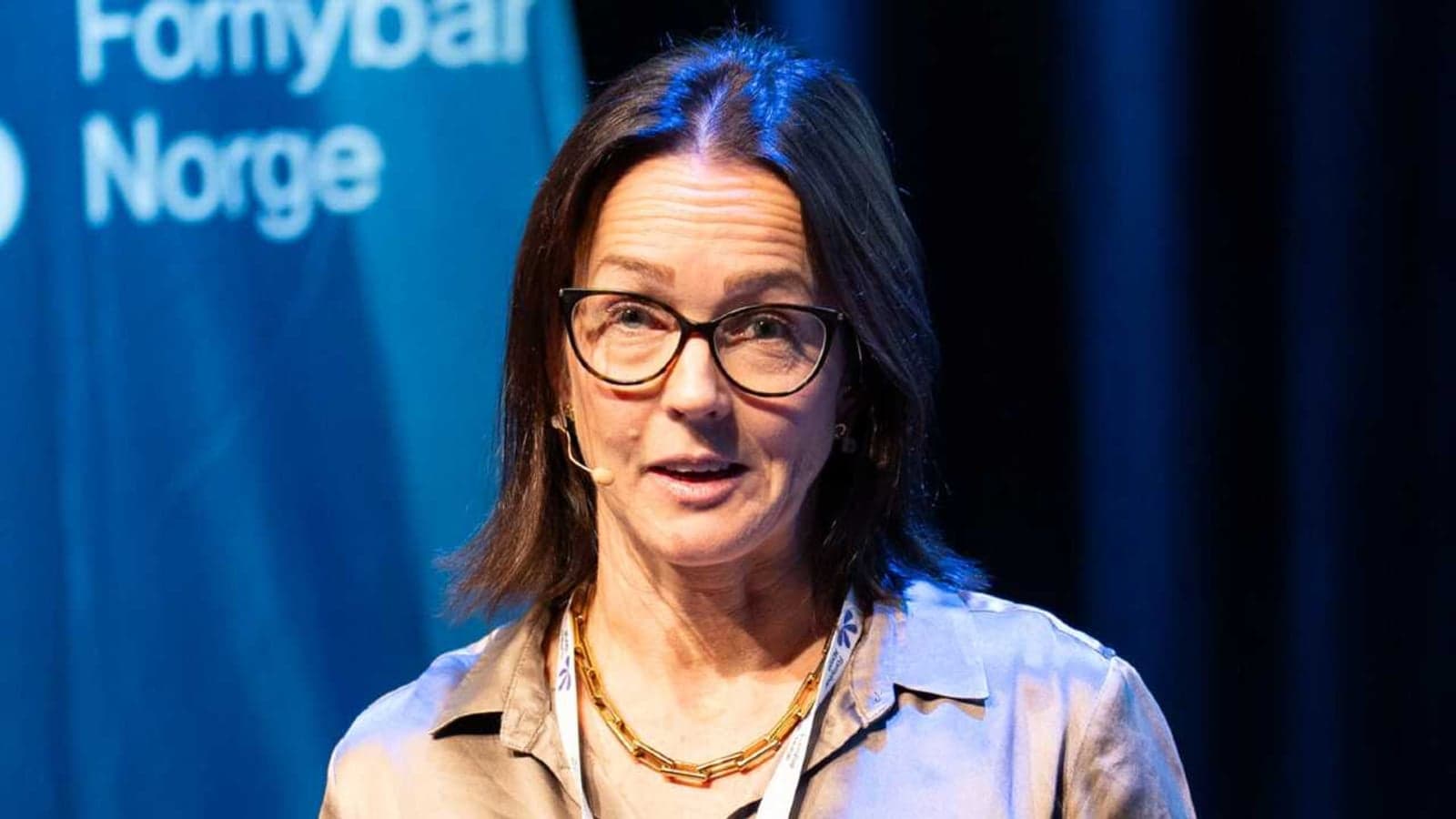
From digitalising distribution networks to unlocking flexibility and data sharing, Linda-Maria Wadman, Chief Commercial Officer at Plexigrid, outlines what it will take to turn ambition into real, connected progress.
How does the European energy sector turn shared ambition into collaborative action?
Europe has ambitious targets, and the regulation is already pushing change: the challenge is execution. To move from ambition to collaborative action, we need to get very practical and enforce the transformative regulation across member states.
Interoperability and data sharing across borders and between system operators is essential to connect the grid, customers, and service providers as one ecosystem. Digitalisation of distribution grids is still lagging in some countries, and this is where the energy transition is happening — with renewables, EVs, and heat pumps connecting every day. If Europe can align on these priorities and speed up adoption, ambition will translate into real progress.
What does Europe need to do to deliver competitive, resilient energy by 2030?
The biggest risk we face in meeting this ambition is that our electricity grids are not designed for the volume of renewable energy required to be self-sufficient on clean energy. Without action, bottlenecks in the grid will slow down the transition and increase costs.
Europe must accelerate the deployment of capacity-enhancing solutions that require relatively low CAPEX and deliver impact quickly. This means harnessing customer-side flexibility, deploying digital technologies to unlock hidden capacity in the existing grid, and creating regulatory frameworks that reward smarter, not just bigger, infrastructure investments.
If we succeed, we will not only integrate renewables at scale but also build a more resilient and competitive energy system — one that is less dependent on external risk factors, delivers better value to customers, and positions Europe as a leader in the global energy transition.
We are undergoing the largest re-regulation of the energy system in decades, combined with a technological leap forward. Harnessing this moment is difficult… but failure is not an option.
It’s 2030: what does Europe’s energy mix look like?
By 2030, Europe’s energy mix must be predominantly renewable. Wind and solar will provide the largest share, driven by their strong cost competitiveness. Hydropower will remain vital for balancing, while nuclear will support large-scale industrial electrification in sectors such as steel, cement, combined with green hydrogen production as a long-term storage for renewables. Gas may still serve as a balancing resource, but increasingly in combination with carbon abatement technologies.
The real shift from today lies in how the system operates. Distributed resources, rooftop solar, batteries, EVs, and flexible demand will be fully integrated into the energy mix. Flexibility will be recognised as a core system asset, fundamental to enabling a decentralised energy system where local resources are orchestrated to ensure overall reliability.
Is there another industry vertical that has vital lessons for the energy sector?
Multiple sectors went through fundamental transformations where digitalisation and AI are now at the core of their operations: classical examples are telecoms and banking. But also supply chains for consumer goods, media, and entertainment are becoming decentralised and empowering consumers with more flexibility and cost-efficient business models. We can learn a lot about changing the perspective to that of the end customer and see energy as a service that needs to adapt to the customer's needs, instead of an institutional monopoly, dictating the terms and giving the customer no choice but to accept.
COP30: Are you optimistic or pessimistic? What should it deliver to make a true impact?
I am not too optimistic if we don’t make some radical changes to alter the trajectory we are currently following. But if we do, we can make it happen. What’s missing is the practical framework that allows countries and companies to act faster. For the energy sector, that means three things:
- Accelerating grid digitalisation so that we can integrate renewables and flexibility at scale.
- Putting resilience on the agenda, making sure systems can withstand climate impacts, cyber risks, and unexpected events.
- Creating clear investment signals for flexibility, demand response, and storage, so that innovative solutions can compete on equal terms with traditional infrastructure.
What is the biggest workforce issue for the energy transition?
We are in the middle of a generational shift in the energy sector. Many of today’s professionals are experts in traditional ways of operating, for example, the electricity grid, while a new wave of digital-native talent is only just entering the workforce. At the same time, most of the systems we rely on are still only lightly digitalised.
The challenge is to bridge these worlds. We need to upskill the existing workforce to work effectively with digital tools, while also attracting new talent who bring fresh perspectives in data, AI, and software. If we manage this transition well, the combination of deep system knowledge and new digital skills will be extremely powerful. As with every major technology shift, I am confident that we will get through this.
You might be interested in:
The grid – Achilles heel of the energy transition
Is the energy sector making the most of the current AI tech?
No, we are only in the beginning, and most tools out there are not leveraging AI to a very large extent. There is also a fear of introducing AI into critical infrastructure operations that need to be acknowledged and managed. That said, the potential is enormous. The key is to develop and deploy these capabilities hand in hand with system operators to build trust and ensure a high level of adoption.
How do you see the role of AI supporting/enabling your organisation's CX strategy?
As energy systems become more complex, AI will become essential for supporting our customer experience strategy. I can provide real-time and future operational awareness, decision support, and an increased level of automation. We are moving away from deterministic and reactive planning and operations to a risk-based, proactive approach, and AI is the perfect enabler of that shift. By orchestrating complexity, AI creates opportunities to increase efficiency, optimise performance, and ultimately deliver a more reliable and responsive service to customers.
What are the biggest challenges facing energy leaders today?
The biggest challenge is delivering transformation at a speed the energy sector has never experienced before. We are not used to operating at this pace of change, and it affects every dimension: skills, processes, technology, procurement, and organisational development. Much of today’s infrastructure was built for incremental improvements, not for the kind of systemic transformation we now need. At the same time, leaders must navigate uncertainty and risk while inspiring their organisations to embrace change. We are undergoing the largest re-regulation of the energy system in decades, combined with a technological leap forward. Harnessing this moment is difficult, but failure is not an option. If we succeed, it will enable us to hit our targets and build a cleaner, smarter, and more resilient energy future.
We need to upskill the existing workforce to work effectively with digital tools, while also attracting new talent who bring fresh perspectives in data, AI, and software.
How are your industry experts going to address these challenges at Enlit Europe in Bilbao?
We are very proud to showcase our capabilities at in Bilbao — our home ground in Spain, where we have some of our most progressive customers. Our experts will demonstrate what’s possible when new technology meets a new way of thinking about grid efficiency.
At Plexigrid, we are committed to showing that digitalisation and local flexibility can transform how grids are planned and operated — making them smarter, more resilient, and ready for the renewable future. But this transformation cannot happen in isolation. We invite all stakeholders across the energy system — DSOs, TSOs, regulators, technology providers, and communities — to collaborate. We know it’s essential to connect every link in the energy chain to succeed in this transformation and make a real impact. Plexigrid is one piece of that puzzle, and at Enlit, we will share how our piece fits into the bigger picture of Europe’s clean energy transition.
If you had a magic wand, what is one thing you would implement today?
If I had a magic wand, I would give every grid operator across Europe full real-time visibility of their grid, down to each individual customer, with all the insights into the actual situation that this brings. Most of the energy transition is happening at the edge of the grid, where renewables, EVs, batteries, and heat pumps connect every day, yet many distribution networks still operate with limited visibility and outdated tools and lack access to their own data due to limitations in data sharing. With instant digitalisation and open data sharing, planners and operators could finally see what is really happening, uncover system inefficiencies, and take the necessary actions to improve the situation. The result would be reduced consumer costs, improved quality of supply, and a dramatic acceleration of the clean energy transition.
Connect with Plexigrid in Bilbao!
Stand: 3.G100
Speaking Engagements
18 November 2025 | Alberto Mendez, Chief Executive Officer, Plexigrid | Evolve Stage (Hall 5)
Related tags
Latest content
+3
Open source: The key to utility digital sovereignty
Open source collaboration is not merely a technological choice for the energy sector but a strategic imperative for navigating the complexities of today and tomorrow, writes Alex Thornton, Executive Director, Linux Foundation Energy.
- Guest/partner contributor
- 29/05/2025