Policy support needed to tap Europe’s biogas potential
Pamela Largue
Posted on: 27 April 2026
Anastasiya Agapova of the European Biogas Association suggests that a lack of policy and regulatory support are the biggest challenges facing Europe’s biogas sector.

Europe’s biogas sector, while mature, is still developing. According to Anastasiya Agapova, Technical Director at the European Biogas Association (EBA), it will be critical to implement effective policy measures and feedstock mobilisation in order for the sector to reach its full potential.
To learn more about the challenges and opportunities associated with Europe’s biogas market, Enlit had a conversation with Agapova, who leads EBA’s technical team responsible for analytical and data-driven work.
How would you describe the current biogas market in Europe? What technologies are leading?
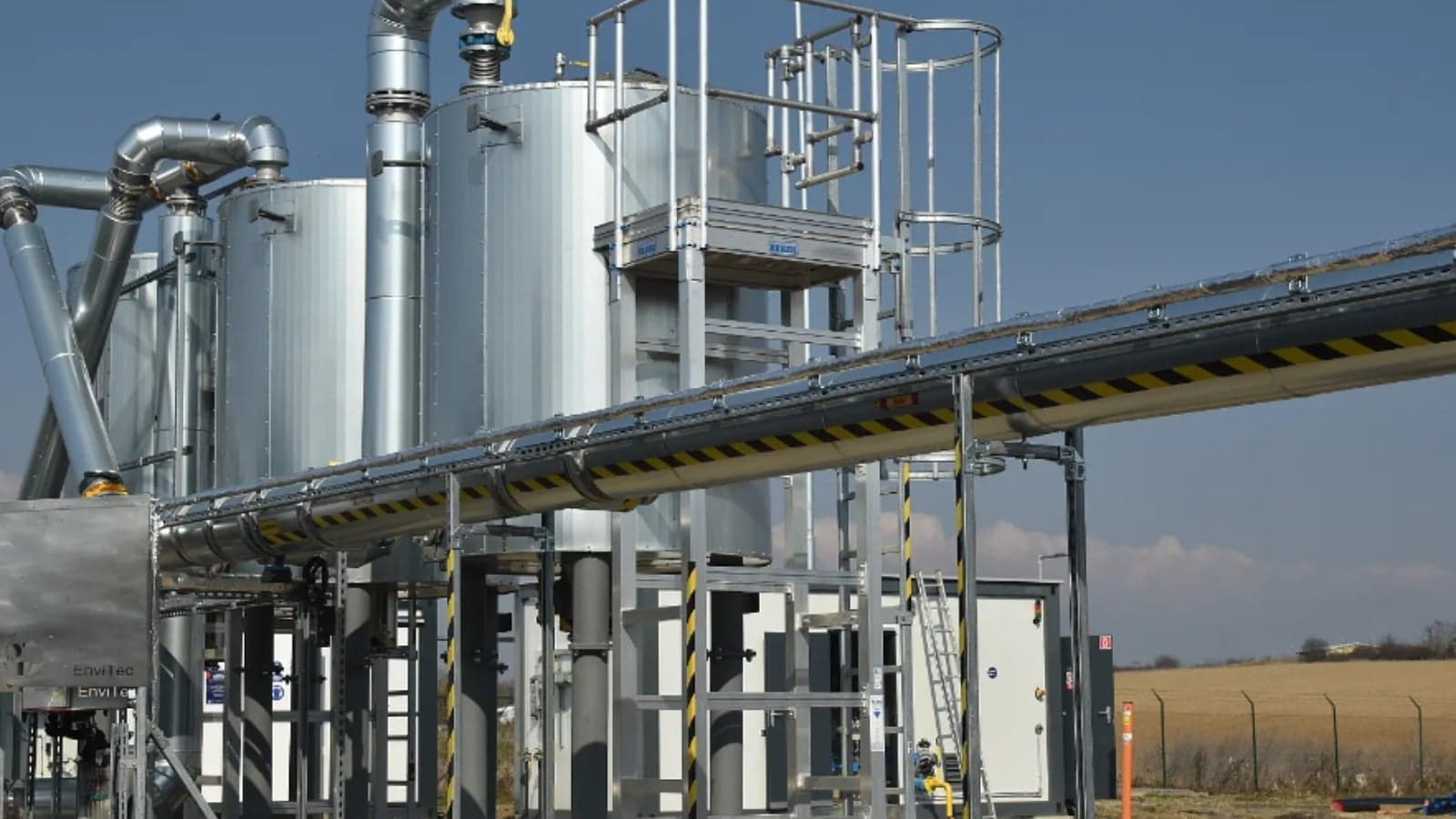
The core technology in this sector is anaerobic digestion, which is the decomposition of biomass without oxygen by microorganisms. It’s a mature technology that has been used for decades, but there is still room for improvement—especially in efficiency and in expanding the range of usable feedstocks, particularly those that are harder to digest.
Permitting is a key issue. In some countries, it can take up to 10 years to approve a project.
Another key area is upgrading biogas to biomethane. Biogas is mainly a mixture of methane and CO₂, and by removing the CO₂, you obtain biomethane, which has similar properties to natural gas. These upgrading technologies are also well established but continue to evolve.
So, the sector is in an interesting position: it’s mature, yet still developing. Compared to wind and solar, it represents a smaller share of the energy mix, but it plays a crucial role. The industry sits somewhere “in between” with strong foundations but significant untapped potential.
What are the main challenges facing the biogas industry?
One of the biggest challenges is policy and regulatory support. While the potential is significant—Europe already produces around 232TWh of energy from biogas and biomethane, about 6% of energy consumption—there are major barriers to scaling further.
Permitting is a key issue. In some countries, it can take up to 10 years to approve a project. On average, it’s about four years, which is problematic in a rapidly changing market. This uncertainty makes it difficult for investors and developers.
Also of interest: How the humble rice husk could cut emissions in India’s iron ore industry
More broadly, the energy transition requires a mix of solutions. Not everything can be electrified—there are hard-to-abate sectors, particularly in industry and transport, where biomethane can play a critical role. The transition shouldn’t be seen as a competition between technologies, but as a system where different solutions complement each other.
What kinds of policy mechanisms are most effective in supporting the industry?
There’s no single best policy, as it depends on the country and stage of market development. Generally, supply-side support like feed-in tariffs, feed-in premiums, and capital grants are most effective in the early stages to help build projects and infrastructure.
As the market matures, demand-side measures such as blending mandates and quotas become more important. These help integrate biomethane into sectors like transport and heating.
France is currently the leading biomethane producer and a great example of how effective policy can drive growth
Carbon pricing plays a role, but currently it’s not strong or predictable enough to drive the market on its own. It works better as a complementary signal that reinforces other support mechanisms.
What were the key takeaways from your recent industry forum – Grid Ready Forum 2026?
The forum focused on practical and technical challenges, particularly around gas quality rules and grid integration.
There were four main technical priorities:
- Reviewing national oxygen limits in gas grids based on new evidence
- Supporting cost-effective solutions for managing gross calorific values variations of gas
- Defining industry standards for grid injection equipment
- Developing “master planning” tools—such as mapping feedstock availability, grid infrastructure, and shared assets like injection points
In addition, there was a strong call to implement the “right to injection” from the EU Gas Directive by August 2026. This would ensure biomethane producers can access the grid and compete fairly with fossil gas.
Overall, the conclusion was that the grid can handle more biomethane, but smarter standards, better planning, and improved regulation are needed.
Which countries in Europe are leading or showing strong potential?
France is currently the leading biomethane producer and a great example of how effective policy can drive growth. It has seen rapid expansion in recent years, largely due to strong and consistent support mechanisms. Its model is based on many small, decentralised plants—around 760 in total.
Denmark offers a contrasting model. It has fewer than 100 plants, but they are much larger and highly centralised. Despite the smaller number, Denmark is among the top producers due to its efficiency and strong feedstock mobilisation.
Have you read?
Biogas roundup: industry makes strong progress across Europe
Closing the gap for Europe’s biomethane ambitions
This highlights an important point: there is no single “right” model. Different approaches can work depending on local conditions.
Spain, on the other hand, has significant potential due to abundant feedstock, but progress has been slow due to policy barriers, lack of incentives, and social acceptance challenges.
Is feedstock availability a limiting factor for growth?
No, there is sufficient sustainable feedstock in Europe to significantly scale up biomethane production. Studies show that using only residues such as manure, agricultural waste, municipal organic waste, and wastewater, Europe could produce up to 77 billion cubic metres of biomethane by 2040 without competing with food or feed.
If you include additional technologies like gasification, which can process other types of biomass, the potential increases further. In total, biomethane production could exceed 150 billion cubic metres, which is enough to cover Europe’s natural gas demand by 2050.
The real challenge is not availability, but mobilisation - ensuring that feedstock is collected and used efficiently, which again depends heavily on policy and infrastructure.
What do you find most motivating about the work you do?
My main driver is intellectual curiosity. I enjoy learning, understanding how systems evolve, and seeing how ideas develop over time. It’s especially rewarding to contribute to something and then see its impact in the real world.
Working in an association is particularly interesting because of the collaboration between technical, policy, and communications teams. The data we produce is actually used by policymakers, industry players, and our members to make decisions and improve outcomes.
That connection between analysis and real-world application is what makes the work meaningful.