How the humble rice husk could cut emissions in India’s iron ore industry
Pamela Largue
Posted on: 17 April 2026
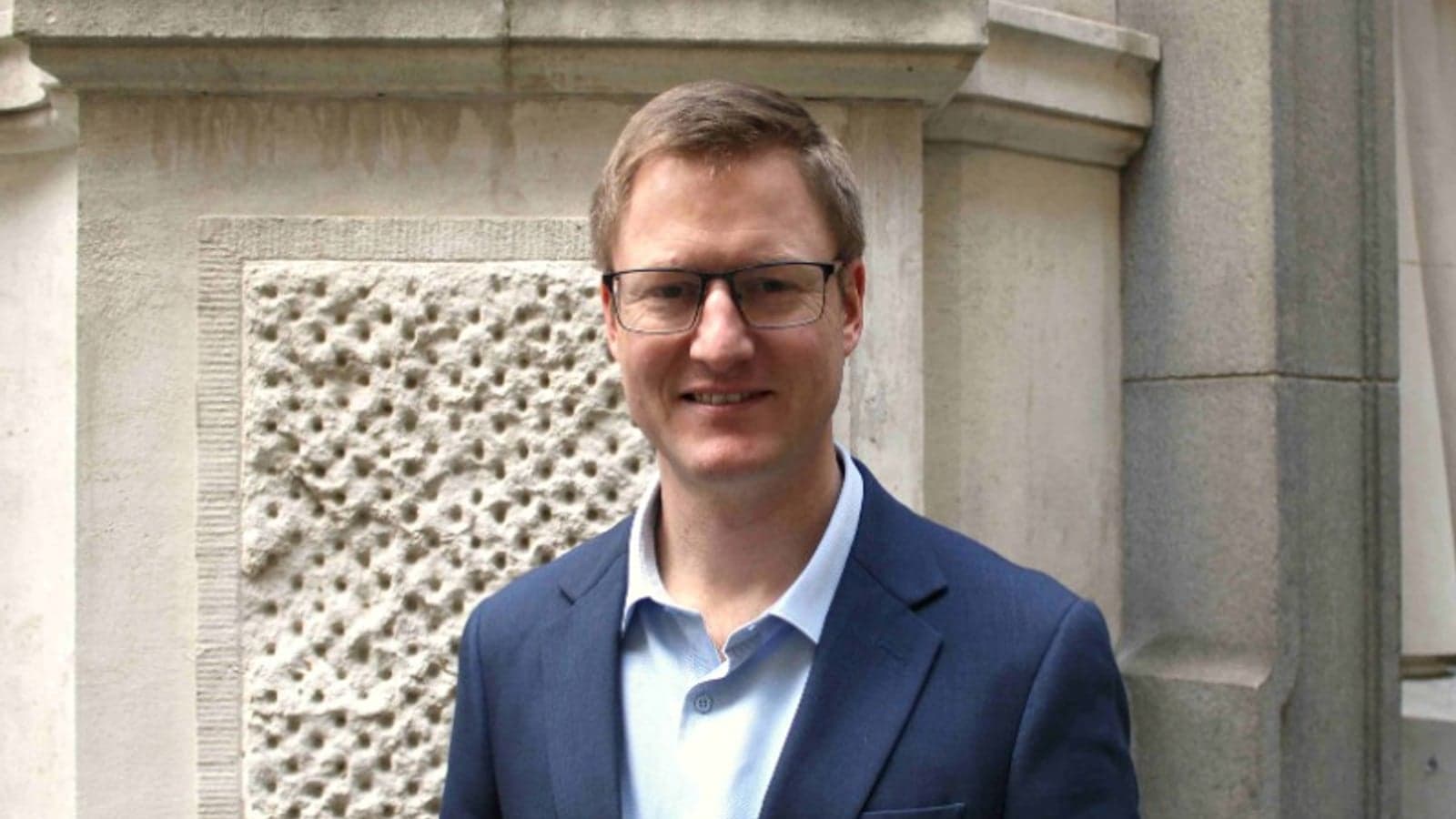
Warren Flentje, a researcher at Australia’s CSIRO, explains how a demonstration project is successfully utilising agricultural waste to reduce emissions in iron ore processing.
Warren Flentje is working at the forefront of one of the most complex challenges in decarbonisation: cutting emissions in hard-to-abate industries.
As a senior research scientist at Australia's National Science Agency CSIRO, he and his team have developed a world-first demonstration project that uses agricultural waste, namely rice husks, to reduce emissions in iron ore processing.
That work has been taken beyond the lab through an international partnership between Australia and India that demonstrates what can be achieved through collaboration, a willingness to learn and several tonnes of rice husks.
Australia and India form pioneering partnership
According to Flentje, Australia and India have a lot more in common than just cricket.
While both countries are passionate about the sport, they are also important trade partners, with India a key destination for Australian minerals and coal exports, particularly metallurgical coal for steelmaking.
It’s this trade relationship that has provided the foundation for a research collaboration between the two nations, led by CSIRO and funded by the Australian government.
A lot of the hydrogen or gas-based processes that are being developed in North America or Europe are not applicable in Australia and India.
The collaboration covers a variety of projects from critical minerals to science innovation accelerators and green metals.
More specifically, Flentje’s project focuses on biomass for steel decarbonisation, a venture that was recognised in India with the publication of their Green Steel Roadmap.
Not all iron ore is equal
Other than sport and trade relations, Flentje explains that Australia and India also share a unique type of iron ore, one not found in Europe. It's a hematite type of ore called goethite and has some particularly unique challenges when used as a feedstock for steel production.
“It's very difficult to upgrade and it's not suitable for typical hydrogen-based steel making.”
“This means a lot of the hydrogen or gas-based processes that are being developed in North America or Europe are not applicable in Australia and India.”
In fact, says Flentje, many of the green steel developments around the world reference hydrogen-based steelmaking, with one of the most advanced hydrogen steelmaking examples being the HYBRIT project in Sweden.
Have you read?
Fortescue speeds up green grid project to curb volatile fossil fuel costs
Navigating the cost reality of industrial decarbonisation in the metal sector
“But that uses Swedish iron ore, which constitutes a maximum of around 80 million tonnes of production per year.
“It's a great demonstration of hydrogen steel making, which has significant decarbonisation potential. But Australia exports around a billion tonnes of iron ore per year, and India is the second largest steel producer globally and the fastest growing. Most of the iron from both countries cannot be processed in the same way as Swedish ores
“The HYBRIT process is therefore a very promising technology, but not applicable to the vast majority of global iron ore production.”
The greening of the syngas
The mission, therefore, was to find a way to decarbonise iron ore processing that was suitable to India’s iron ore.
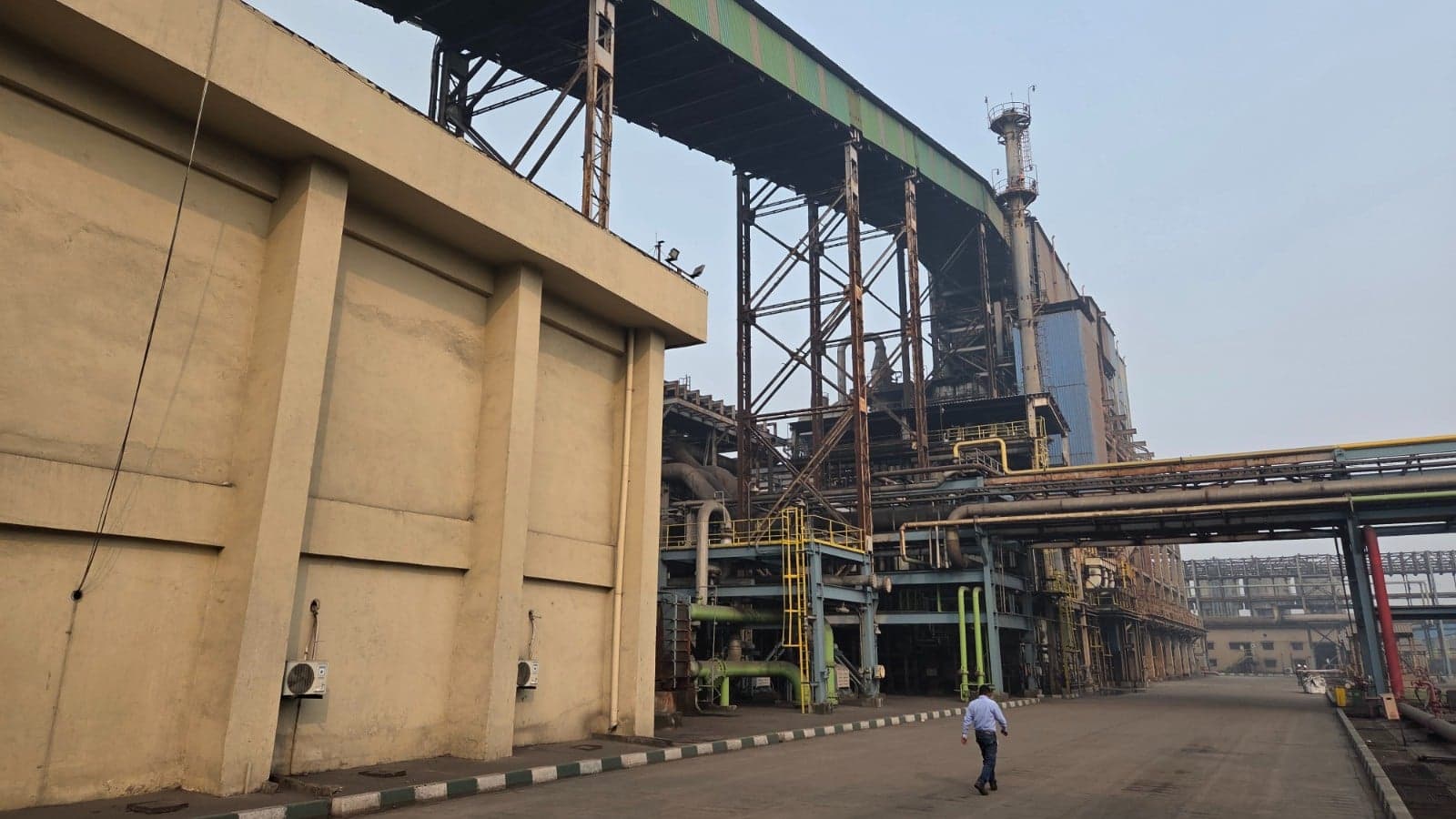
To this end, CSIRO and their partners at Rescons Solutions began working with Jindal Steel in Odisha in India to decarbonise its steelmaking process, which uses gasification of coal.
Jindal Steel takes a low-grade local supply of coal and gasifies it to a syngas by placing it in a high-temperature reactor, and in a low-oxygen atmosphere.
It was such a rewarding moment when the team realised there was no change to the performance of the gasifier.
“The coal will gasify into a syngas consisting of predominantly carbon monoxide, carbon dioxide, and hydrogen. They use that syngas for reducing iron ore to iron, and then they use that iron in the steelmaking process.”
The reduction of iron ore is the emissions-intensive part of that process, says Flentje.
And it’s this part of the process Flentje and his team are successfully decarbonising by substituting 5% and 10% of the coal with a source of biomass.
Rice husks as the source of biomass
The biomass of choice for this project is residue from the production of food, in this case, rice.
“When you harvest and process rice, you're left with a significant volume of residues. This includes rice husks; the leaves and other biomass that surround the rice grain, and the stubble that’s left in the field.”
The stubble and husks are processed into a pellet form and used in the gasifier to displace a similar amount of coal.
Also of interest:
Elimini and HOFOR to develop landmark BECCS facility in Copenhagen
This isn't constrained to rice husk pellets, highlights Flentje, adding a variety of sources can be used.
“That's particularly relevant for India, where they don't have a lot of gas available to move to gas-based steelmaking and currently nobody can afford to move to hydrogen-based steelmaking.”
To ensure maximum sustainability, CSIRO will look into using non-food sources in the future, which can also build nutrients into the soil and provide greater benefits back to communities.
Key challenges
While swapping coal for biomass pellets sounds like a simple task, Flentje explains it is not without challenges, especially when scaling from a controlled lab environment to a real-world operation.
“We can gasify biomass to a syngas and we know that we can use this to reduce iron ore to iron. That's all fairly straightforward.
“The challenges come when we want to scale that process up to the kind of scale that they use in industry.”
Two major challenges stood out for Flentje.
The first was ensuring the biomass pellets are strong and consistent enough to not only survive the very harsh industrial process, but also gasify at the appropriate rate to produce the clean syngas.
The second major challenge was the ash composition and content of the biomass.
“Everything that doesn't burn or gasify remains as a solid ash, similar to what you'd find in your fireplace at the end of the night. And that ash can cause a lot of problems for a gasifier.”
Flentje explains that coal is washed before it goes into a gasifier to remove a lot of the ash.
“We can't do that to the biomass. We needed to establish that the ash that's left over from the biomass after gasification does not cause major trouble for these large-scale gasifiers, which can cost many millions of dollars.”
The real value of the technology
According to Flentje, all these technical challenges can be solved through the application of engineering and science.
The real challenge, however, is understanding the business drivers and the commercial environment in which this process can be adopted.
Flentje explains that while they are grateful for the opportunity to learn from their collaboration with Jindal Steel, at their very large integrated steelworks, the process may have greater impact for regional industries.
“When you look at the volume of coal that's going into that process, it's very difficult to source enough biomass at the right cost to be able to displace a lot of that coal.”
When you look at the volume of coal that's going into that process, it's very difficult to source enough biomass at the right cost to be able to displace a lot of that coal.
However, says Flentje, India has a large fleet of small-scale regional steel makers using older rotary kiln technology, many of which have access to a more distributed source of waste biomass.
They can take waste biomass from the local agricultural enterprises at a reasonable cost, presenting a regional solution that will make a tangible difference.
One of the co-benefits of this for those local steel makers, highlights Flentje, is that besides maintaining the processing performance, they can lower emissions which allows them to attract a green premium, an important additional revenue source for locals.
“It's very important that we capture the co-benefits, that is, the revenue that can be delivered back to the agricultural community and the regional economy, and other benefits such as the air quality improvements that can be achieved through this process.”
Flentje references India’s notorious air pollution challenge and explains that burning the agricultural residues at the end of a harvest contributes significantly to the poor air quality.
“The farmers in India are not burning residues in the fields for fun. They're doing it because they need to seed the next harvest and there's no economic incentive for them to collect that residue.
“If we can use it in a steel making process, and they also use it in power generation as well, then we can offer revenue to farmers which can incentivise them to collect that residue and centralise it and then process it.”
For Flentje, projects like this are exciting to work on from an engineering perspective.
“It was such a rewarding moment when the team realised there was no change to the performance of the gasifier.”
However, perhaps more rewarding he says was the excitement of seeing the displacement of coal in a real industrial process.
“It’s the most exciting thing to watch 40 tonnes of biomass put next to all the coal that they're currently using, load it onto their conveyors and watch the biomass going in.
“And then understanding that there’s some steel out there which is lower in emission, thanks to the work that we've done...if we work in a lab, we don't get that kind of connection to the impact that we're having.”
Latest content
+5
ECOLOOP: Empowering rural communities for the energy transition
The ECOLOOP project is transforming how rural communities manage land, waste and energy by equipping farmers and foresters with tools, knowledge and innovative business models to harness renewable energy, improve soil health and cut carbon emissions, while generating new economic opportunities.
- Guest/partner contributor
- 10/06/2025