Researchers remanufacture wind turbine parts to reduce waste
Power Engineering International
Posted on: 9 June 2025
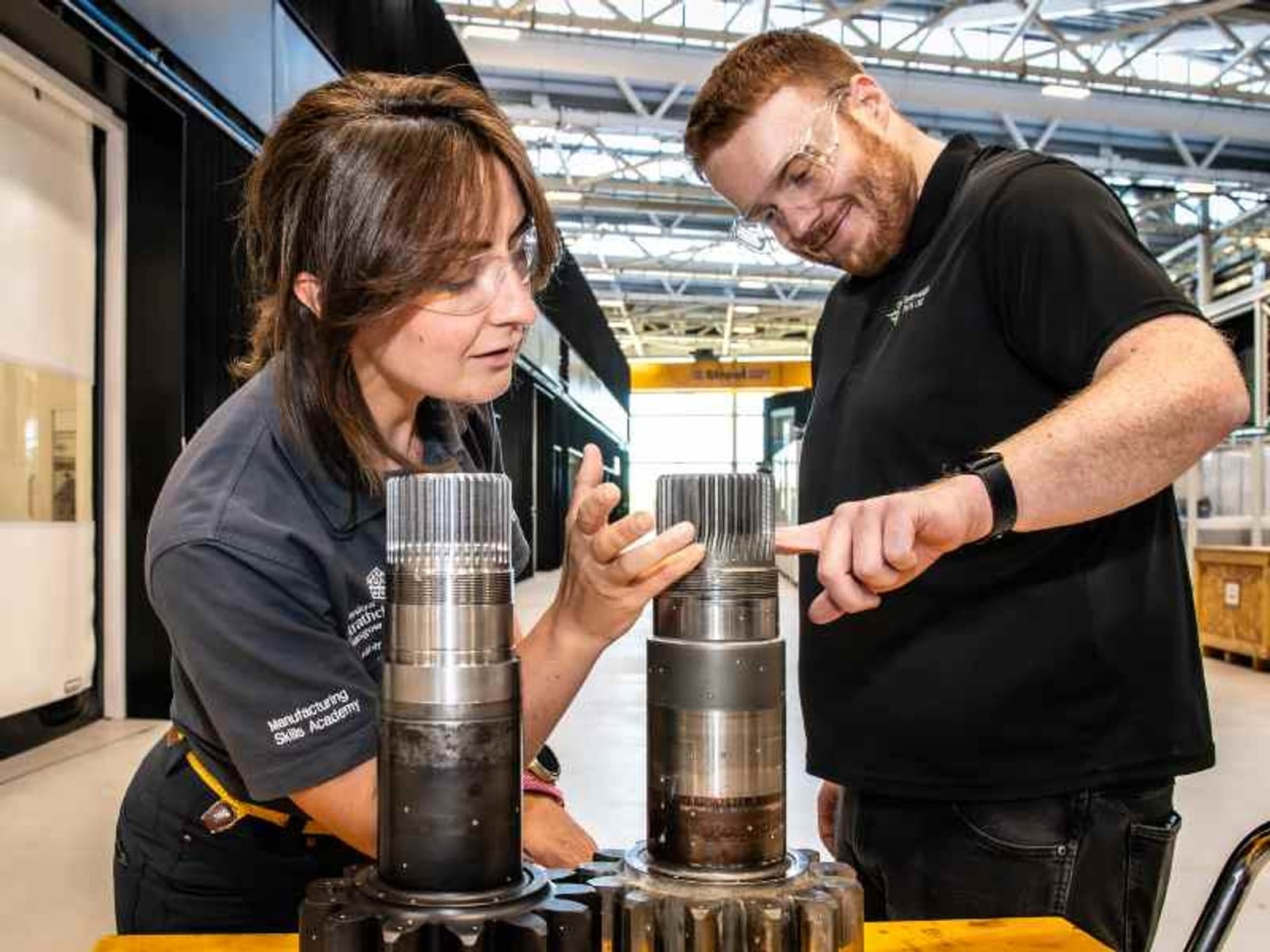
The researchers are using additive manufacturing techniques to restored damaged pinion shafts from a wind turbine yaw gearbox.
A team of researchers has demonstrated the potential to remanufacture onshore wind turbine parts in an effort to reduce waste and emissions and extend part life.
The researchers from Renewable Parts Limited (RPL), SSE Renewables, and the National Manufacturing Institute Scotland (NMIS), are using additive manufacturing techniques to restored damaged pinion shafts from a wind turbine yaw gearbox.
According to NMIS, failure of the pinion shaft, a key component that keeps turbines facing into the wind, leads to the replacement of components resulting in up to 42kg of steel being scrapped.
Early trials showed that remanufactured parts could perform to original specifications following machining and non-destructive testing, saving up to 84kg of CO2 equivalent per remanufactured component.
Have you read?
Sustainable decommissioning planned for ageing Scottish wind farm
The role of circularity in decarbonising copper
RPL is now looking to validate the units and compare with new shafts ahead of operational field trials.
Building on the success with pinion shafts, there is also potential to explore remanufacturing other critical wind turbine components using similar advanced manufacturing technologies.
The longer-term ambition is to widely use remanufactured pinion shafts in wind turbines across UK windfarms, potentially saving thousands of tonnes of steel waste and significantly lowering emissions.
With approximately 15.7GW of onshore wind capacity currently operational across the UK, the potential impact of adopting remanufactured pinion shafts at scale is substantial.
Ryan McCuaig, product development engineer at Renewable Parts, said: “Remanufacturing could be a game changer for improving sustainability in the wind sector and significantly increase the percentage of steel recirculated within our refurbished products portfolio.
"Working with NMIS and SSE Renewables has allowed us to prove that these critical components don’t need to end up in a skip - they can be given a second life.”
The project is part of ReMake Glasgow, a circular manufacturing initiative supporting companies in the region to adopt technologies for remanufacturing and refurbishment. The aim is to cut CO₂ emissions by up to 99% compared to producing new parts at a time when fewer than 2% of UK products are designed to be reused.
Andreas Reimer, senior ReMake theme lead, Digital Factory at NMIS, said: “Repair and remanufacture must become mainstream if we’re to reduce the environmental impact of what we make and use, but also to present new economic and business model opportunities - particularly in high-integrity sectors, such as renewable energy...
“If adopted industry-wide, remanufacturing could not only prevent vast amounts of steel waste but also substantially cut emissions linked to air miles by reducing the need to import replacement parts from overseas. Manufacturing parts locally would also create jobs and help retain specialist manufacturing skills within the UK.”
The project was funded in part by the Glasgow City Region Innovation Accelerator programme, led by Innovate UK on behalf of UK Research and Innovation. With a one-year extension now underway, ReMake Glasgow will continue supporting manufacturers to adopt circular practices and drive sustainable growth.