Revolutionising ceramic firing in the METAWAVE project
Guest/partner contributor
Posted on: 1 June 2026
The METAWAVE project introduces a transformative microwave plasma heating system for the ceramic sector, in collaboration with GRES ARAGÓN.
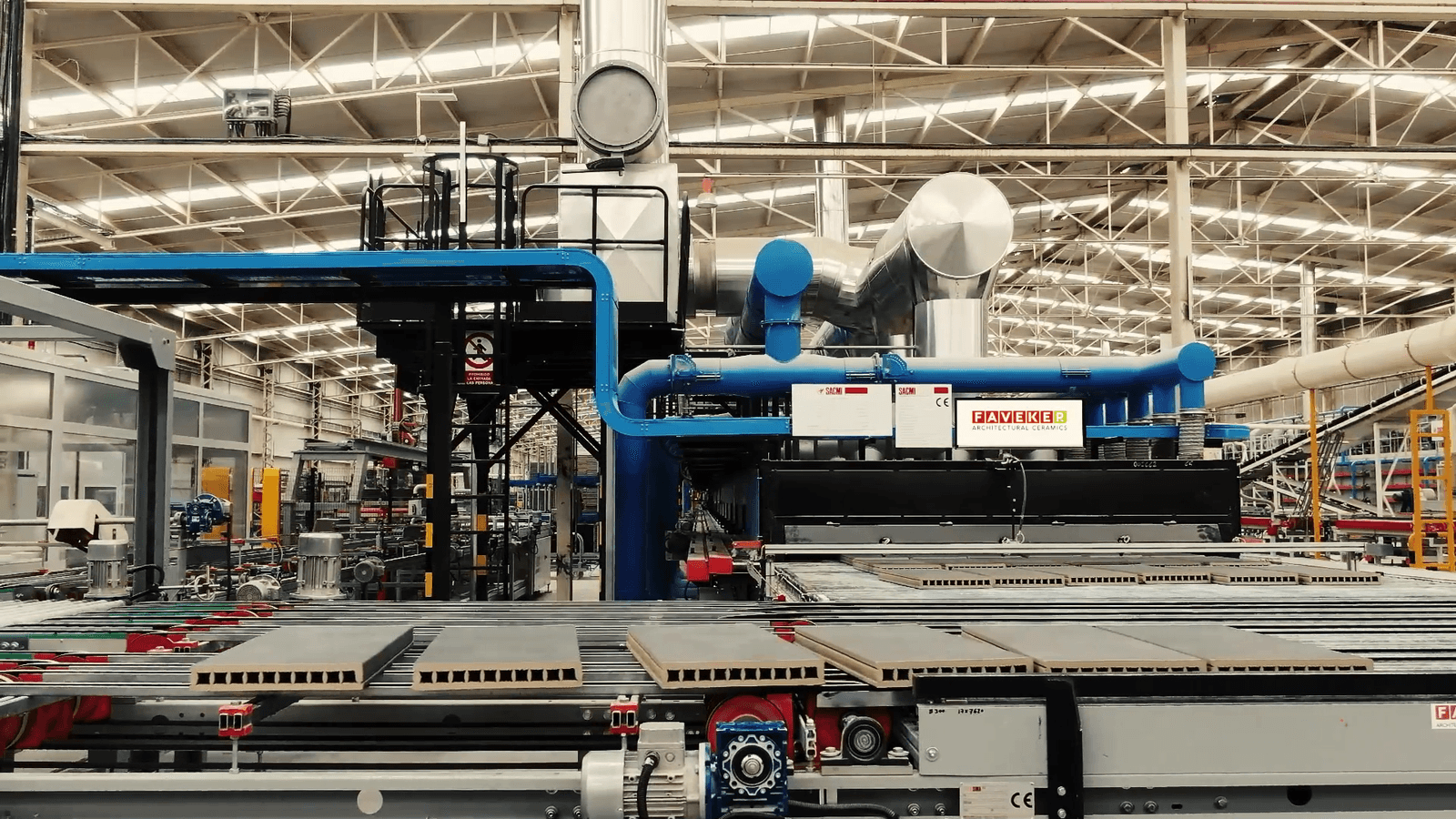
Industrial heating processes are currently a significant contributor to climate change, with ceramic production alone accounting for 1% of total EU industrial emissions (approximately 19Bt CO2eq/y).
This high carbon footprint is primarily due to the energy intensive firing stage, which typically relies on natural gas to reach temperatures between 1,100°C and 1,200°C.
The EU-funded METAWAVE project addresses these challenges by replacing traditional gas powered systems with an innovative microwave plasma heating concept. Focused on the GRES ARAGÓN use case - a leading ceramic producer - the project seeks to prove that electrification and digitisation can revolutionise industrial kilns.
The project's objectives are ambitious: achieving a 70% heating efficiency, reducing final energy use from 5.76GWh to 3.8GWh, and averting 427t of CO2eq per year.
These advancements support the broader EU climate targets by demonstrating a viable pathway for the electrification of high temperature industrial processes.
METAWAVE methodology
The development of the GRES prototype is multifaceted, combining hardware innovation, advanced materials science, and a sophisticated digital stack.
1. Multiphysics modelling design
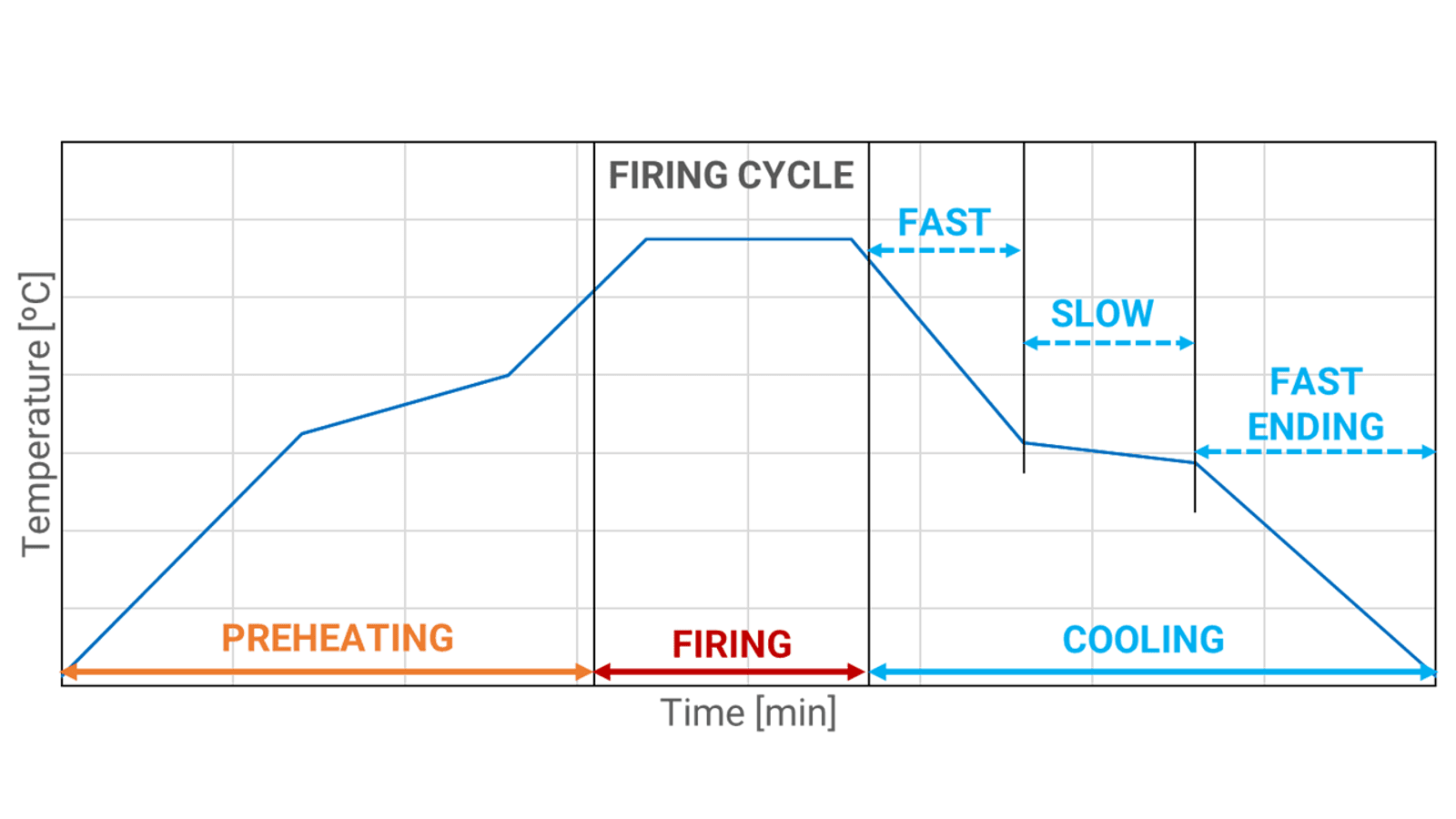
The prototype kiln is designed as a three-section system: preheating, firing, and cooling.
In the preheating zone, electrical resistances and recycled hot air from the firing zone raise the temperature of the tiles (see Figure 1). The core innovation lies in the firing section, which utilises plasma torches to generate radiant heat via microwave energy.
Finally, a three-stage cooling process (rapid, slow, and rapid) uses ambient air to stabilise the ceramic products.
The METAWAVE prototype design relies on modelling to minimise trial-and-error during development and building stages. The approach integrates complex computational fluid dynamics simulations, implemented in ANSYS Fluent, to predict heat transfer (radiation, convection, and conduction) within the kiln.
This approach enables accurate prediction of heat transfer and fluid flow within the kiln, providing valuable insights into the tile heating process and kiln design.
2. Circular refractory materials
To withstand firing conditions, the University of Modena (UNIMORE) developed new refractory bricks using secondary raw materials, such as recycled alumina and kyanite, via a geopolymerization process. These materials were engineered for low thermal conductivity (0.63W/mK) and high temperature stability up to 1,200°C.
Crucially, these refractories exhibit low dielectric losses (permittivity of 4.89-i0.05), ensuring they do not interfere with the microwave fields while providing maximum thermal insulation.
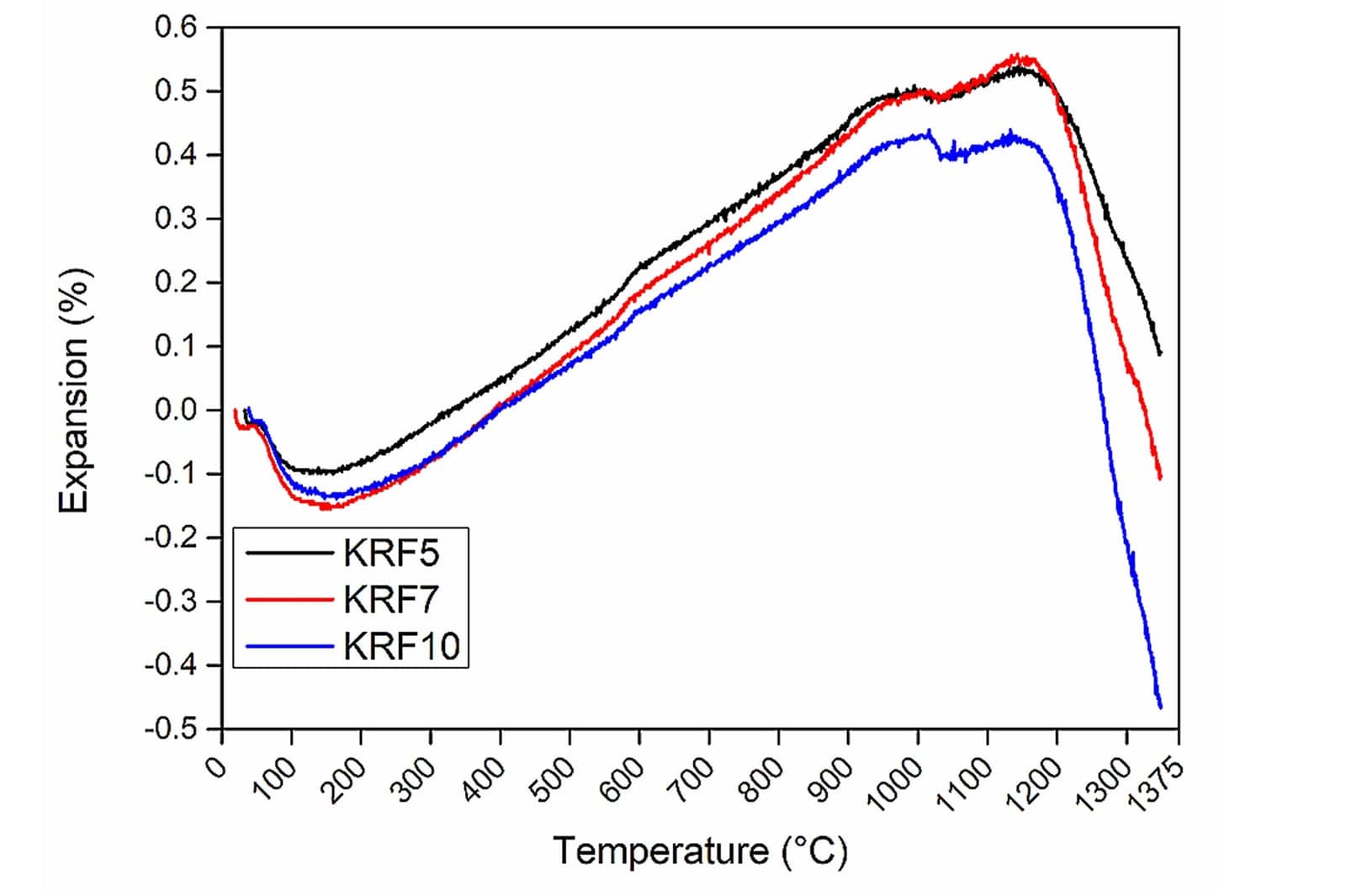
The samples were then subjected to thermal analysis to identify relevant technological properties and assess their maximum use temperature. Thermo-dilatometric analysis (Figure 2) confirmed a good dimensional stability of the optimised samples (KRFn, with 'n' identifying different percentages of kyanite with respect to reference).
3. Advanced sensing and monitoring
Real-time monitoring in a microwave plasma environment requires robust, electromagnetic-immune sensors.
The GRES prototype employs:
- Fibre optic sensors: Fibre Bragg gratings and Rayleigh/Raman distributed sensing are placed in direct contact with moving tiles to provide continuous thermal profiling.
- Short wave infrared multispectral imaging: A SWIR camera monitors surface temperatures through optical access ports. Its multiband capability allows for accurate readings even under varying emissivity and extreme plasma torch temperatures.
4. Digital architecture and OT/IT convergence
The project implements a unified architecture based on the IEC 61499 standard to bridge the gap between operational technology (OT) and information technology (IT). Designed for scalability, this framework enables hardware independent, software defined automation that can be deployed in both greenfield and brownfield environments, a critical step toward future-proof energy operations.
Data from the kiln sensors and power meters is collected by a PLC and an industrial PC, then transmitted via a CPSizer gateway to the Kharon cloud platform using MQTT and OPC UA protocols.
Upon reaching the IEC 61499-based CPSizer, the incoming data are processed and structured into the format required by the cloud layer to support higher level decision making. The CPSizer then forwards the processed data through a northbound connection to the cloud layer, where Kharon receives and stores the information, enabling integration with a suite of software modules that support real-time monitoring, modelling and decision-making across the project.
5. AI optimisation and energy management
Reduced order models of the physics-based models are developed and integrated with data driven AI models. Specifically, reinforcement learning agents are trained using a hybrid approach - combining simulated data for exploration and real-world data for accuracy.
These agents learn to make real-time control decisions that maximise efficiency while adhering to safety and quality constraints. Safety and quality constraints of the process will be embedded in the agent architecture, for example, by using control barrier functions.
The energy management system uses mixed integer linear programming to compute optimal operational strategies, balancing energy costs and emission constraints. It integrates forecasting modules for energy demand and electricity prices to interact with a virtual power plant, thereby enabling a fully closed loop energy management workflow that maximises sustainability and performance.
Results and discussion
The numerical modelling and simulation phase proved essential for validating the kiln’s design before physical construction.
Thermal profile validation
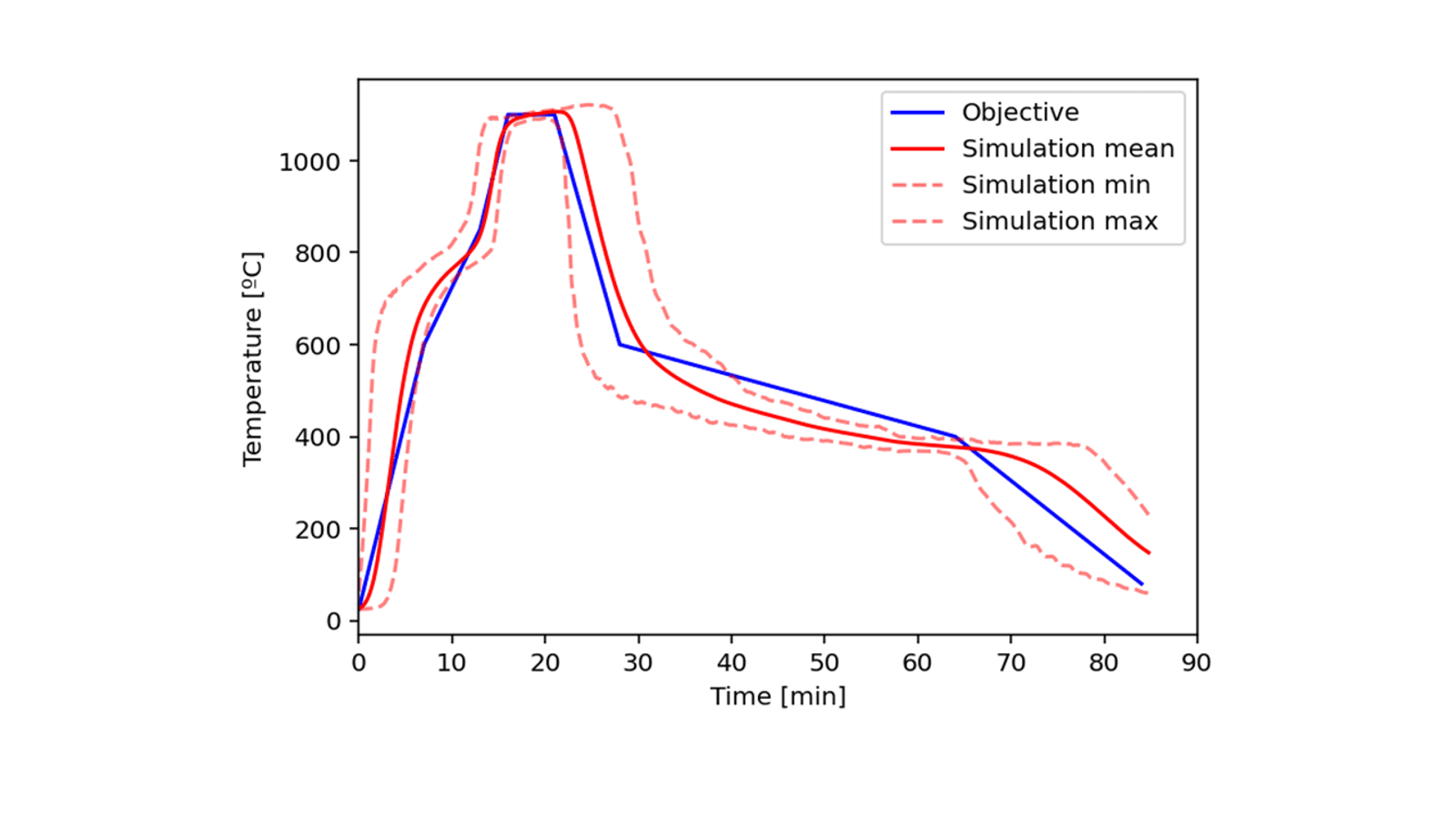
Simulations successfully replicated the targeted firing cycle required for high quality ceramics. Iterative adjustments to heating element positions, cavity dimensions and airflow configurations allowed the team to reach a steady-state temperature distribution that meets industrial standards.
Figure 3 and Figure 4 illustrate that the system can maintain the precise thermal gradients necessary for ceramic vitrification.

Environmental and efficiency gains
A preliminary assessment of the environmental impact, by the eco-audit tool of Ansys Granta software, performed on all the selected refractories demonstrated significant CO₂ and energy savings when using recycled alumina. The activities performed and results achieved confirm the technical and environmental viability of circular refractory materials tailored for advanced microwave industrial heating applications.
The projected 33.2% energy savings represent a benchmark for the sector.
The synergy between the microwave plasma’s 70% efficiency and the EMS’s 5% optimisation through digitisation demonstrates that high temperature electrification is not only technically feasible but also economically and environmentally superior to natural gas systems.
Scalability and integration
The modular nature of the IEC 61499-based control solution means that this technology is not limited to ceramics. The successful integration of distributed control and automated sensor discovery suggests that the METAWAVE platform can be scaled to other sectors, such as asphalt production or glass manufacturing.
Conclusion
The METAWAVE project demonstrates that the combination of innovative microwave-based heating, advanced materials and a robust digital ecosystem can significantly decarbonise the ceramic industry. By moving from gas-fired kilns to an AI-optimised plasma-based system, GRES ARAGÓN is set to achieve a 40% reduction in CO2 emissions.
The next phase of the project involves building the physical prototype and validating these results under real operating conditions. This will allow for the verification of energy savings in a live production environment. In the long term, the project aims to integrate renewable electricity sources through the VPP to eliminate carbon intensity and explore cross-sector applications for this sustainable technology.
To follow the progress of the METAWAVE project and explore our technical publications, further information and updates are available at the project website.
About the authors
Ismael Viejo is responsible for heating system design and the digitalisation of the systems at the Instituto Tecnológico de Aragón. He holds a Masters in Mechanical Engineering and MSc in Computational Mechanics from Universidad de Zaragoza and counts 18 years of experience in R&D projects.
María Herrando, project coordinator of the METAWAVE project, is Project Coordinator and Principal Investigator at the Instituto Tecnológico de Aragón and an Honorary Research Fellow at Imperial College London. She holds Masters in Industrial Engineering, MSc in Sustainable Energy Futures, an International PhD in Renewable Energy and Energy Efficiency and brings 15 years of experience in R&D projects
Related tags
Most popular
Join the community for freeAnd get access to all content
Related projects
METAWAVE
+1
1 January 2024 - 31 December 2027
View project