Rotterdam and Duisburg ports unveil ‘hydrogen corridor’ feasibility study
Jonathan Spencer Jones
Posted on: 18 September 2023
A new feasibility study on a ‘hydrogen corridor’ between the ports of Rotterdam and Duisburg points to the need for scaling up of infrastructure and transport routes.
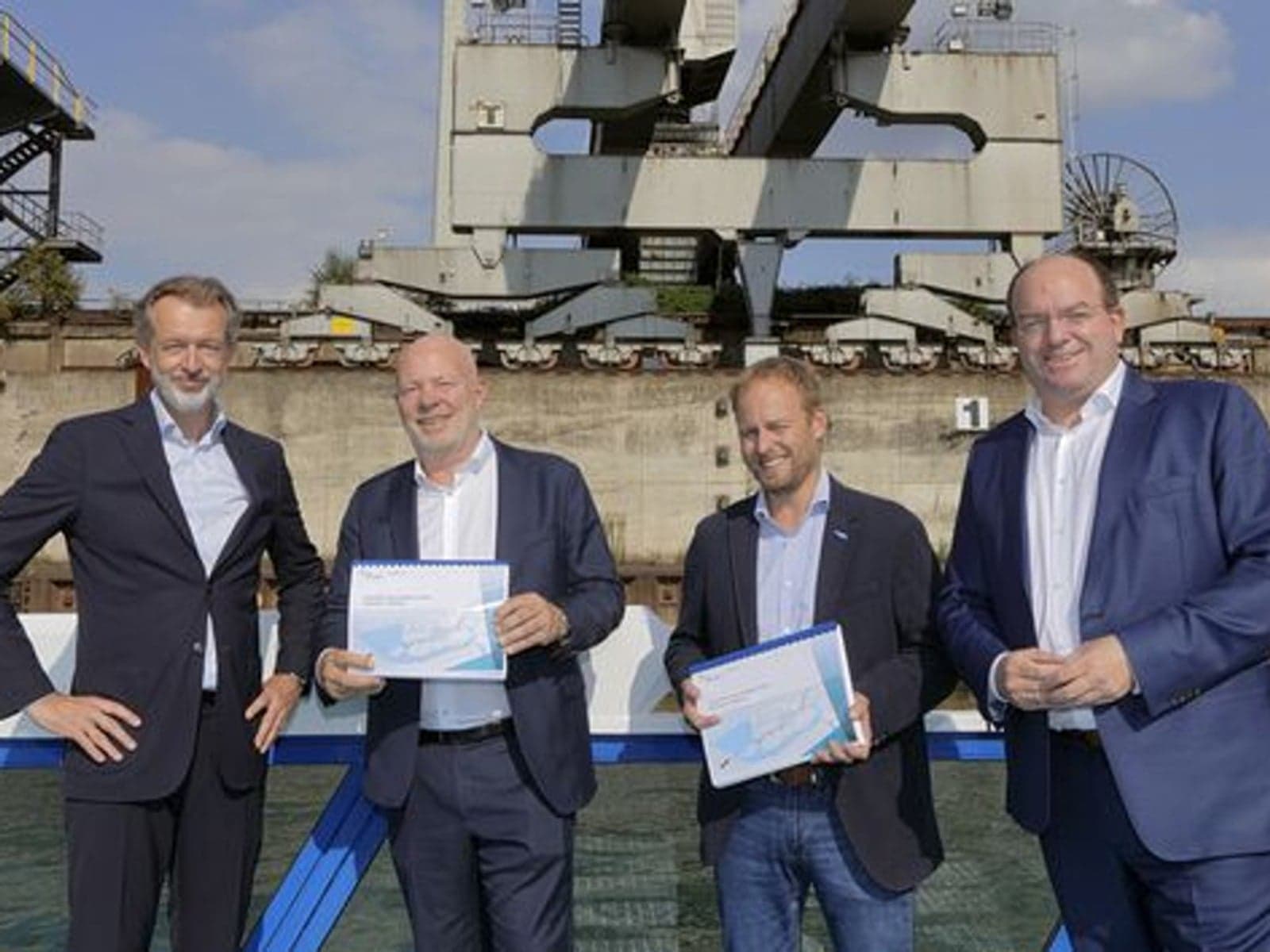
A new feasibility study on a ‘hydrogen corridor’ between the ports of Rotterdam and Duisburg points to the need for scaling up of infrastructure and transport routes.
The proposed ‘hydrogen corridor’ between the port of Rotterdam and the inland Duisport in the city of Duisburg in western Germany is aimed to support the growing demand for green hydrogen and its derivatives in that region, with the two ports acting as future market hubs.
A new feasibility study by the two ports finds that the increase in demand for low carbon hydrogen from the industrial cluster in the Ruhr region in North Rhine-Westphalia is expected to exceed 3Mt per year until 2045.
The demand for methanol is also expected to increase significantly to more than 2.5Mt per year.
Have you read?
Port of Rotterdam prepares site for 1GW hydrogen plant
Energy Transitions Podcast: How to build a viable green hydrogen economy
To meet the expected demand the relevant infrastructure needs to be scaled up and suitable areas provided.
The study indicates that the first hydrogen pipeline between the two ports should be completed by 2027 to meet the growing demand for green hydrogen in North Rhine-Westphalia in the medium term.
Pipelines for hydrogen derivatives, i.e. ammonia and methanol, and for the export of CO2 should follow.
According to the study, several hydrogen pipelines will ultimately be needed to meet the demand in North Rhine-Westphalia and beyond.
Inland shipping and rail transport will also remain essential elements in getting the hydrogen chains up and running, and facilitating the first imports.
Boudewijn Siemons, interim chief executive of Port of Rotterdam Authority, said the study confirms the important role that both ports play as hubs, matchmakers and drivers of the energy transition.
“It shows which forward-focussing activities are needed in both ports to build the hydrogen economy of the future.”
Markus Bangen, chief executive of Duisport, highlighted the need to bring suppliers, users and political players together to develop concrete solutions for a sustainable path of hydrogen production and use.
“That is how we make an impactful contribution to activating the market and accelerating the energy transition.”
A demonstration of the hydrogen corridor in action is planned with hydrogen supplier OCI Global.
Hydrogen infrastructure under development
The two ports are already taking action to develop the necessary infrastructure to support the hydrogen economy.
They also are supported by the Duisport-initiated ‘Hy.Region.Rhein.Ruhr e.V.’ initiative to develop the hydrogen market in the Rhine-Ruhr region.
At Duisport a central building block is the expansion of tank storage capacities for hydrogen derivatives and the port has recently announced its intention to build a storage facility for tank containers with green energy sources and a tank farm for liquid renewable fuels and raw materials such as ammonia.
The construction of a first hydrogen plant is planned for mid-2025.
Together with the city of Duisburg and the Essen power plant, the first hydrogen training centre in the region also is currently being built to open in 2025.
In the port of Rotterdam, several projects have been announced for hydrogen import terminals and local hydrogen production, including the building of a 200MW electrolyser by Shell.
Space has been reserved for several electrolysers that will produce green hydrogen from North Sea wind energy.
Gasunie recently made the decision to invest in the national hydrogen network, the construction of which will start in Rotterdam.
OCI Global is a longstanding partner of the Port of Rotterdam. The company operates the port’s only ammonia import terminal, which it currently undergoing expansion to triple the throughput capacity in anticipation of its growing demand as a cleaner fuel for hard-to-abate sectors.
OCI also operates a methanol import terminal and earlier this year announced partnerships with Unibarge and X-Press Feeder Lines on green methanol for dual-fuelled maritime use.
Last month, OCI also completed Europe’s first bunkering of green methanol onto the world’s first green methanol powered containership, owned by A.P. Moller-Maersk, in the port of Rotterdam.