Smarter demand response for local energy communities: ODEON’s innovative approach
Guest/partner contributor
Posted on: 5 December 2025
As Europe’s energy system becomes increasingly decentralised and data-driven, new digital tools are helping local energy communities turn flexibility into opportunity.
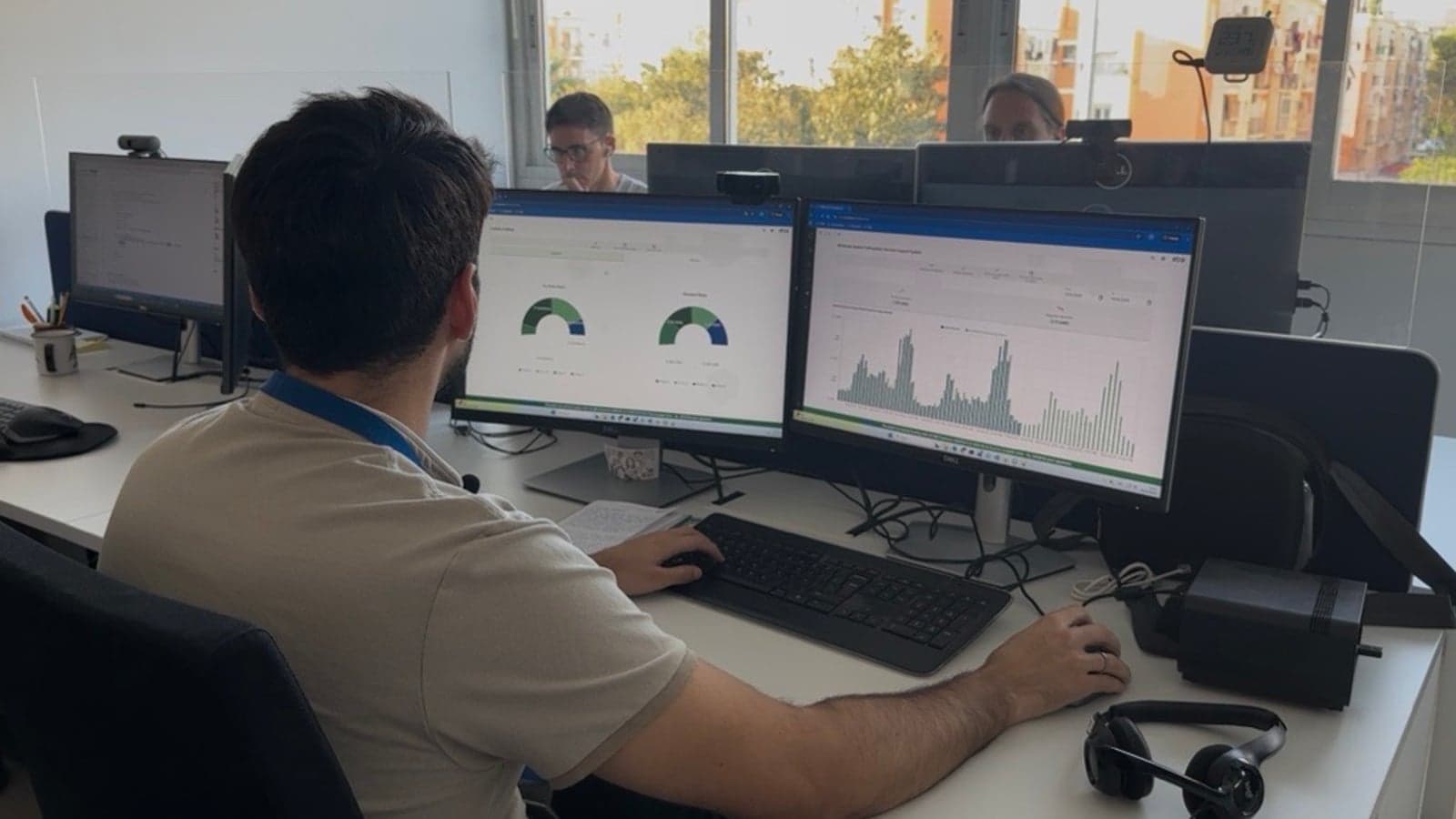
The energy sector is undergoing a profound transformation towards sustainable, decentralised and intelligent systems. This shift is driven by the rapid integration of renewable energy sources, the rise of distributed energy resources (DERs), and the growing participation of consumers who are increasingly becoming prosumers, producing and consuming energy.
These changes are reshaping electricity networks, traditionally unidirectional, into dynamic, bidirectional systems that demand new approaches for stability, flexibility and market participation. DSOs are evolving into active system managers, balancing variable renewables and ensuring reliability. At the same time, aggregators and local energy communities (LECs) are emerging as key players, pooling distributed resources and enabling citizens to participate directly in energy markets.
In this new landscape, advanced digital tools, ranging from AI and digital twins to edge computing and blockchain, are essential to manage complexity, optimise flexibility and unlock the full potential of decentralised energy. Within the European policy framework promoting consumer empowerment and market innovation, LECs are becoming a cornerstone of the transition, driving local resilience, efficiency, and sustainability.
Despite the promise of LECs, stakeholders face critical challenges: coordinating diverse actors, anticipating consumer behaviour and managing energy flows in real time while minimizing imbalances and unlocking the value of flexibility.
To address these challenges, data becomes the key enabler. The growing complexity of decentralised systems demands seamless data exchange across stakeholders; from prosumers and aggregators to DSOs and energy communities. Data spaces provide the trusted digital environment needed to share, access and process energy data securely and transparently.
Within this framework, the ODEON project is building the foundations for federated European energy data spaces, enabling interoperability and innovation across the energy value chain. Its community portfolio management and elasticity-based demand response tool, developed by ETRA, embodies this vision: a data-driven application that leverages shared information to help LEC operators gain holistic insights, predict user behavior, and design effective flexibility strategies.
Demand response tool
The growing number of decentralised energy assets, such as solar panels, batteries and electric vehicles, poses new challenges for monitoring and controllability. These distributed resources now represent a significant share of the energy landscape. In this context, LECs play a promising role: by aggregating local assets, they can act as unified, commercially optimised and grid-responsive entities within the decentralised energy ecosystem.
But how can we bridge the gap between decentralised assets and the centralised requirements of energy markets and grid management? The ODEON community portfolio management and elasticity-based demand response tool, developed by ETRA, provides the answer. It gives operators the insights and control needed to coordinate flexibility, optimise generation and reduce imbalances.
This is made possible through the ODEON cloud-edge platform, which enables a seamless flow of information by operating across both cloud and edge environments. The platform integrates, processes and harmonises data streams from the decentralised energy system, creating the digital foundation for smarter, more responsive energy communities.
From data to decisions
The community portfolio management and elasticity-based demand response tool comprises three main components, each designed to support local energy community operators in decision-making, forecasting and market participation:
The LEC users segmentation engine component analyses and visualises data on community members, combining elasticity profiling with socioeconomic characteristics to help operators understand user behaviour. By segmenting consumers based on predefined criteria, it enables more personalised and engaging energy services within the community.
The wholesale market participation decision support system component helps LEC operators forecast and manage their energy needs in short-term markets. It integrates external variables and predictive models to estimate the energy to be traded in wholesale markets, continuously updating forecasts to detect deviations. It can also suggest dynamic tariff adjustments to minimise imbalances between actual consumption and forecasted allocations.
Finally, the market positioning optimisation component provides data-driven insights to optimize the LEC’s participation in wholesale and flexibility markets. By analysing performance indicators such as revenues and market position, it suggests strategies to maximise returns from energy generation and flexibility provision across day-ahead, intraday, and continuous markets.
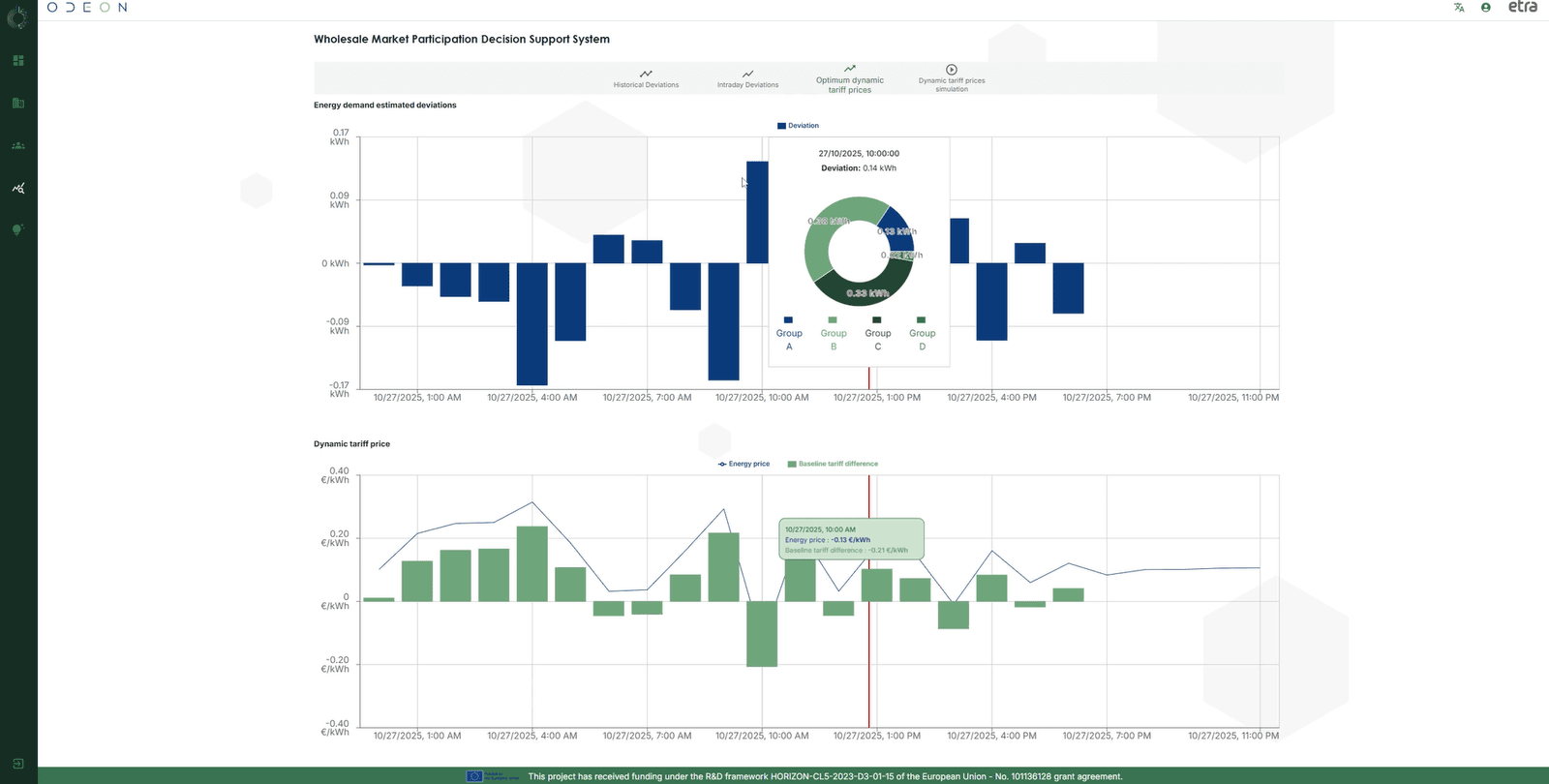
Turning complexity into opportunity
Beyond its analytical capabilities and user-friendly interfaces, this ODEON tool directly addresses some of the most pressing challenges faced by local energy communities today.
One of the main hurdles lies in gaining a holistic view of members’ behaviour and flexibility potential, as traditional tools rarely capture the collective dynamics of prosumers. ODEON’s solution bridges this gap by providing advanced analytics and segmentation capabilities, allowing operators to understand how different user groups consume and generate energy and to tailor services accordingly.
Another key challenge is quantifying how community members respond to price signals, which limits the effectiveness of demand response strategies. To overcome this, the tool creates detailed elasticity profiles that cluster users according to their reaction to varying electricity prices. This enables LEC operators to design dynamic pricing schemes and activate implicit demand response mechanisms that support grid stability and provide valuable ancillary services to DSOs.
Finally, forecasting inaccuracies often leads to costly imbalances and missed revenue opportunities in day-ahead and intraday markets. By integrating precise demand forecasting with real-time optimisation and dynamic pricing, ETRA’s tool helps LEC operators anticipate deviations, correct them proactively and optimise market participation. The result is a data-driven approach that enhances efficiency, flexibility, and profitability across the local energy ecosystem.
Bridging decentralisation and market efficiency
The community portfolio management and elasticity-based demand response tool stand out by creating an intelligent bridge between the decentralised flexibility of local energy communities and the structured, fast-paced dynamics of modern energy markets. It transforms the LEC from a collection of individual participants into a unified, commercially optimised and grid-responsive energy portfolio, a crucial step toward a smarter, more resilient and more participatory energy future.
Discover more about ODEON innovative solutions on the ODEON website and explore related videos on the ODEON YouTube channel for deeper insights.
Watch the ODEON local energy communities porfolio management tool demo video.
Watch the smarter demand response for local energy communities video.
Most popular
Join the community for freeAnd get access to all content
Related projects
ODEON
+2
1 January 2024 - 31 December 2027
View project