Empowering communities: Insights from the InterPED citizen-centric approach
Guest/partner contributor
Posted on: 27 January 2026
InterPED’s citizen-centric approach to positive energy districts focuses on participatory design, energy literacy and digital empowerment tools.
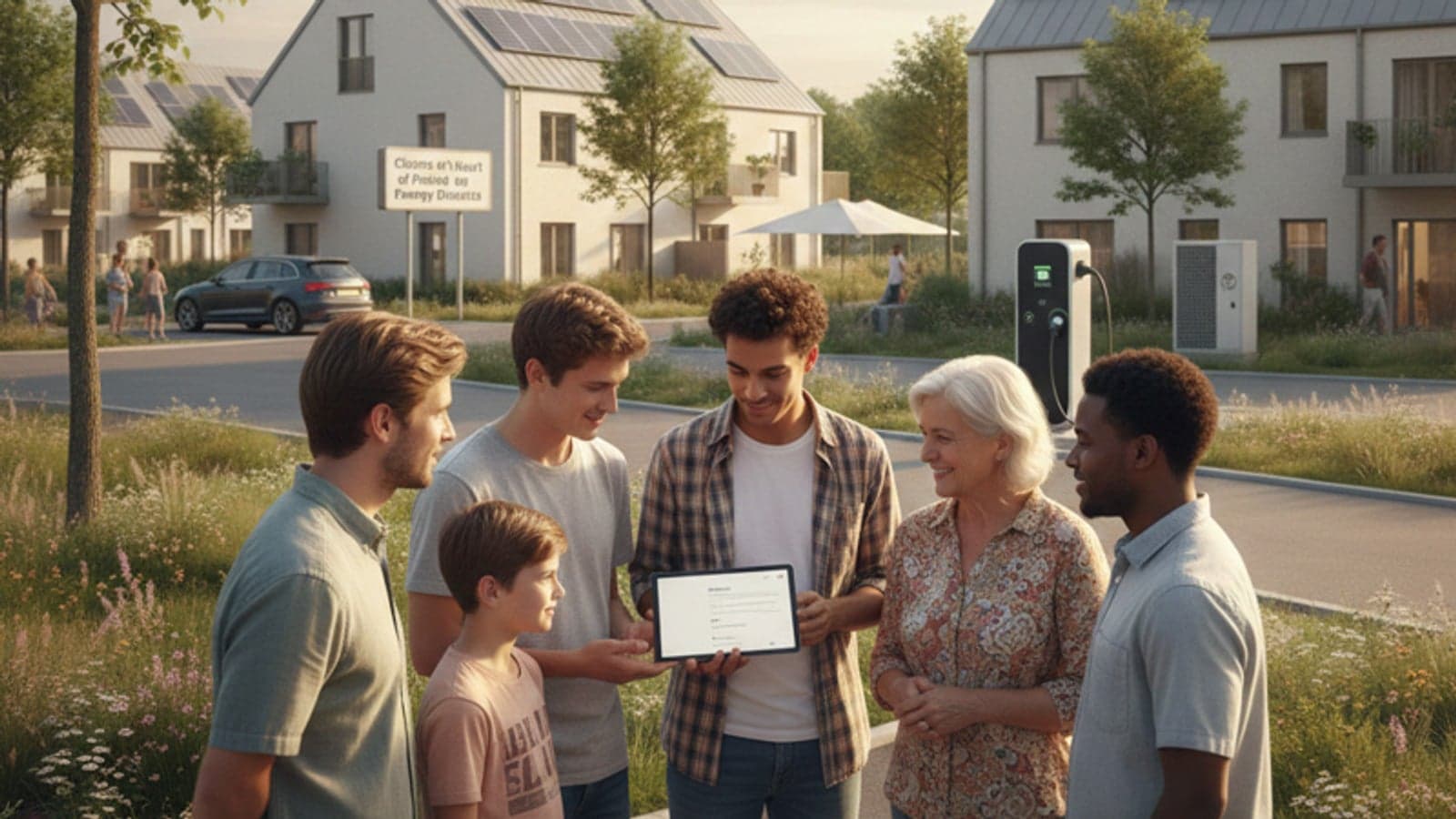
Europe’s climate and energy targets are accelerating a shift from optimising individual buildings to transforming entire districts. In positive energy districts, electricity, heating, mobility and local renewable generation must be planned and managed together through integrated, cross-sectoral models.
InterPED highlights a critical lesson emerging from this transition: technical innovation alone does not create a functioning energy community. As renewable energy systems become more decentralised and variable, flexibility becomes essential. Citizens therefore move from passive consumers to active actors whose daily decisions influence demand response, energy balancing and system performance.
This shift makes citizen empowerment a core requirement of positive energy district frameworks. Adoption ultimately depends on trust, legitimacy and people’s ability to understand and act on available options. InterPED responds with a citizen-first approach validated across four diverse pilot sites, ranging from healthcare-focused environments to residential energy communities.
Rather than applying a single engagement model, the project adapts participation methods to local needs and readiness. It begins by identifying community relevant topics with local stakeholders, followed by participatory learning activities and interactive digital tools. Continuous feedback loops refine both engagement content and technical solutions.
By transforming complex modelling into accessible narratives and hands-on 'what-if' exploration, InterPED enables citizens to participate meaningfully in flexibility strategies and supports positive energy district deployment that is technically feasible, socially adopted and durable.
Participatory design framework
InterPED applies a participatory design framework structured around four iterative stages: prepare, co-define, co-create and implement. This approach ensures that positive energy district development remains community-driven and responsive to emerging insights.
Citizens actively contribute to defining objectives, shaping system design, and refining solutions throughout the process.
Energy literacy and shared imaginaries
Citizen participation is closely linked to energy literacy – the ability to understand, discuss and reflect on energy-related choices. [1] To support meaningful engagement, InterPED designed a participatory energy literacy methodology consisting of two phases: a learning phase, focused on building understanding, and an application phase, where this knowledge is used to envision the community’s future energy pathways.
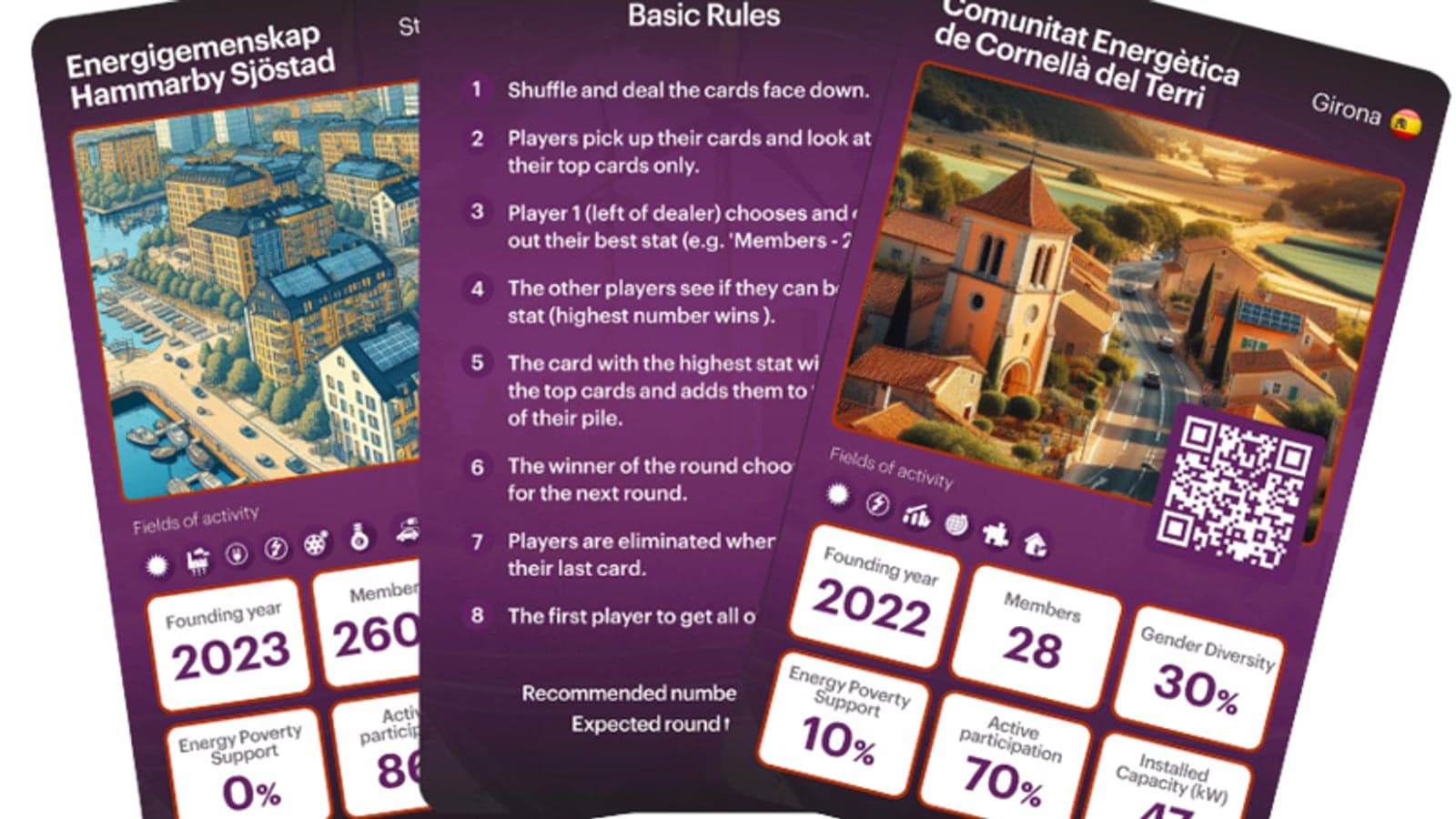
The participatory learning process is organised into four iterative steps. First, key energy topics relevant to the community are identified and translated into accessible explanations grounded in everyday experiences. Second, engagement materials and participation methods are designed; in InterPED, picture cards were used to stimulate discussion and lower entry barriers for non-technical participants. Third, literacy sessions are implemented through facilitated workshops. Finally, content and framing are refined based on participant feedback to ensure shared understanding.
Following these sessions, shared imaginaries are developed using insights from discussions. These collective future energy scenarios reflect local values, needs and concerns, ensuring that positive energy district concepts are grounded in lived experience rather than abstract technical assumptions.
Interactive demand response literacy tool
Most energy simulation tools require expert knowledge and remain inaccessible to non-technical users. To address this gap, InterPED is developing a participatory, web-based demand response literacy tool.
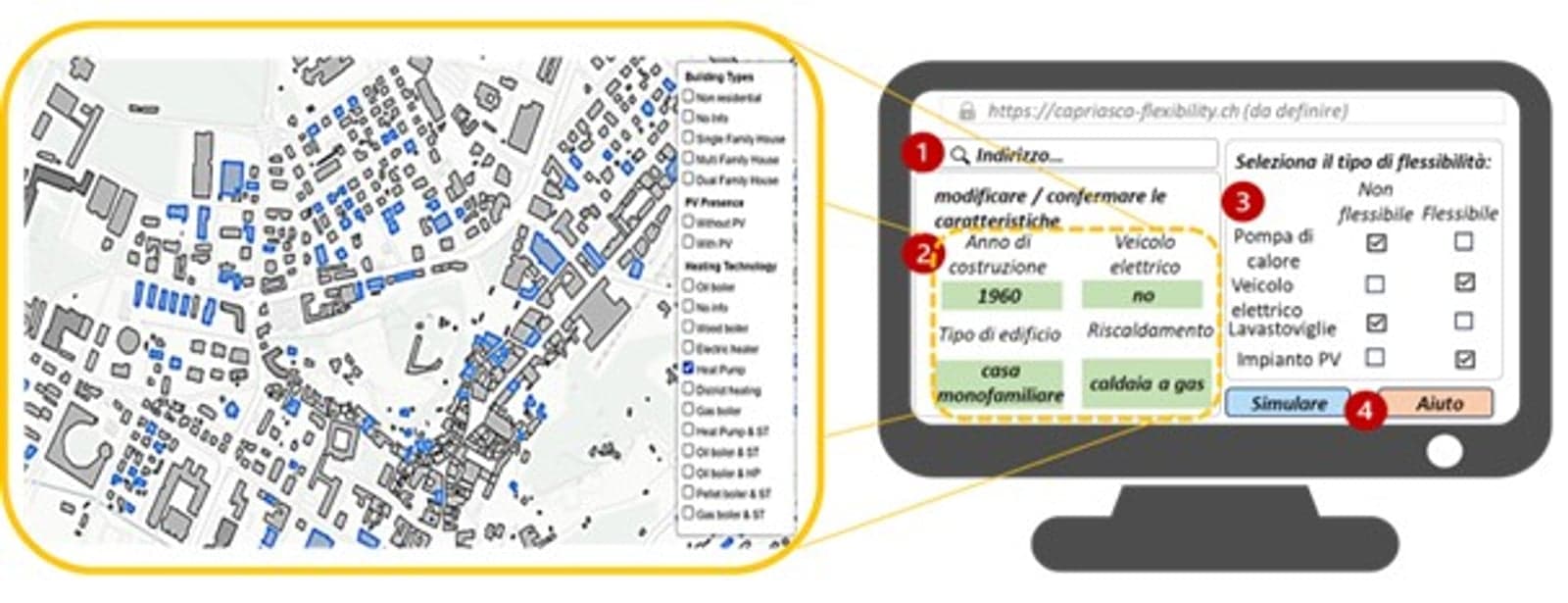
The tool allows households to explore demand response scenarios using their own building characteristics, HVAC systems, photovoltaic installations, weather conditions and flexibility preferences. By visualising realistic, context specific outcomes, it helps users understand how flexibility strategies affect comfort, costs and emissions without requiring technical expertise (Figure 1).
User stories
User stories are informal, user-centred descriptions of software functionality written from the perspective of end users.
Within InterPED, they capture community needs and goals related to energy use, flexibility and trading, ensuring that digital platforms align with the lifestyles and sustainability priorities of each pilot.
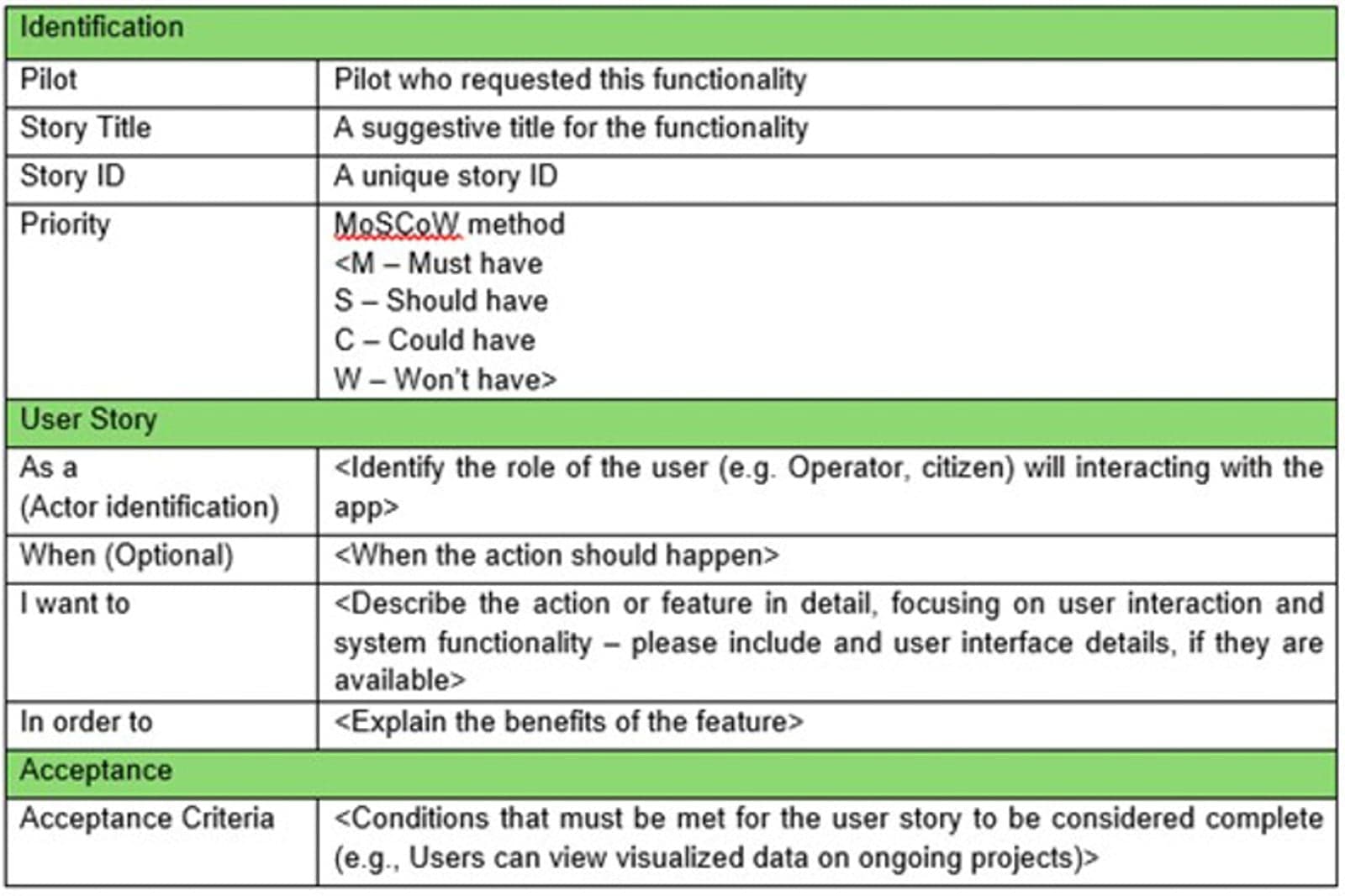
InterPED adopted a structured user story format (Table 1), including pilot identification, a descriptive title, a unique ID and priority defined using the MoSCoW method (Must have, Should have, Could have, Won’t have). Each story follows the “As a… I want to… in order to…” structure and includes acceptance criteria defining when requirements are fulfilled.
In line with ISO/IEC/IEEE 29148:2018, user stories are refined into verifiable, measurable system requirements that define system performance rather than user behaviour.
Digital tools for citizen empowerment
Analysis of user stories from the Findhorn Ecovillage pilot in Scotland identified 13 distinct actors representing different energy roles and responsibilities. From these, six core functional actions were derived, including monitoring energy flows, optimising consumption, participating in peer-to-peer (P2P) trading and supporting community resilience.
These actors were consolidated into four user archetypes:
- Individual residents;
- Energy producers and traders;
- Community organisers and advocates;
- Residents with special energy needs.
This structured approach ensures that platform functionalities reflect diverse user perspectives while remaining technically coherent.
Cross-vector energy insights explained
In InterPED, technical energy modelling is deliberately translated into clear, relatable narratives to bridge the gap between complex system design and everyday decision-making. Rather than presenting abstract indicators, energy concepts are framed around concrete questions such as comfort, costs and daily routines.
Through participatory workshops and co-design sessions, modelling assumptions and results become simple stories about choices and consequences. These narratives are embedded into intuitive digital tools, including dashboards and interactive simulators. Forecasts are translated into recommendations for optimal energy use timing, while flexibility models become simulations showing impacts on emissions, bills, and thermal comfort.
This combination of education, visualisation and hands-on exploration enables citizens to engage as informed participants in positive energy district systems.
Evidence-based insights
Co-creating future energy visions helped participants align perspectives, goals and expectations, creating a strong foundation for collaboration. Citizens reported that the process helped them “see the bigger picture", “understand how everyone’s role connects” and “feel part of a shared vision".
This shared understanding informed later activities, including identifying barriers, priorities and system design preferences, strengthening ownership and commitment.
How citizen input changed the technical design
Early impacts are emerging through structured validation activities defined in the InterPED validation methodology, which assesses technical, environmental and social performance across the four pilots. Following installation completion, pilots are collecting data to establish baselines for testing. Initial results provide insights into renewable energy production and system behaviour.
Flexibility-oriented use cases demonstrate coordinated control of storage systems, electric mobility and other flexible assets, with validation focusing on peak load reduction, demand response activation and system efficiency. P2P energy trading concepts are being assessed through calibrated simulations using real pilot data, indicating potential bill savings, increased renewable utilisation and improved grid resilience.
Social impacts are also evident. Workshops, surveys and co-creation activities influenced platform design, visualisation tools and demand response strategies, demonstrating how early user participation shapes technical solutions.
InterPED defined over 35 KPIs spanning technical, financial, environmental and social dimensions. These KPIs are tailored per pilot and focus on user acceptance and experience when interacting with citizen-facing tools. Validation activities include 19 participants in Findhorn and 60 in Capriasca in Switzerland.
The DREAM tool represents a key step toward citizen-centred flexibility, allowing households to simulate demand response strategies using their own configurations. Additionally, Grid Singularity conducted an in-depth peer-to-peer trading simulation study at Findhorn, highlighting the importance of measurement data availability and informing the development of advanced heat pump digital twins.
Future directions
Positive energy districts cannot succeed through technology alone. Citizens must understand available options, trust the process and perceive tangible benefits, as their daily behaviours ultimately determine the effectiveness of flexibility and demand response measures.
InterPED demonstrates how citizen-centric approaches strengthen positive energy district deployment by combining interoperable, cloud-based planning with participatory design adapted to local contexts. By translating complex modelling into accessible dashboards, simulations and engagement methods, the project supports scalable, replicable and socially legitimate positive energy district solutions across Europe.
Moving forward, InterPED continues validating its co-designed tools in pilot sites, refining them based on user feedback and regulatory conditions, with the goal of consolidating transferable engagement methodologies and citizen-facing tools for broader positive energy district replication.
Reference
1. Palm, J., Kojonsaari, A.R. and Magnusson, D. (2025). Toward energy democracy: Municipal energy actions in local renewable energy projects. Energy Research & Social Science, 120, p.103921.
About the authors
Dr Tasniva Rahman is an architect and researcher focused on community engagement and participatory design for sustainable neighbourhoods and just energy transitions. Her research explores child-friendly cities, gender and public spaces and inclusive design, promoting equitable, resilient and people-centred environments that empower citizens and strengthen community wellbeing.
Andoni Osorio is an Electronics and Automation Engineer with a Master’s degree in Control Engineering, Automation and Robotics. He works on control and automation solutions that support smart energy systems, focusing on practical engineering approaches for monitoring, optimisation and reliable operation in complex technical environments.
Federico Giani is a Project Manager and Electrical Engineer at Azienda Elettrica di Massagno (AEM), specialising in smart grids. With an MSc in Electrical Engineering (Smart Grids) from Politecnico di Milano, he works on advanced metering and EV charging initiatives and brings expertise in compliance and testing for charging technologies.
Dr Ana Trbovich is co-founder of Energy Web and Grid Singularity, developing web3 technologies for the energy transition. She serves on the UNECE task force on digitalisation in energy. Her background spans governance, innovation and EU policy, including roles in government and international development projects.
Laura Casolo Ginelli is an energy engineer and R&D Programme Manager at Hive Power, focused on smart charging, flexibility and e-mobility. She bridges business and technical teams to deliver innovation projects and interoperable solutions. Her experience includes global product ownership for smart charging services and digital capabilities for energy communities.
Elpida Tzika is a Project and Innovation Manager with 5+ years of experience in EU-funded research and innovation projects. She leads dissemination, exploitation and stakeholder engagement activities, supporting consortium coordination, proposal writing and impact planning. Her work connects research, business strategy, and communication to strengthen project adoption and results.
Otilia Bularca is a Project Manager at SIMAVI with experience delivering commercial and EU-funded R&D projects in software-intensive domains, including engineering and healthcare. She supports project planning and execution with strengths in business analysis, coordination and stakeholder collaboration, helping translate technical work into structured delivery and measurable outcomes.