Transforming an Italian town into an energy island
Yusuf Latief
Posted on: 24 June 2024
Enlit on the Road visits Italy's Segrate, a Milanese commune transforming itself into an energy island of the future.
Segrate, a town in the Metropolitan City of Milan, Italy, is becoming a so-called energy island through its partnership with the pioneering RENergetic project. Enlit on the Road visited to find out more.
Enlit’s visit to sunny Segrate coincided with a key milestone for the energy island project, namely the installation of solar PV panels on the roof of the town hall, which is one of five public structures designed to support the energy island and its ambitions.
Through RENergetic, which is an EU Horizon 2020 research project that aims to demonstrate the viability of turning defined urban areas into self-sufficient urban energy islands, Segrate's town hall, two civic centres, a police centre and a school - during holidays - will all be linked together. This network enables them to share and distribute the energy they generate.
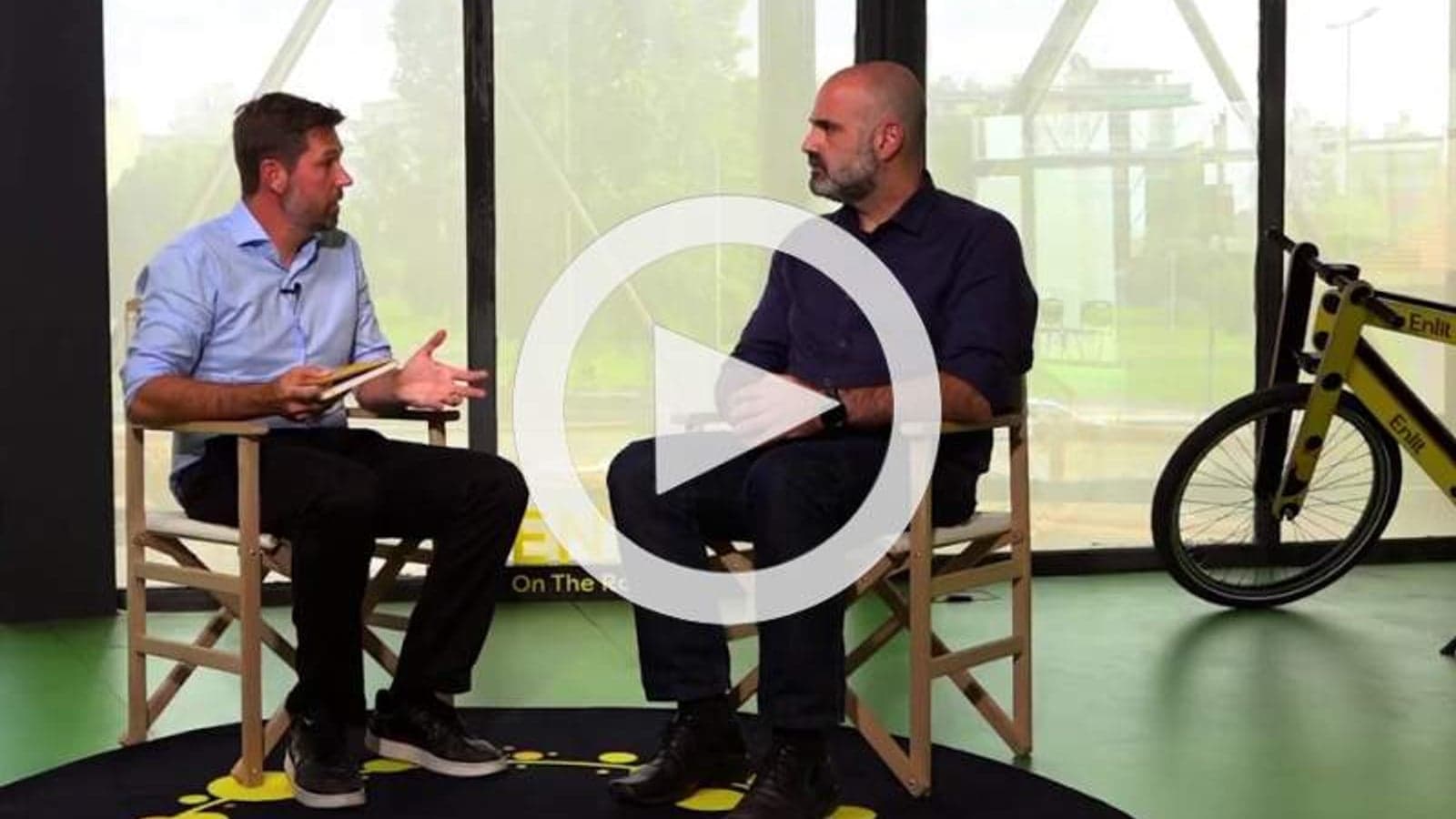
From these buildings, “we will share our energy and spread our electricity,” says Luca Alessio, a Consultant in Segrate for the Territory Development Office.
Specifically, RENergetic is expected to significantly reduce energy consumption. Projections for these five buildings indicate a 40% decrease in energy use, equating to the environmental benefit of planting an 800-tree forest over 20 years.
More from Enlit on the Road Italy:
Building Milan’s net zero airport of the future
Turning wastewater into energy: a story of hydrogen and circularity
Empowering locals
A core focus for the RENergetic project in Segrate is to empower community members.
By maximising the energy autarky of a local energy system, RENergetic aims to empower renewable energy communities to inhabit the energy island based on an economy of quality, fuelling their involvement in processes that have traditionally been hidden for local communities.
Says Alessio: “Three years ago we started a focus group specifically to enter into contact with the people. With our stakeholders, we share information on what we are doing, what we are studying and what the possibilities are.”
According to Alessio, further engagement strategies include educational initiatives in schools. In a bid to foster an understanding of what it means to be a prosumer, interactive dashboards will be installed, allowing students and the public to monitor energy production and consumption data in real time.
“Now we will start to share our knowledge with the schools, with professors and students. We will prepare public and interactive dashboards for them where they can check anything they want to know about our electric energy island. They can check the period, they can check by building, such as information on production or consumption and what it means to be prosumers,” he adds.
This use of data itself forms a big part of what Segrate aims to achieve, creating a database from public and private data to serve as a source of knowledge for the municipality. This will help to understand the commune’s total production and consumption, says Alessio, and will support decision making.
Looking ahead, Alessio states how Segrate's 360-degree approach, encompassing technology, citizen engagement and data collection, offers valuable insights for other cities seeking to improve their energy efficiency or even establish urban energy islands and energy communities.
RENergetic involves several prominent European partners, both from academic and industrial segments: Ospedale San Raffaele, Comune di Segrate and University of Pavia (Italy), Inetum (Spain, France, and Belgium), Clean Energy Innovative Projects and Gent University (Belgium), Poznan University of Technology, Veolia and Poznan Supercomputing and Networking Center (Poland), Energy Kompass GMBH, Seeburg Castle University (SCU) in Seekirchen (Austria), University of Stuttgart, University of Mannheim and University of Passau (Germany).