U2DEMO: Advancing peer-to-peer energy sharing
Guest/partner contributor
Posted on: 19 March 2025
The U2Demo project, launched in September 2024, is a key initiative under the EU’s Horizon Europe programme aimed to advance peer-to-peer (P2P) energy sharing.
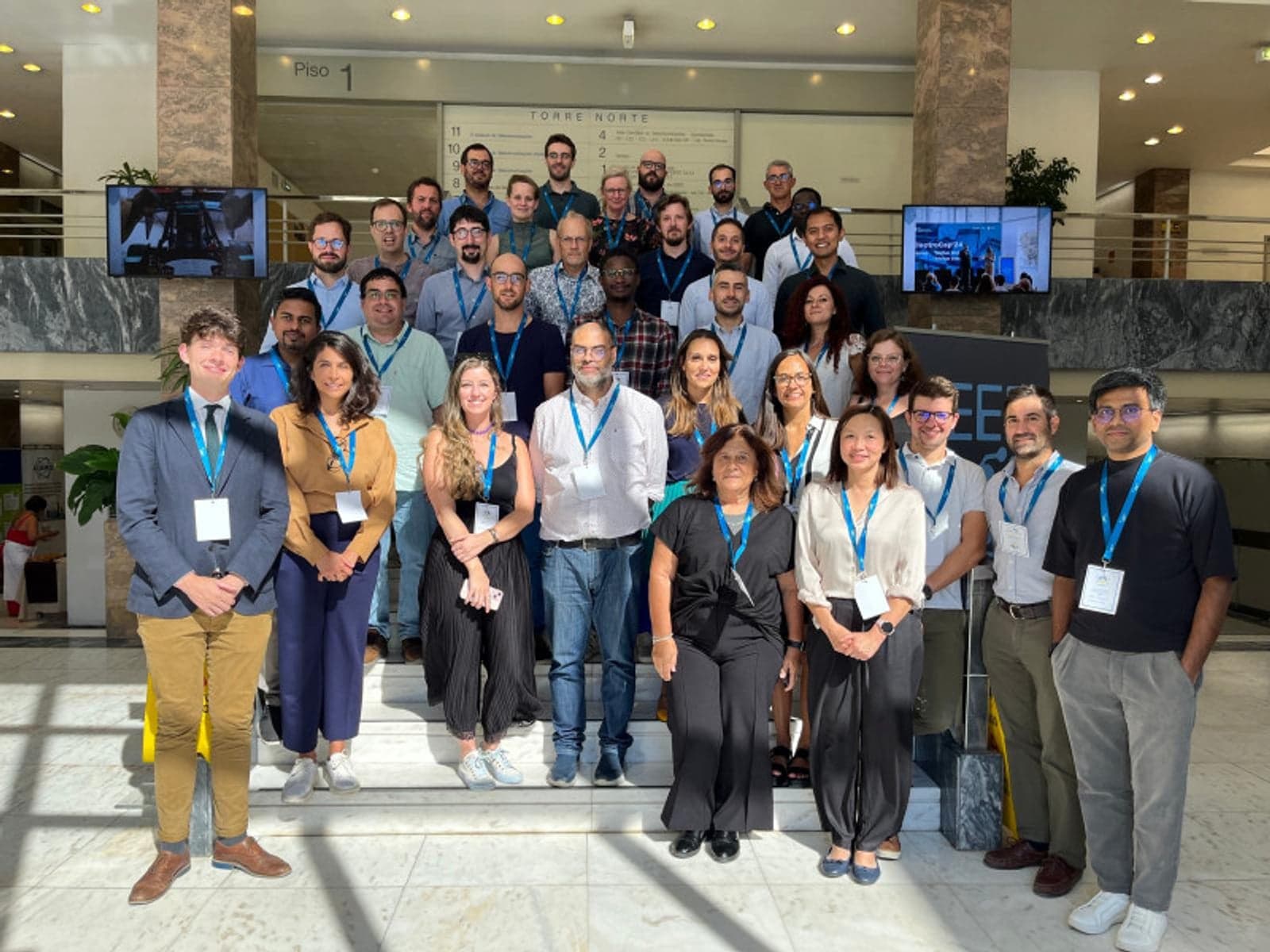
The U2Demo project, launched in September 2024, is a key initiative under the EU’s Horizon Europe programme aimed to advance peer-to-peer (P2P) energy sharing.
Over its 42-month duration, this initiative brings together 20 partners from eight countries, united in their mission to foster energy democracy through innovative, open-source solutions.
The challenge
As Europe accelerates its transition to renewable energy, there is an urgent need to empower local energy communities and unlock the full potential of P2P energy trading and sharing.
Challenges such as fragmented regulations, limited technological tools, and the complexity of integrating flexibility services into existing grid systems hinder the advancement of equitable energy sharing.
U2DEMO’s solution
U2DEMO addresses these challenges by developing and implementing open source platforms and strategies to enable seamless P2P energy sharing across diverse energy communities.
Guided by the principles of openness, interoperability and scalability, the project focuses on:
- Open source platforms: Building interoperable, technology-neutral tools that connect prosumers, consumers and energy providers.
- Energy market integration: Enabling participation in local and national energy markets through advanced decision support algorithms and dynamic pricing models.
- Blockchain for transparency: Leveraging blockchain technology to ensure credibility, traceability and trust in energy transactions.
- Real world demonstrations: Testing solutions across four pilot sites representing diverse community settings and governance models.
The pilots
U2Demo tests innovative P2P trading mechanisms in four pilot sites, Belgium, Portugal, the Netherlands and Italy – each with tailored solutions to local needs, including multi-family buildings, rural communities and urban social housing.
Beyond tackling technical and economic barriers, the project fosters social engagement and empowers communities to take control of their energy use.
In Valverde, a rural Portuguese village with 450 residents, the focus is on integrating P2P energy transactions within a renewable energy community, comparing different trading algorithms.
Meanwhile, in The Hague, Netherlands, the Living Lab Scheveningen explores privacy-focused, decentralised technologies like edge computing and wallet systems, while also testing how grid factors influence P2P energy trading.
Italy’s Vallevignale pilot seeks to strengthen community ties through energy sharing among ten buildings, leveraging existing solar, storage and EV charging infrastructure.
In Mechelen, Belgium, the Klimaan project is optimising energy sharing in a social housing neighbourhood, using gamification to boost engagement and enhance financial viability.
Looking ahead
As U2Demo progresses, the focus is on scaling its solutions and refining its business models to maximise impact.
The project aims to provide a replicable and scalable toolkit by 2028, ensuring that advanced P2P energy sharing mechanisms contribute to a sustainable, democratic and resilient European energy system.
Follow U2Demo’s journey toward energy democratisation on LinkedIn, BlueSky (@U2Demo.bsky.social) and on its website u2demo.eu and explore videos of the project’s milestones on our YouTube channel: INESCID Energy.
Written by Isabelle Vanhoutte, Journalist at REScoop.Vlaanderen.