UK industrial growth being stalled by grid connection delays
Louise Davis
Posted on: 17 July 2026
Report says UK businesses have a "grid reality gap" because they greatly underestimate the time and complexity of securing electricity connections.
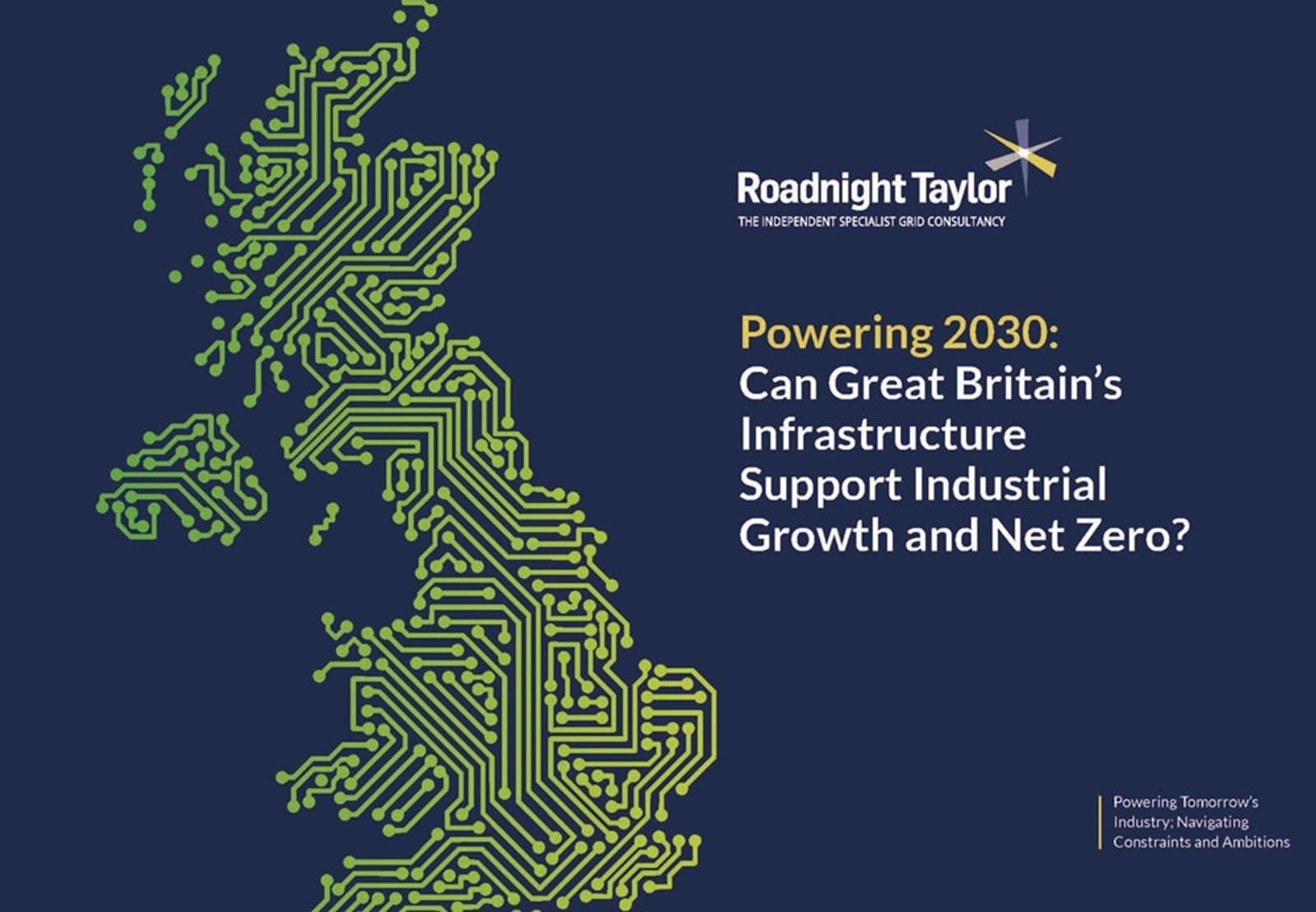
Grid connection delays are emerging as one of the biggest barriers to industrial expansion in the UK, with new research suggesting many businesses are greatly underestimating the time and complexity involved in securing electricity network capacity.
According to Powering 2030: Can Great Britain's Infrastructure Support Industrial Growth and Net Zero?, a report commissioned by specialist grid consultancy Roadnight Taylor, more than a third (34%) of companies that have experienced grid connection delays say the issue has halted their growth plans entirely. Overall, 60% of organisations affected by delays reported a direct impact on their business.
The findings come despite generally positive growth expectations across the industrial sector. More than a quarter (28%) of senior decision-makers surveyed expect their organisations to grow by between 26% and 50% over the next three years. However, the report argues that limited grid capacity and lengthy connection times are becoming a serious obstacle to achieving those ambitions.
As more manufacturers and industrial operators electrify their operations to meet net-zero targets, access to sufficient electricity capacity is becoming increasingly critical. One in five respondents (20%) believe a lack of available grid capacity could ultimately prevent the UK's industrial sector from reaching its full potential.
The survey, which questioned 200 senior industrial decision-makers across the UK, found that 33% of businesses have seen projects delayed because of grid connection issues, while 32% reported higher costs and 25% said the challenges were hindering their decarbonisation programmes.
Mind the gap
Roadnight Taylor says that the data shows a clear ‘awareness gap’ between those that have faced grid connection challenges and those that are unaware of what lies ahead. 28% of directors who have experienced grid hurdles feel connection timescales represent a significant barrier to success, compared with just 8% of those who haven’t.
Directors who are embarking on major grid connections for the first time are vastly underestimating the barriers. The consultancy stresses that this gap between expectation and reality carries immense risk.
Enlit grid exclusives
Europe’s heatwave is creating quadruple whammy for the grid
Tackling US grid congestion to meet the demand surge
How Siemens and Alliander out-smarted Dutch grid congestion
The report lays out its warning in frank terms, stating that “directors planning projects may be in for a rude awakening when their connection is not achieved in the expected timeframe”.
Unsurprisingly, the report also highlights that energy costs are compounding the pressure. Nearly half (47%) of decision makers are concerned about energy costs and a quarter (25%) feel overseas competitors have a distinct energy cost advantage.
Brits abroad
The research also suggests infrastructure constraints are beginning to influence investment decisions. A quarter of directors (25%) said they are considering locating future manufacturing facilities overseas, while 18% are exploring the possibility of relocating their operations entirely.
Summarising Roadnight Taylor’s warning, its chief executive Hugh Taylor said: “The ambition across British industry is clear and encouraging. What concerns us most is not the directors who have experienced the challenges, it is those who do not yet know what they are walking into, and who will not plan for it.
"The ‘awareness gap’ this report reveals is significant, and the consequences of underestimating grid connection complexity can be severe. Expecting a grid connection in 3.2 years when the realistic timeframe for a major project is closer to eight is not just an inconvenience – it can fundamentally reshape project viability, financing and commercial timelines. The earlier organisations engage with this reality, the better placed they will be.”
Despite the challenges, respondents remain cautiously optimistic about planned reforms to the electricity connections process. Nearly three-quarters (74%) believe the National Energy System Operator's (NESO) ongoing Connections Reform programme will improve the situation for their organisations.
However, confidence is tempered by broader concerns about the UK's competitiveness. Around 72% of those surveyed believe the country risks falling behind other nations as investment in low-carbon industry accelerates worldwide.
Participants identified greater financial support for low-carbon technologies, clearer long-term industrial policy and increased investment in electricity infrastructure as the measures most likely to unlock future industrial growth.
Taylor added that although reforms being developed by NESO and Ofgem are encouraging, businesses cannot afford to treat electricity connections as a late-stage engineering issue. "Organisations such as those surveyed in this research cannot wait for a perfect infrastructure landscape before making decisions. Grid connection needs to be treated as a strategic consideration from the outset, rather than a technical detail addressed later in the project,” he asserted.