Unlocking flexibility in hydropower with D-HYDROFLEX
Guest/partner contributor
Posted on: 7 March 2025
The D-HYDROFLEX project is bringing groundbreaking solutions to hydropower’s flexibility challenge.
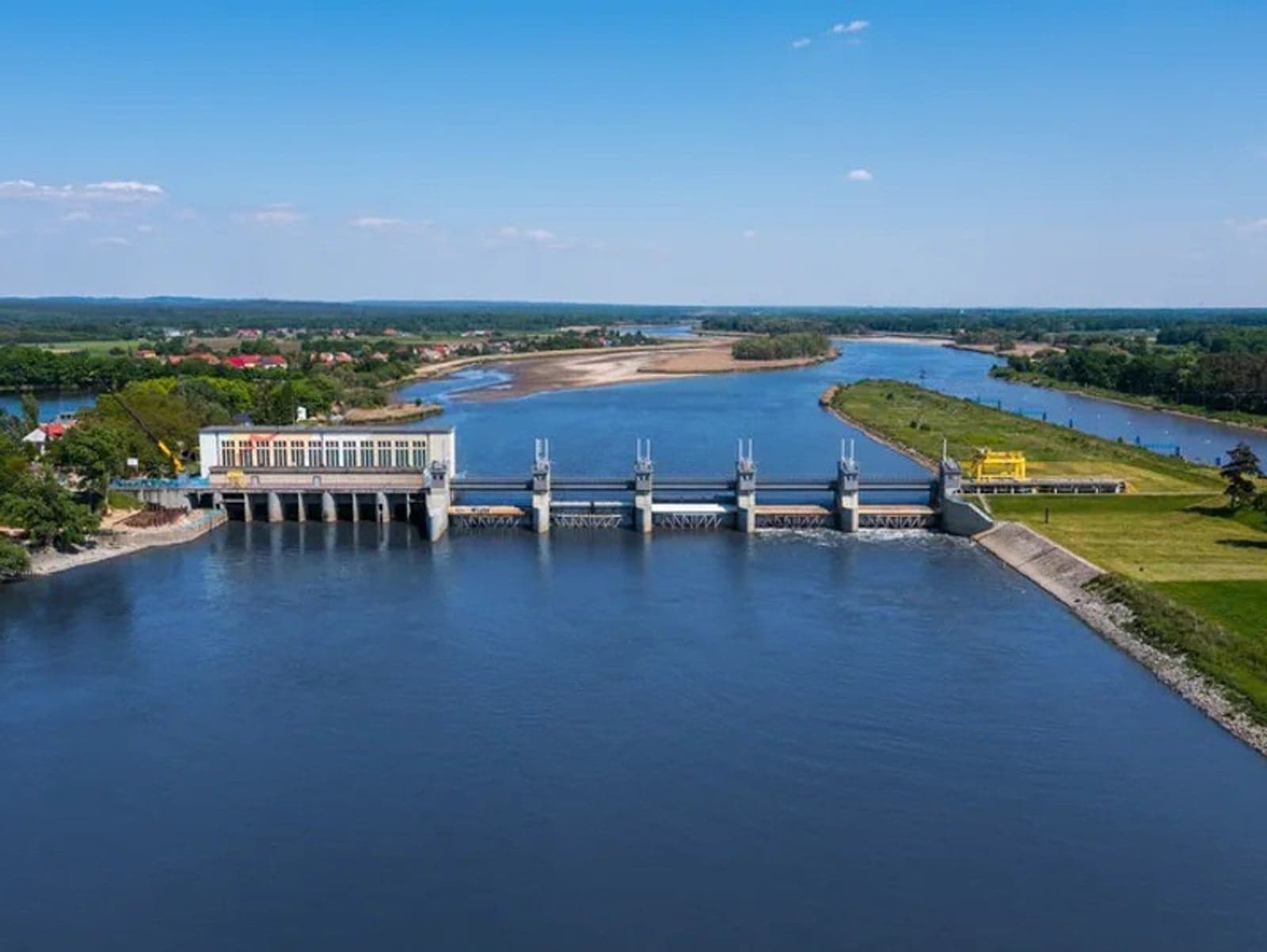
The D-HYDROFLEX project is bringing groundbreaking solutions to hydropower’s flexibility challenge.
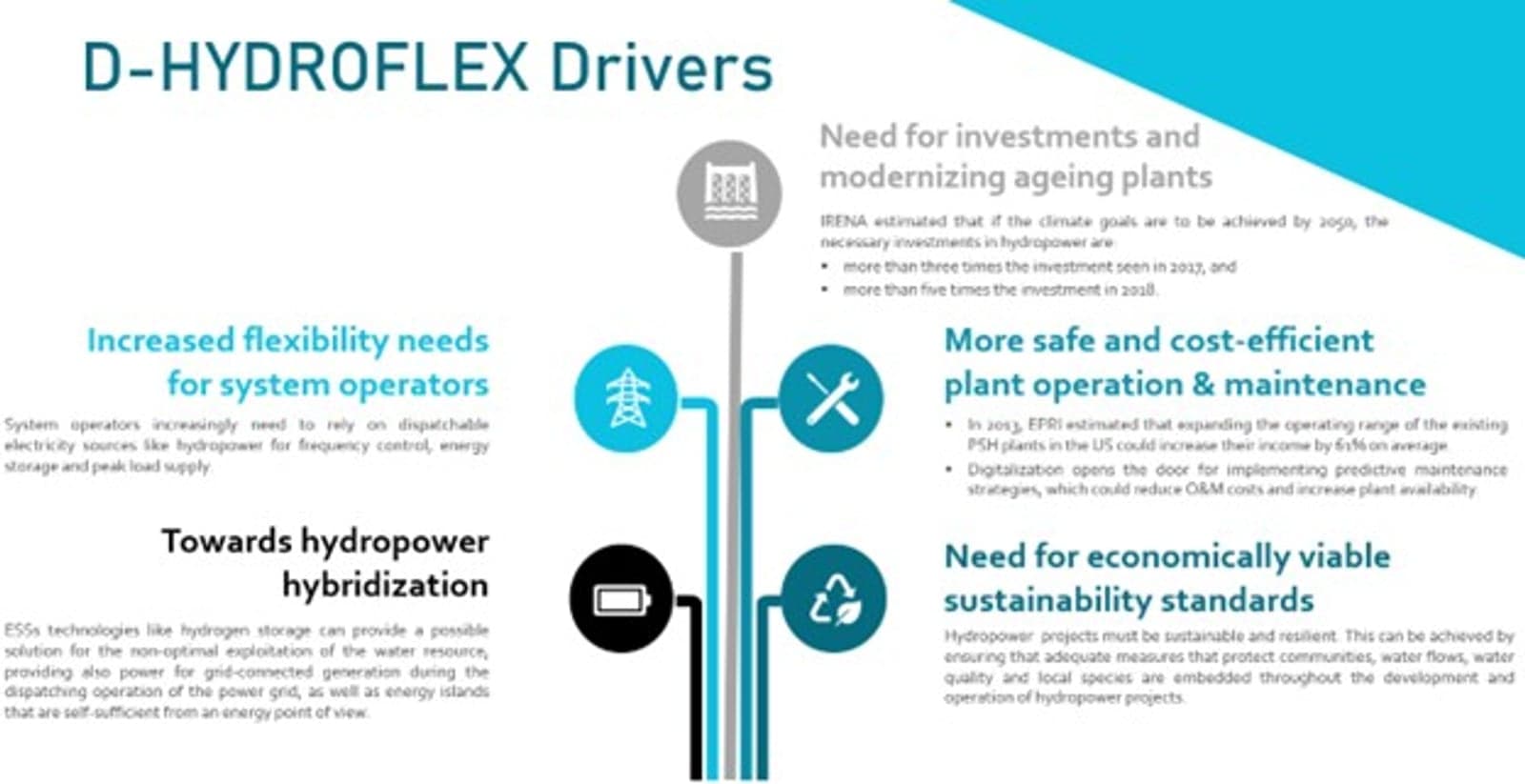
The integration of variable renewable energy sources, like wind and solar, into Europe's power grids has significantly increased the need for flexible energy solutions.
Hydropower, traditionally seen as a stable baseload provider, must now adapt to dynamic grid demands by enhancing its flexibility.
However, achieving this while maintaining operational efficiency and environmental sustainability presents a critical challenge.
The D-HYDROFLEX approach to flexibility
By leveraging cutting-edge digital technologies and hybrid energy systems, D-HYDROFLEX enables hydroelectric plants to operate more responsively in today’s evolving energy markets.
Key innovations include:
● Hybridisation with hydrogen systems: Integration of hydropower with hydrogen storage solutions to enhance plant flexibility, enabling smoother adaptation to fluctuating grid demands and renewable generation.
● Virtual power plant (VPP) coordination: Allowing hydropower plants to seamlessly interact with other energy assets in a virtual ecosystem, optimising load balancing and grid services.
● Advanced AI algorithms: Providing predictive insights for real-time adjustments, ensuring faster and more efficient responses to market and grid conditions.
Real-world validation
D-HYDROFLEX’s flexibility solutions are being tested in seven demonstration campaigns across Europe, including sites in Greece, Spain, Romania and France.
These pilot projects explore:
● Peak shaving: Managing surplus energy during high demand periods.
● Frequency regulation: Stabilising grid operations with fast response capabilities.
● Hybrid system optimisation: Maximising the synergy between hydropower and hydrogen-based storage.
The impact of enhanced flexibility
By redefining hydropower’s role in the energy system, D-HYDROFLEX supports the European Union’s decarbonisation goals while ensuring grid stability.
Benefits include:
● Energy security: Flexible hydropower plants can quickly compensate for intermittent renewable generation, reducing reliance on fossil fuel reserves.
● Market competitiveness: Enhanced operational versatility allows hydropower to participate effectively in energy markets, increasing profitability.
● Decarbonised solutions: Hybrid systems reduce emissions by enabling deeper integration of renewable energy sources.
Flexibility: A core pillar of the future
Hydropower is evolving beyond its traditional role, becoming a linchpin of a resilient, low carbon energy system.
D-HYDROFLEX’s innovations demonstrate how digital technologies and hybrid models can unlock new dimensions of flexibility, making hydropower a critical enabler of Europe’s renewable energy transition.
To learn more about D-HYDROFLEX’s flexibility solutions, visit us at d-hydroflex.eu
About the author

Eleni Tsironi is Project Manager at UBITECH. She holds an integrated Master’s in Electrical and Computer Engineering, specialising in electric power systems. Actively involved in European R&D projects since 2013, she coordinated the H2020 projects FARCROSS and BEYOND and currently leads the Horizon Europe projects D-HYDROFLEX and DIGITISE, driving innovation in sustainable technologies and trust enhancing digital solutions.