What the energy sector should watch in Europe’s space programmes
Jonathan Spencer Jones
Posted on: 28 February 2026
Rollout of the EU’s space flagship programmes is a priority, and energy sector players should look out for spinoffs.
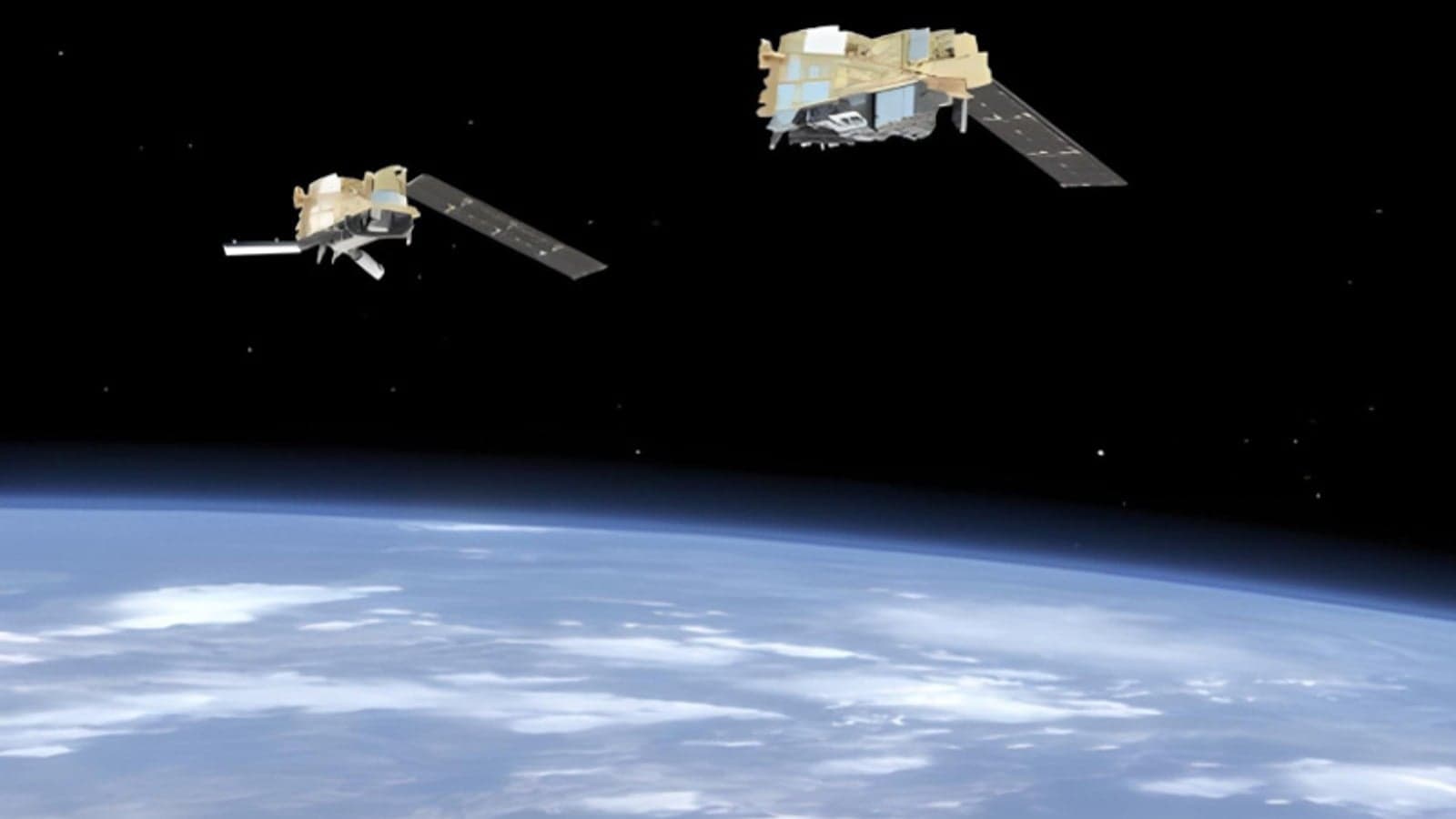
The key programmes are Galileo, Copernicus, GOVSATCOM, IRIS2 and SSA, which are intended to deliver new services and to ensure that Europe remains at the forefront of space innovation and security.
Reports from the recent European Space Conference indicate that there is a shared understanding that space assets and services have become strategic infrastructure. Satellite navigation, Earth observation, secure communications and space situational awareness increasingly support European policy objectives ranging from climate monitoring and disaster response to security, defence and economic resilience.
Thus, the challenge ahead is not in expanding these space capabilities, but in ensuring that they remain reliable, interoperable, and resilient in an environment including growing demand for space-based services.
“We shall spend a lot of our attention strengthening European cooperation; not to allow our space sector to be fragmented, overlapping and not as effective as we would like to build,” promised European Commissioner for Defence and Space, Andrius Kubilius.
Galileo and satellite navigation
Galileo is Europe’s global navigation satellite system, which has been operational since December 2016, providing positioning and timing data for use, for example in mobile phones and in other applications and sectors, including energy.
For example, timing synchronisation in smart grids is key to preventing data errors and enabling effective monitoring, protection and control.
On the horizon is the second generation of Galileo satellites – twelve more powerful satellites evolved from the first generation with fully digital payloads, electric propulsion, advanced navigation antennas, improved atomic clocks and additional robustness and security features that will provide more reliable positioning, navigation and timing.
The first pair of these, which will integrate with the current fleet, is expected to launch later this year or early in 2027.
New services are also being implemented, including the new emergency warning satellite service (EWSS). Intended to be complementary to existing warning systems for natural or human-made disasters, particularly in remote and rural areas or where networks are down, it will transmit authority-provided information related to the hazard to people affected and for example, could be used to send notifications to field workers.
Also of interest
EU Energy Projects Podcast: How space data is advancing the energy sector
Copernicus and Earth observation
Copernicus, the EU’s Earth observation programme, providing a wealth of imaging and other Earth land, marine and atmospheric data, is perhaps the best known and increasingly utilised in the energy sector in a growing number of use cases.
These range from renewables site selection and operations to grid management and maintenance.
The Copernicus Sentinel satellite constellation is continually being added to with more advanced imaging and sensing instrumentation, providing higher resolution and new datasets.
For example, the Sentinel-4 launched in July 2025 provides atmospheric monitoring, including aerosol concentrations, with which accurate and timely data can improve short term forecasting of solar PV output.
The so-called Sentinel Expansion programme is also underway to provide, over the next decade, a set of six satellites addressing specific challenges in support of the EU’s ‘Green Deal’.
Among these, the CO2M mission is focused on measuring CO2 and methane emissions for estimation down to the local level. The ROSE-L mission is intended to deliver L-band radar data for improved monitoring, e.g. for vegetation management.
GOVSATCOM and IRIS2 for communication
The GOVSATCOM initiative, which is the newest coming online in February 2026, is planned to provide satellite communication services to security and governmental operations across the EU.
The three main use cases are crisis management, surveillance and key infrastructures on the ground and in space.
Its approach is to pool government and private satellite capacities, with access through ‘hubs’ where these are also aggregated with ground assets. Initially, it is utilising existing satellite capacity from France, Spain, Italy, Greece, and Luxembourg, but over time this will be expanded.
With this, authorised users – including border surveillance teams, crisis management responders and critical infrastructure operators – are able to access high assurance bandwidth on demand.
IRIS2 (Infrastructure for Resilience, Interconnectivity and Security by Satellite), which will integrate into GOVSATCOM, is a new programme under development to deploy a 290 satellite constellation providing 5G/6G based connectivity and broadband services across the EU.
Forming part of the EU’s drive for digital sovereignty, the services are intended to support government and other users across a range of applications, with smart energy grid management listed as one of the commercial applications they should support.
The first launch for IRIS2 is currently envisaged in 2029, with the service starting in 2030.
SSA for space surveillance and awareness
Space Situational Awareness (SSA) is considered an essential component of the EU space programme in providing knowledge and understanding of space hazards.
One of these is space debris, with more than one million and growing pieces of debris larger than 1cm believed to be in orbit and raising the risk of collisions with other satellites.
Another, of interest to the energy sector among others, is space weather, with data providing monitoring and forecasting capabilities.
The SSA programme is provided by a network of ground and space-based sensors, with future developments including deeper data analysis and dedicated satellite missions.
The Swing mission, under development for a 2027 launch, is planned to demonstrate the capability of nanosatellites to provide near real time space weather data and the potential for a distributed monitoring system.
The Vigil mission, planned for launch in 2031, is due to monitor solar activity with the intent to provide four to five days advance notice of space weather effects that could impact the Earth.
Related tags
Latest content
+7
What will it take to truly digitalise the European power grid?
In this episode of the Energy Transitions podcast, Christiane Mann, Chair of the T&D Europe working group on grid digitalisation and Vice President, Head of Industry Affairs at Siemens Smart Infrastructure, helps unpack what true grid digitalisation really means.
- Yusuf Latief
- 19/02/2026