Why a diversity of storage solutions will achieve renewable energy security
Guest/partner contributor
Posted on: 24 May 2022
The fastest way to achieve net zero is to make it profitable and longer-duration energy storage can accelerate this climate pay-day argues Matt Harper of Invinity Energy Systems.

The fastest way to achieve net zero is to make it profitable and longer-duration energy storage can accelerate this climate pay-day, argues Matt Harper of Invinity Energy Systems
The global energy landscape has been significantly and irrevocably transformed this year: Russia’s invasion of Ukraine has sent shockwaves across energy markets, reminding the world of the challenges to geopolitical stability caused by an energy system based on fossil fuels.
Global policy makers are now rapidly updating their energy strategies, scaling their ambitions for renewable energy deployment within the next decade to lock in long-term energy security and tackle record high prices, all while achieving decarbonisation goals.
As the cheapest form of energy generation in most countries, domestic wind and solar power are the common-sense routes out of this crisis.
However, incorporating an ever-larger proportion of renewable generation presents challenges for national electricity networks originally designed for centralised fossil-fuel generation at a time when 'electric vehicle' meant a golf cart.
The constraints imposed by that antiquated grid, and the markets designed to make it operate, are today threatening the further deployment of renewable energy.
In markets worldwide, and especially in regions like California, South Australia and the UK where renewable energy exceeds 30% of total generation, both market price volatility and risk of outages are increasing.
The reasons are simple: renewables' intermittency can today only be mitigated by expensive fast-responding fuel-based power plants, and bottlenecks in the grid limit how much renewable power can be delivered to cities and factories.
No wonder regulators are slowing the application process for new interconnections with interconnection queues for new solar and wind generation in areas of the UK often extending to years rather than months.
Also of interest
Energy Storage Start-up Spotlight: Geyser Batteries
We must act now to resolve these constraints if renewable energy is to be the foundation of our continued path to net zero.
Fortunately, batteries can resolve these challenges. But while lithium-ion batteries have been widely deployed to date, they by themselves won't solve the problem.
Lithium batteries suffer diminishing economics at longer ‘duration’ – that is, the number of hours of full power they can deliver – and the more energy they deliver, the more their capacity diminishes.
Enter the era of long-duration, high-throughput batteries. A new asset class of energy storage which is already beginning to play a quiet, but extremely exciting role in the next phase of the global energy transition.
The 'right' batteries
Renewable energy can deliver global long-term energy security, but to do so while maintaining the reliable and inexpensive electricity on which our homes and businesses depend will require flexible, economic and easily deployed solutions that can deliver low-cost, low-carbon electricity on demand during the ‘missing hours’, when the sun isn't shining, and the air is still.
Longer-duration energy storage solutions are designed to do exactly that. Existing lithium-ion battery deployments, designed primarily to correct occasional deviations in network frequency and fill short-term supply gaps, have done a phenomenal job of proving that batteries can be a key and profitable part of the electric grid.
Longer-duration energy storage (LDES), goes beyond those initial problems to solve for broader intermittency, over days or even months where supply and demand gaps exist.
Exactly what constitutes 'longer duration' energy storage remains a subject of debate. Is It three hours or 300 hours? Today, 'long duration' typically means that a battery can deliver Its full rated power for four hours or more to the grid; this is reinforced by current markets, where incremental compensation for durations longer than four hours is typically limited.
The next step is 'longer' duration storage that is capable of filling in the eight to 12 'missing hours' per day when the sun isn't shining, or the wind is still.
Even beyond that, there are battery technologies emerging suited for shifting hundreds of hours of energy from one week to the next.
Finally, large-scale solutions, based for example on compressed air or hydrogen, are being developed to manage seasonal shifts, ensuring wind energy from a November storm can run a heat pump to warm homes in a still, dark February.
Each of these solutions have a job to be done on the electric grid. Today's lithium-ion batteries must deliver both power and energy in equal measures.
Solutions designed for delivering the sun's rays as baseload power overnight must be able to store incremental energy at ever-lower cost.
And to store energy over weeks to months, the capital cost of the storage medium itself must be either very low (as with iron-based batteries currently under development) or near zero (as with underground compressed air).
But the number of hours isn't the only story. Equally important to regulating renewables is how much work a battery can do over its useful life; and in this, not all technologies are created equal.
Why throughput matters
One of the more commonly used - and commonly misunderstood - metrics in energy storage is the levelized cost of storage (LCOS), a measure of what it costs to deliver a unit of energy out of a battery over its useful life.
Measured either by cycle count - or Increasingly as the battery's throughput over its life - maximizing the work done by a battery is the best way to ensure a low LCOS, and by extension, profitable project for investors.
Related reading
Could Baltic winds and Berlin batteries power Bavaria?
How light could boost performance of fuel cells and lithium-ion batteries
With renewables now typically providing up to 30% of global generation, batteries are being asked to serve the grid near-constantly, storing excess renewable generation and discharging it back into the grid when needed, avoiding the need to fire up economically and environmentally inefficient legacy coal and gas generation assets to cover the shortfall.
As the proportion of renewable generation and therefore the need for balancing increases, the energy throughput demands of batteries grow too, ensuring that high-throughput energy storage technologies, capable of cycling multiple times per day without degrading, are rapidly becoming an intrinsic part of our energy system.
Why vanadium flow?
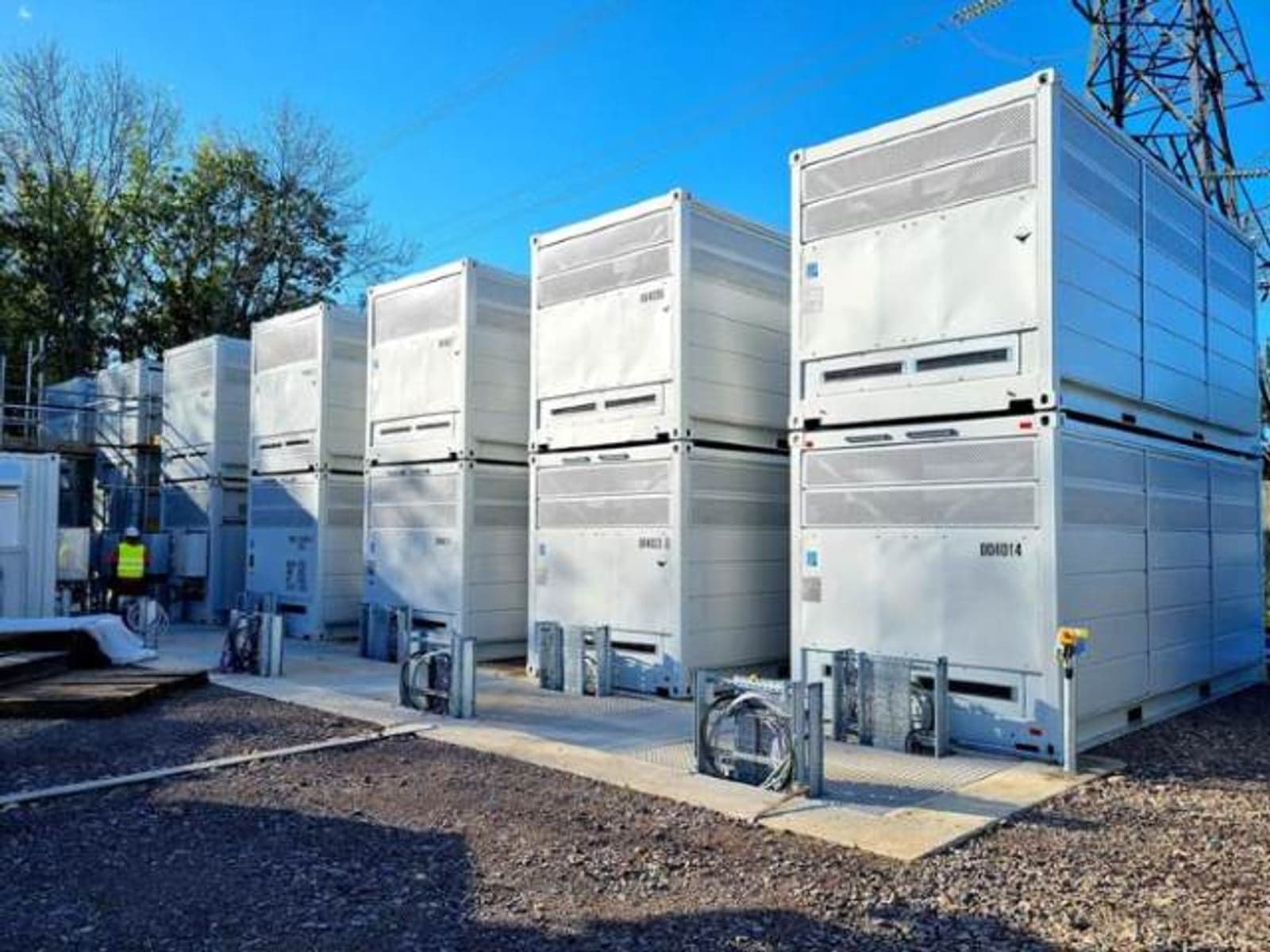
Vanadium flow batteries (VFBs) are a prime example of these high-throughput LDES solutions. VFBs store electricity in an aqueous solution, so are inherently non-flammable. They do not degrade with use, lasting 25 years or more at the highest possible levels of daily throughput.
And where today's lithium battery market is already straining the global sources of lithium, cobalt and nickel, vanadium is a non-conflict, readily-available mineral that can be either mined or recovered from common industrial wastes the world over.
Unlike many new entrants into the LDES market, none of this is theoretical: VFBs are already serving some of the world's most Innovative storage projects. At the Energy Superhub Oxford in the UK, a 5MWh Invinity VFB has been combined with a 50MWh lithium-ion array to make the world’s largest hybrid battery.
The VFB’s role is to deliver high throughput, acting as the 'tip of the spear' as the hybrid system charges and discharges almost constantly to balance the electric grid.
Only when high power is required does the lithium-ion battery step in, reducing cycle count and so extending the lifetime of the lithium system.
Making net zero profitable
The fastest way to achieve net zero is to make it profitable. Aurora Energy Research recently noted that further deployment of LDES could reduce the UK’s reliance on expensive gas by up to 40%.
Aurora also noted that LDES could generate savings of £2bn from reducing wind curtailment; in the UK alone, this amounted to 3.4 TWh of wasted energy last year, enough to drive a Tesla Model S the distance to the sun and back 61 times (though the battery might not last).
Consumers will benefit too, since utilizing more cheap renewable energy while managing Intermittency and transmission constraints using durable LDES assets will keep electricity bills low. In sum, McKinsey recently noted that LDES deployment can reduce the overall cost of achieving a fully decarbonised power system in the US by $35 billion annually by 2040.
Further policy support
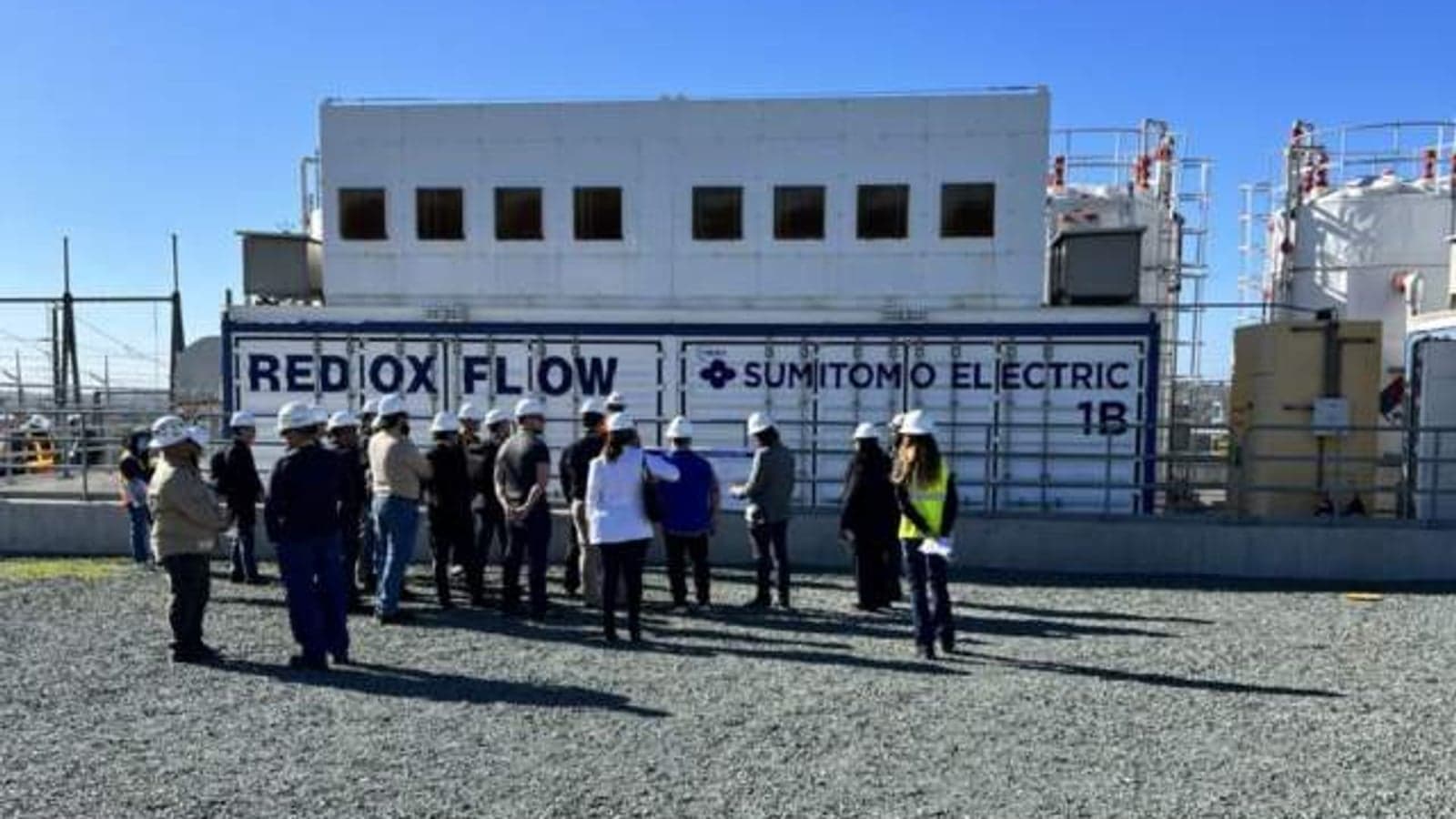
The past year has seen increasing support for LDES: in the US, the DOE Long Duration Storage Shot is leading the charge. States are also involved, with Invinity selected by the California Energy Commission to deliver four LDES projects. In the UK, the government is spending £68m on a programme to increase deployment of LDES solutions.
The path to net zero has never been clearer. However, we cannot let increasing energy price volatility and grid constraints stifle the rapid build out of renewables.
Flow batteries are already being deployed to resolve these constraints, and a diverse range of energy storage solutions will be needed to deliver low-cost, low-carbon dispatchable energy the world needs on demand.