Why wasted wind doesn't need to be a wasted opportunity
Guest/partner contributor
Posted on: 17 November 2025
Using excess wind energy to decarbonise industrial heat will lower curtailment levels, costs to consumers and emissions, suggests Mark Tarry, CEO at AMP Clean Energy

The issue of 'wasted wind' has been in the news again, with headlines focussing on projections that the cost of curtailment - where energy generators are paid to turn off due to lack of demand or insufficient grid capacity - could hit £8 billion ($11 billion) by 2030.
It has been used as a stick to beat the UK’s clean energy goals, with detractors highlighting that it’s one reason why the move to renewables won’t work.
However, this doesn't need to be the case. While the development of technologies such as long-duration energy storage will be critical to capturing renewable output to deploy at a later date, more innovative approaches to harnessing the potential of excess wind power are ready right now.
One example is using this power as a way to tackle the challenge of decarbonising industrial heat.
While industrial emissions have dropped considerably over the past 25 years, it remains one of the most difficult barriers to overcome on the road to net zero.
Since the publication of the Industrial Decarbonisation Strategy in 2021, some measures to support the UK’s most energy intensive industries have been announced. This includes the proposed relief on levies under the British Industrial Competitiveness Scheme, which was announced as part of the Industrial Strategy earlier this year.
When wind generators need to turn off their turbines, it costs UK consumers millions of pounds in energy constraint payments...
According to some sources, a refresh of the Industrial Decarbonisation Strategy is expected later in 2025 or early 2026. Until then, companies in energy intensive industries have been considering new ways to decarbonise their operations.
So, how can excess wind power be used to decarbonise heat?
A new era of energy centre
Firstly, it’s important to look at one of the reasons why wind curtailment is a major issue.
Excess renewable energy cannot be stored at scale within the current grid structure, and constraints in power cables mean power generated in one region cannot always be transmitted to others.
As a result, the costs associated with administering the Balancing Mechanism are growing each year. So, when wind generators need to turn off their turbines, it costs UK consumers millions of pounds in energy constraint payments.
This is particularly true on the North side of the B6 Boundary which broadly follows the Scotland - England border, where the cost of wind curtailment is higher than other regions.
This is also where Simpson Malt Limited - one of the largest independent, family-owned malting companies in the world - happens to be based, with its Tweed Malting Valley site right on the border.
Simpsons Malt is an energy intensive company. The process for creating malt barley typically uses fossil fuels that emit many thousands of tonnes of CO2 each year.
It takes its sustainability obligations extremely seriously throughout its supply chain, setting an ambitious objective of achieving net zero Scope 1 and Scope 2 emissions by 2030, which is a company-wide reduction of 55%. It has also been a Certified B Corporation (BCorp) since November 2021.
Its Tweed Valley Malting site is the largest maltings in the UK and has the capacity to produce around 245,000 tonnes of malt per year. As it takes approximately 2.5kg of malt to produce just one litre of whisky, it is an energy intensive process.
In addition, as 90% of the malt made at the Tweed Valley site is destined for the distilling industry, any emissions reduction would impact not just Simpsons, but also its wider community and its client base, i.e. the global Scotch whisky sector.
It wanted to find a new way to decarbonise its energy-intensive malting process and cut its reliance on fossil fuels.
Also of interest:
Why repowering wind farms is a win-win for companies and communities
Partners explore next-gen nuclear to green Dutch industry
The solution? A ground-breaking energy centre that dramatically reduces carbon emissions from heat, reinvents energy storage and harnesses the power of ‘wasted’ wind energy.
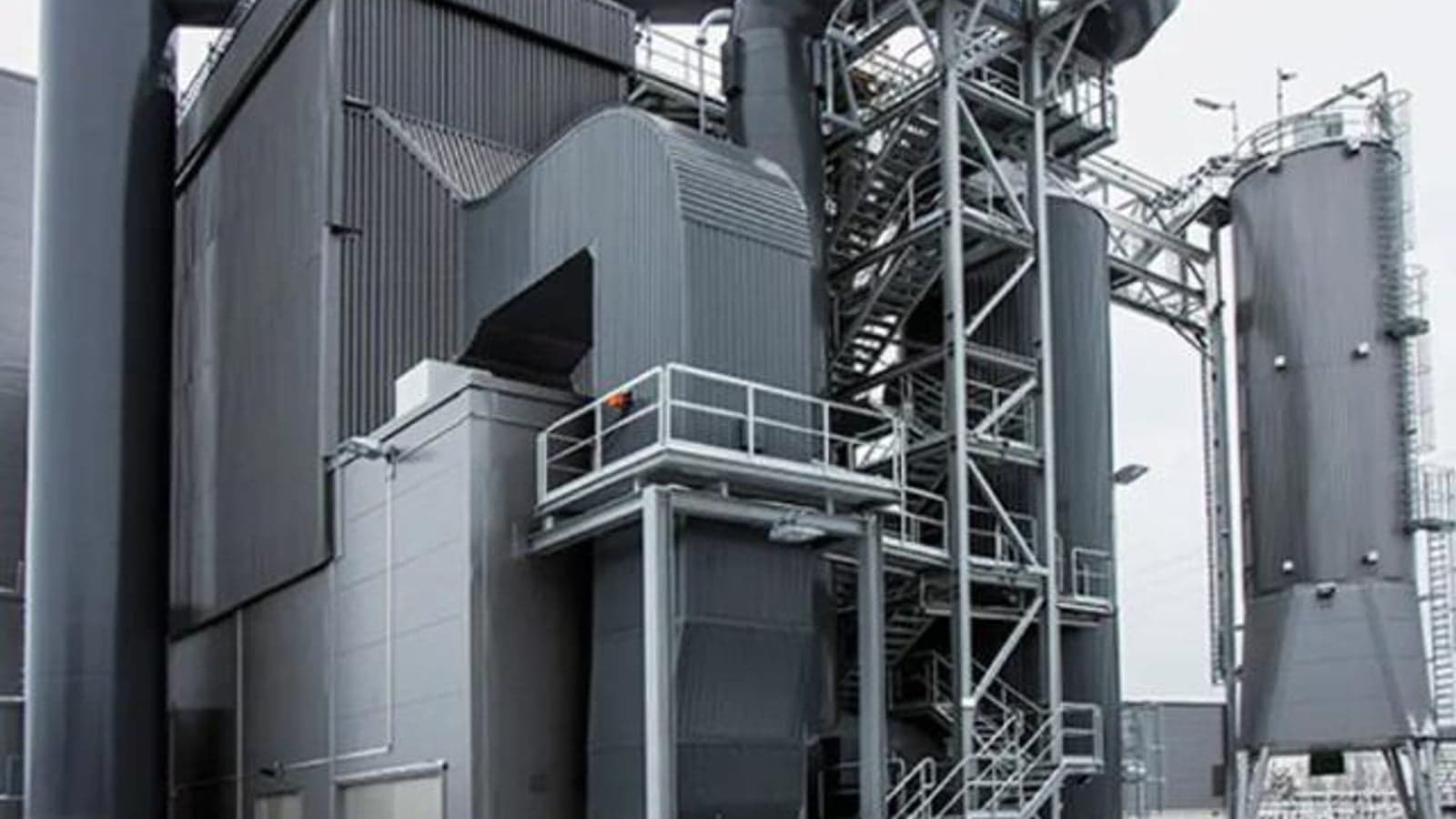
The energy centre was designed to transition the site to sustainable energy sources, tackle local grid constraints by making use of otherwise-curtailed renewable electricity, and maintain the high product quality and operational efficiency that Simpsons Malt is known for.
It uses a state-of-the-art, high-voltage 12MW electrode boiler, which is powered by curtailed wind energy, and three 6MW biomass boilers fuelled by locally-sourced, low-grade woodchip.
This project provides a highly effective way to decarbonise industrial heat, as well as reducing compensation payments to wind energy generators by using energy that would have otherwise been wasted.
It also reinvents biomass as an effective long duration store of energy -sourced from forest, urban and sawmill residues, and readily available to use during periods of low wind curtailment.
The impact speaks for itself. The energy centre at Simpsons will see more than 140GWh of fossil fuels displaced, 25,000 tonnes of CO2 saved each year and a reduction of carbon emissions at the site by 80%.
Harnessing the wasted wind potential
The approach at Simpsons Malt not only approaches industrial decarbonisation in a new way, it offers a real solution to the issue of wind curtailment, particularly in Scotland. It is also an asset that can - and should - be called up by NESO to help balance the grid more cost effectively during times of high generation.
By addressing grid constraints and optimising renewable energy use, it really does set a new standard for hard-to-decarbonise sectors. Importantly, this is a technology that is available right now.
While increasing the amount of long-term energy storage will undoubtedly be core to the success of transitioning to zero carbon power, this project highlights the importance of a whole energy system approach, and why a range of technologies and solutions to deliver a cleaner energy future will be so important.
ABOUT THE AUTHOR
Mark Tarry is CEO at AMP Clean Energy, developer and operator of the Simpsons Malt energy centre. With a background in economics and environmental technology, Mark is driven by the challenge of how the UK can build a cleaner, more resilient energy system.