Home
/
Project TradeRES – New market designs for green European power system: preliminary findings
Project TradeRES – New market designs for green European power system: preliminary findings
Guest/partner contributor
Posted on: 15 May 2024
TradeRES is an EU-finded project with the objective of developing and testing an innovative electricity market design that can meet society’s needs in a near 100% renewable power system.
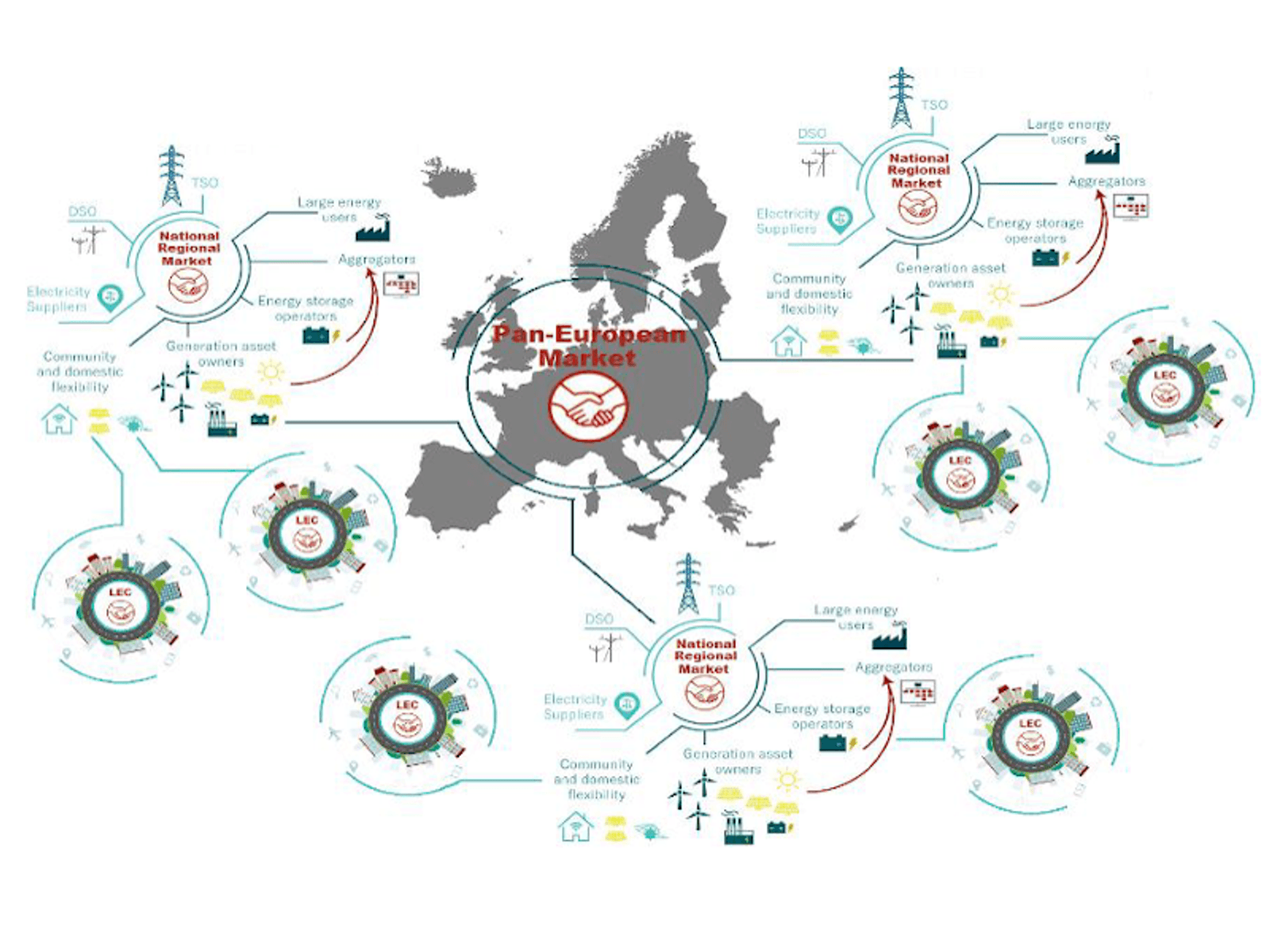
TradeRES is an EU-funded project with the objective of developing and testing an innovative electricity market design that can meet society’s needs in a near 100% renewable power system.
Traditional electricity markets, initially designed during an era dominated by conventional power technologies, operate based on marginal cost pricing mechanism to efficiently allocate available resources and incentivize investments.
But, this fundamental market principle becomes less effective in power systems with high shares of variable renewable energy systems (vRES), such as wind and solar photovoltaic (PV), which have marginal costs close to zero. While the environmental benefits of integrating vRES on a large scale are clear, the intrinsic variability of these sources can lead to unique situations in electricity market environments.
Periods with excess of vRES energy can flood the markets, leading to price drop to zero or even turn negative. This situation is often referred as the "merit order effect" and it diminishes the incentives for investing in new capacity - a crucial requirement for meeting the ambitious European renewable energy targets in the coming decades.
On the other hand, periods with deficit of vRES energy and high energy demand increase the prices. Unforeseen events, like the energy crisis in Europe, have also exacerbated the volatility in energy prices and raised major concerns related to existing market designs, investment risk, and the protection of the consumers, as recently highlighted by the European electricity market reform consultation.
The European energy goals for 2030 and beyond are clear and highlight the path for the energy transition to decarbonise the power systems with vRES playing an important role. In this path, supported by the decentralisation and digitalisation of the power systems, new electricity market players and designs are expected to arise aiming to reflect, among others, the value of existing and new flexibility sources and remunerate them adequately, integrate the end-user consumers/prosumer and local energy communities (LEM) to stimulate flexibility offered by demand response in an economically efficient manner, and facilitate sector coupling.
Within this context, project TradeRES – Tools For The Design And Modelling Of New Markets And Negotiation Mechanisms For A ~100% Renewable European Power System (H2020 contract 864276) started in 2019 having as goals to:
- Identify actual barriers and deficiencies of current energy market and pricing structures;
- Calculate cost, value, and price structure of electricity in a ~100% vRES-dominated electricity system for 2030 and beyond;
- Conceive, design and model electricity markets that deal with novel flexibility products;
- Develop optimization and agent-based market models beyond the state-of-the-art.
To achieve such goals the project is developing new market designs, and creating open-access tools for analysing electricity markets, and engaging key stakeholders in the development and use of the simulation tools.
The project addresses existing and future power system energy mixes of European countries with physical differences as well as different spatial scales (Fig. 1) from:
- local energy communities and local energy markets (LEMs);
- three national/regional - the Netherlands, Germany, and Iberia (Portugal and Spain); and
- pan-European energy markets.
The different designs are assessed based on quantitative market performance indicators (MPIs) such as security of supply, average costs to consumers, and investment cost recovery. At this moment, the project achieved an important milestone with the first preliminary results. These results have been derived using agent-based and optimization models capable of capturing the behaviour of diverse market participants.
TradeRES’ scenarios – future power system energy mixes
Future power system energy mixes of European countries, considering a near 100% renewable power system energy mix, were defined within the TradeRES project. The scenarios differ based on two dimensions: demand flexibility and non-thermal supply capacity.
On the supply side, various target shares are explored at a pan- European scale, ranging from approximately 85% (scenarios S1 and S2) to a minimum of 95% (scenarios S3 and S4).
On the demand side, sector coupling and demand-side flexibility by adjusting the number of electric vehicles and the annual exogenous hydrogen demand were explored.
Specifically, lower levels of exogenous hydrogen demand were considered in S1 and S3 scenarios, while higher levels were considered in S2 and S4 scenarios.
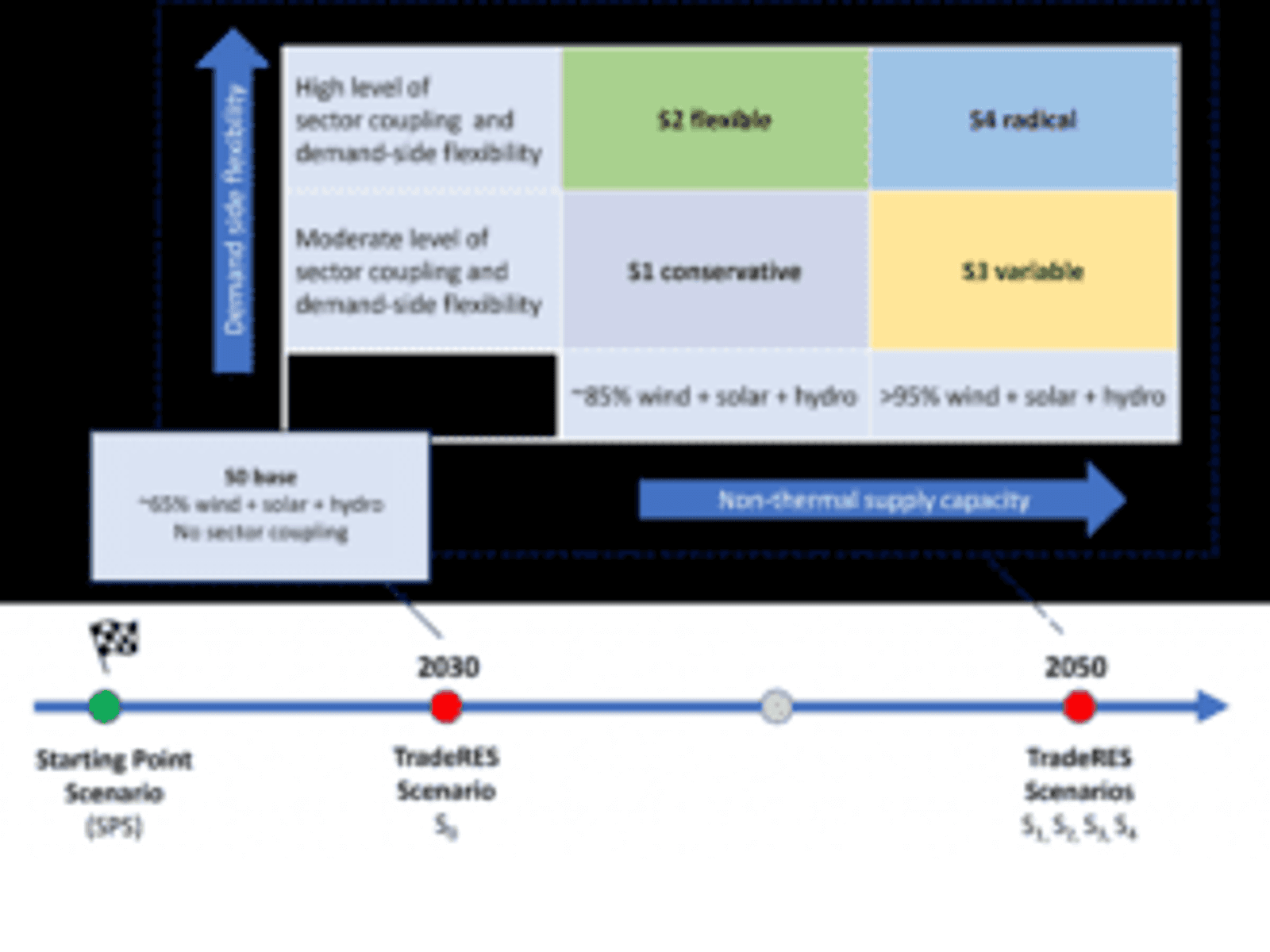
A scenario S0 is also defined to represent the transition from the European power system status quo in 2019 - Starting Point Scenario (SPS) - targeting a 65% share of non-thermal renewable energy (wind, solar, and hydro power) in electricity production based on ENTSO-E's European resource adequacy assessment capacities for 2030 and the 2030 national energy and climate plans.
These scenarios were optimized using the Backbone software, which provides information such as energy mixes and the hourly optimal operation of the power system. Fig. 2 illustrates the different scenarios and the respective timelines.
Local energy markets - TradeRES’ preliminary results
Local Energy Markets (LEMs) represent an innovative concept that enhances the direct energy trading on a community level. This empowers consumers and prosumers to interact and engage in mutually beneficial transactions without the need for intermediary entities such as retailers.
As a side effect, this type of approach can result in a more favourable energy prices for the members of the community. Several approaches are being developed in TradeRES to address LEM, namely, through a LEM simulation framework considering two specific environments:
1) a "broad" environment that emphasizes interactions with a strategic retailer, and
2) a "narrow" environment exploring the study of LEM mechanisms like the mid-market rate, double auction, and more.
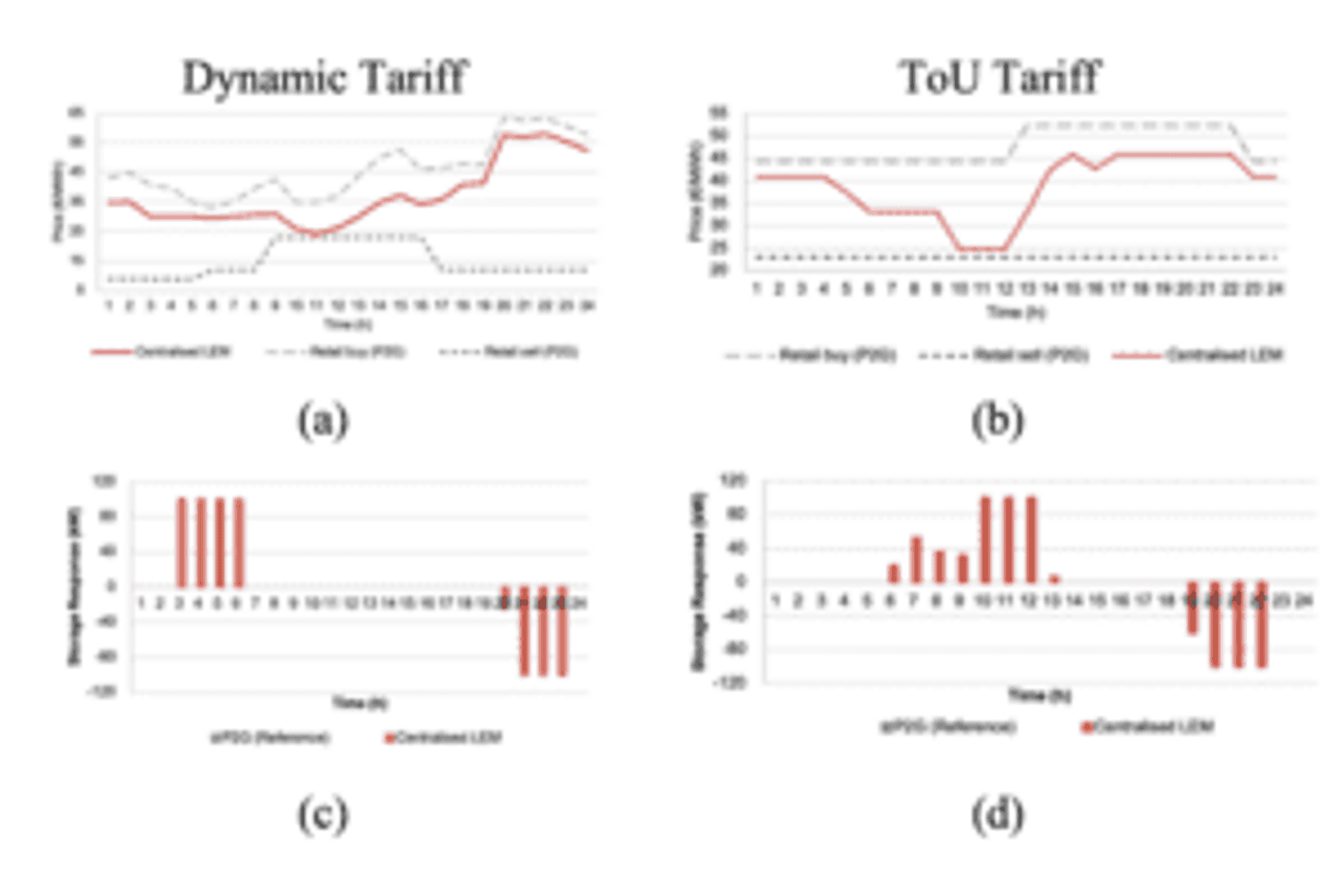
Preliminary findings are based on the interaction of a centrally managed LEM and a retailer that can strategically set the offered tariffs. Fig. 3 (a,b) shows the LEM price together with the tariffs that have been optimally chosen by the retailer, given the wholesale price, under the dynamic and time of use (ToU) structure. Fig. 3 (c,d) shows the utilisation of flexible resources (storage) under the different tariff schemes.
In addition to this framework, blockchain-based automated agreements allowing consumers and prosumers to engage in energy trading with specific conditions, such as buying power at favourable prices, are also being investigated in the project. Further details are available in Deliverable 5.2.
National and Regional European Markets - TradeRES’ preliminary results
The National and Regional European Markets accomplished the first set of simulations by addressing the following aspects:
- Case Study B - the behaviour of the Dutch electricity market using the soft-linked market models AMIRIS-EMLabpy aiming to answer the following research question: To what extent can an energy-only market (EOM) with/without vRES targets provide system adequacy for a 100% RES system by 2030 and 2050?
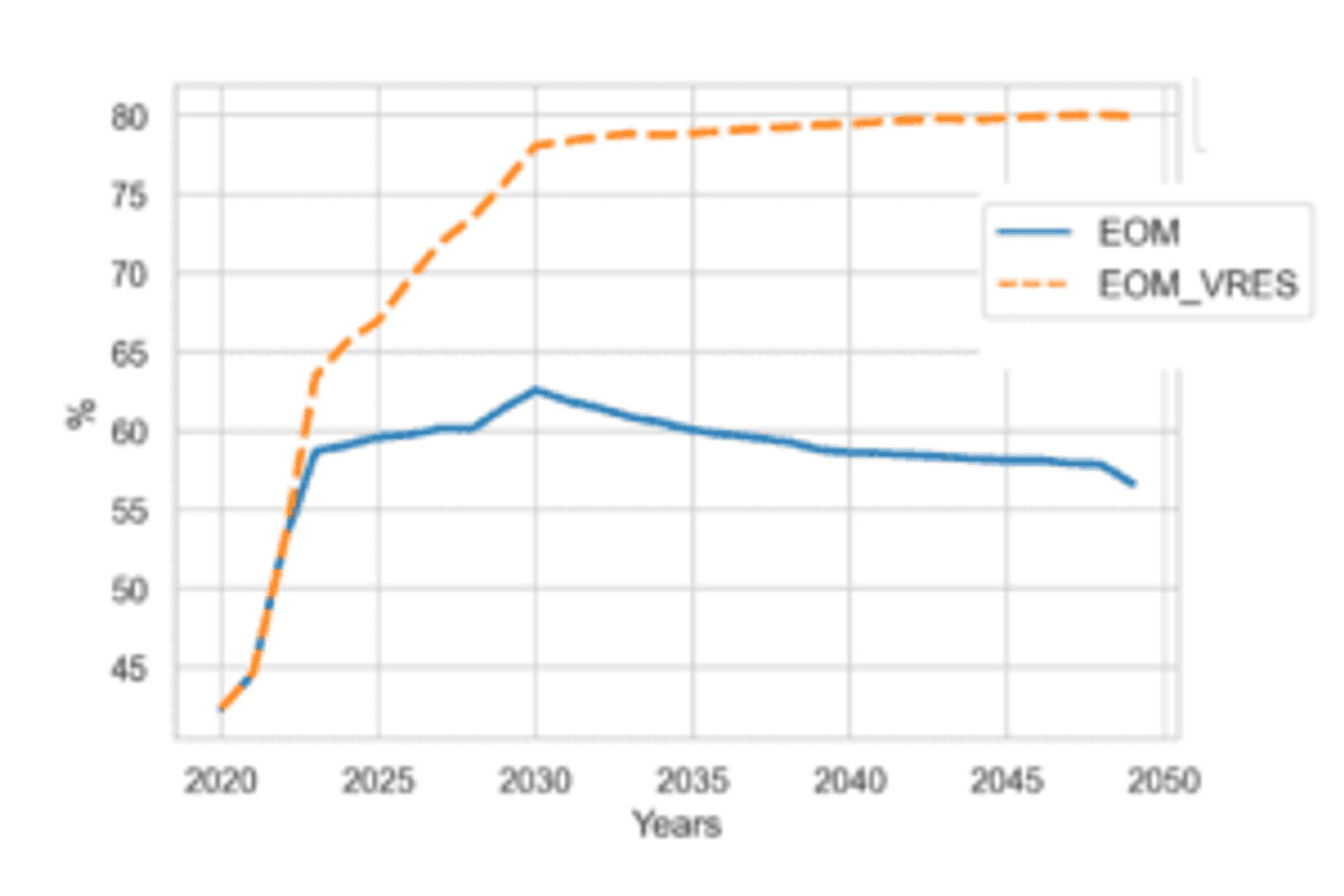
Some (preliminary) findings of the first iteration of this case study indicate that the share of vRES in total electricity demand reaches a limit of around 60% in the case of the profit-based on energy only markets without vRES targets (“EOM”) against about 80% in the EOM case with vRES targets (“EOM_VRES”), Fig. 4.
This indicates that a profit-based EOM is not sufficient to achieve a very high share of renewable energy sources in the total electricity demand. Although not shown, from 2035-2050, the average annual electricity prices are significantly lower (~ 20 €/MWh) in the EOM_VRES case than in the EOM case (due to the higher installed vRES capacities in EOM_VRES). As a result, the indicator of the market-based cost recovery is substantially higher in the EOM case than in the EOM_VRES case.
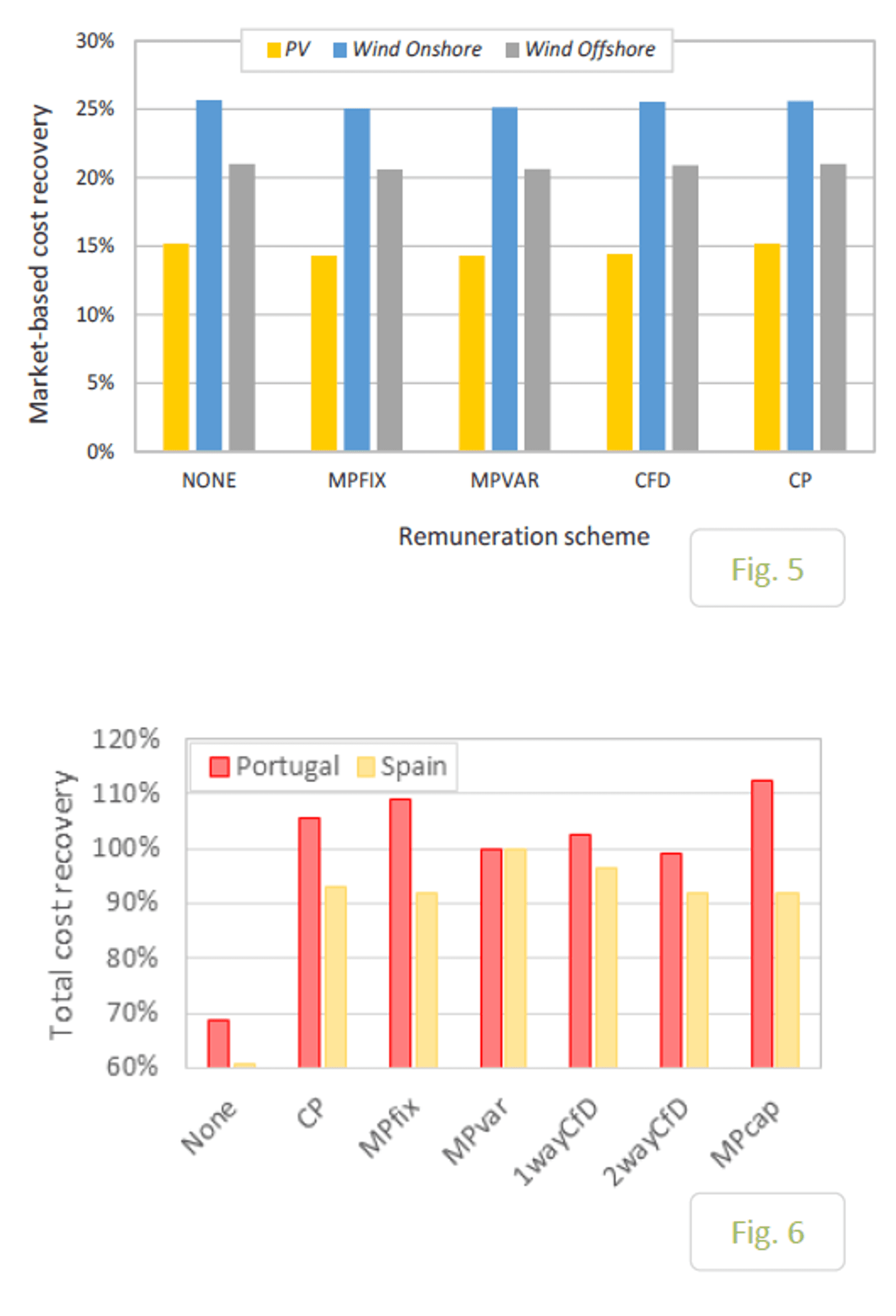
- Case study C addresses the German day-ahead market using the agent-based model AMIRIS aiming to answer the following research question: Are vRES remuneration support schemes needed and if so, how should they be designed? Multiple simulations using different remuneration schemes for renewable energy sources were run, namely, no remuneration (“NONE”), capacity premia (“CP”), fixed market premia (“MPFIX”), variable market premia on a monthly basis (“MPVAR”) - effectively a one-way contract for differences (CfD) design, and two-way CfD with a monthly reference period (“CFD”). Preliminary results reveal that vRES need remuneration schemes, as their market revenues are significantly too low to cover their costs under the scenario assumptions: between 75% (wind onshore) and 85% (PV) of the total cost cannot be covered at the day-ahead market (Fig. 5).
- Case study D addresses the Iberian market (MIBEL) with the agent-based models MASCEM and RESTrade aiming to answer the following research question: “Are vRES remuneration support schemes needed and if so, how should they be de-signed?” Again, different remuneration schemes were tested, namely, i) EOM, ii) CP, iii) MPfix, iv) MPvar, calculated to ensure full cost recovery of the vRES investments, v) 1wayCfD; vi) 2wayCfD, and v) capped premium (MPcap). Preliminary results indicate that while in Portugal, wind power investors recovered their production costs, in Spain, it only happened when considering the MPvar scheme, Fig. 6. In Portugal, the 2019 wind power productivity was above the average, which increases their remuneration in other support schemes.
Final notes
All national and regional markets simulations are preliminary and it is too soon to extract conclusions or recommendations for suitable market designs. However, the MPIs obtained so far point out energy-only markets seem to be insufficient to give enough incentives to promote investment in a high volume of renewables.
Therefore, changes to current market designs shall decrease the power system costs and increase the market value of vRES, reducing the need for externalities like support schemes and capacity mechanisms.
Finally, the studies conducted enable to observe that LEM trading paradigm contributes to the efficient management of energy supply and demand by promoting direct energy exchange among members, which would provide significant economic benefits, compared to a conventional retail market. Furthermore, more decentralized variable generation incentives the development of local energy communities and markets, helping system operators manage imbalances at lower costs to end-use consumers.
The project TradeRES will continue to develop tools and test different elements of market designs to provide recommendations for the best designs to achieve nearly 100% carbon-neutral power systems.
Acknowledgements
This work has received funding from the EU Horizon 2020 research and innovation program under project TradeRES (grant agreement No 864276). Readers may find more information on the TradeRES project website, including the large majority of the deliverables of public access, which contains information regarding the models and further details of the results.
Most popular
Join the community for freeAnd get access to all content
Related projects
TradeRES
+3
1 February 2020 - 31 January 2024
View project