Unlocking flexibility in Europe’s evolving energy systems
Yusuf Latief
Posted on: 5 December 2024
How has power system flexibility been implemented in Europe? From DSOs to software vendors, experts at Enlit Europe gathered to discuss.

Although the concept of power system flexibility is no secret, its implementation in Europe’s energy systems could still be improved. But how has it been tapped to date? Power system experts at Enlit Europe gathered to discuss.
Power system flexibility - the adaptive ability of an energy system to meet changes in electricity demand and supply.
The concept has been recognised as a key way to buff up our energy systems to ensure reliability as they continue to evolve with the immense penetration of renewable energy and electrification continuing at pace.
But while the ‘what’ of power system flexibility is known, the ‘how’ is less so. How have European operators implemented system flexibility?
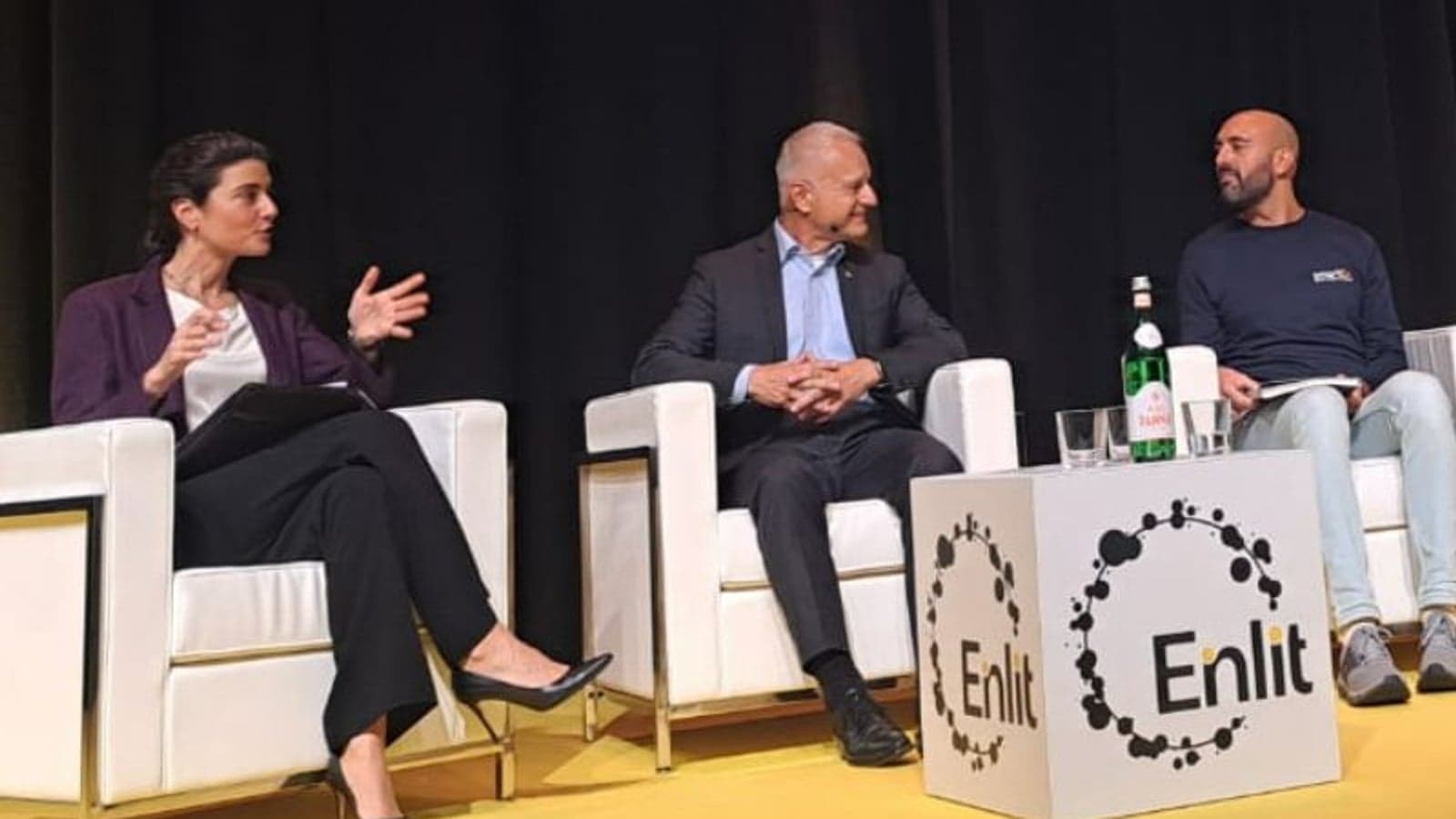
Energy sector executives gathered at Enlit Europe in Milan and discussed the different ways to implement flexibility.
Flexibility contracts
For Elvia’s Erik Jansen, a form of power system flexibility they have been working on involves a new type of customer contract.
Through these contracts, said the Norwegian DSO’s Head of Grid Operation, the company can tap into their customer’s flexibility where, instead of delivering capacity for all hours, the utility agrees with customers on when they can curtail, depending on the state of the network.
“It enables us to connect the customer much earlier, because a lot of customers engaging the energy transition, for example industries switching from fossil-based energy to electricity, have flexibility.
“They might be okay with getting delivery from us 90% of the time…which is still much better than them having to wait five years, for example, to get 100% connection before they get started.”
Indeed, these waiting times have been a significant pain point for grid operators as more renewable energy comes online. Take the Netherlands, for example, where customers need to queue to await grid connections, sparking the grid operators to test out different types of contracts for flexibility.
Said Jansen: “So this is a new tool that just came into place…We have a handful of signed contracts on this, but I think this will be a key instrument: working with the customer to actually connect the customers.
“To handle those terms and try to have as high a delivery time as possible to the customer, you also need other skills.
“For all the different kinds of flexibility you need other kinds of technology - the system support, the data available to monitor and also communicate with the customer along the way, for example, if they're going to be curtailed or disconnected.”
Have you read:
Project RESONANCE: Mobilising demand-side flexibility at large-scale
The urgency and opportunities for demand side flexibility in France
These types of flexible contracts are not the only way Elvia has been looking into system management.
Last year, the DSO partnered with Siemens to use their LV Insights X software to gain insights into flexible grid management to increase capacity.
Said Jansen at the time: “We needed an innovative approach to develop a future-proof next-generation grid management solution in Norway. Working with Siemens, we deployed an advanced and future-proof product within weeks that will help us accelerate and handle the energy transition.
“With increased flexibility and oversight over our grid, we can now manage our low-voltage system in a much more efficient manner – from planning to operations and maintenance.”
Energy communities and data criticality
Speaking on how to make flexibility more possible, Vattenfall Business Manager Yvonne Ruwaida explained how Austria has nailed two of the most critical concepts nationally – data exchange and interoperability.
Discussing energy communities and energy sharing, Ruwaida referenced the Energy Data Exchange (EDA), a platform for specialised software that supports data exchanges between gas and electricity market participants in Austria.
Said Ruwaida, “it [data exchange] makes it possible with very many different kinds of business models for flexibility, whether it's dynamic tariffs or flexible connection agreements or energy communities.
“It has boomed and it's really something needed in all EU countries and will come with regulation on interoperability in the future.
“I think this is one of the critical things to make flexibility a possibility.”
Agreeing with the criticality of data for flexibility setups, Siemens AG’s Ralf Kortner added to Ruwaida’s point, calling the need for cross-segment data a commonality among those looking to implement flexibility.
Referencing their work with different utilities – including Norway’s Elvia - the tech giant’s Head of NextGen Grid Management explained that the need for data is a constant.
“Everyone has a different starting point of how to tap into flexibility.
“But what's common? Flexibility that isn't planned for can't be operated. Flexibility that is not operatable, can't be planned for.”
To meet this challenge, Kortner says that an end-to-end perspective is needed, “and this is something that's completely different to the way most grids are operated and planned today.
“We need to have data coming together from planning, from operations, from the metadata management system, from the GIS system, making it operable.
“For some examples - [Ruwaida] mentioned energy communities - the starting point is the low voltage. For some, it's the medium voltage, such as flexible contracts with big consumers."
Referring to Siemens’ Gridscale X, launched earlier this year in February, Kortner says: “We need to have a top-to-bottom view.
"Grid operations need to scale horizontally from planning to operations, and vertically across all voltage levels. The basis for that is one common grid model.”
He adds that rather than submitting requests for information or proposals, which are “the wrong side of the equation”, this type of common grid model would be more effective.
“The right side is building a common grid model as the starting point to then unlock flexibility…”