Blockchain to be harnessed for sustainable aviation fuel
Jonathan Spencer Jones
Posted on: 22 November 2022
Energy Web and RMI and Abu Dhabi National Oil Company (ADNOC) and Siemens Energy are partnering on blockchain initiatives to grow the use of sustainable aviation fuel.
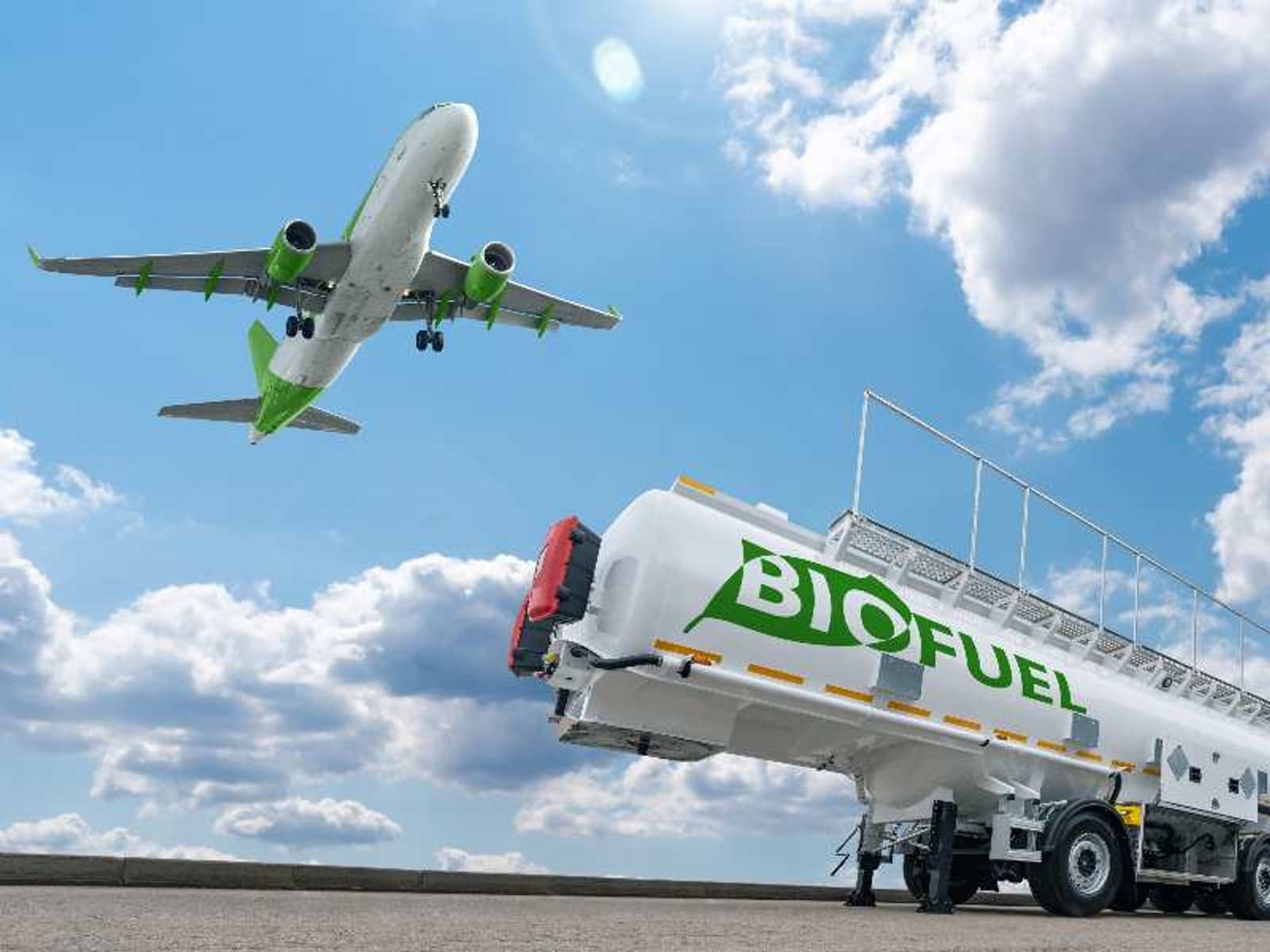
Energy Web, RMI, Abu Dhabi National Oil Company (ADNOC) and Siemens Energy are partnering on blockchain initiatives to grow the use of sustainable aviation fuel.
With the decarbonisation of aviation a key goal of the sector, initiatives such as these are expected to pave the way, with hydrogen or other zero carbon options for powering aviation still well in the future
Sustainable aviation fuel comprised of a mixture of renewable sourced fuel with regular jet fuel is currently considered the most promising option for the sector to progress towards net zero as it can be used without modification to jet engines.
Indeed, over the lifecycle of an aircraft, the emissions can be reduced by up to 80% and it has been used already on almost half a million flights.
Have you read?
Hydrogen-fuelled green freight
Blockchain in Europe’s energy sector – policy and regulation
The challenge, however, is that sustainable aviation fuel is more expensive than regular jet fuel, up to double the price, and is available in only limited quantities.
For example, in 2021 only 100Ml of sustainable aviation fuel was produced, which is less than 0.03% of aviation’s typical yearly usage of 360 billion litres of fuel, according to figures cited by Energy Web.
Energy Web is working on two separate but related initiatives – one with Shell on the blockchain powered Avelia platform to provide fully traceable sustainable aviation fuel purchases and the other with RMI on a digital registry for sustainable aviation fuel certificates.
Book-and-claim sustainable aviation fuel
The Avelia solution, which also involves Accenture and American Express, is a book-and-claim system aimed at corporate travellers to enable them to purchase a share of sustainable aviation fuel for the flight they are taking. If the fuel isn’t available on that flight, then it is used by another flight.
Either way, the purchase can contribute to the overall demand for the fuel and its environmental benefits are recorded in the company’s favour.
Energy Web states the ultimate goal of Avelia is to create and evidence the demand necessary to help sustainable aviation fuel to scale up.
“By creating a straightforward and transparent way to purchase sustainable aviation fuel, we send clear buying signals to the market, giving suppliers the confidence to invest in ramping up production.
“At the same time, by furthering investment in production, Avelia will help to lower the price of sustainable aviation fuel for all airlines.”
Sustainable aviation fuel certificates
The sustainable aviation fuel certificate registry being developed with RMI, one of Energy Web’s founders, is similarly intended to grow the use of the fuel by providing more transparency on emissions reduction claims.
With the certificates, companies or other customers can pay for the environmental benefits, with the digital registry able to issue, transfer and retire the certificates with the assurance they represent unique and verified emissions reduction claims.
“A transparent, easy-to-use registry built on a rigorous accounting approach will lift public confidence in sustainable aviation fuel emissions reduction claims, propel investment in production and accelerate decarbonisation of the aviation sector,” comments Bryan Fisher, managing director for RMI’s Climate-Aligned Industries Program.
The registry, which forms part of work with the Sustainable Aviation Buyers Alliance, a coalition of corporate buyers and aviators committed to decarbonising aviation co-founded by RMI and the Environmental Defence Fund, is expected to go live in mid-2023.
Low CO2 energy certificates
The ADNOC-Siemens Energy initiative is a pilot which is aimed to explore the digital certification of the oil company’s aviation fuels as well as its Murban crude and ammonia.
Smart sensor data gathered from across ADNOC’s operational chain, from the oil well to the customer, should show how much CO2 was used to make these products, with the information automatically recorded onto a decentralised blockchain ledger.
Such transparency should allow independent regulators to certify the carbon intensity of products, while customers have clarity over the carbon footprint of their purchases, the companies state.
This energy certificate initiative forms part of a broader memorandum of understanding between ADNOC and Siemens Energy to co-create technologies to accelerate decarbonisation and the transition to clean energy.
Other areas under joint development include electrification and ‘power-to-X’ technologies to produce green hydrogen and its derivatives, including synthetic CO2-derived products.