Home
/
Clean energy finance: Ex-minister on ‘panic in the boardrooms’ and ‘drinking climate Kool-Aid’
Clean energy finance: Ex-minister on ‘panic in the boardrooms’ and ‘drinking climate Kool-Aid’
Kelvin Ross
Posted on: 9 March 2022
Former climate minister says private sector firms have realised their business ‘is going to become obsolete’ if they ignore climate action.
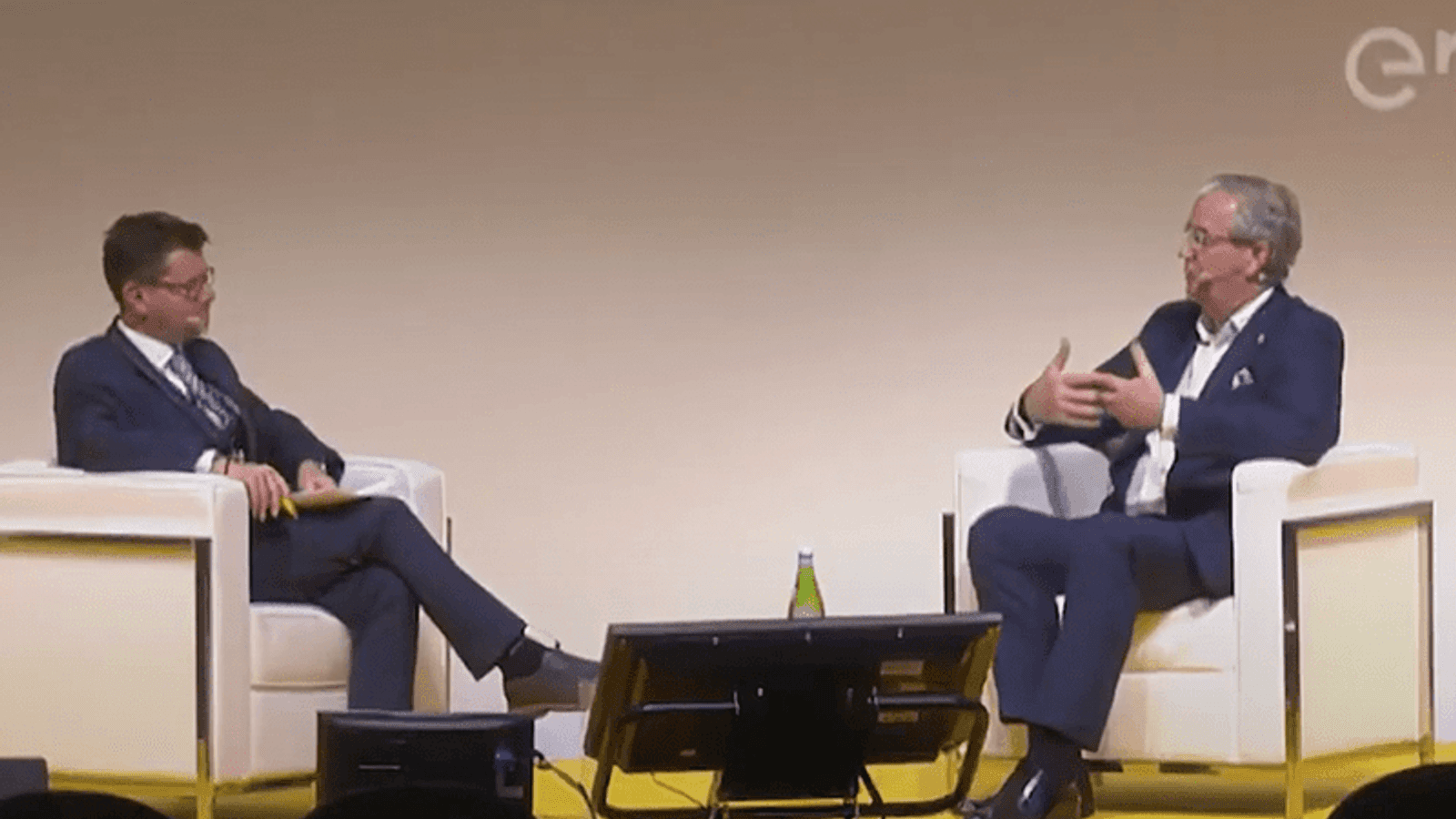
Former UK climate minister Gregory Barker explains why the ‘big shift’ at COP26 was watching private sector firms realise their business ‘was going to become obsolete’ if they didn’t embrace green investment.
“It’s no longer a minority sport”, says former UK government climate minister Gregory Barker.
He’s talking about investing in clean energy technologies and the shift in mindset he witnessed in those private sector companies who attended the COP26 climate talks in Glasgow.
“Beforehand, you had the private sector turn up in force at these meetings, but invariably it was their ‘green leaders’: those who are optimistic about their business’s ability to lead the low carbon transition – those who were ‘true believers’ as it were.
“But this time there was a big shift because it wasn’t dominated by the long-time believers, but those who are new.
“And they were not coming because they were drinking the climate Kool-Aid. They were coming because they recognised that the risk to their business – and to their business model – was far greater if they stood on the sidelines and did nothing than if they actually embraced the energy transition. That’s the big shift.”
Inherent risks
Barker was a Conservative minister in the then Department of Energy and Climate Change from 2010 to 2014, and as such has a keen understanding of the need for policy drivers to attract clean energy investors and the challenges of doing this.
It also means he is alive to the changes in the investment community he saw in Glasgow last year. “Now, the private sector is dominated by those who understand the inherent risks of not acting, rather than those who just see the opportunities of being early leaders.
“And that has meant the weight of private sector finance and investment is all now on the side of driving climate action.”
If you don’t make the transition now to a low-carbon model, you will literally not have a future.
He says that too many companies spent years sitting on the sidelines of climate investment, wondering “if they should take it seriously, is it corporate window dressing, and can they afford to do it?
“Now they’re thinking: Oh my goodness – we’ve got to get with this now otherwise our business model is going to become obsolete.”
And he says the decision really is that stark. “If you don’t make the transition now to a low-carbon model, you will literally not have a future.”
As such, he believes there is now “a healthy degree of panic in corporate sector boardrooms”.
“They really have ignored this right up to the 2020s, and now are rushing to get with the party.”
Science-based targets
However, he stresses that “the big question is: will all of this movement be commensurate with the scale of change that we need to see?
“It’s not good enough for everyone to ‘do their best’: what we need to do is make sure that change happens in a way that is commensurate with the science-based targets that are set out in Paris – which is a very high hurdle to meet.”
He says that for some of those companies “that come late to the party, there’s a lot of low-hanging fruit. But make no mistake: as you start to get closer to net zero, it’s going to be a challenge and it’s going to require unprecedented innovation, and unprecedented investment to drive that innovation. So there’s big change coming.”
Gregory Barker left Parliament in 2015 and was subsequently appointed to the House of Lords as Lord Barker of Battle. He joined Russian aluminium and hydropower company En+, becoming its executive chairman in 2019, a post which he resigned this week.
Watch the full interview to hear him discuss what more industry should be doing to decarbonise, the future for hydropower, and bringing microgrids to Africa.
Related content
Enel Group's Viviana Vitto sees 'huge scope' for utilities within the EU Green Deal
Energy transition needs ‘molecules and electrons, plus action not targets’: Uniper’s David Bryson
Pushing the ideas envelope: Siemens software boss on enabling a net-zero future
Most popular
Join the community for freeAnd get access to all content
Related companies
Enlit
Related members
Kelvin Ross
Enlit, Enlit Media
Editor-in-Chief