AIR4NRG: Advancing isothermal energy storage for a sustainable future
Guest/partner contributor
Posted on: 15 December 2025
AIR4NRG is demonstrating isothermal compressed air energy storage to make large-scale energy storage cleaner, more efficient and cost-competitive.
Europe’s energy transition depends not only on producing renewable energy, but on storing it efficiently and affordably. As renewable generation grows, the need for flexible and scalable energy storage technologies has never been greater.
Traditional compressed air energy storage systems have been around for decades, but their efficiency is limited by several heat phenomena during the compression, air storage and expansion processes.
The Air4NRG project introduces an isothermal approach, where the temperature of the air remains nearly constant over the whole storage process, reducing energy losses and increasing round-trip efficiency. At the heart of this innovation is the use of a liquid piston to enable reversible compression and expansion.
This design allows heat generated during compression to be absorbed by the liquid and later exchanged with the atmosphere during expansion, achieving an almost isothermal process. As a reversible process, the expansion phase will later take heat from the atmosphere to maintain a constant temperature during discharge too, ensuring an overall high efficiency.
The project also features regenerative heat exchangers, advanced manufacturing and coating techniques for those components, and a system architecture that emphasises modularity and industrial readiness.
Working both as a compressor and an expander with the exact same components, many innovations are integrated into the driving control of the machine. This new advanced driving algorithm ensures reliable operation and continuous optimization of all parameters, to get the best energy efficiency.
From simulation to real-world application
The Air4NRG consortium brings together research organisations, SMEs and industrial partners from across Europe. Since its launch, the project has moved from conceptual and modelling phases towards prototype development and experimental validation. The collaboration between academic and industrial partners ensures that research findings are translated rapidly into practical design improvements.
One of the major achievements of Air4NRG has been the integration of advanced computational models with experimental testing. Numerical simulations (including three-dimensional computational fluid dynamics studies) have helped the consortium better understand how heat and pressure behave at the micro-channel scale within the regenerative heat exchanger.
These insights have been crucial in improving the efficiency of the storage cycle and supporting the design of key components. The regenerative heat exchanger, in particular, plays a vital role in maintaining constant temperature between compression and intake phases, which directly impacts overall system performance.
Next generation prototypes
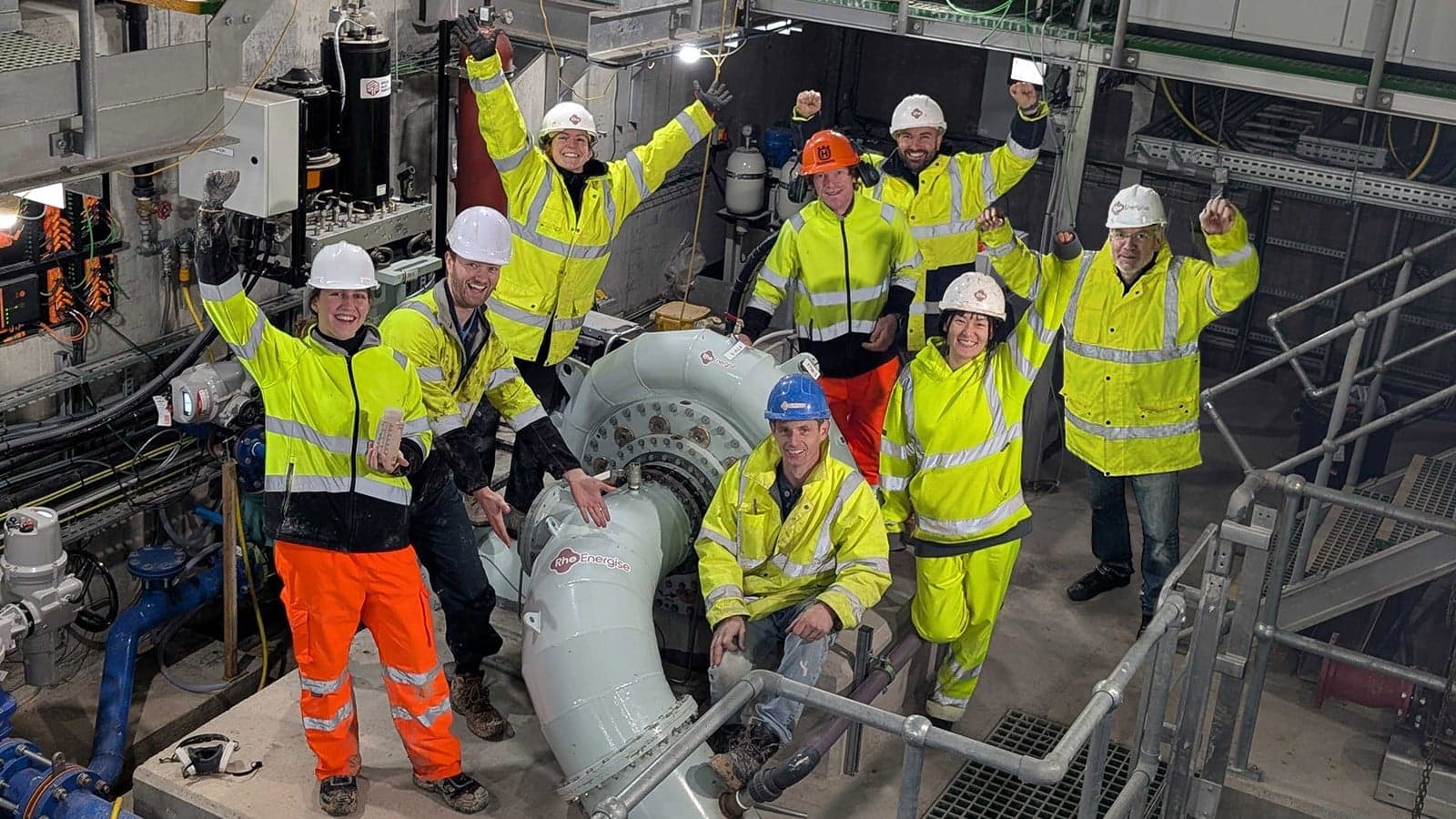
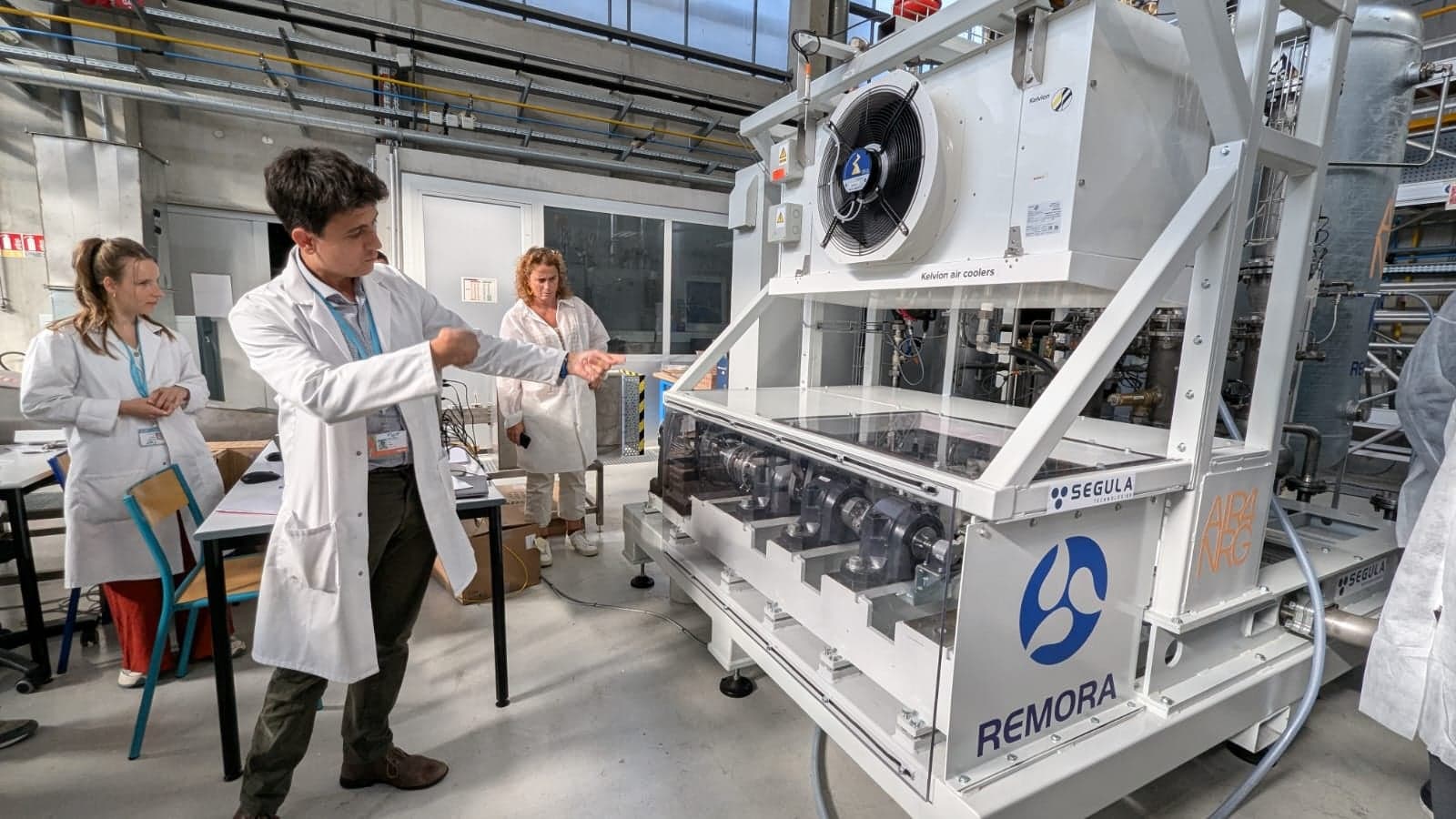
One of the most exciting milestones of the project so far has been the first successful run of the test bench. The test bench is a dedicated experimental platform that replicates the compression and expansion processes of the system at laboratory scale. It allows researchers to study how the air and liquid interact, measure temperature and pressure variations, and validate the numerical models before moving to full-scale prototype development.
The next phase of the project will focus on the production of a second-generation prototype, integrating lessons learned from earlier experiments. This prototype will bring Air4NRG closer to demonstrating a scalable, industrial-grade isothermal compressed air energy storage system capable of contributing to Europe’s future energy mix.
This prototype located in Portugal will be the first demonstration of isothermal compressed air long duration energy storage at TRL5. This is the first implementation of the process into an industrial system.
The project’s final target is to prepare the development of a 200kW and 10h storage product for the energy storage market. The storage system will be fitted into standard 40ft container modules. The roundtrip efficiency, converting electricity to compressed air and back to electricity, will reach 70% thanks to high efficient isothermal process.
As with any cutting-edge R&D project, the Air4NRG team has faced daily technical and engineering challenges, from managing multiphase flow behaviour to optimising heat exchange in confined geometries. Yet, these challenges are also what drive innovation.
The collaborative environment fostered within Air4NRG has enabled partners to share expertise and develop new modelling tools and methodologies that will continue to benefit the wider research community beyond the project’s lifetime.
Path towards sustainable energy storage
Beyond the technical innovation, Air4NRG addresses broader questions of sustainability, resource use and European industrial sovereignty. By avoiding rare materials, focusing on air and water as working media and adopting scalable modular architecture, the solution aligns with circular economy and strategic autonomy aims.
Furthermore, the plug-and-play container concept lends itself to rapid deployment in industrial environments and grid edge applications, unlocking flexibility services, load shifting and enhanced renewable integration.
To stay informed about the project’s progress, publications and upcoming results, visit the website or follow the project on LinkedIn.
About the author
Valentina Ferrara is a Senior Communication and Dissemination Officer at ICONS, leading communications and dissemination activities for several EU projects in the field of energy. She is a communications strategist with more than ten years of experience in delivering impactful communications strategies for EU associations and projects.
Related tags
Most popular
Join the community for freeAnd get access to all content
Related projects
Air4NRG
+1
1 January 2024 - 31 December 2026
View project