Can the EU's Clean Energy Investment Strategy work?
Yusuf Latief
Posted on: 27 March 2026
De-risking projects is the goal, but complex structures and scaling challenges could limit the plan.
In this week’s Power Playbook: Can public money really unlock the scale of private capital Europe needs for its clean energy transition?
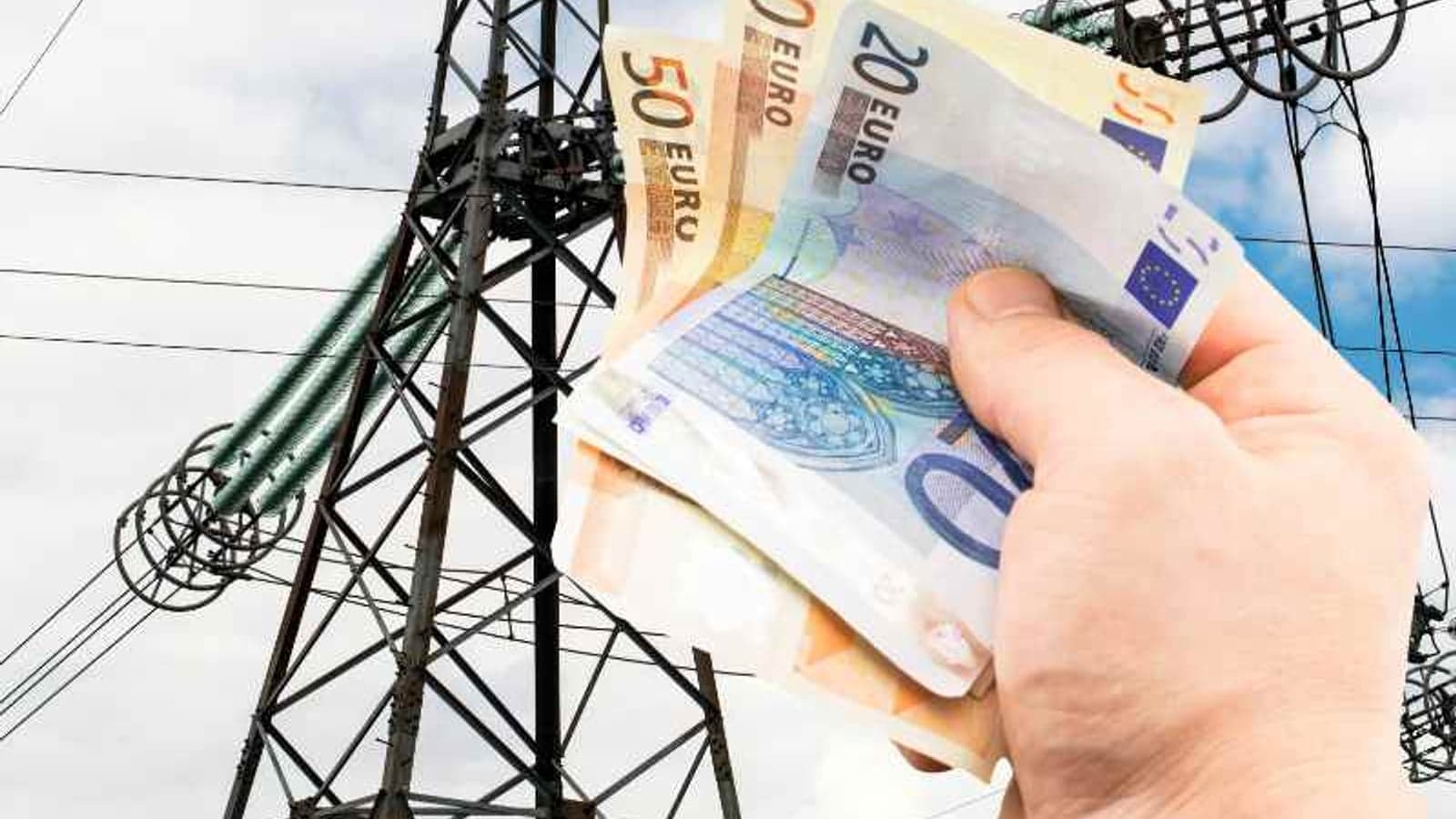
On paper, the EU’s Clean Energy Investment Strategy is straightforward. Use public funding to de-risk projects, crowd in private capital, and close what is, by any measure, a widening investment gap.
The approach leans heavily on institutions like the European Commission and the European Investment Bank (EIB), which are expected to act as catalysts rather than primary financiers.
Instruments range from equity support and loan facilities to more structured mechanisms like revenue securitisation — all designed to make projects look and feel more investable to institutional capital.
The funding model
From a developer’s perspective, however, the picture is a bit more grounded.
R.Power’s Michał Swół told me that although public support is meaningful, it doesn’t really change the financing model. “It does not fundamentally replace traditional project finance as in most cases, developers still rely on the usual combination of sponsor equity and senior debt, while public funding mainly improves bankability by reducing risk or filling specific gaps.”
That distinction suggests that the strategy is less a reinvention of project finance and more an incremental enhancement — one that reduces risk at the margins through tools like contracts for difference, subsidies, and guarantees.
More from the Power Playbook:
How data centre-driven power demand is shaping big tech power plays
Is electrification the cushion Europe needs against energy market volatility?
Is grid access holding back the economic case for fleet electrification?
Where things get more interesting is in how these layers interact. Blended finance structures can strengthen the overall credit story, making projects easier to finance in principle. But they also introduce friction.
Swół said: “One common example is the tension between covenants imposed by public lenders — such as reporting obligations, procurement rules, or restrictions on distributions — and the requirements of commercial banks, which can require significant negotiation to align and may extend the timeline to financial close.”
So while capital may be more available, it is not necessarily more accessible.
The strategy also assumes that mobilising institutional capital will shape how projects are developed. And to an extent, that is already happening.
Larger, standardised portfolios with predictable cash flows are increasingly favoured, said Swół. “Institutional investors typically prefer scale, standardisation, and predictable cash flows, so this tends to favour larger portfolios or platform-style structures over single-asset projects, especially at earlier stages of development.”
Yet this shift comes with trade-offs. According to Swół, traditional non-recourse project finance still offers something valuable: the ability to ring-fence risk at the asset level.
Zoom out, and the scale of what needs to be financed adds perspective.
An infrastructure-heavy transition
Analysis from Trinomics, a European consultancy firm, underscores just how infrastructure-heavy the transition will be.
According to the company in its report, Investment needs of European energy infrastructure to enable a decarbonised economy, grids alone account for the vast majority of investment needs.
Distribution networks represent nearly half of the total, with transmission, cross-border interconnections, and offshore links adding further weight, while hydrogen infrastructure is set to absorb significant capital through to the 2030s.
In other words, this is not just a generation story. It is more about systems story that are capital intensive in ways that are not always immediately attractive to private investors. That is where public funding becomes less about leverage and more about necessity.
Certain assets, particularly early-stage technologies, cross-border infrastructure, or projects with uncertain revenue models, struggle to attract private capital on their own. In these areas, public money would indeed be enabling.
But even here, financing is only part of the equation. As Swół pointed out, the idea that cost of capital is the primary barrier doesn’t really hold up in practice.
Rather, grid access, permitting timelines, and revenue visibility are just as decisive. A well-financed project won’t move forward if it cannot secure a connection or a stable route to market.
That raises a more uncomfortable question for the strategy.
If the real constraints sit outside financing — in infrastructure, regulation, and market design — then mobilising capital, while necessary, may not be sufficient.
The risk is that Europe succeeds in making projects bankable on paper, while they remain stuck in development in reality.
None of this is to say the strategy is misguided. On the contrary, aligning public and private capital at this scale is essential. But it does suggest that finance is only one piece of a much broader puzzle.
Which brings us back to where we started.
If Europe is serious about accelerating its energy transition, the challenge is not just to mobilise capital — it is to ensure that capital has somewhere viable to go. The question now is whether policy, infrastructure, and market structures can keep pace.
Cheers,
Yusuf Latief