Is grid access holding back the economic case for fleet electrification?
Yusuf Latief
Posted on: 13 March 2026
While the economics are improving rapidly, slow grid connections and infrastructure bottlenecks risk becoming the decisive factor in how quickly Europe’s corporate fleets can electrify.

In this week’s Power Playbook: Corporate fleets are increasingly seen as a cornerstone of Europe’s transport decarbonisation strategy. But are the economics there — and if so, what is holding electrification back?
On paper, the numbers look compelling.
A recent study by Eurelectric and EY found that, for fleet operators, fleet electrification could deliver up to €246 billion ($284.1 billion) in cumulative savings by 2030, through 50% to 70% lower energy costs and 20% to 40% reductions in scheduled servicing and maintenance expenditure.
According to the report, such savings are significant, as operating costs make up 60% to 75% of the total cost of ownership (TCO).
That potential matters, not just for fleet operators, but for the broader ecosystem.
Potential business cases
For infrastructure providers and financiers, says the report, there is promise of predictable, high-volume demand and long-term revenue streams.
For leasing companies, bundled e-mobility packages, such as vehicle-plus-charger at a fixed monthly fee, could hold the key to a decade or more of growth.
For charge point operators (CPOs), fleet charging is expected to generate three to five times more volume than is possible from public charging. Long-term corporate charging contracts will also provide secure and predictable revenue streams.
Speaking to me in a follow-up interview about the findings, EY’s Constantin Gall noted that many fleets are already seeing meaningful cost advantages.
“A significant share of the €246 billion is already visible today, because many fleets are benefiting from lower energy and maintenance costs,” said Gall, who is the firm’s Global Aerospace, Defence and Mobility Sector Leader.
“In mature segments, corporate fleets are already realising up to 64% lower operating costs for cars and up to 45% for electric vans, and importantly, they are doing so without depending on future technology breakthroughs.”
In other words, the technology case is largely proven. And looked at this way, fleet electrification does provide an economic strategy.
However, the reality on the ground is more complicated.
Grid access bottlenecks
Indeed, if the economics are improving, the pace of adoption still appears slower than needed. There are many explanations, according to the study.
These include fragmented policy and incentives, upfront vehicle costs and higher prices for public rather than private charging. Other obstacles come from uncertain second-hand demand, residual value dilution and operational complexities.
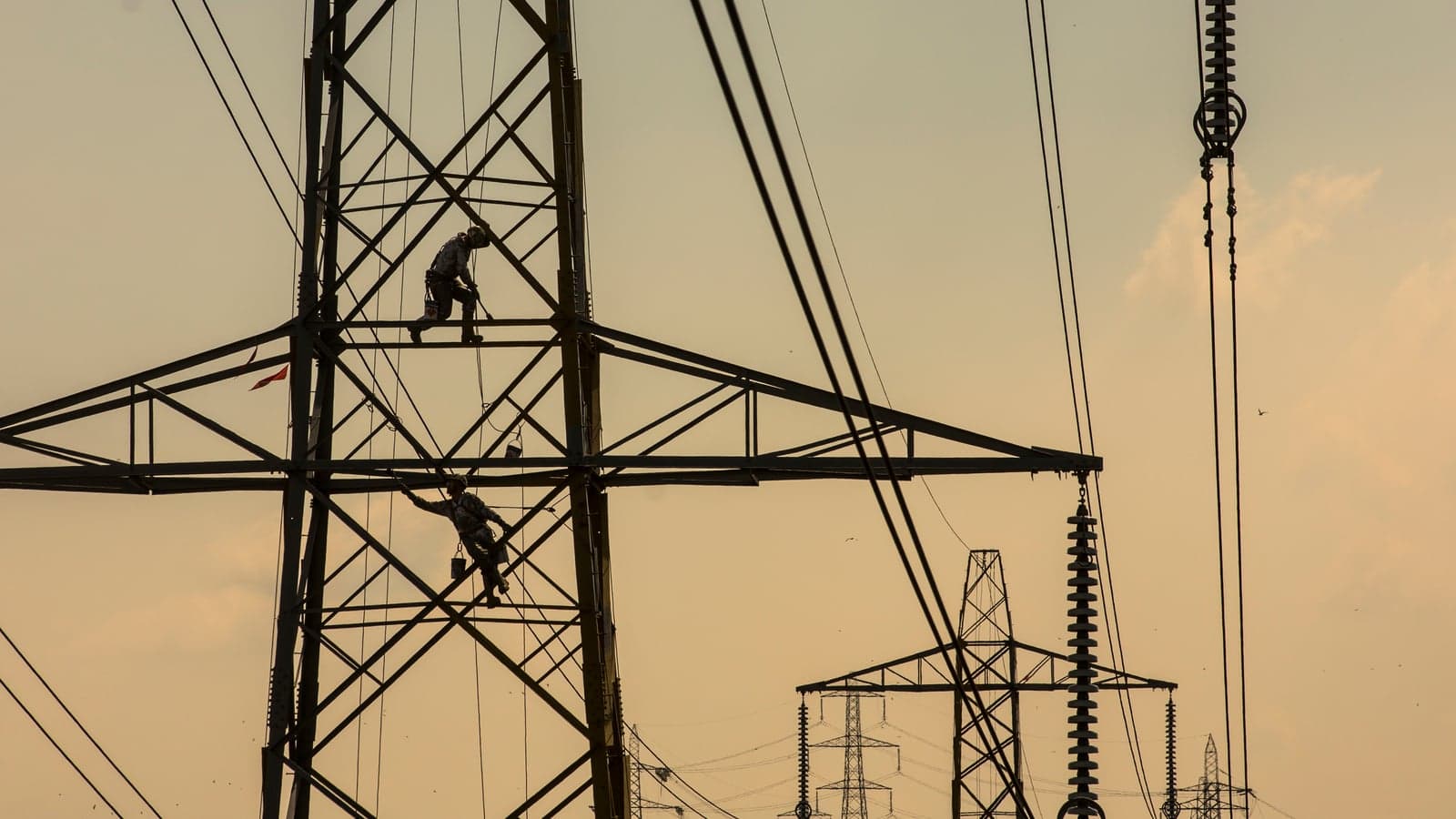
Many corporates now cite grid connection lead times of 18 to 36 months as the biggest constraint on scaling fleet electrification.
Additionally, in certain countries, challenges continue with the speed of grid reinforcement and access to support the rollout of charging infrastructure.
Said Gall: “For depots and trucks, this happens very frequently. Many corporates now cite grid connection lead times of 18 to 36 months as the biggest constraint on scaling fleet electrification.”
Cars and vans can sometimes work around these limitations through flexible charging solutions. But for logistics depots and truck fleets, the constraints are harder to avoid.
This raises a broader question about how electricity networks evolve alongside transport electrification.
Gall argues that grids need to move from reactive to anticipatory planning. “In practice, this means reinforcing grid capacity ahead of demand at logistics hubs and along major corridors such as the TEN-T (Trans-European Transport Network) network.”
It also means rethinking connection models themselves.
Allowing flexible or non-firm connections, supported by on-site battery storage, could allow fleets to electrify sooner rather than waiting years for full grid reinforcement.
At the same time, queue management processes may need to evolve.
Said Gall: “Finally, it involves reforming grid queue processes so that projects move from a first-come, first-served model to a first-ready, first-connected approach.”
If these changes occur, fleet electrification could play a far larger role in the power system than simply increasing electricity demand.
Because fleets, unlike most residential charging, are highly predictable. Charging schedules can be planned, aggregated and optimised — creating opportunities for smarter energy management.
“Fleet charging creates predictable and schedulable demand, which is significantly easier for grids to plan around compared with residential charging.”
And with smart charging in place, fleets could help support the broader energy transition.
“Electrified depots can absorb renewable energy, smooth out peaks and reduce the need for costly reinforcement.”
In other words, fleets could become more than electricity consumers. They could become flexibility assets.
More on e-mobility:
EV optimism collides with fleet economics
Climate rollback could leave ‘grid to nowhere’ warns MEP
Smart charging alone can significantly shift the economics.
According to Gall, smart charging alone can reduce electricity bills by 20 to 40% simply by helping fleets avoid peak tariffs.
And when combined with on-site storage, the benefits extend further.
“On-site storage enables fleets to avoid demand charges, defer expensive grid upgrades and improve their operational resilience.”
Vehicle-to-grid (V2G) technologies may also play a role, though their impact this decade is likely to remain limited, due to technological readiness.
Gall believes that, in selective cases, it can even be a realistic revenue stream, “however, for most fleets, the majority of value this decade will continue to come from smart unidirectional charging, or V1G.”
Where V2G may prove most viable is in fleets with long dwell times — such as buses, airport vehicles or municipal fleets — where vehicles spend extended periods parked and connected.
“As a result, it is likely to provide an incremental upside rather than form the core of the business case by 2030.”
The bigger opportunity may lie in aggregation. While individual depots may offer limited flexibility, aggregated fleets could eventually provide system-level services.
“Aggregated fleets can provide flexibility at a scale that matters. In reality, this flexibility will likely show up first through cost avoidance and better asset utilisation, and then evolve into a more material revenue stream over time,” said Gall.
More from the Power Playbook:
How data centre-driven power demand is shaping big tech power plays
Iberdrola's grids-first strategy pays off early as E.ON and Enel double down
Moving forward
So where does that leave fleet operators today?
Gall’s advice is pragmatic.
“The first priority is to treat energy as a managed input rather than a fuel by aligning vehicles, depot charging, grid access and tariffs into a single strategy.”
The second step is securing infrastructure early.
“It is essential to secure grid capacity and depot charging early, because these have become the scarcest assets in the system.”
And finally, fleets should move where the business case is already clear.
“Fleets should electrify where the economics already work today, i.e. mainly cars and vans.”
Taken together, the message is clear: the economics of fleet electrification are improving rapidly — in many cases faster than market confidence.
But the real constraint may not be vehicles, batteries, charging technology or the economics. It may simply be whether the grid can keep up.
What do you think? Will grid access become the decisive factor that determines how quickly fleet electrification scales across Europe?
Reach out and let me know so that I can feature your thoughts in the Power Playbook.
Cheers,
Yusuf Latief