EU seeks to mobilise private investment via Clean Energy Investment Strategy
Jonathan Spencer Jones
Posted on: 11 March 2026
The European Commission’s ‘Clean energy investment strategy’ aims to supplement public funding with private investment for the energy transition.
With an estimated €33.7 trillion in assets under private management in Europe and institutional investors controlling over €12 trillion of assets in the region, the Commission is aiming to tap into these with a framework intended to deliver the long-term stable returns that such investors would want.
In particular, the aim is to use public financing as a catalyst to de-risk projects, spread financing costs over time and attract a wider base of investors, including large-scale institutional capital.
While there doesn't seem to be a target specified, the scale of the challenge is that delivering the clean energy transition requires an estimated €660 billion of investment annually in generation, energy efficiency and the grid to 2030, rising to €695 billion between 2031 and 2040.
This is a substantial increase compared to the average of €240 billion annually between 2011 and 2021.
Also of interest
Energy security must not overshadow affordability in Europe
As a first step, the European Investment Bank (EIB) group has committed to deliver more than €75 billion of financing over the next three years.
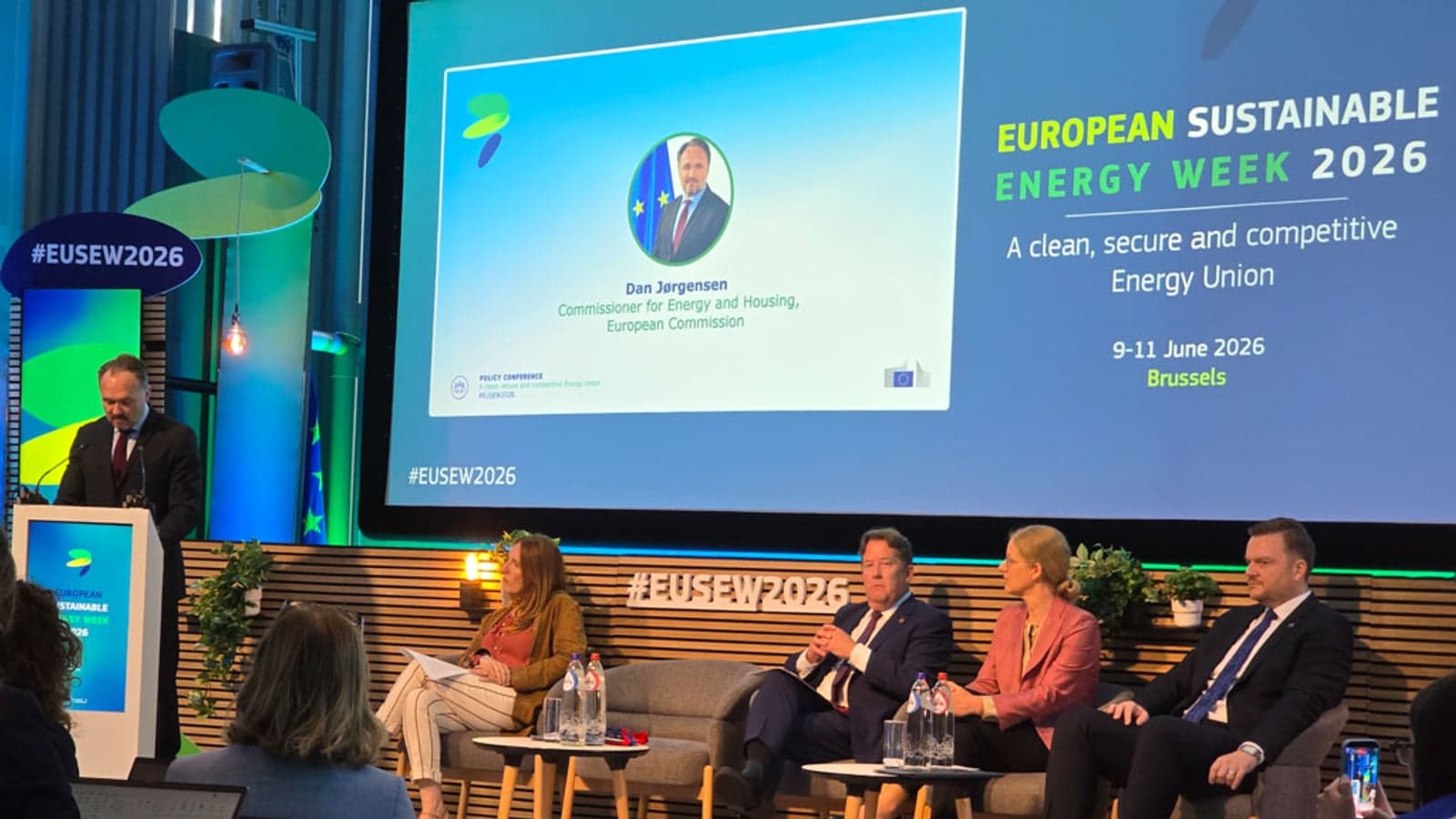
Commissioner for Energy and Housing, Dan Jørgensen, described the strategy as the step change needed in energy investments for the EU’s competitiveness, security and decarbonisation.
Stating that to ensure that Europe’s economy is powered by secure, affordable and clean energy, the pace and scale of investments must be stepped up, he said: “We will de-risk projects and attract a broader range of investors to help finance clean technologies, energy efficiency and modern infrastructure such as grids that will underpin the clean energy transition.”
Action points
The strategy includes four key measures aimed at improving access to capital markets and bank loans and providing targeted public funding for clean energy investments.
To improve access to capital markets and bank loans for electricity grid operators, including access to equity, the EIB is due to set up a strategic infrastructure investment fund that will help to provide equity, based on an indicative commitment of up to €500 million from the EIB.
The European Commission and the EIB will also explore the possibility of setting up a facility for operators to securitise their future revenue streams in return for immediate liquidity.
The Commission and EIB also intend to support the ability of banks to lend, particularly for small operators.
Targeted public funds are proposed to de-risk innovative clean energy technologies and energy efficiency investments. This includes financing for research on small modular nuclear reactors in Europe, the strengthening of energy efficiency financing through InvestEU and the launch of a €500 million pilot scheme to accelerate the offer and uptake of 'energy efficiency as a service' models.
Last but not least, an ‘Energy transition investment council’ with the investment community is proposed to support long-term private investment in the energy sector. Due to be convened later in the year by Commissioner Jørgensen, its agenda includes inter alia ensuring that public policy is aligned with investor needs.
According to the Commission, further clarity on the scope and nature of the investments sought will be provided in the forthcoming energy and climate framework for the decade ahead.
Meanwhile, the EU’s 2028–2034 budget and national support schemes will serve as further strategic levers to de-risk projects, reduce financing costs and ensure that public funds amplify private investment.