Is electrification the cushion Europe needs against energy market volatility?
Yusuf Latief
Posted on: 20 March 2026
Volatility once again is a defining feature of global energy markets; electrification might just be a needed balm.
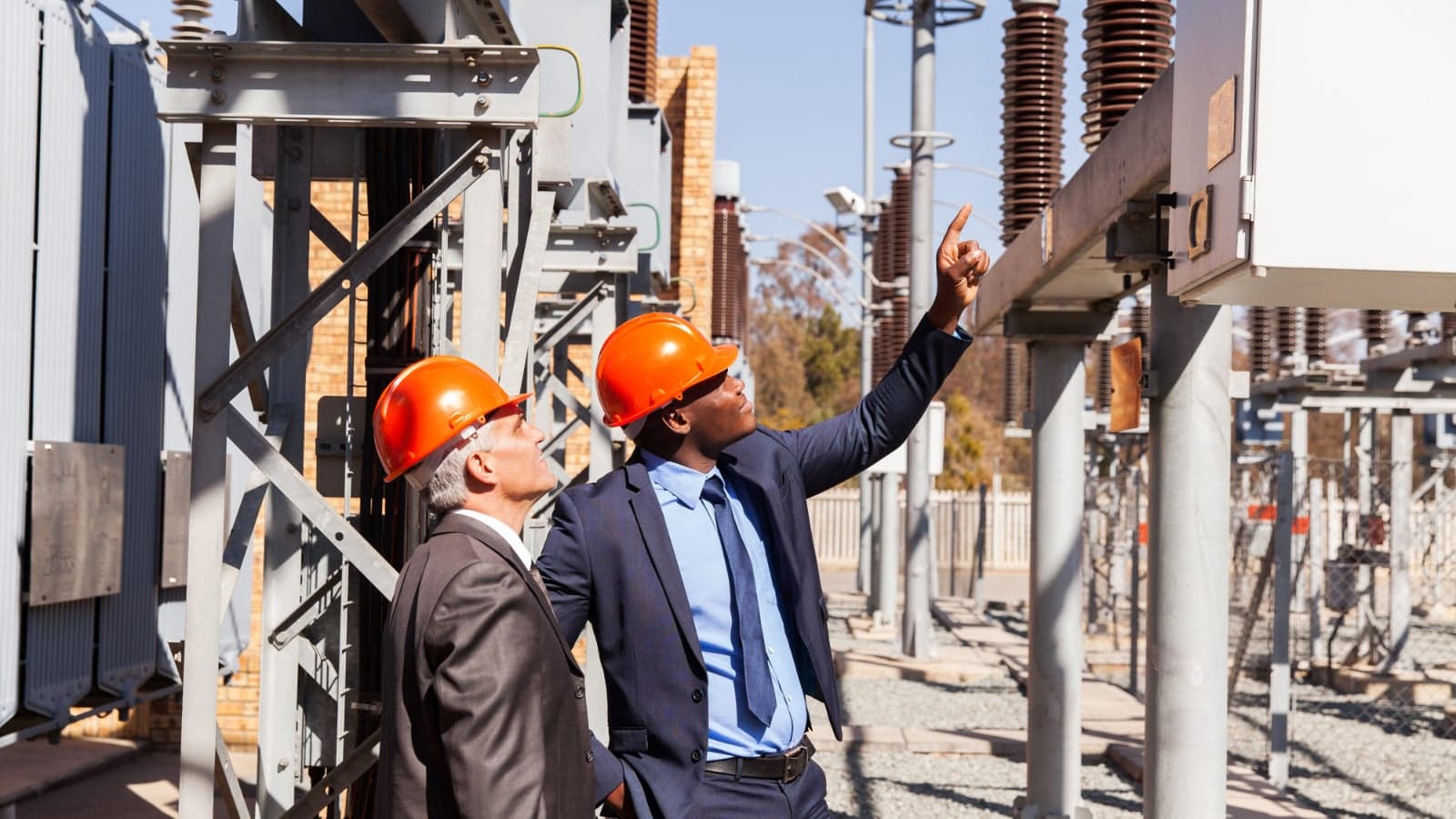
In the Power Playbook: With conflict in the Middle East showing no signs of slowing, global energy market volatility is dominating headlines. Electrification offers a hedge.
Price shocks have been dominating headlines and are exposing a structural issue; how modern economies remain tethered to unpredictable fossil fuel systems.
So what does this mean for investors and businesses?
That exposure feeds directly into operating costs, margin stability, and long-term planning.
However, as the new energy price crisis has been unfolding before our very eyes, a growing body of evidence has also come out, suggesting that electrification may offer a way to rebalance that risk, at least in the very long term.
A recent white paper from the We Mean Business Coalition (WMBC), a lobby group focusing on climate policy, argues that electrification is rapidly becoming the operating system of modern economies, as electricity increasingly powers transport, buildings, industry and digital infrastructure.
The white paper, Electric Advantage: The Business Case for an Electrified Economy, argues that electricity, particularly when generated from domestic clean sources, operates differently. It is more localised, more controllable, and—crucially—less exposed to international commodity swings.
That distinction has direct financial implications.
Specifically, says the white paper, electrification could displace around 60% of global fossil fuel use and energy-related emissions, while lowering energy costs and strengthening resilience to external shocks.
For the 74% of the global population living in net fossil fuel–importing countries, the paper argues that this translates into reduced dependence on volatile imports and greater control over energy pricing—an increasingly important consideration for businesses managing long-term cost risk.
More from the Power Playbook:
How data centre-driven power demand is shaping big tech power plays
Is grid access holding back the economic case for fleet electrification?
Iberdrola's grids-first strategy pays off early as E.ON and Enel double down
The electric business case
The white paper states that the ability to deploy clean electricity across transport, buildings, and industry—what it calls ‘electrification readiness’—is emerging as a proxy for economic competitiveness.
Investors and manufacturers, it says, are increasingly considering this factor when making decisions, looking at whether countries can use it across their economies. Electrification is thus transforming into a central element of capital planning.
Indeed, the business case for electrification seems to already be influencing investment behaviour.
According to the latest Siemens Infrastructure Transition Monitor, a survey of 1,400 senior executives across energy, buildings, and industrial sectors, 65% of industrial leaders now see electrification as the most effective lever to achieve net zero.
This preference is driven as much by operational and cost considerations as by sustainability goals, underscoring that electrification is increasingly a commercial decision.
So said Matthias Rebellius, Managing Board Member of Siemens AG and CEO of Smart Infrastructure, in the report:
“Industrial companies are proving that sustainability and competitiveness can advance together. They are investing in electrification, flexibility and digital technologies that deliver results today.”
The survey also reveals that companies are pairing electrification with complementary strategies to maximise both efficiency and resilience.
Nearly six in ten (59%) industrial organisations plan to use demand-side flexibility mechanisms to optimise energy consumption and cut costs, while 63% cite digitalisation as critical to improving energy management.
What [industrial companies] need now is long-term policy clarity and supportive regulations to plan ahead with confidence and accelerate the transition to cleaner, more efficient operations.
In practice, this means businesses are not waiting passively for cheaper electricity; they are actively shaping how, when, and where it is used to align with market signals and internal operational priorities.
Momentum is also visible in the uptake of onsite renewables and decarbonisation of core operations. The Siemens data shows that 42% of organisations are mature or advanced in onsite renewable production, and 38% report similar maturity in decarbonising core operations—both up sharply from 27% in 2023.
These figures suggest that companies are increasingly embedding clean electricity into their capital expenditure strategies, reducing their exposure to fossil fuel price swings while creating predictable operational costs.
The survey also highlights the risk of stalling momentum where policy and regulatory signals are unclear. Almost two-thirds (63%) of industrial leaders identify policy uncertainty as a growing threat to their energy transition investments, while 60% point to regulatory unpredictability as a deterrent to renewable deployment.
For investors and CFOs, this translates into heightened caution: capital allocation decisions are increasingly tied to confidence in stable market and policy frameworks.
Added Rebellius: "What [industrial companies] need now is long-term policy clarity and supportive regulations to plan ahead with confidence and accelerate the transition to cleaner, more efficient operations.”
Lagging capital
Yet if the investment case is strengthening, the pace of deployment and flow of capital leaves something to be desired.
Corporate Leaders Group (CLG) Europe, in the context of the upcoming Electrification Action Plan (EAP), recently published a statement underlining the urgency and importance of scaling up the continent’s clean electrification.
According to CLG, although the ‘frontier’ of electrification is moving forward due to faster-than-expected technological development, scale-up and deployment in the EU has effectively stalled for decades.
The Group, a business-led lobby group whose members include industry leaders from a range of sectors, including energy, says the continent needs to urgently do more to keep up with the innovation race as other major economies seize opportunities and massively invest in electrification.
Their statement points to several challenges that need to be addressed by the EAP. These include:
- High upfront investment needed to transition from fossil fuel-powered devices, despite lower operating and maintenance costs and growing consumer interest;
- Cost-related challenges that are amplified by regulatory instability, and by poor targeting and design of support schemes to bridge the funding gap
- Grid constraints, whereby underutilisation of the existing grid and slow expansion delays improvement of grid connections, both for industrial customers as well as electricity suppliers;
- A robust carbon price, which requires continued improvement of the implementation of the EU Emissions Trading System (ETS) and maintaining the integrity of the ETS;
- Clearer and more consistent communication to ensure consumers understand the economic, performance and resilience benefits of electrified, fossil-free goods and services.
At the same time, CLG Europe emphasises that electrification represents a shift toward a “future-proof, innovative, secure and clean economy,” with reduced exposure to fossil fuel price volatility and more predictable energy costs.
For investors, such predictability is key. Stable cost structures underpin long-term planning, valuation, and capital allocation.
Cushioning exposure
The question is no longer whether electrification makes sense in principle. For many businesses, that case has already been made.
Indeed, the question now is rather whether systems—policy, infrastructure, and markets—can evolve quickly enough to support capital deployment at the scale required.
Because the alternative is continued exposure to volatility that is largely outside domestic control.
The volatility we are seeing in global energy markets is a reminder of how exposed modern economies remain to fossil fuel shocks. Electrification powered by clean electricity offers a way to reduce that exposure while strengthening competitiveness and energy security
Recently, my colleague Kelvin Ross covered comments from Professor Nick Butler of King’s College London, which highlight how quickly external shocks can ripple through energy markets. Warnings of a potential global gas bidding war suggest that countries could be priced out of supply altogether as competition intensifies for limited resources.
For businesses and investors, that is not just a geopolitical risk. It is a pricing risk, a supply risk, and ultimately a balance sheet risk.
In that context, electrification begins to look less like a long-term transition pathway and more like a strategic hedge.
As Maria Mendiluce, CEO of We Mean Business Coalition puts it: “The volatility we are seeing in global energy markets is a reminder of how exposed modern economies remain to fossil fuel shocks.
"Electrification powered by clean electricity offers a way to reduce that exposure while strengthening competitiveness and energy security."
Of course, it's not a complete shield—no system is immune to volatility—but, as the We Mean Business Coalition argues, a structural shift that can reduce exposure to the most unpredictable elements of the current energy landscape.
And as both industry data and policy signals suggest, the foundations for that shift are already in place. The real test now is how quickly capital can move to build on them.
But what do you think? Reach out and let me know so that I can feature your thoughts in the Power Playbook.
Cheers,
Yusuf Latief