Empowering stakeholders in flexible energy systems: Insights from ELEXIA
Guest/partner contributor
Posted on: 5 March 2026
The idea behind ELEXIA is that energy sector integration creates flexibility for the power system that can be crucial for the transition to zero emission societies.

To achieve this, ELEXIA will develop and showcase the utilisation of validated tools for effective planning and management of integrated energy systems across varying geographical, climatic and economic regions in Europe, as well as to link them across vectors and sectors towards creating a cost-optimised, flexible and resilient energy system.
The practical application of these tools will be demonstrated at three distinct pilot sites: an industrial port in Portugal, an urban-city environment in Denmark and an industrial-urban-residential landscape in Norway.
Addressing societal issues
ELEXIA’s ambition of developing practical and feasible pathways towards independence of fossil fuels by capitalising on the untapped flexibility within the energy system has great potential. However, this ambition also opens doors for new societal issues that must be understood and overcome in order to have a positive impact on the local communities.
The social science and humanities (SHH) researchers involved in ELEXIA argue that lack of stakeholder feedback early in the process can lead to tools and technologies being developed that do not meet the needs and expectations of future users of the energy system, thus affecting and possibly preventing acceptance.
Understanding social acceptance
While some skepticism exists around the concept of social acceptance on the assumption that social acceptance is inherently desirable, we are building on a branch of literature where the goal is to point to needs, perspectives, preferences and challenges in order to develop and improve the technology, not to convince people that a technology is good and right. [1, 2]
Inspired by this conceptualisation of social acceptance as a combination of community acceptance, socio-political acceptance and market acceptance, we have aimed for involving not only the relevant industry when approaching our stakeholders, but also policymakers, local and national authorities, city planners, knowledge institutions, non-profit organisations and future users.
In that way, we are retrieving perspectives, concerns and ideas from all three dimensions of social acceptance, providing a holistic and comprehensive understanding of the acceptance object.
Stakeholder engagement strategy
The stakeholder engagement strategy developed for ELEXIA aimed for early engagement of stakeholders through focus groups and interviews to receive their input before the technology was fully developed by the technology partners in the project.
This early feedback from various groups of stakeholders can help refine the technology at an early stage, resulting in a more user-centred design. By delivering our report on stakeholder perspectives early in the process, the consortium had a unique opportunity to incorporate these insights into the technology development process while there was still time and room for adjustments. This is perhaps the greatest strength of our social science and humanities strategy in ELEXIA.
More about our specific methodology and the early stakeholder feedback is available in the project deliverable 'Stakeholder Perspectives and Social Acceptance Report'. [3]
Value of stakeholder engagement in technology development
The following section provides four examples on how stakeholder engagement in the ELEXIA project has informed technology development. By listening to end-users and understanding their needs, our goal in ELEXIA has been to create more user-friendly tools that simplify complex processes and provide clear, actionable results for the users.
1. User interface
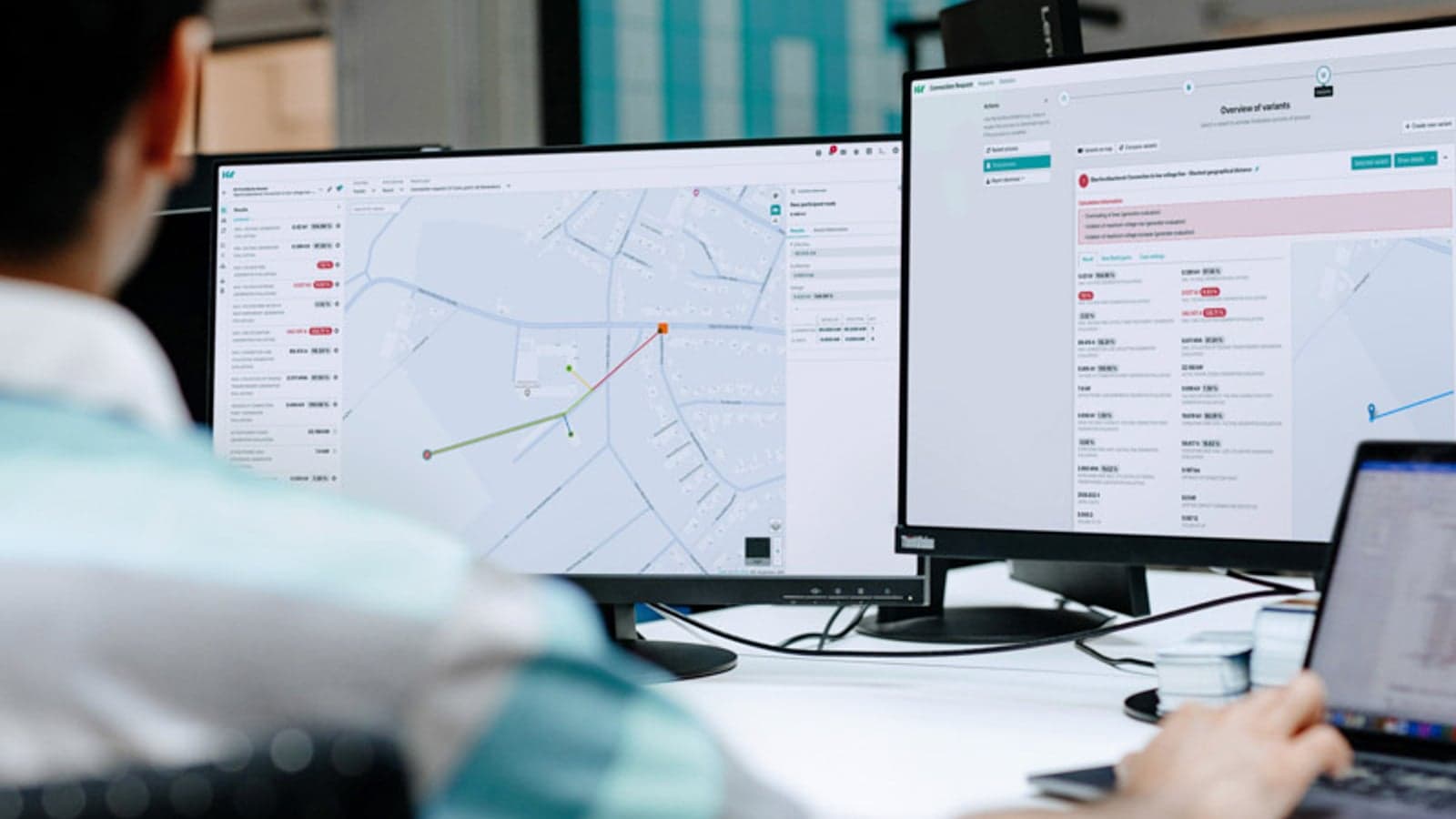
After conducting rounds of discussions with stakeholders and end-users such as city planners, architects and researchers, it was decided to develop an interactive interface to visualise the results from the planning tool.
With the technical requirements of the project in mind, i.e. integration with the digital service platform and operation from an online platform, our technology partner VTT developed a versatile interface. Recognising some conflicting technical requirements, the technology partner adopted a flexible approach, allowing the interface to be deployed both offline and online, based on the best technical solutions found.
2. Installation and setup
To minimise the installation burden and setup complexity, feedback from stakeholders led to the adoption of a 'click and play' approach. This ensures that users can quickly and easily get the tool up and running, enhancing user experience and facilitating wider adoption of the tool.
3. Output visualisation
While the initial plan was to provide outputs that could be displayed either in the original tool or exported to Excel, stakeholder feedback indicated that these solutions were too complex and not user-friendly.
In response, our technology partner invested additional effort to develop a user interface (UI) and dashboard where results can be easily displayed. This interface and dashboard are designed to be intuitive and visually engaging, enhancing the accessibility of the tool's outputs for the users.
4. Integration with data lake
The integration with the data lake ensures that end users do not need to interact with the underlying energy management system (EMS). Stakeholder engagement guided our developers from Amctech and Tecnalia to focus on clear and useful visualisations.
In the Portuguese pilot, the energy management system developed by Tecnalia produces outputs such as total system cost, energy consumption, PV production and curtailment, EV charging profiles, HVAC setpoints and consumption, and LNG compressor power usage.
Stakeholders emphasised the need for these results to be transparent and intuitive for operators who rely on them for decision-making. Consequently, dashboards were prioritised over technical views, allowing operators to easily see optimal setpoints and system performance indicators without requiring knowledge of the underlying energy management system algorithms.
Ensuring social viability through stakeholder engagement
Early stakeholder engagement at our three pilot sites has not only led to technology refinement but also uncovered key organisational, regulatory and economic factors that may impact implementation and adoption of the tools that are being developed in ELEXIA.
The invaluable input from local actors, who have in-depth knowledge of regional conditions and barriers, has been essential in understanding the processes following the development of a new energy system. This local expertise has greatly benefited work packages focused on integrating and demonstrating technology at pilot sites, as well as analysing social impacts such as cost distribution, value chains and addressing market integration and regulatory barriers.
Conclusion
In ELEXIA, we believe that early stakeholder feedback from a broad group of stakeholders is key to uncovering crucial insights that can significantly shape the development process. By being responsive to local contexts and inclusive of diverse needs and perspectives, we aim to pave the way for more socially accepted and sustainable energy solutions.
This article has demonstrated how stakeholder engagement can inform not only technology development, but also the broader organisational, regulatory and economic factors that influence the implementation and adoption of new energy systems.
Engaging actively with local actors allows us to understand the unique challenges and opportunities within each region, fostering collaboration that drives more targeted and effective solutions. In doing so, our approach ensures that new energy technologies are not only technically sound but also aligned with the social, regulatory and economic realities, thereby enhancing their impact and acceptance.
References
1. Wüstenhagen, R., Wolsink, M., & Bürer, M. J., 2007. Social acceptance of renewable energy innovation: An introduction to the concept. Energy Policy, 35(5), 2683–2691.
2. Wolsink, M., 2018. Social acceptance revisited: gaps, questionable trends, and an auspicious perspective. Energy Research & Social Science, 46, 287–295.
3. Ljones, M. L., et al., 2024. Stakeholder perspectives and social acceptance report. European Commission, CORDIS: EU research results.
About the author
Marie Louise Ljones holds a master’s degree in political science from the University of Bergen. She is employed at NORCE Research Centre AS and involved in several international collaborative projects that focus on public and social acceptance in relation to technologies and methods that can contribute to the green transition, especially within the energy field.
Related tags
Most popular
Join the community for freeAnd get access to all content
Related projects
ELEXIA
1 October 2022 - 30 September 2026
View project