Partner contentProjects
Energy system resilience through ‘energy modi’
Guest/partner contributor
Posted on: 9 October 2024
The ‘energy modi’ is proposed as a coordination mechanism for energy communities to collaborate with the power system, writes Aditya Pappu and Gerwin Hoogsteen.
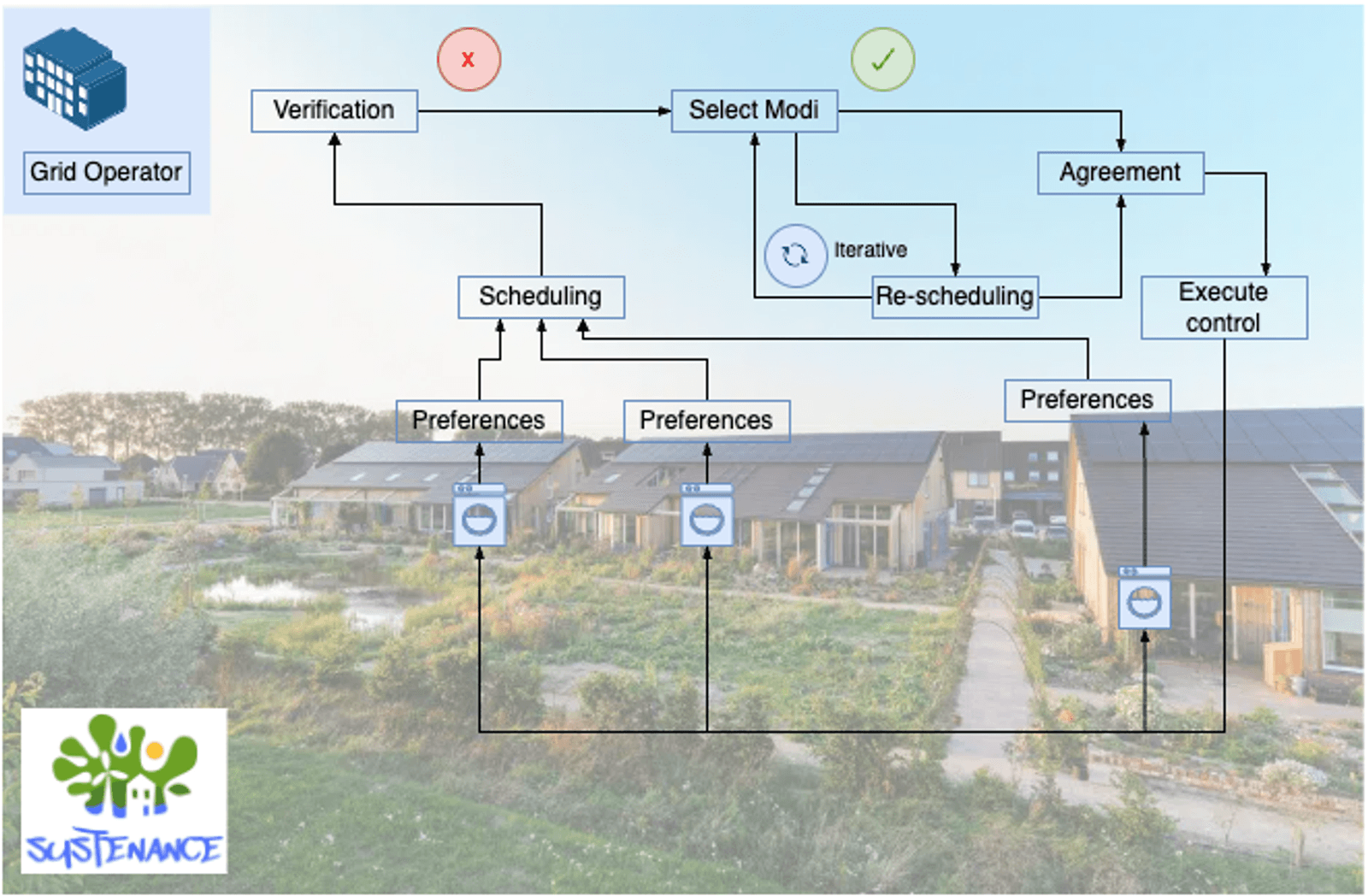
The ‘energy modi’ is proposed as a coordination mechanism for energy communities to collaborate with the power system, writes Aditya Pappu and Gerwin Hoogsteen from the University of Twente, partners of the H2020 SUSTENANCE Project.
New challenges emerge as the energy transition unfolds, one of which is grid congestion.
Grid congestion is a problem that occurs when the existing grid infrastructure is not able to deliver the desired amount of power at an adequate power quality. This problem has become especially pronounced in the north of Europe, where it has rapidly evolved into a significant problem limiting economic growth and hampering the energy transition.
The temporal scarcity of resources, both in terms of power capacity and energy, requires a different mind-set to provide a comfortable power supply to energy communities. To address this, we introduced a framework of innovations that allow energy communities to collaborate with the power system to safeguard an adequate supply of energy for the whole system.
For these innovations, we utilise concepts from resilient systems seen elsewhere in the world.
Entangling power and energy markets
The underlying problem is that we are encountering a new reality where energy can no longer be taken for granted.
One leading aspect is that renewable energy sources cannot be controlled in the same way that we used to operate our traditional power plants. This is because we cannot feed more fuel upon request to generate more electricity based on demand.
As an effect, traditional power-oriented controls and markets struggle to maintain a balance, as now not only power capacity but also energy availability may be a bottleneck.
Another aspect is that the infrastructure was not designed for such high levels of electrification which require more localised solutions when it comes to balancing supply and demand to ensure the safe and secure delivery of energy.
These developments necessitate a change of perspective in which power and energy markets become entangled and local aspects cannot be neglected anymore. Moreover, it is a change that requires a commitment from all actors involved in the energy system, since we all have a shared responsibility.
With this in mind, we must look at systems that naturally deal with the aforementioned challenges. Such systems already exist among power grids. Many electricity grids start as small isolated microgrids that provide basic needs to small communities.
See for example the electrification of remote areas in India that must operate solely on their own. As these grids develop and connect, their service quality may increase. But often, due to a lack of resources, blackouts still occur.
The World Bank's Energy Sector Management Assistance Program has developed a classification of different tiers of access to energy supply for households. A higher tier denotes a higher availability of connection to the power grid.
Find out more about:
EU-funded energy projects
Solution: Energy Modi
Our solution is the introduction of Energy Modi, focusing on the highest-quality tier, tier 5. Advances in IT enable coordinated energy use, allowing for voluntary changes in consumption and voluntary disconnection from the main grid. The idea here is that such behaviour helps the overall system and prevents the need, for example, for rolling blackouts.
The focus of our solution is on a coordination mechanism in autonomous energy management systems (EMSs) to coordinate energy use with the grid operators and energy markets.
If the grid operator signals problems in the near future, e.g. grid congestion, it can send out a signal, which we call the ‘energy modi’. The developed communication interface allows the grid operator to seek help from energy communities to resolve these problems. It therefore signals a time window in which problems will occur and the type of problem.
We define two types of problems. The first is capacity scarcity, which signals that the desired power cannot be delivered. The second is energy scarcity, which means that the desired energy will not be available. Note that both types of scarcity may apply. For this signalling, the grid operators can utilise forecasts and market bids to anticipate future problems.
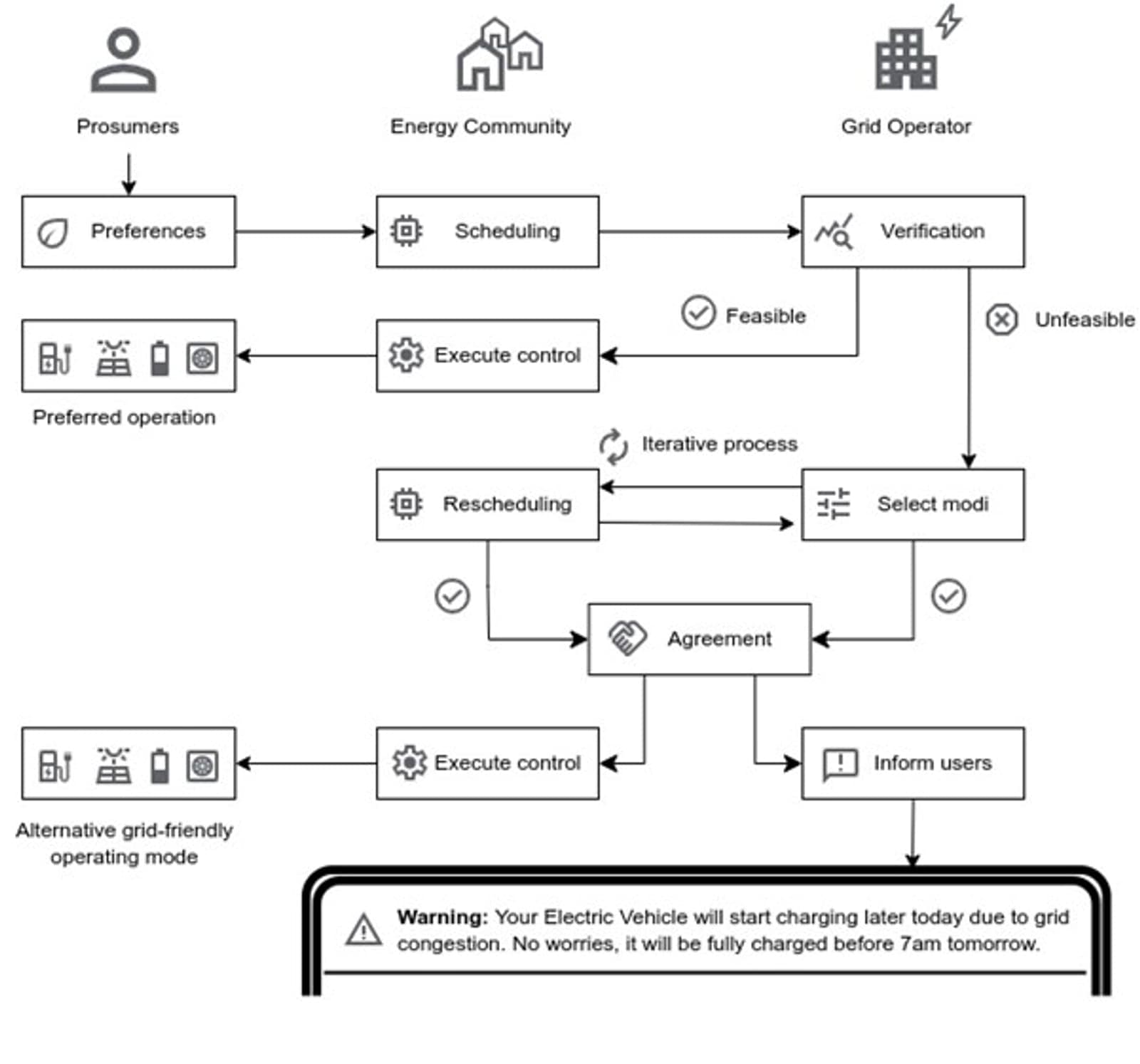
Normally, these energy communities can pursue their objectives concerning energy usage and may voluntarily respond to communicated signals by the grid operator. However, in case this does not resolve problems, we argue that the grid operators should have the means to enforce restrictions to safeguard the overall system.
For this, we propose an iterative algorithm for collaboration between energy communities and the grid operator using the energy modi. Iteratively, the number of control intervals and weight of system objectives are increased, shown in figure 1. With this the parties can explore together the feasible states that minimise the influence of the grid operator, whilst ensuring an as high as possible quality of service.
The proposed concept therefore implements the orange phase of the USEF framework, shown in figure 2.
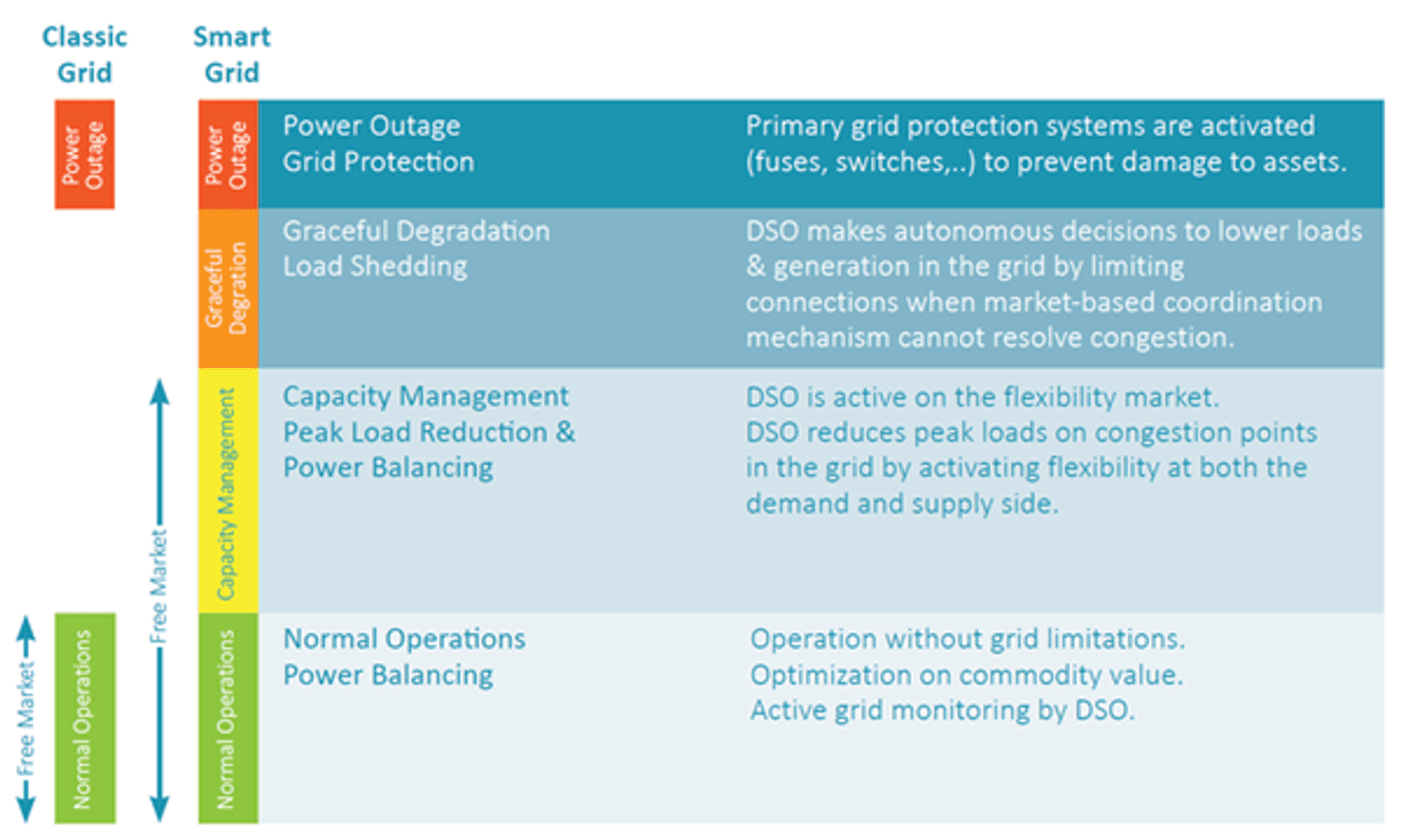
The concept heavily relies on the availability of an energy usage schedule and underlying optimisation algorithms which are well-studied in the field. Such a schedule is required to make the right trade-offs in this coupled power and energy system.
Nevertheless, forecasts are often wrong; therefore, our framework also incorporates local measurements such as voltage. A real-time control system adapts the control based on the planning and these local observations to avoid power quality problems. When deviating too much, the algorithms reschedule and notify other parties.
Read more on Project SUSTENANCE:
Optimised flexibility for private households
Impact
The proposed method impacts everyone connected to the grid. The challenges we face as a society require us to rethink how we want the energy system to operate. By more inclusive coordination between energy communities and the power grid operators, we can cope with the limitations of our system. This not only results in a better quality of service for the community itself but also for all others that are connected to the energy system.
Reflecting on the different tiers of access to energy, we observe that there is a need for higher tiers. These tiers do not necessarily lead to a better service but rather keep the energy service at a high level. They would do so through coordination, respecting the limits of our system and nature.
Advancements in IT make it possible to do so voluntarily and thereby avoid the risk of falling back into a system that may be perceived as less reliable.
About the authors
Gerwin Hoogsteen is an Assistant Professor at the University of Twente. His research interest is in energy management for smart grids, particularly concerning multi-disciplinary research and cyber-physical systems. Current research directions include distributed coordination, and cybersecurity of smart grids. He is the founder and maintainer of the DEMKit and ALPG software.
Aditya Pappu is a PhD candidate at the University of Twente. His research areas are energy management for smart grids, energy access and communication networks. Current research directions include robust energy networks, distributed optimisation and congestion management in smart grids.
About Project Sustenance
The overall purpose of the H2020 SUSTENANCE project is to set up sustainable energy systems for achieving novel carbon-neutral energy communities. The project focuses on the development of smart technological concepts enabling a green transition of the energy systems with higher share of local renewable energy and more efficient integrated energy solutions for the electrical, heat, water, waste as well as transportation infrastructure.
The set-up solutions will at the same time have a good socio-economic impact on the local communities and ensure eco-friendly solutions and good infrastructures, which provide support to sustaining the essentials of life. The demonstration activities are set up in four countries: Denmark, the Netherlands, Poland and India.
Listen to:
EU Energy Projects Podcast: Empowering energy consumers with Project Sustenance
Learn more about the SUSTENANCE project and follow them on LinkedIN. Related topics and information can be found in the H2020 SERENE project.
Related tags
Most popular
Join the community for freeAnd get access to all content
Related projects
SUSTENANCE
+8
1 July 2021 - 31 December 2024
View project