EU approves aid for Poland’s first nuclear power plant
Pamela Largue
Posted on: 11 December 2025
Plant will comprise three reactors, each with 1250MW capacity, and cost around €42 billion.

The European Commission has approved an aid package to support the construction of Poland’s first nuclear power plant.
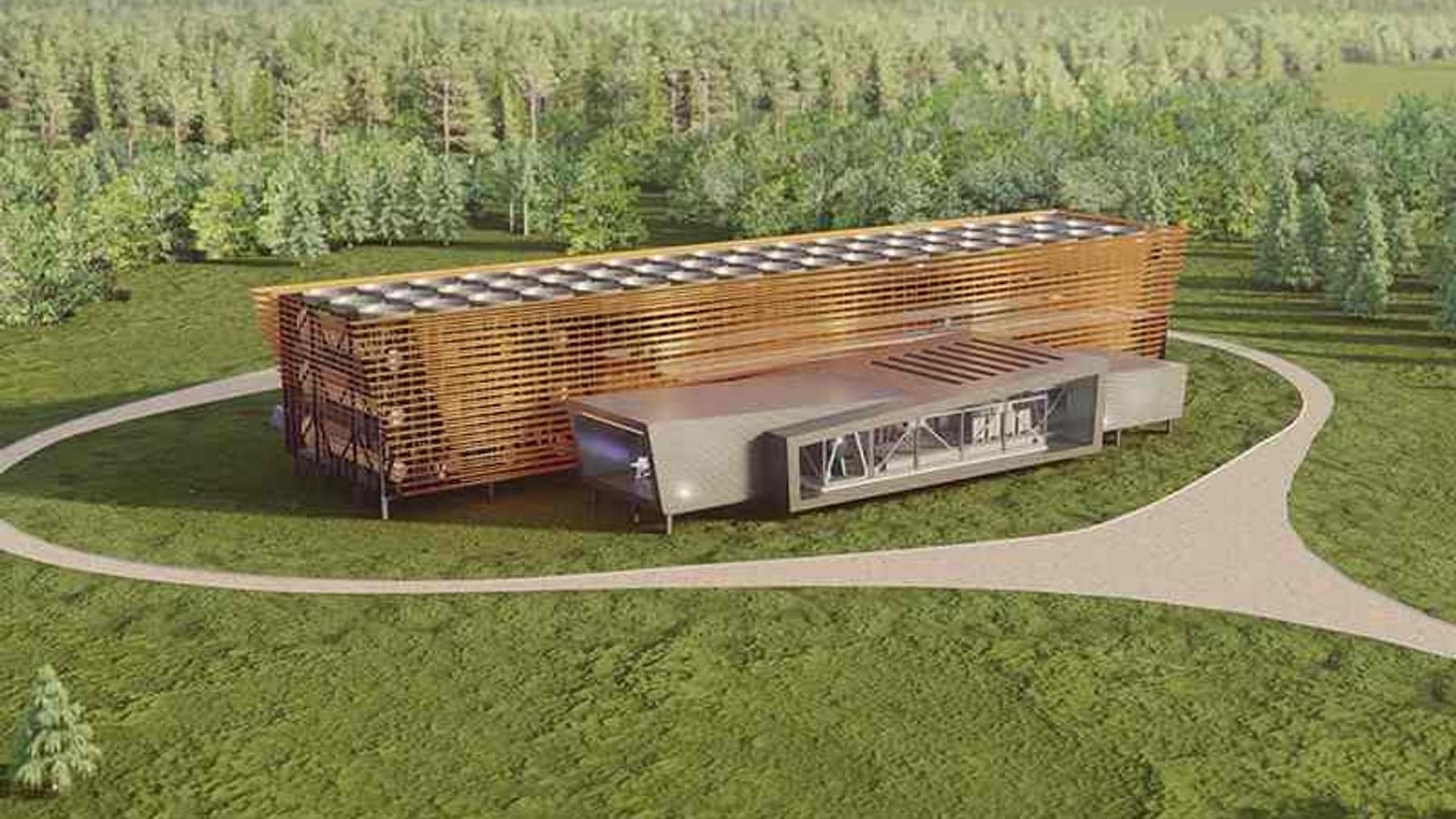
The nuclear plant will be located in Lubiatowo-Kopalino and will be constructed by Polskie Elektrownie Jądrowe (PEJ).
The project consists of three new nuclear reactors, each with a capacity of 1250MW, which are scheduled to start operating in the second half of the 2030s.
In April 2025, PEJ and a Westinghouse-Bechtel consortium signed an engineering development agreement for preparatory work at Lubiatowo-Kopalino. Westinghouse will supply three of its AP1000 units for the project.
The project will cost around €42 billion ($49bn). To ensure stable revenues from the plant, a two-way contract for difference mechanism will be in place for the next 40 years.
This will see the Polish state pay PEJ if market prices fall below a pre-determined strike price. If market prices exceed this price, PEJ will pay the difference to the Polish state.
Have you read?
Poland poised for renewable energy awakening shows report
EIB loans Poland's Energa €405m for power grid upgrades
In December 2024, the Commission began investigating Poland's proposed support package for the nuclear power project.
Some concerns however were identified relating to the potential for distorted competition in the internal market. For this reason, Poland revised elements of the aid package.
The revisions include:
- The period of the CfD was reduced from 60 to 40 years.
- A revised remuneration formula to ensure strong incentives for PEJ to operate the plant efficiently and to make use of its abilities to respond to market signals.
- Poland will set the strike price of the CfD using a ‘discounted cash flow' model that takes into account the equity injection and the State guarantees provided, ensuring that the total aid is limited to the project's funding gap.
- A dedicated control mechanism was introduced under which any additional profits exceeding what is necessary to achieve a market rate of return must be shared with the Polish state.
- To mitigate risks related to market concentration and to prevent the aid from being passed through to consumers, Poland has agreed to strict conditions regarding electricity trading. At least 70% of the plant's annual electricity output will be sold on the open power exchange - covering day ahead, intraday and futures markets - throughout the lifetime of the power plant.
Nuclear power forms a central part of Poland’s move away from coal-based power.
To this end, the country is not only exploring the possibility of large reactors, but of small modular reactors too, with several announcements in the past few years demonstrating this focus.
According to the World Nuclear Association, in September 2021 NuScale, together with liquid fuels trading group Unimot and minerals producer KGHM Polska Miedź, started exploring possibilities for its reactors to replace coal-fired power plants. In April 2023 KGHM submitted an application to the Ministry of Climate and Environment for the construction of a 462MWe NuScale VOYGR modular nuclear power plant. The application was approved in July 2023.
In April 2023 Orlen Synthos Green Energy (OSGE) announced seven possible sites for the deployment of GE Hitachi BWRX-300 units. In December 2023 the government granted a decision-in-principle for the construction of up to 24 BWRX-300 reactors at these sites.
Also of interest:
Are SMRs the solution for Poland's energy transition?
In February 2025 the General Director of Environmental Protection issued a scope of environmental reports for the proposed projects at Włocławek and Ostrołęka, allowing OSGE to begin environmental and siting research. The same was issued for Stawy Monowskie in February 2024.
In August 2025, Orlen and Synthos Green Energy announced that Włocławek would be the first reactor site to be developed.