EU Energy Projects Podcast: Port of Bilbao reveals €115m decarbonisation plan
Jonathan Spencer Jones
Posted on: 17 December 2025
The Port of Bilbao is integrating port electrification, renewable energy production and advanced energy storage to create a democratic energy ecosystem.
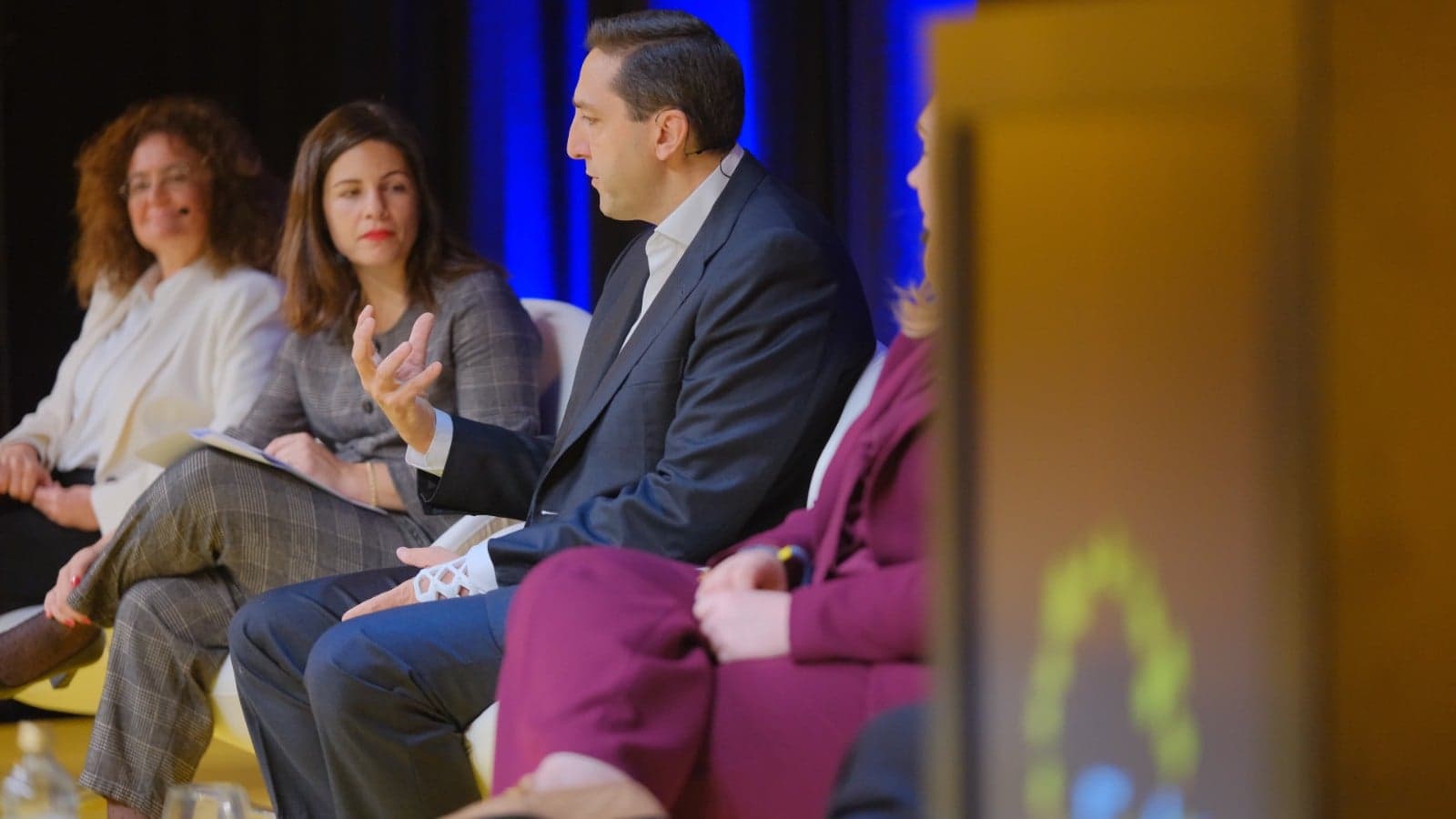
In this episode of the EU Energy Projects podcast, recorded live at Enlit Europe 2025, Ivan Jimenez, President of the Port Authority of Bilbao, tells Areti Ntaradimou about the ambitious investment plans to decarbonise the port.
Ports are key hubs in the energy transition, at the heart of countries’ economies and with diverse energy users from heavy, energy-intensive industries to small businesses and multiple transport types.
They thus present particular challenges for the transformation from traditional fossil fuel based use to clean energy, ensuring that the various stakeholders’ demands can be met without interruptions in port operations.
The port of Bilbao’s BilbOPS project, supported with €115 million ($135 million) in European funding, is aiming to fully electrify the port by 2027 – significantly ahead of the 2030 regulatory deadline.
The extent of the task confronting the port is that by 2030, its power demand is expected to be about seven times higher than it is currently.
Ivan Jimenez, President of the Port Authority of Bilbao, describes the port’s approach as a “collaborative energy sharing model” among the shipping lines, port terminals and stakeholders to enable them to share the clean energy resources democratically and thereby significantly reduce the costs while also enhancing competitiveness.
“We see electrification as the future and see it an opportunity for the port to gain, not only in terms of environmental sustainability but also in economic and social sustainability,” he says.
But democracy and cost effectiveness don’t always go hand in hand and Jimenez says that there are various model options.
“The idea is that we want to create an energy consumption community… the plan is to generate about 25% of our overall energy needs by 2030.”
The expected outcomes of the project are impressive on paper, including emissions reductions around 40% and as high as 85-95% for cruise lines as more and more vessels are able to be connected to onshore power supply.
“The risk is that only 6% of all vessels currently are ready to be connected but we think that by 2030 almost a third of vessels could be ready … we are doing our homework and expect to be ready but one of the worries is if vessels are going to ports that are not ready."
There, the European Commission could have an important role to play with an oversight portal monitoring compliance with port electrification and decarbonisation mandates.
“We think that ports – like Bilbao – that are doing their homework should be rewarded with vessels coming to them.”
LISTEN
Listen to previous episodes:
Building Europe's renewable-ready grid with project CABLEGNOSIS
Community engagement and fair benefit sharing in renewable energy projects
More about the Basque energy transition:
How Basque Country is shaping a sustainable energy future
A Basque blueprint for a resilient energy backbone
Related tags
Latest content
+3
EU Energy Projects Podcast: How the 2Cool2Waste cluster is turning waste heat into an opportunity
In this episode of the EU Energy Projects Podcast, I had the pleasure of welcoming Mohaddeseh Maktabifard and José Luis Corrales Ciganda, both representing the inspiring 2Cool2Waste cluster; an initiative uniting EU-funded projects that transform waste heat from an overlooked by-product into a practical, clean-energy resource.
- Areti Ntaradimou
- 03/12/2025