Home
/
EU Energy Projects Podcast: Building Europe’s Renewable-Ready Grid with Project CABLEGNOSIS
EU Energy Projects Podcast: Building Europe’s Renewable-Ready Grid with Project CABLEGNOSIS
Areti Ntaradimou
Posted on: 10 December 2025
In this episode of the EU Energy Projects Podcast, I had the pleasure of speaking with Christos Christodoulou, coordinator of CABLEGNOSIS, a forward-looking initiative reshaping the power cables that form the backbone of Europe’s energy system.
As we move toward a cleaner, more electrified future, cables might not be the first technology that comes to mind, but as Christos reminded me, “nothing in the energy transition works without them”.
Although CABLEGNOSIS does not directly target the EU’s 55% emissions-reduction goal for 2030, its contribution is fundamental; the project is building the next-generation transmission infrastructure needed to carry vastly more renewable energy.
With renewable electricity expected to reach 50% of Europe’s power mix, the demand for efficient high-voltage AC and DC links, both underground and submarine, is growing rapidly. Strengthening this “invisible backbone” is essential for connecting offshore wind farms, supporting interconnections between Member States, and ensuring grid reliability in a decarbonised future.
Christos highlighted several major challenges the project is tackling. Today’s cable systems face thermal bottlenecks, insulation aging from humidity and contaminants, limited recyclability and - in the case of HVDC links - more complex failure mechanisms. CABLEGNOSIS is addressing these issues head-on by developing new cable layouts, experimenting with different conductor cross sections, and introducing advanced polymer insulating materials that offer higher thermal performance and better long-term durability.
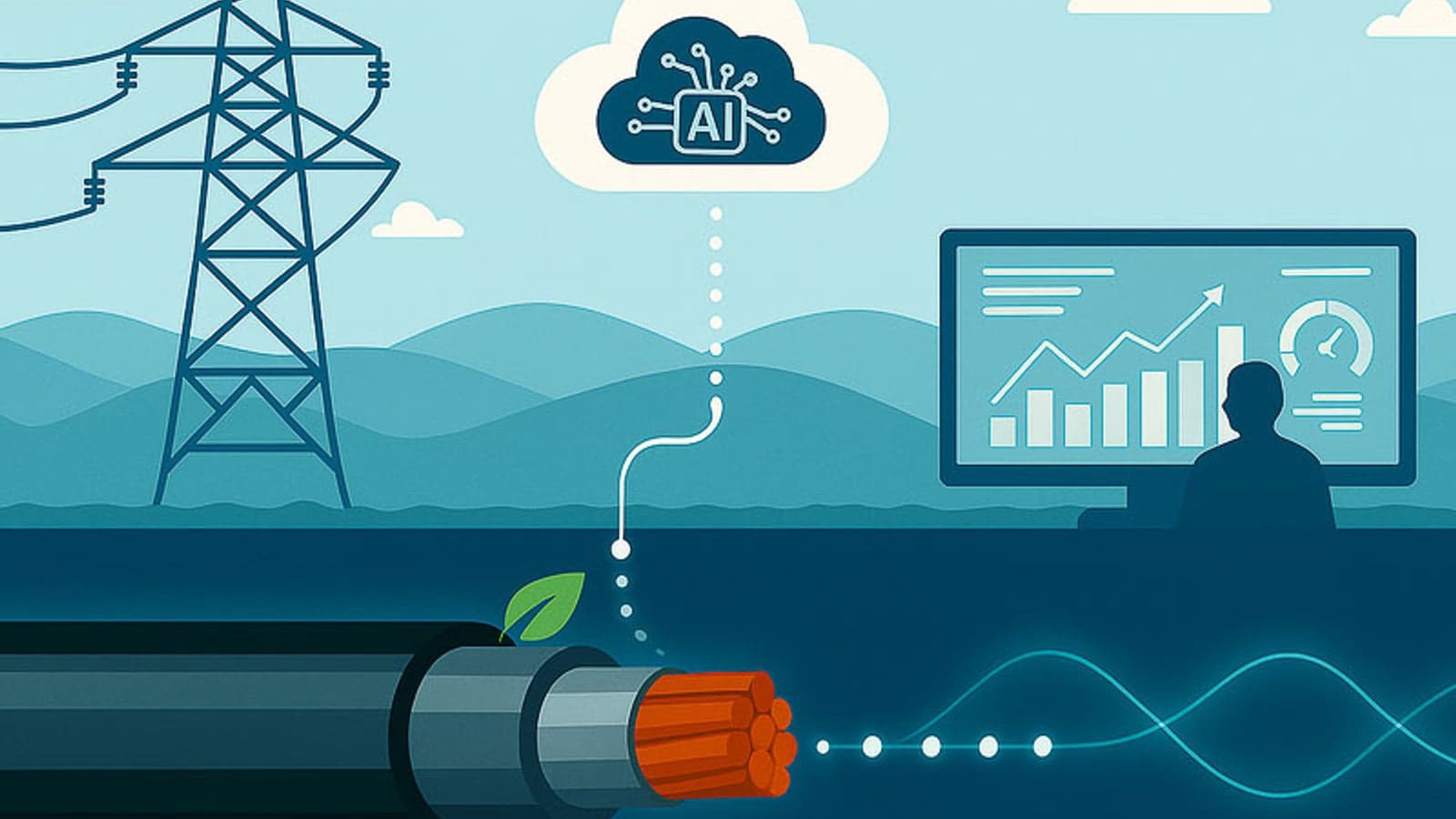
A particularly exciting element of the project is its emphasis on predictive maintenance. By integrating AI-based platforms capable of monitoring cable health, detecting faults, and assessing real-time operating conditions, CABLEGNOSIS is helping operators anticipate problems before they disrupt the grid.
Recyclability emerged as a central theme in our conversation. Today’s most common insulation material, XLPE, is notoriously difficult to recycle effectively. The project is responding with two major innovations: new insulating materials that are far easier to reuse, particularly for low-voltage applications, and a methodology for separating and recovering the insulation fraction from decommissioned cables. Both developments support the EU’s circular-economy ambitions and reduce the environmental footprint of large-scale cable deployment.
From materials science to smart diagnostics, CABLEGNOSIS is demonstrating how innovation at every stage of the cable lifecycle can deliver a more reliable, sustainable, and renewable-ready European grid.