Industrial intelligence: The MOTIVATE XR strategy for automated training
Guest/partner contributor
Posted on: 30 June 2026
The MOTIVATE XR project streamlines industrial training by developing an AI-driven, no-code pipeline for extended reality (XR).
In the rapidly evolving landscape of European industry, the demand for highly skilled technicians in maintenance, repair and overhaul (MRO) has reached a critical peak.
However, traditional training methods - reliant on static 2D manuals and off-site classroom sessions - often struggle to keep pace with modern technological complexity.
MOTIVATE XR, a flagship initiative funded by the European Union under the Horizon Europe programme, was launched in June 2024 to address these challenges. The project’s significance lies in its mission to make XR more accessible.
By moving away from bespoke, expensive software development, MOTIVATE XR provides a scalable, interoperable toolset that allows industrial instructors - even those without programming skills - to create high fidelity immersive training environments independently.
MOTIVATE XR methodology
The MOTIVATE XR framework is built upon a user-centred co-design methodology, ensuring that the technology serves the operational needs of the workforce.
The technical approach is divided into three primary phases:
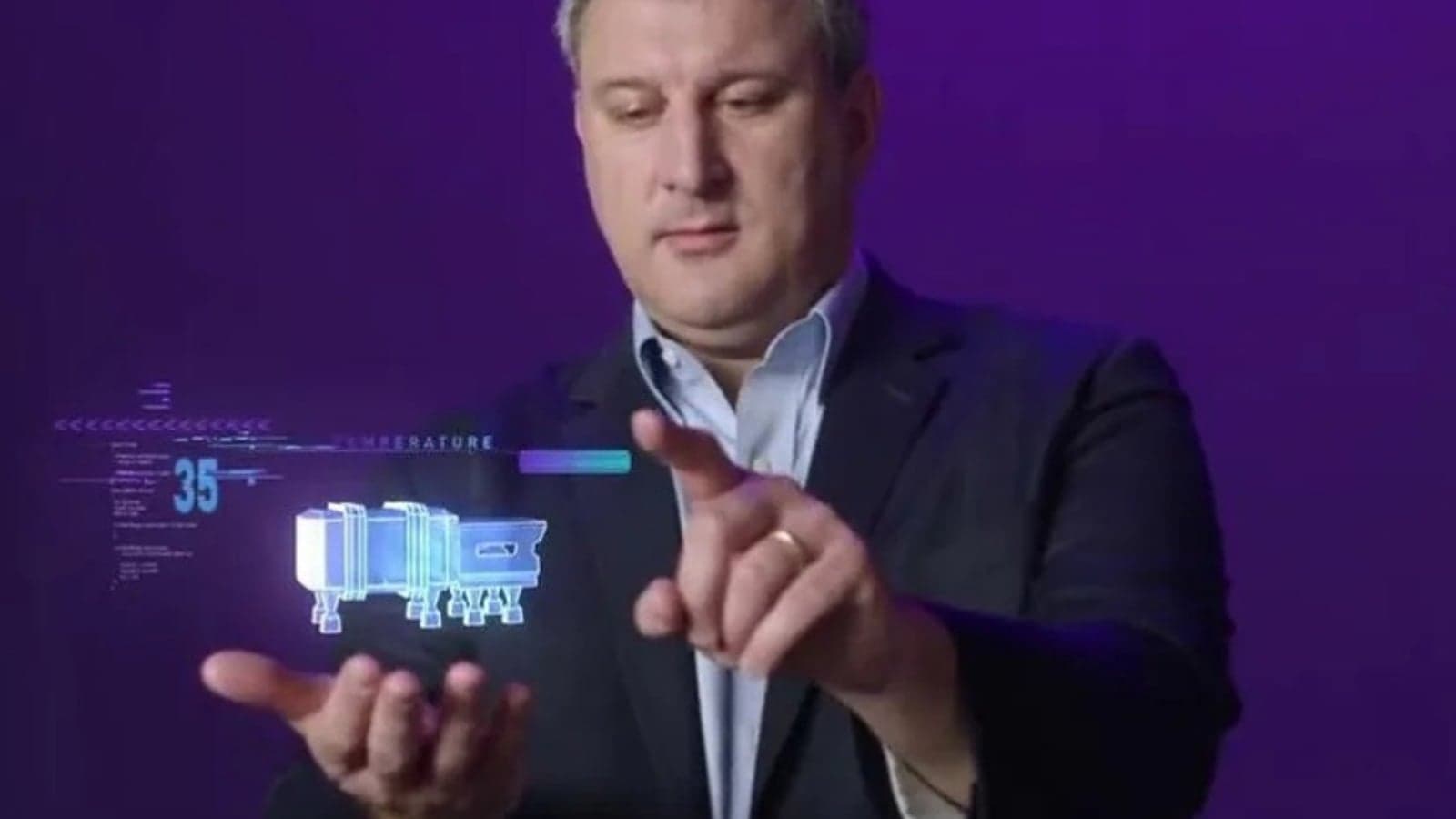
- Authoring phase: This stage leverages 3D scanning (Gaussian splatting and videogrammetry) and CAD model integration to create high fidelity digital twins. A key innovation is the use of GraphRAG (Graph-based retrieval-augmented generation), which analyses existing PDF technical manuals to automatically generate interactive training scenarios.
- Sharing phase: Assets are published to a secure, web-based platform that facilitates collaborative authoring and version control across different industrial sites.
- Experiencing phase: The final training is delivered via device-agnostic players (such as the KAYROX or INSCAPE VTS players). These tools support real-time data streaming from real equipment to the XR headset, enabling live remote assistance.
Results and discussion
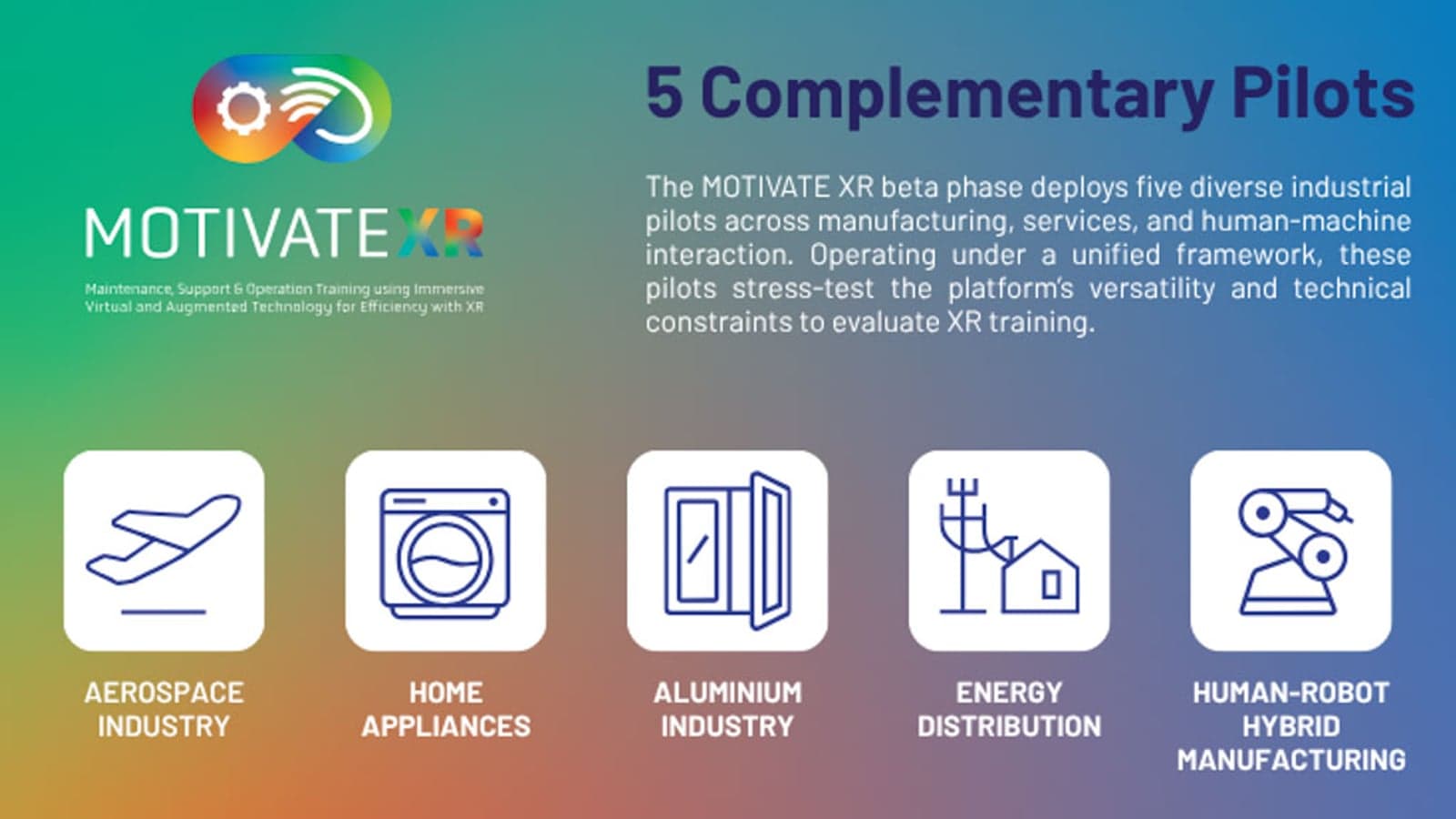
The project is currently validated through five strategic pilots:
- Aerospace (Aerospace Valley, France): The project successfully converted complex aircraft air conditioning inspections into XR modules. By replacing six-month development cycles with a no-code workflow, the initiative reduced manual errors in maintenance tasks and enabled instructors to update content directly without specialised programming.
- Home appliances (Gorenje, Austria/Slovenia): Focusing on washing machine maintenance, this pilot transformed 2D service manuals into spatially anchored instructions for mobile devices. Results showed a measurable reduction in repair errors and increased user confidence, proving the platform's ability to lower costs and improve product sustainability through accessible self-repair.
- Aluminium industry (Architectural Aluminium Academy, Greece): By digitising expert assembly know-how into step-by-step 3D instructions, the pilot eliminated the ambiguity found in traditional drawings. A key success was the implementation of remote supervision, where senior engineers provided real-time corrective guidance via the trainee’s headset.
- Energy distribution (HEDNO, Greece): This pilot modernised the inspection of electrical infrastructure. By replacing labour-intensive manual calculations with an XR system, engineers created 3D animations and digital records accessible in the field. The result was a high efficiency digital workflow that improved data accuracy and worker safety in hazardous environments.
- Human-robot hybrid manufacturing (BI-REX, Italy): The final pilot integrated XR with collaborative robots for mechanical gearbox assembly. Inexperienced operators successfully completed complex tasks by following AR guides and interacting with robotic arms. This established a roadmap for Industry 5.0, where gesture-based controls and safety 'heatmaps' synchronise human skill with machine precision.
Conclusion
MOTIVATE XR proves that immersive technology is no longer a luxury but a standard utility for the industrial workforce. As the project moves toward its 2027 completion, future directions include refining AI-assisted authoring and integrating advanced vision modules for real-time component recognition.
By lowering the barriers of cost and production time, MOTIVATE XR ensures that European industry remains resilient, sustainable, and technologically advanced.
Visit the project website or follow the project on LinkedIn for updates on future developments, public deliverables and upcoming events.
About the authors
Alberto del Rio holds a PhD in Communication Technologies and Systems at the Universidad Politécnica de Madrid (UPM), alongside a BA from UC3M and a master's degree from UPM. As a UPM researcher, he optimises 5G networks and multimedia communication systems using AI and reinforcement learning.
Iñaki Martinez Sarriegui is a telecommunications engineer with 20 years' experience and currently Project Manager at Tecnalia, driving computer vision and XR initiatives and securing public funding through competitive proposals in tech innovation. He holds an MSc in Telemedicine and an international PhD (cum laude) in Biomedical Engineering.
Melissa Tang is a Communication Manager at F6S Innovation and plays a pivotal role in various EU-funded initiatives. With a BA in design and advertising and master’s in communication and media studies, she has experience leading communication, dissemination and exploitation efforts in over 15 research and business projects.