Addressing the million-dollar AI question for the energy workforce
Yusuf Latief
Posted on: 20 November 2025
AI advisor for the Energy Institute describes AI’s “problem or solution” dilemma for the energy sector and its workforce as a $1 million, glass half empty, half full scenario.
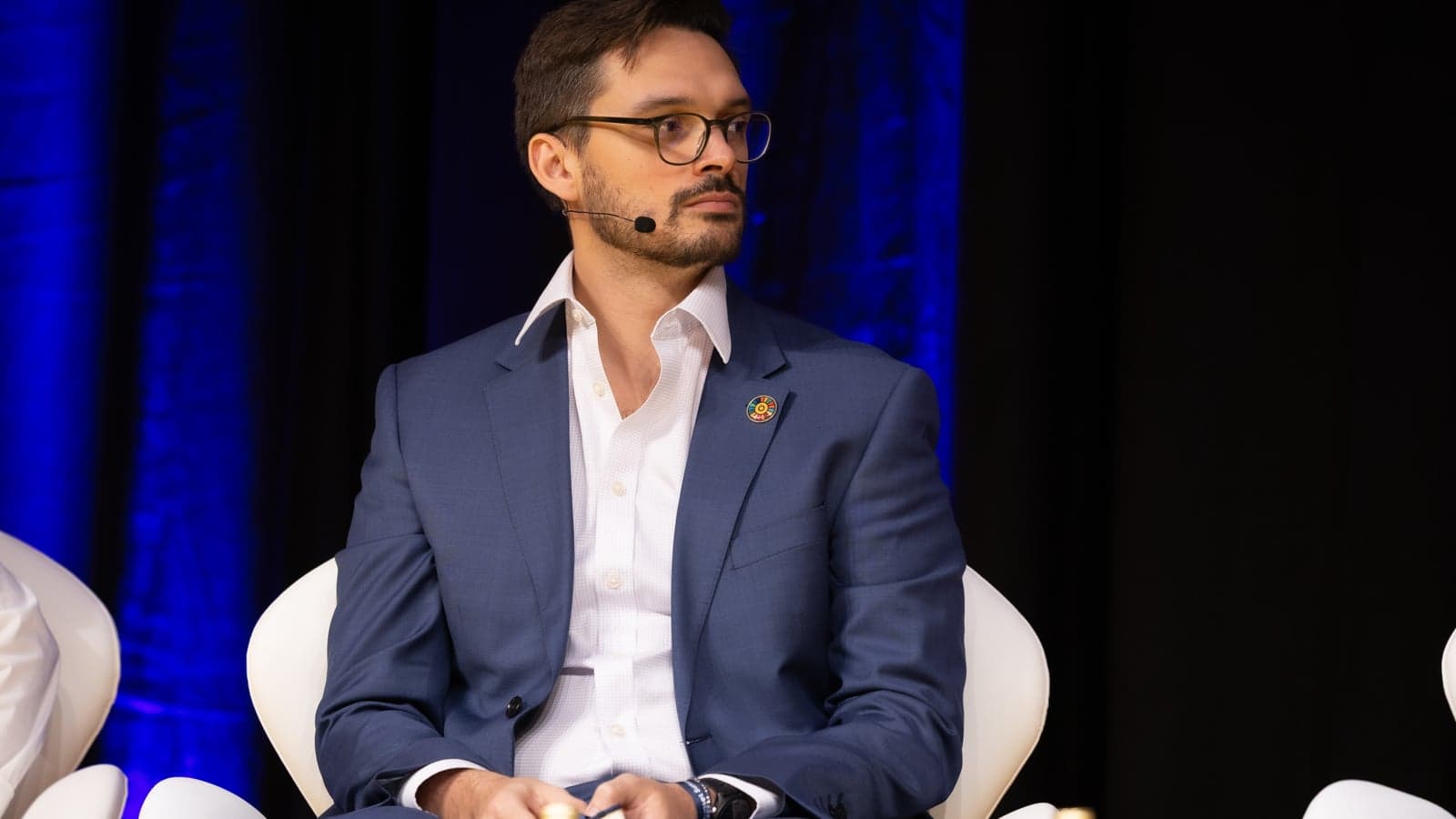
On the one hand, says Guilherme Castro, AI can assist with hiring and is gaining traction among “shiny companies”. On the other, strategies to integrate it and train the workforce require significant adaptation.
When asked whether AI remains a concern for energy companies or whether it can help solve workforce challenges, Castro called it “a $1 million question; it’s a glass half full, half empty.”
According to Castro, the rapid adoption of AI—a “hype movement,” as he describes it—has made adapting to the technology and understanding how long it will take to train the workforce a pain point for energy companies.
However, the technology can also support these efforts. “The technology will help companies identify who will be the workforce, and how to attract them.
“It can be used to adapt the message; tailor quicker and more precisely – on the country, on the technology, on your interests … using AI.”
He cautions, though: “There are many aspects that one needs to be aware of when deploying these algorithms, because at the end of the day, there are humans building them, at least for now.”
Adding to the glass being half full, says Castro, is the hiring trends among big tech companies—Google, Meta, Amazon, and Microsoft—which are bringing in fresh talent such as computer science graduates. “In a certain way, this could help the energy sector to attract this talent.”
From this perspective, seeing graduates scouted by such “shiny companies” is crucial to instilling confidence that visible opportunities exist in the energy sector and its digitalisation journey.
More from Enlit Europe:
Will public perception derail Europe's nuclear renaissance?
Grids face new energy trilemma of security, resilience and adaptation
Is grid edge failing to deliver on its promise?
But then there is the other side of the coin: companies aiming to hire for their digitalisation journey without digitalisation already being core to their operations.
“On the other side, I think it's the dilemma of energy companies with a new technology. Either you are too risk averse to adopt because you don't know where you start, and that is challenging [or] you want to use AI for everything, which also is not the answer.”
“The balance here is for the energy sector and energy companies to build the maturity... to understand the power of the technology, and also the risks. These companies can build independency from the third parties that today they rely on.”
Indeed, energy companies are increasingly relying on external consultancies to assist with hiring for digitalisation competencies.
The strategy behind the technology adoption [needs to be] more long term, rather than a short term 'desperation'.
However, this approach comes with risks. “We, like the talent providers within the energy sector, sometimes don't understand the business model.
“For example, why having multiple use cases makes more sense than the ones that we deliver a return on investment on … so sometimes approaching AI as more targeted, rather than a widespread 'I want to do everything' should be a better strategy … and it will take time.
“Energy companies need to adapt. The strategy behind the technology adoption needs to be more long term, rather than a short term 'desperation'.”