Fortescue speeds up green grid project to curb volatile fossil fuel costs
Pamela Largue
Posted on: 10 April 2026
Price volatility sparked by the war in the Middle East has spurred Fortescue to eliminate fossil fuel use as quickly as possible.
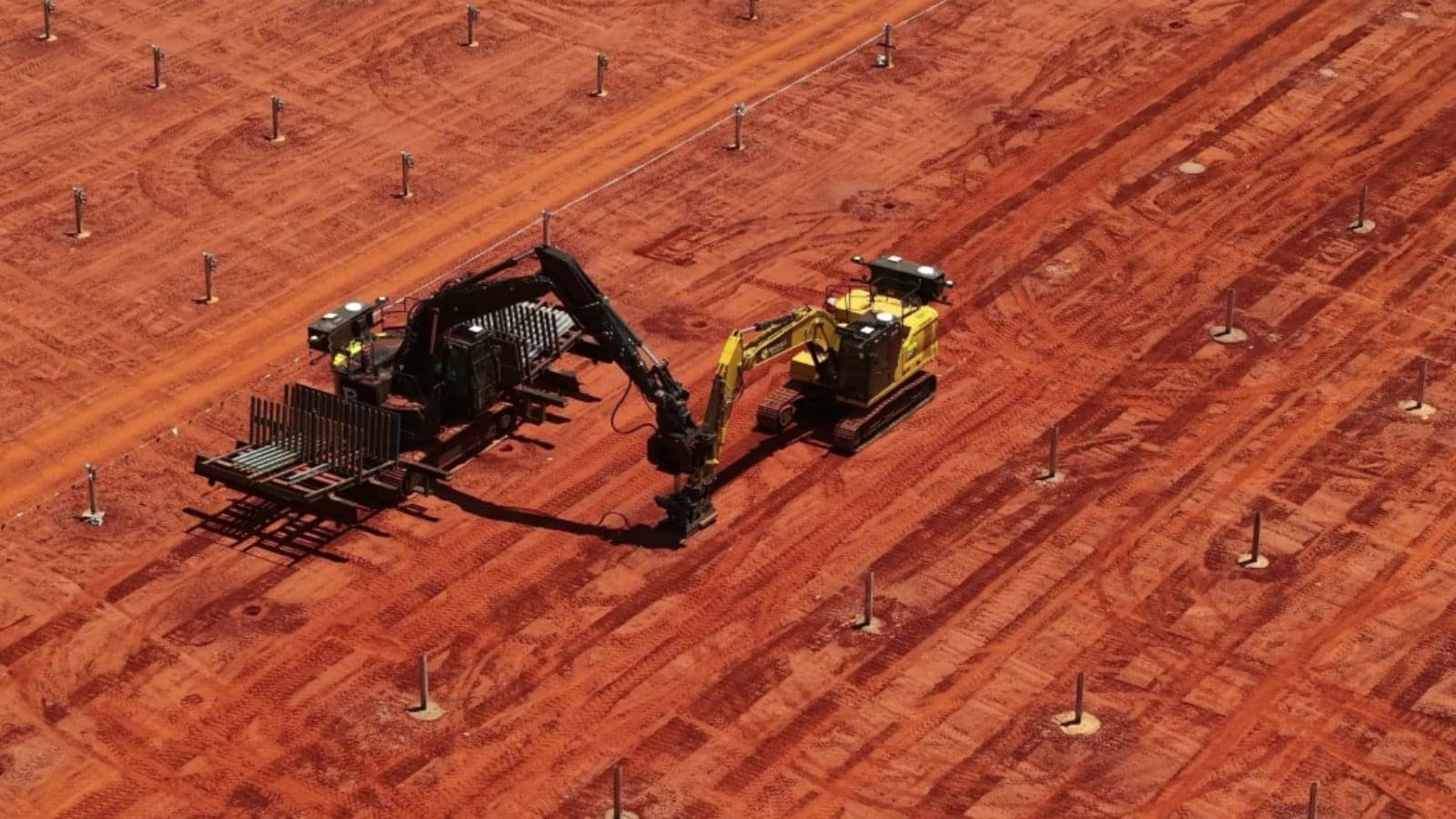
Australian mining giant Fortescue has announced plans to speed up the delivery of its Pilbara green energy grid to minimise reliance on fossil fuels and the associated impact of volatile pricing.
The news comes after the geopolitical tensions in the Middle East sparked a price and supply shock, highlighting the potential impact of relying on imported fossil fuels.
The company is looking to eliminate diesel specifically, a fuel that is 100% imported and subject to extreme price volatility.
Fortescue's CEO of metals and operations, Dino Otranto, said disruptions sparked by the recent war with Iran have forced companies to carefully weigh the risks associated with energy supply.
Reuters reports Otranto saying in a media call: "I think a lot of people have been taken by surprise by the situation, and it demonstrates ... how vulnerable our supply chains are to foreign interests."
By early next year, Fortescue aims to complete 290MW of installed renewable capacity to meet the fixed energy requirements of its ore processing facilities. This is sufficient renewable capacity to enable daytime “green processing” across its Pilbara operations.
By the end of next year, the mining company plans to power all its operations for 24-hour periods without fossil fuels using the same system, which will include 1.2GW of solar capacity, more than 600MW of wind generation, and 4-5GWh of battery energy storage.
According to a company statement, this is well ahead of the originally announced Real Zero plan, which targeted December 2030.
Expediting the project will result in significant savings. Fortescue expects to save $100 million in fossil fuel costs by next year, and at the completion of its decarbonisation programme, expects to see a further reduction in unit costs of at least $2 – $4/wet metric tonne.
The entire project is expected to cost less than $2.5 billion and will result in a fully integrated industrial green grid, able to support an entire mining ecosystem, including plant operations, port infrastructure, iron ore processing facilities, logistics infrastructure and on-site accommodation and services supporting approximately 10,000 personnel.
Have you read?
Aggreko to deliver renewable power for Harmony Gold’s Eva Copper Mine
Photocatalysis pilot reaches key hydrogen production milestone in Australia
The key factor is that the system will be able to function without pricy fossil fuels and will function independently of the main grid.
This is critical, especially as the war in the Middle East has once again highlighted how vulnerable energy systems are to price and supply shocks.
A recent podcast with Ann Mettler, former VP of Breakthrough Energy Europe and Co-Founder of Catalyse Europe, highlights the importance of home-grown clean energy, as well as a more decentralised system as a form of risk mitigation.
Said Mettler: “We continue to be very dependent on fossil fuel. Some of the priorities, if I were a policymaker, would be certainly localization, more homegrown sources of energy. Wind, solar, geothermal, also nuclear…We cannot be overly reliant on any one source of energy nor one country. Right now, we are way too dependent.
“I think we need to keep in mind decentralisation of the energy system, because we obviously live in very volatile times and we know that the first targets are always the refineries, import terminals, the LNG terminals, etc.,” concludes Mettler.
While the US suggests the impacts on oil and gas markets will be short-lived, some analysts are predicting a much longer-term impact. All the more reason for countries and companies to reduce fossil fuel dependencies.