Going like the wind: why cross-border collaboration is key for offshore wind in Europe
Guest/partner contributor
Posted on: 18 November 2024
Europe’s seas are set to become the power plants of the future – but Elia Group finds in its latest study that questions about cross-border collaboration and finance still need to be addressed.
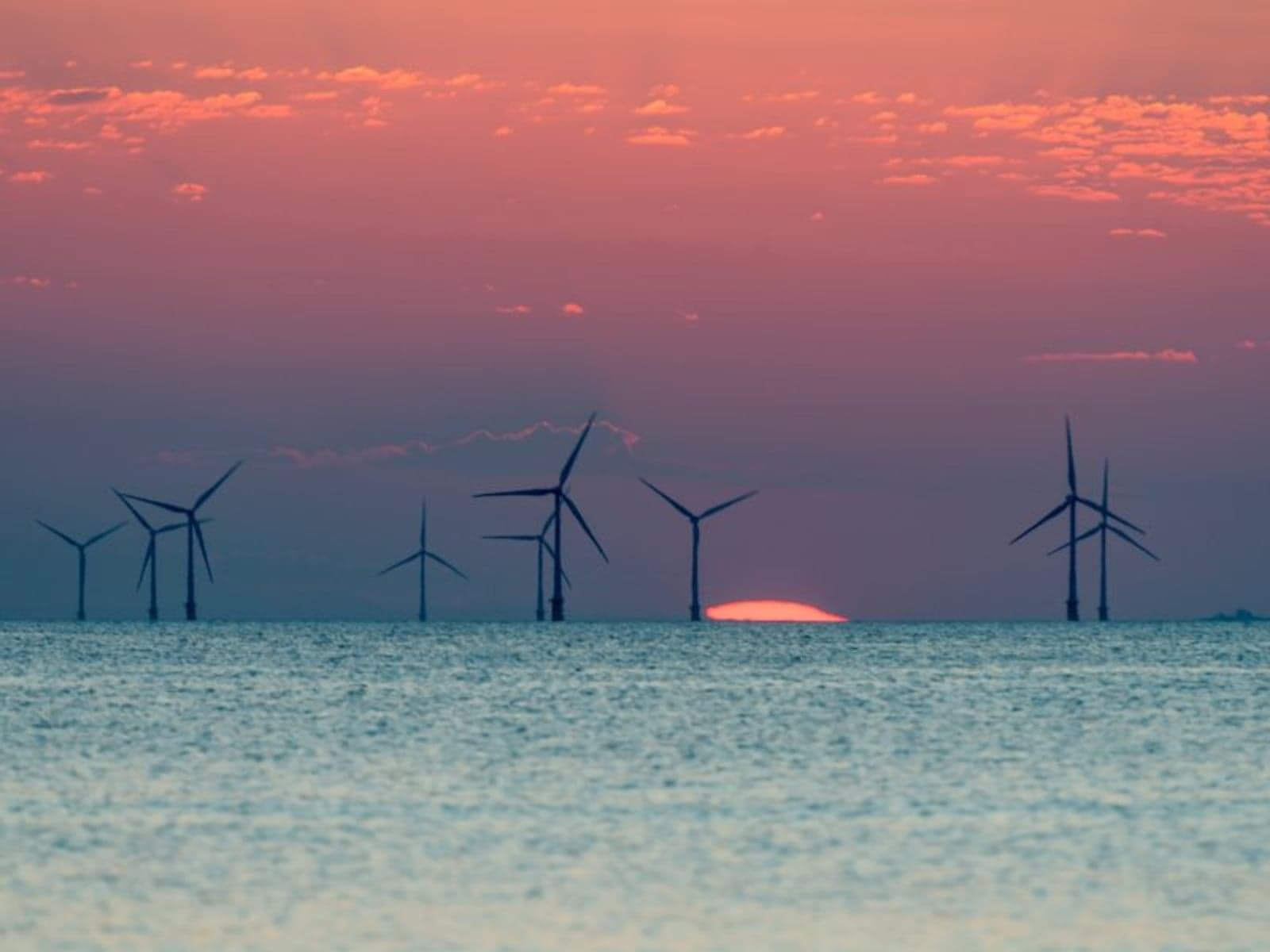
Europe’s seas are set to become the power plants of the future – but Elia Group finds in its latest study that questions about cross-border collaboration and finance still need to be addressed.
To continue Europe’s offshore wind success story and implement its ambitious renewable energy targets, issues around spatial planning and cost allocation across multiple countries must be addressed.
Whilst Elia Group has published several papers on the subject in recent years, its 2024 viewpoint study provides new insights into the benefits of strategic cross-border planning. It demonstrates how the latter maximises wind potential and enhances overall efficiencies, in turn bringing down total energy costs for Europe.
Accelerating the expansion of renewable energy sources alone will not be sufficient to meet the European Union’s direct electricity demand in 2050. As identified in the 2021 viewpoint, Roadmap to Net Zero, Europe must also build more interconnectors, as these will balance out the uneven renewable energy distribution across the Union.
Indeed, in the north and west, domestic renewable potential exceeds the demand for renewable energy sources; meanwhile, central European countries (like Germany and Belgium) do not have enough renewable energy potential to meet their demand. In order to successfully reach net zero, therefore, member states will be required to collaborate much more closely than they have until now.
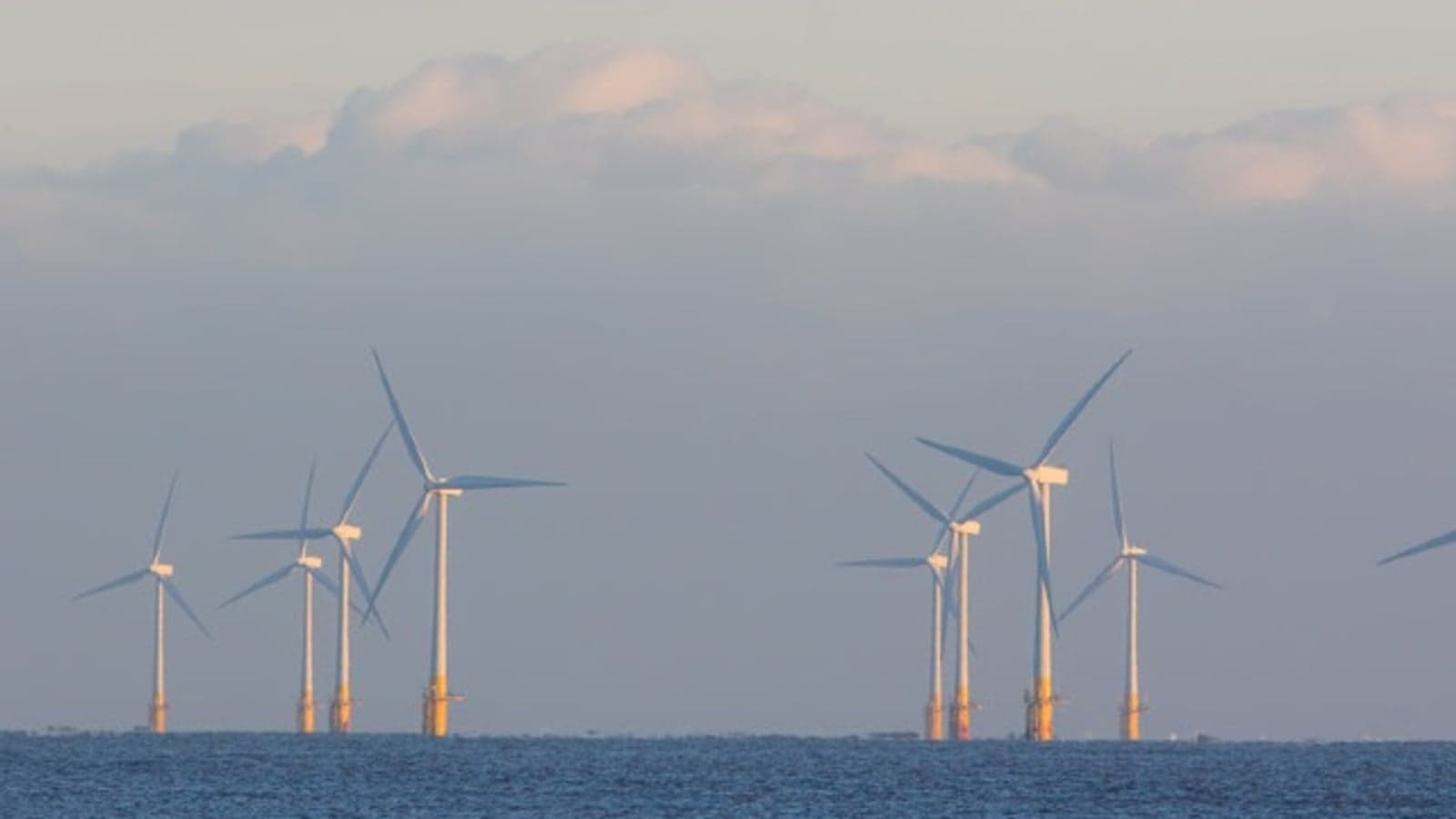
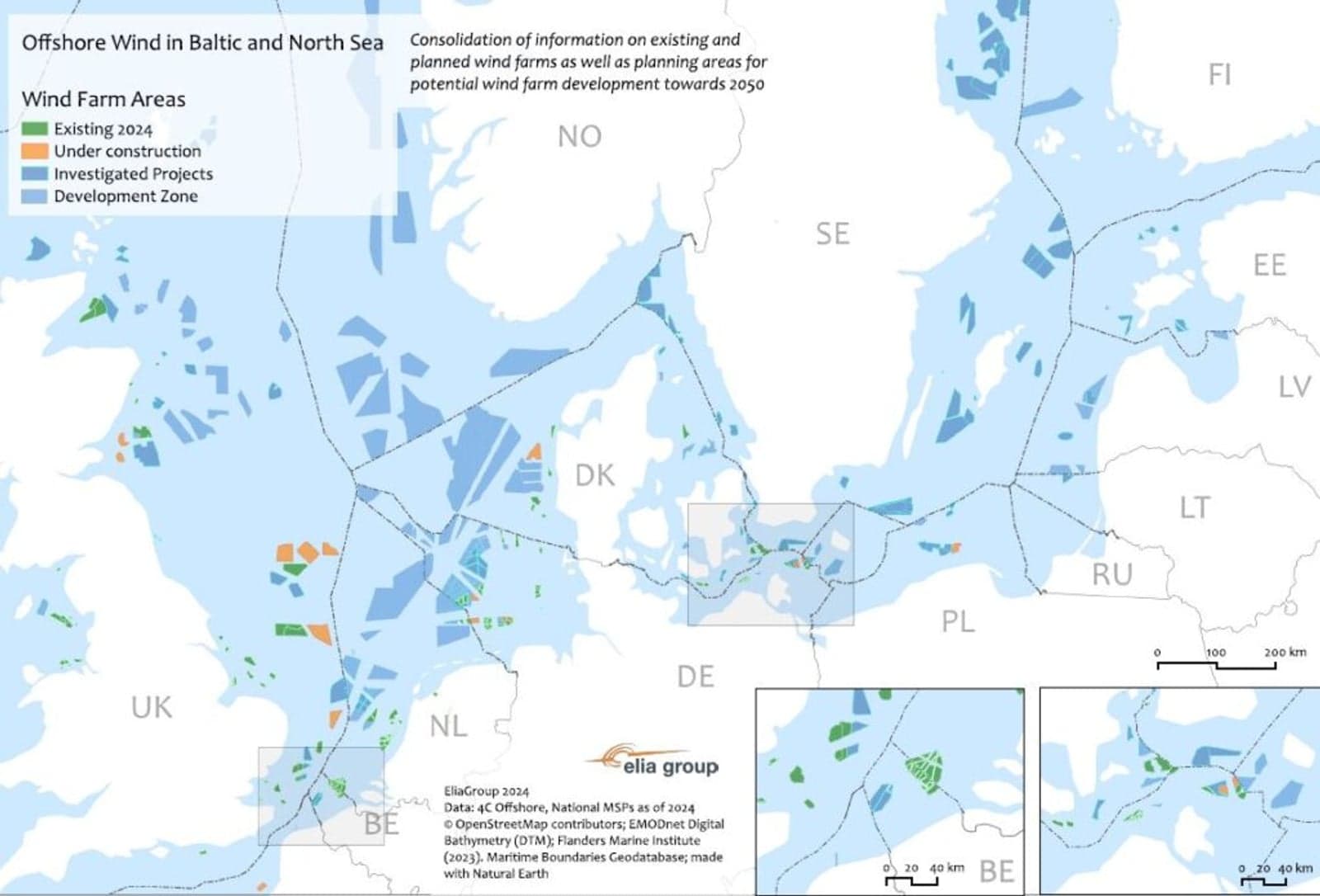
As of 2024 approximately 33GW of wind capacity have been installed in Europe’s seas.
Europe has a long way to go, and all segments of the value chain will need to be transformed to match the accelerated pace of (increasingly cross-border) development. In addition to climate, financial and security benefits, the expansion of wind energy infrastructure will stimulate job creation, local economies, and technological advancements.
Offshore wind energy and cross-border connections: a winning combination
Wind and solar power will form an essential component of Europe’s future energy mix. The technologies are complementary: wind turbines have a higher output in winter, whilst solar panels reach their peak generation patterns in summer.
Implementing wind and solar power in the most efficient way (two-thirds of energy yield from wind and one-third from solar) will ensure that Europe has a balanced energy mix, each component of which will carry different patterns of volatility. In turn, this will lead to a reduced need for flexibility across the system.
In this year’s Going like the Wind study, we find that establishing over 400GW of offshore wind capacity in the European Seas (covering the EU27, the UK and Norway) will result in lower total energy costs for society.
In order to reach this figure, European member states will need to work on establishing cross-border connections of all kinds: point-to-point interconnectors (such as KONTEK), but also newer varieties such as hybrid interconnectors (only one of which has been built so far: the Kriegers Flak – Combined Grid Solution), and crossborder radial connections (which have yet to be built).
In fact, our analyses demonstrate that the cost of a system with low levels of offshore wind capacity would be higher than one with high levels. This is partly due to the absence of hybrid interconnectors, but is also linked to the extra work associated with onshore interconnectors and the fact that the integration of the onshore energy mix into the system is more costly.
More about offshore wind:
A deep dive into joined-up offshore energy in the North Sea
The North Sea – a clean energy hotspot for Europe
Energy Transitions Podcast: The North Sea – Axis of decarbonisation
Indeed, strategically placed hybrid interconnectors or cross-border radials will allow the best wind locations to be tapped, whilst allowing offshore wind to be integrated into transmission systems which generate the highest amount of socioeconomic welfare. When compared with (more traditional) radial connections, they carry even more benefits.
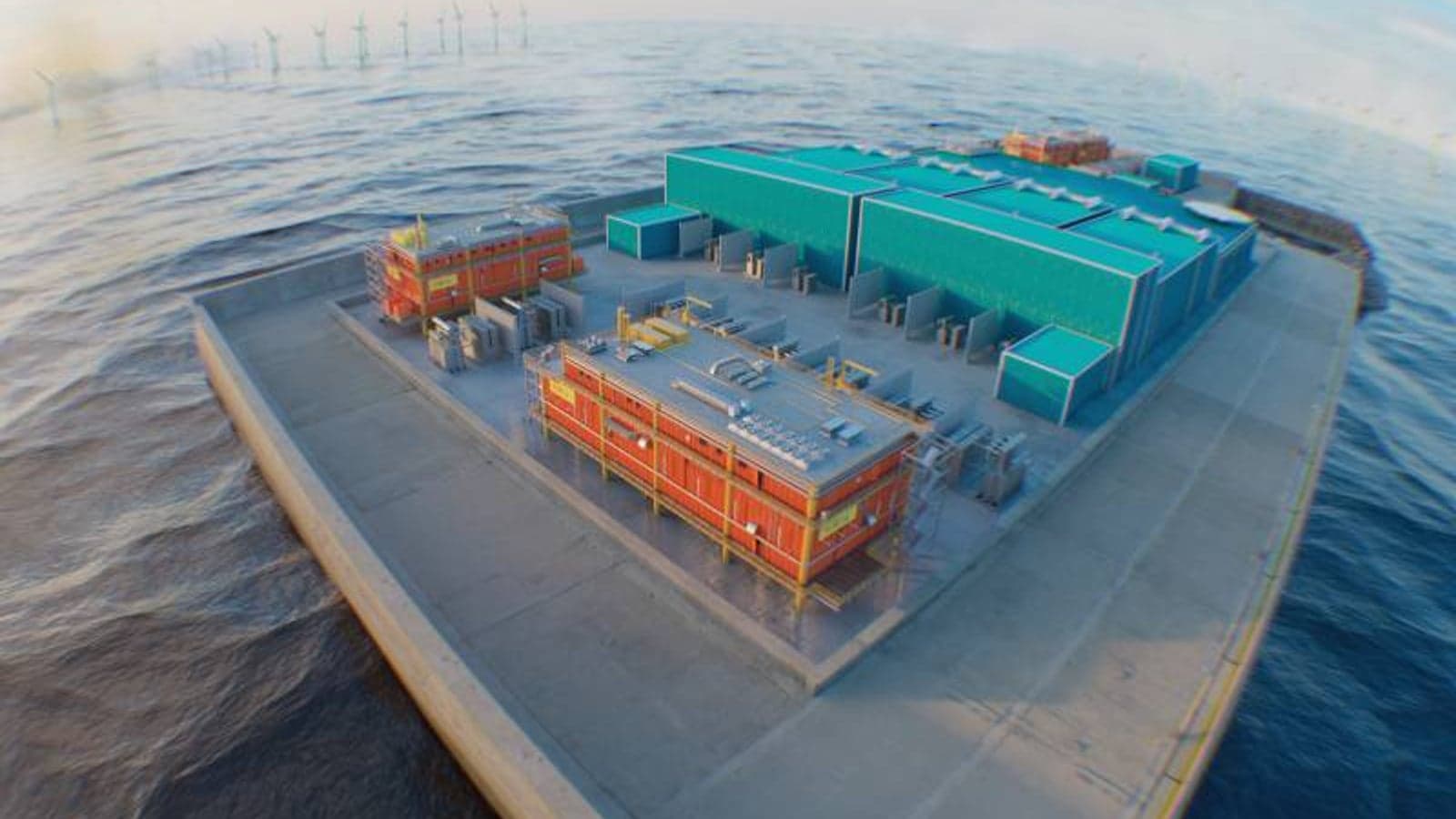
Hybrid interconnectors use transmission infrastructure in a more efficient way than radial connections. They serve a dual purpose, functioning both as export cables for wind energy and as interconnections.
Relying on radial connections alone will either result in the construction of too many underutilised subsea cables or will lead to insufficient deployment of offshore wind power to meet climate targets.
More generally, hybrid interconnectors and cross-border radials can reduce the variability of wind infeed, especially when they stretch across distances of more than 500km. This smooths out the infeed of offshore wind into the onshore grid as well as reducing the number of hours with very low or no infeed.
Moreover, our analyses demonstrate that cross-border connections impact countries beyond those which directly host them. These impacts relate to changes in average power prices and cross-border flows. In other words, the cross-border (co-)development of offshore wind, and particularly of hybrid interconnectors, also affects countries that are not directly connected to them.
Cross-border radials can have similar effects. This highlights the importance of adopting a wider approach to the allocation of project costs, mitigation of project risks, and sharing of project benefits across larger (sea basin) areas.
Have you read:
Meet the rocketman of AI: Accenture’s Stuart Brown
How quantum computing is disrupting power utilities
Spatial planning and coordination
Maximising the wind potential of Europe’s seas and leveraging the benefits of offshore wind will require member states to coordinate closely in terms of project development and maritime spatial planning.
High amounts of wind capacity in the same area lead to reductions in wind speed and increased turbulence, known as ‘wake effects’. Much lower levels of wind energy infeed could arise in 2050 compared with current expectations if member states do not adopt a coordinated planning approach.
Additionally, lead times for new wind farms and their grid connections can reach up to ten years, meaning that spatial needs must be anticipated early on. Finding suitable locations for wind farms and linking them to shore (via radial or hybrid connections) is a complex process. Many transmission corridors will be needed in future and will compete for space with other maritime activities.
Strategic cross-border planning will also promote a more sustainable approach to offshore wind development. Sustainability measures, such as minimising the cables that cross protected areas, can be included in project plans without significantly increasing cable lengths. By coordinating the development of projects and anticipating spatial effects, nature conservation can be supported.
Shared costs and risks for shared benefits
Offshore development projects require massive amounts of public and private investment in generation and grid infrastructure. In order to provide the many different financing actors with the confidence they need to invest in offshore projects (thus enhancing their success rates), project risks and benefits should be fairly allocated amongst those parties which are best placed and equipped to manage them.
A wider approach – which would involve entire sea basin areas being covered at the same time and would mean the costs, risks and benefits of several projects being pooled – could be one solution for achieving this.
It should be noted that projects that carry the highest societal value for Europe as a whole should be prioritised. (Hybrid) interconnector projects generate distributional effects across the value chain and different bidding zones.
These effects can either positively or negatively influence electricity prices and socioeconomic welfare in the interconnector’s host countries and beyond.
To manage these effects and create win-win scenarios, TSOs should work together and establish balanced portfolios.
This will lead to participating countries benefiting from increased socioeconomic welfare thanks to the combined implementation of projects in their portfolios. The value generated from each project should also reach their investors and contributors.
About the author

Felix Jakob Fliegner is an analyst at 50Hertz, Elia Group’s subsidiary, as part of its System of the Future think tank. He is also a researcher at TU Dresden.