Iberdrola to use space data to manage extreme weather events
Jonathan Spencer Jones
Posted on: 1 July 2026
Iberdrola has selected the Finnish satellite owner Iceye to develop a project to strengthen the response of its electricity grid to extreme weather events.
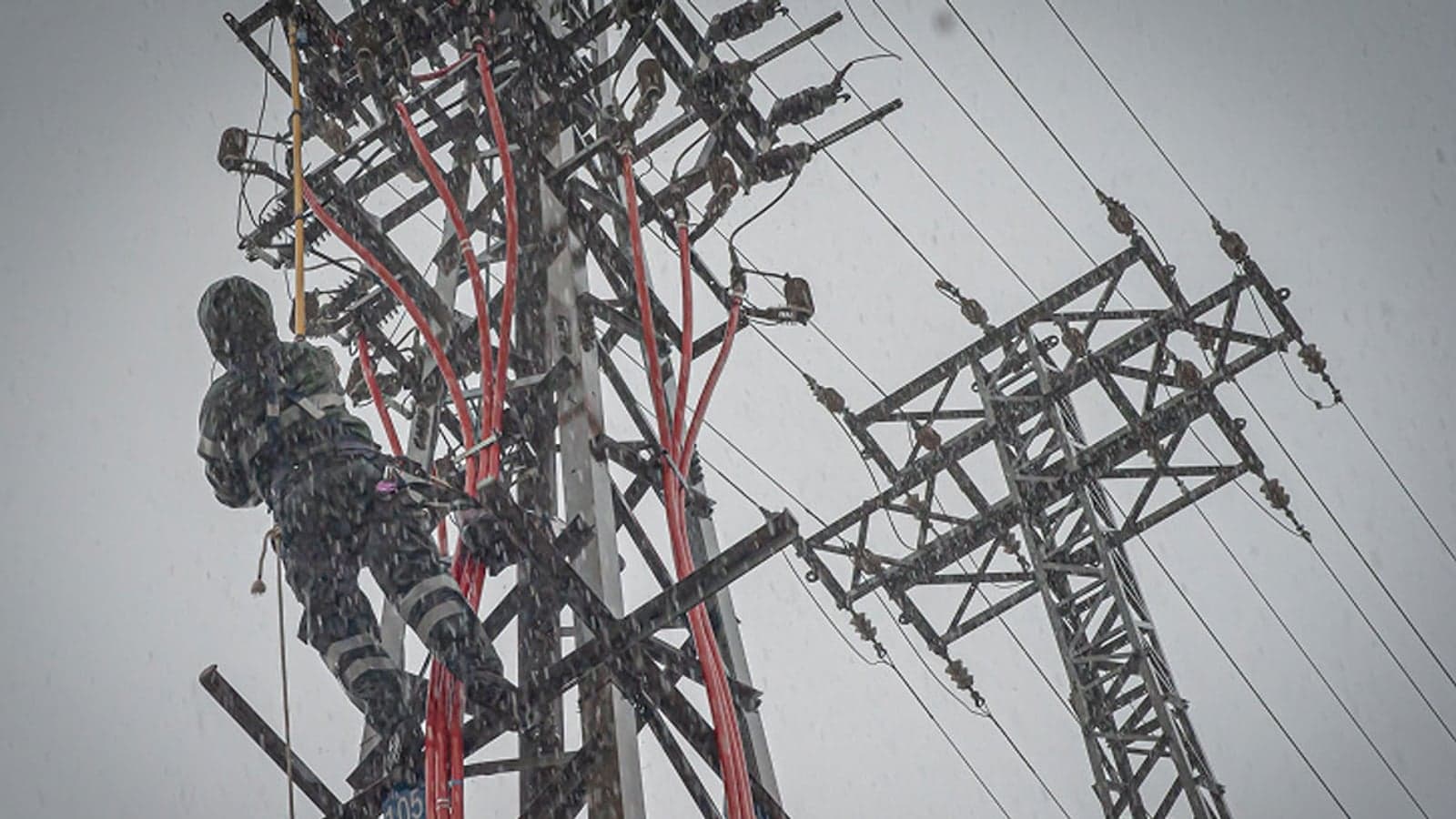
The solution, selected form over 40 proposals in Iberdrola’s ‘Perseo’ open innovation programme, will draw on Iceye’s synthetic aperture radar data to anticipate risks and monitor different events such as floods, fires and strong winds in selected areas.
With 24-hour observation capability enabling rapid near real time assessments, even when ground access is limited, Iberdrola should be able to prioritise the most affected assets, mobilise repair teams more effectively and speed up the restoration of service.
Iberdrola's network is made up of more than 1.4 million km of transmission and distribution lines in different countries and serves millions of customers.
Óscar Villanueva, Director of the Western Region at i-DE Redes Eléctricas Inteligentes, Iberdrola's distributor in Spain, comments: "Resilience is a key priority for our electricity grids, and this collaboration allows us to incorporate advanced observation and analysis capabilities to predict extreme events, minimise their impact on customers and strengthen the electricity system in the long term".
Also of interest
Detecting space weather for the power grid
How to enhance utility resilience through digital transformation
Based on the experience in Spain, the programme also includes access to Iceye's rapid assessment capacity for other phenomena such as hurricanes for the company's assets in the United States and Australia, with detailed damage maps available within 24 hours of the event.
Gonzalo García-Muñoz, Senior Vice President of Global Operations and CEO of Iceye Spain, adds: "This collaboration allows satellite intelligence to be integrated into network operations, detect risks earlier and accelerate the recovery of supply in the affected areas."
Space data in energy
Synthetic aperture radar (SAR) data is the most commonly used space-based data used in the energy sector, with its ability to deliver near real time high accuracy monitoring of any location, regardless of whether day or night or the state of the weather.
Iceye claims the world’s largest and most advanced SAR satellite constellation with services including near real time intelligence on floods, wildfires and building and infrastructure changes after extreme storms.
For example, after September 2024’s Hurricane Helene, Iceye records that several electric and water utilities in the US southeast leveraged its flood solutions for near real time situational awareness, enabling them to prioritise crews, identify dangerous areas and restore power and water services more quickly based on precise SAR data, rather than waiting days for aerial or ground assessments to reveal the damage.
But SAR data is not the only type of Earth observation data that is gaining growing application in the sector.
For example, as highlighted in the latest EU space market report, instruments on Europe’s Copernicus satellite cluster can provide inputs for energy yield assessments such as solar radiation or wind speeds, useful for planning and operating solar and wind energy assets.
Other instruments provide data on aerosols and trace gases, which can further improve solar power forecasting.
Climate indicators
Offshore wind, wave and tidal energy developers are able to leverage wave data and ocean physics information when planning the deployment of assets, while radar data also can be used for offshore wind resource mapping and assessing sea surface conditions.
Another service provides key information on climate-related indicators relevant to the European energy sector, such as electricity demand and renewable energy production.
Other areas highlighted where Earth observation data can be valuable include flexibility scheduling, renewables curtailment and grid planning.
Positioning is another growing area of interest. The integration of Galileo capabilities into phasor measurement units, with the highly accurate time synchronisation it offers, is gaining momentum, according to the EU space report.
Furthermore, the open service navigation message authentication (OSNMA) allows receivers to verify the authenticity of the Galileo open service to guard against spoofing.
Nevertheless, adoption in existing PMU infrastructure is still emerging rather than widespread. Many PMUs are legacy or installed with GPS only, and retrofitting or upgrading is not straightforward. Also, the transition takes time and investment.