Iberdrola's grids-first strategy pays off early as E.ON and Enel double down
Yusuf Latief
Posted on: 27 February 2026
Europe’s largest utility reaps rewards from their networks focus as Italy’s Enel and Germany’s E.ON take on a similar focus for their investments.
In the Power Playbook: European utility giants Iberdrola, E.ON and Enel have released their results and investment focuses; what do they say about utility success and strategy?
Europe’s largest utility, Iberdrola, this week announced reported net profit of €6.3 billion ($7.4 billion) in 2025, up 12%, underpinned by networks.
The payoff is a huge win for the company who in recent years has been touting its strategic plan to invest tens of billions of euros to boost growth in power networks in countries with stable policy and regulatory frameworks.
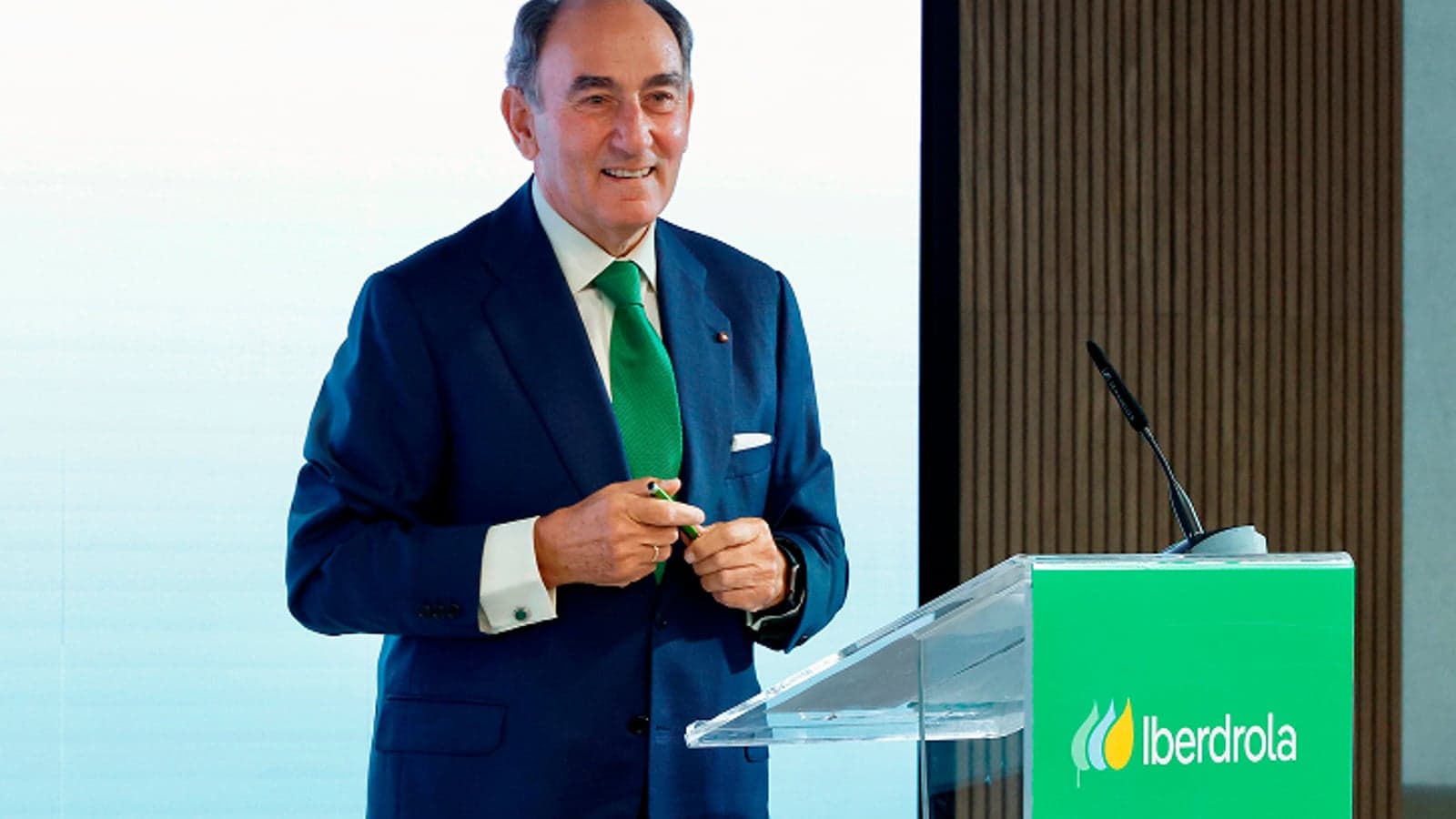
As phrased by their Executive Chairman, Ignacio Galán in September, when they announced their investments, the plan has long looked to networks “as a vector for growth.
“We will invest €58 billion by 2028, two-thirds of which will go to transmission and distribution networks, mainly in the United Kingdom and the United States.”
25 years ago, we recognised that electricity infrastructure was going to be essential…
And now, speaking on the strategic win, said Galán: "2025 was a record year for Iberdrola thanks to investment of €14.6 billion, mainly in in transmission and distribution infrastructure in the US and the UK.
“Networks investment increased by 13%, taking our regulated asset base to €51 billion, and in generation we have commissioned 2,700 new megawatts, have a further 4,600 megawatts under construction and continue to lead the PPA market in Europe with 100% of this year’s production already sold to long-term contracts.”
Indeed, the utility is going into the next quarter strong, with Galán celebrating the company’s 125th anniversary this year, accompanied by their new record market capitalisation of €135 billion ($159.6 billion), with “strong prospects ahead.
“We expect to close 2026 with a net profit of more than €6.6 billion, and our projects under construction will lead us to exceed €7.6 billion by 2028.
“25 years ago, we recognised that electricity infrastructure was going to be essential to meet growing demand and we developed a strategy focused on growth, geographic diversification and access to financing and technology.”
All of this, said the executive chairman, has been the best guarantee of long-term growth.
And I think there are very few people in the sector who would disagree.
Networks as the growth engine
The numbers reinforce that view.
Networks are now the central earnings engine. Iberdrola’s regulated asset base continues to expand in core markets, providing the company with visibility into returns that merchant generation cannot match in the current environment.
In the UK, transmission is moving into a new phase under an updated regulatory framework, reshaping the profile of ScottishPower’s grid business. Construction has also begun on Eastern Green Link 1, a subsea power line linking Scotland to the north-east of England.
In the US, the interconnection between Canada and Massachusetts is already operational. In Brazil, distribution concessions have been renewed for more than 30 years, extending to 2060. And this isn’t to mention the company’s first transmission project in Australia and acquisitions of Avangrid and Neoenergia minorities.
Iberdrola has clearly thought through its structural positioning in regulated infrastructure, and it’s hard to ignore the timing.
As Reuters reported, a robust contribution from regulated grid operations can offset weaker renewables earnings, which were pressured by lower power prices in key markets and system-related impacts following the April blackout in Spain.
With renewable power prices declining in key markets and project economics tightening, regulated networks increasingly look like the way to anchor earnings.
Power Playbook exclusive: What do falling renewable PPA prices signal about Europe’s energy transition?
That said, this does not necessarily signal a retreat from renewables.
In the coming days, the company will install the final two turbines at its 806MW Vineyard Wind 1 offshore wind project in Massachusetts, reaching the planned 62. The project is already selling electricity.
E.ON and Enel’s renewed investment focus
Iberdrola is not alone in recalibrating.
Italy’s Enel and Germany’s E.ON earlier this week set out their 2026 to 2028 and 2026 to 2030 plans, respectively, earmarking tens of billions of euros for investments.
Enel announced €53 billion ($62.6 billion). The company's key strategy is similar to Iberdrola, namely to accelerate growth in countries with stable environments, with a focus on grids, renewables and final customers.
Have you read?
Engie to buy UK Power Networks for £10bn in milestone deal
Over €26 billion ($30.7 billion) of this will be funnelled into grids, of which about 55% in Italy and the remainder distributed between Iberia and Latin America.
Additionally, over €26 billion will also go into the company’s Integrated Business, with a sharp acceleration of investments in renewables, reaching around €20 billion ($23.6 billion). Around 50% of this is planned for Europe, to be allocated through regulated auctions, plant hybridisation and repowering alongside Brownfield opportunities.
Likewise, the Group has planned to invest the remaining capex in the other so-called Tier 1 countries, mainly the US, through projects supported by long-term contract frameworks such as PPAs that ensure full visibility on their contribution to Group value creation.
Commenting in a release was Flavio Cattaneo, CEO of the Enel Group: “The managerial actions carried out in the last three years provide us with the financial flexibility to invest in the most dynamic markets in terms of electricity demand.”
Over in Germany, E.ON announced total investments of €8.5 billion ($10 billion), including €7 billion ($8.3 billion) in energy networks.
They also updated their investment plan from €43 billion ($50.7 billion) for 2024 to 2028 to €48 billion ($56.6 billion) for 2026 to 2030, assuming an adequate regulatory framework.
E.ON said its increasing investments respond to the continuously growing infrastructure needs of the European energy system, including the expansion of renewables, new industrial consumers, and the sharp rise in connection requests for battery storage and data centres.
At the same time, maintaining security of supply and resilience is becoming more demanding, they say, driven by both the increasing volatility of the energy system and a heightened threat landscape for critical infrastructure.
Therefore, maintaining resilience is also key within E.ON’s strategy. In January, Berlin experienced a staggering blackout, highlighting a need to secure the critical grid infrastructure.
The new utility playbook
What links these announcements is not simply scale, but emphasis. Capital is being steered toward assets that offer duration, regulatory clarity and predictable returns.
For Iberdrola, that shift was made years ago. The company built its strategy around expanding regulated networks in large, stable markets, while developing renewables with increasing contractual cover. In 2025, when wholesale prices softened and system shocks tested resilience, that balance showed its value. The grid business absorbed volatility elsewhere.
Enel’s plan reflects a similar logic, with grids taking a substantial share of investment and renewables deployed under auction schemes, hybridisation and long-term contracts.
For E.ON, the focus turns more towards ensuring resilience in the face of increasing demands placed on the power system.
And looking forward, if the last decade was defined by how quickly utilities could add capacity, the next may be defined by how effectively they integrate and monetise it.
But what do you think? What more can we learn from Iberdrola’s success and Enel’s planning, and what key strategies will enable utilities to gain the most in such a rapidly evolving energy sector?
Reach out and let me know so that I can feature your thoughts in the Power Playbook.
Cheers,
Yusuf Latief