Innovations for hybrid AC/DC networks: the HYNET project
Guest/partner contributor
Posted on: 22 April 2025
The HYNET project will create a workbench of multipurpose innovative technologies that model the planning and operation of hybrid AC/DC networks in transmission and distribution systems.
The HYNET project will create a workbench of multipurpose innovative technologies that model the planning and operation of hybrid AC/DC networks in transmission and distribution systems.
Nowadays, the interest in direct current applications for transmission and distribution systems among academia and industry has been rekindled. This is mainly due to the proliferation of power electronics-based (or interfaced through power electronics) loads and the increasing deployment of distributed energy resources (DERs), which operate intrinsically in DC or have a DC stage.
The growing integration of DC-based DERs such as PV generation, energy storage systems and electric vehicles (EVs), allied to the widespread use of modern power electronic converter technologies, have significantly raised interest in hybrid AC/DC modelling for resilient system operation, security in DC energy delivery and smarter implementation of DC technologies across all voltage levels on the electricity networks.
The challenge
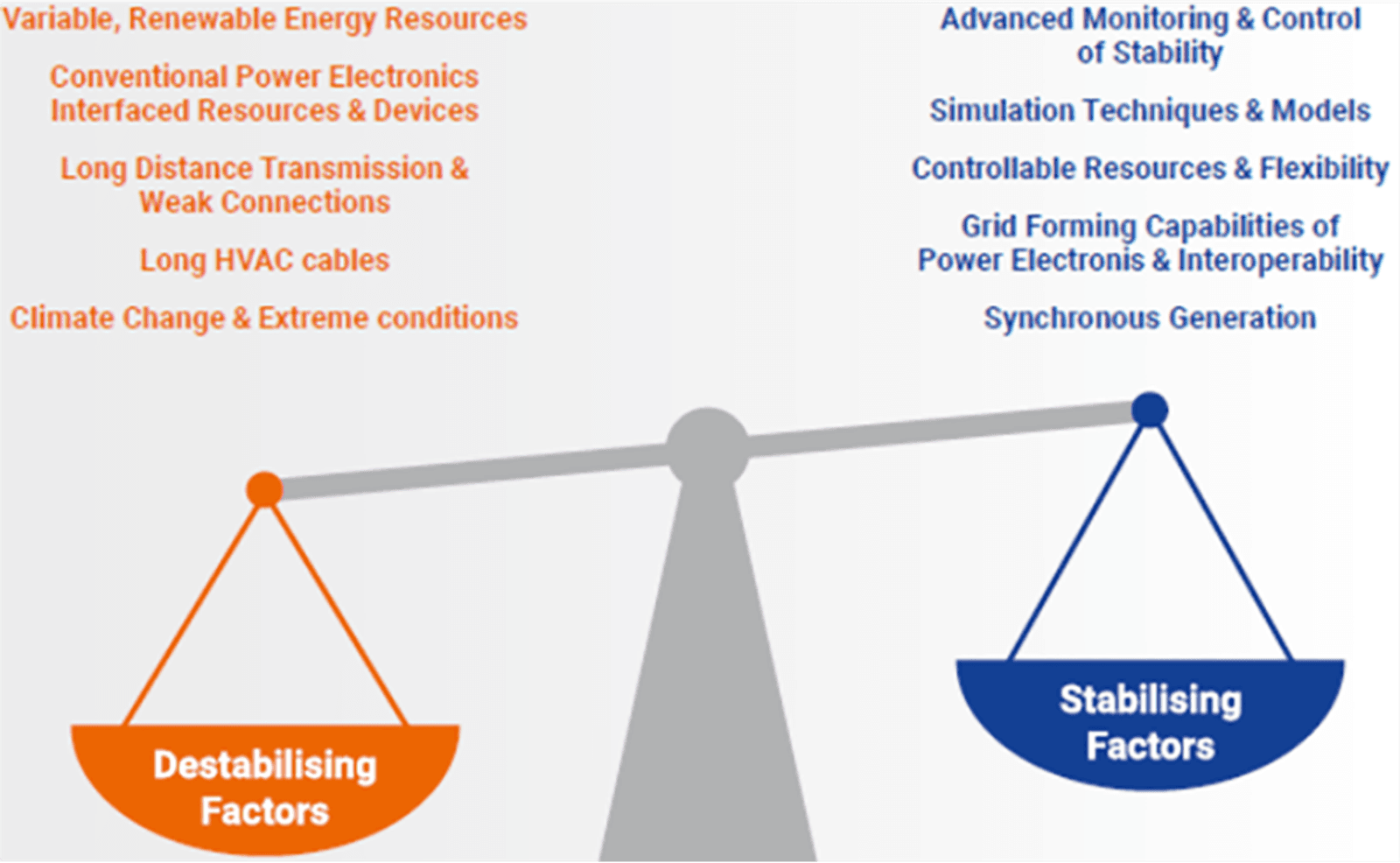
The increase in renewables leads to an increase of power electronics interfaced generation connections. From heavy generator rotors inherently able to rapidly provide considerable inertia and stability to the electricity system, we are moving to power electronics connected infeed inherently characterised by low inertia capabilities.
Unmanaged stability challenges would lead to a rise of unforeseen incidents such as islanding events, system splits, cascading faults, blackouts and equipment damage.
System adequacy, reliability and resilience assessments must be revisited in order to address the new challenges and topologies related with sector integration, i.e. EVs, P2X, PV and storage, etc., high capacity efficient energy transmission, congestion relief and secure cross border interconnections.
HYNET innovative solutions
The HYNET project combines the competencies of academia, system operators, technology providers and industry to deliver a portfolio of applicable AC/DC modelling tools which will be interoperable, scalable and replicable in several validation cases across Europe.
HYNET will develop 13 tools addressing:
- Reliability and resilience assessment, considering the integration of DC technology in power systems, modular redundancy in multiple DC network configurations, trading off resilience indices and costs and designing hybrid AC/DC grids that can be self-contained energy islands when necessary.
- Long term multi-energy systems planning, enhancing the integration of transfers from one energy source to another as part of infrastructure retrofitting and to faithfully represent the existence of the various possible supply chains in the modelling and their coupling.
- Grid-forming and inertia support techniques, delivering an innovative energy management system for avoiding blackouts, adjusting the necessary support for grid inertia according to resource planning and energy market trends, while optimising the number of DERs in grid forming mode and allowing other DERs to deliver their maximum capability in grid following mode.
- DC distribution and microgrid modelling and analysis, producing a portfolio of tools for power dispatching, voltage and reactive power control for hybrid AC/DC configurations, capable to exploit the flexibility existing in a fleet of controllable and non-controllable resources existing in the distribution grid/microgrid, such as DERs, EV chargers, energy storage systems and typical controllable and non-controllable AC and DC loads.
Validation cases
HYNET project will validate the innovative tools developed in four validation cases of DC networks at various voltage levels and regions across Europe.

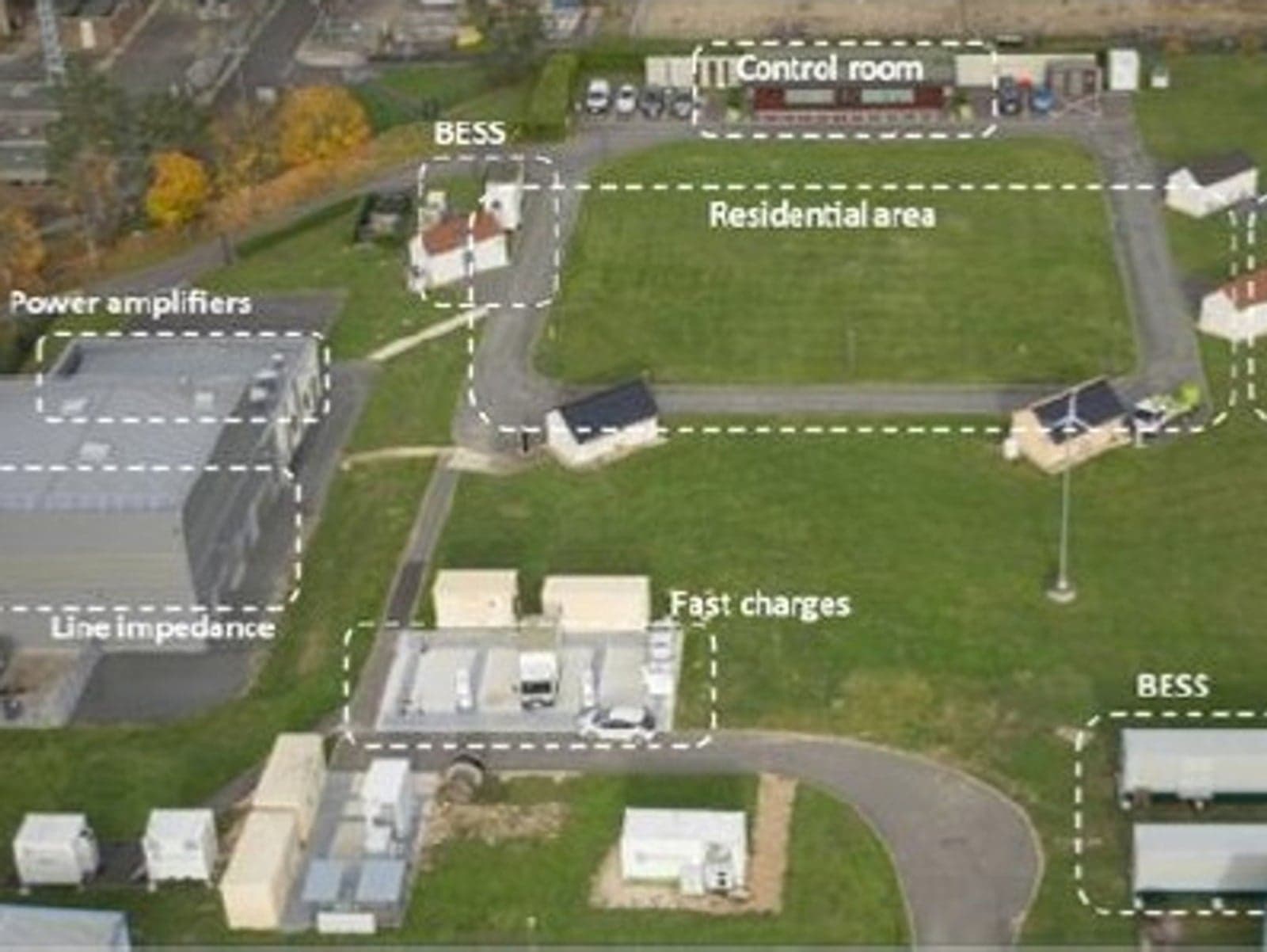
The France-Caribbean demonstrator is investigating the AC-side virtual synchronous machine concept in weak grids with a multi-terminal DC topology, via exploiting AC/DC grid forming capabilities as well as the integration of a significant amount of new applications at the LV level (EV charger, railway power supply, CO2 free hydrogen production) using DC connection to the distribution grid with a dedicated LV/MV converter.
The validation will be carried out in the EDF lab in Renardieres, France, introducing the PHIL (power hardware in the loop) methodology to test under real condition the functionalities developed for two case studies, i.e. voltage source converter grid forming integration to reinforce weak grid and congestion management on the HV station.
In Montenegro, the focus is on grid planning for reliability and resilience of cross-border interconnections with HVDC. With innovative strategies aimed at reducing losses, optimising operations and enhancing overall grid efficiency, the project strives to achieve grid stability and minimise fluctuations.
A comprehensive framework will be adopted in order to assess the investment and operational costs as well as to consider the integration of renewable energy sources and grid reliability.
In Norway the focus is on the interconnection of offshore wind farms with hybrid AC/DC grids. More specifically the development and implementation of a comprehensive cost-benefit analysis methodology for offshore interconnections will be undertaken, taking into account the fast-evolving multi-energy European system and the modeling of network constraints in sufficient detail to analyse the resulting flows and reinforcement requirements.
In Cyprus, the project will undertake resilience assessment, impact quantification of cascading events, provision of adaptive synthetic inertia and frequency support by DC systems, when the HVDC interconnection with Greece will be implemented.
Quasi real-time estimation of system inertia in AC/DC systems will be validated by considering field and digital twin PMU measurements for the operation of a system collected from generation, load and HVDC buses. A digital twin non-invasive environment will be developed to investigate the disturbance propagation effect and stability enhancement under multiple what-if scenario, disturbances and faults.
Stay tuned for developments in the HYNET project at hynet-project.eu,
About the author
Ilias Zafeiropoulos is Technology Director at Ubitech Energy. He graduated from the National Technical University of Athens (NTUA) with a PhD in Power Systems. He has strong academic and professional background in electrical engineering as a lecturer and researcher and held various roles in IPTO, the Greek TSO.
Related tags
Most popular
Join the community for freeAnd get access to all content
Related projects
HYNET
+1
1 October 2024 - 30 September 2027
View project