Hedging against market volatility with geothermal power
Pamela Largue
Posted on: 19 March 2026
Geothermal energy is gaining attention in the UK as a stable resource that could reduce reliance on imported gas and shield against market volatility. Charlotte Adams explains why.
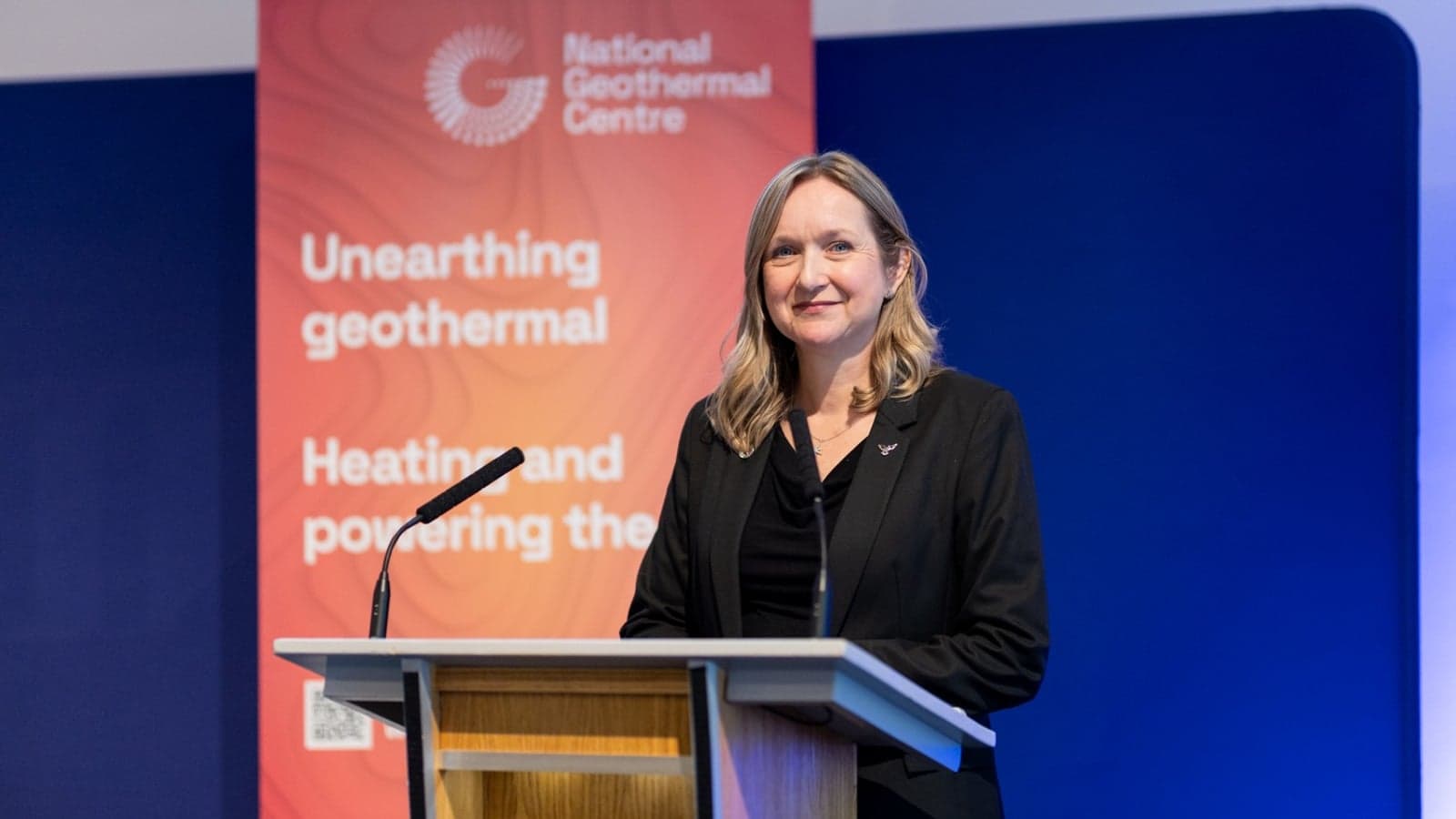
Geothermal energy could play a pivotal role in strengthening energy security and sovereignty in the UK, according to Dr Charlotte Adams, Chief Executive of the UK National Geothermal Centre (NGC).
Energy security became a strategic priority across Europe following geopolitical tensions and supply disruptions linked to the Russian invasion of Ukraine.
The crisis highlighted the risks of relying too heavily on imported gas, a challenge the UK should not take lightly, says Adams.
“We’ve been heavily reliant on gas, and we’re now increasingly reliant on imports.”
The chief executive explains that, once geothermal infrastructure is installed, operating costs are relatively stable and predictable.
“Geothermal protects against market volatility. It’s an investment in long-term energy security.”
Adams points out that in the year of the Ukraine invasion, the UK spent around £50 billion ($66.3 billion) importing gas, split between pipeline deliveries and liquefied natural gas shipments.
It’s in these high-price environments that most types of geothermal become particularly economically competitive with conventional energy sources, says Adams, which is why she questions why it’s rarely featured prominently in national energy policy debates and major government documents.
“You do a control-F search for ‘geothermal’ and it’s just not there,” she says. “It can be quite disappointing.”
However, there are signs of progress. The government has begun discussing the need for a dedicated geothermal strategy, a move Adams believes would provide a critical signal to investors.
“That commitment from government reassures private finance,” she says. “It tells them the sector has a future.”
Persistence behind the sector
Adams has spent much of her career advocating geothermal energy, long before it gained mainstream attention.
During her doctoral research on mine-water treatment, she noticed that underground water temperatures were warm enough to be used as an energy source. At the time, however, cheap natural gas meant few people saw geothermal as economically viable.
“People thought I was a bit of a lunatic,” she recalls.
But rising energy costs, climate commitments and geopolitical tensions have steadily strengthened the case for geothermal.
“For years, people would say, ‘We have access to cheap UK-sourced gas – why would we do this?’
“Now the conversation has changed.”
Taking back control of our energy supply is essential. Geothermal is sitting beneath our feet – we just need to start using it.
Today, she believes the UK has an opportunity to rethink its energy system and take greater control of its energy future.
“The security aspect is really key,” she says. “We can access geothermal more or less anywhere in the country.”
Harnessing that resource would bring energy production back within national borders.
“Taking back control of our energy supply is essential,” Adams stresses. “Geothermal is sitting beneath our feet – we just need to start using it.”
UK’s greatest opportunities
While geothermal electricity generation is attracting attention, Adams emphasises that the UK’s greatest potential lies in the vast resources of geothermal heat.
Because the country lacks volcanic activity and major tectonic zones, its underground temperatures are generally lower than those found in regions such as Iceland. As a result, geothermal electricity resources are better suited to heat production.
“Our heat demand is much higher than electricity if you look at total energy use,” Adams says. “So, the fact that geothermal is better suited to heat isn’t a problem.”
Mine-water geothermal systems represent a particularly promising opportunity for the UK because of the country’s extensive mining legacy.
“About 25% of the UK’s built environment sits above a mine,” Adams says, pointing to the UK’s largest geothermal project, the Gateshead Mine Water Heat Network in northeast England, where warm water stored in abandoned coal mines heats homes and businesses.
More exclusive geothermal content:
Why the UK should harness its hidden geothermal potential
Superhot geothermal: technologically challenging but easier than flying to Mars
UK’s first geothermal plant starts powering the grid
The flooded underground tunnels contain water that naturally warms as it circulates through rock layers. By pumping this water to the surface and passing it through heat exchangers and heat pumps, the thermal energy can be used for district heating networks.
Because the mines are relatively shallow, Adams highlights that the drilling costs are lower and the resource is easier to access than deeper geothermal reservoirs. This significantly reduces project risk and cost during the early stages of sector development.
“The mines had to manage water levels so miners could work safely,” Adams explains. “That means we already know water is there, which removes a big part of the uncertainty.”
Beyond heating, such systems can also provide cooling and thermal storage, allowing heat to be stored underground during warmer months and used in winter.
Lessons from international markets
Adams urges the UK to pay attention to what other countries have got right, such as demonstrating how targeted policy frameworks can accelerate geothermal growth.
She highlights the example of the Netherlands, where three key measures helped transform the sector.
First is a state-backed risk insurance scheme that protects developers against the possibility of drilling wells that might not encounter the expected geothermal resource.
Drilling costs represent one of the biggest barriers to geothermal investment because the resource lies underground and cannot be fully confirmed until drilling is completed.
“If you drill and don’t find what you want, you can insure against that risk in some countries,” Adams explains. “Having that in place really helped.”
We need to let more people know that geothermal is there and available. There is a huge potential but the deployment environment is not quite there yet.
Second, geothermal operators in the Netherlands receive payments based on the amount of renewable energy produced. These incentives help offset the high upfront capital costs associated with drilling and infrastructure.
Third, the Dutch government ensures open access to geological data from drilled wells and operating schemes. Information gathered during oil, gas or geothermal exploration is made publicly available after a set period, helping future developers reduce uncertainty and plan projects more effectively.
“When those measures were put in place, the sector grew by about 50% in five years,” Adams says. “Other countries that have adopted similar policies have seen comparable growth.”
While the UK has good geological data in some areas, it lacks the same level of financial risk mitigation and production incentives, which slows investment.
Awareness is key
One of the biggest barriers to utilising the heat beneath our feet, stresses Adams, is a lack of awareness of geothermal energy among policymakers, industry and the public.
Generating that awareness and creating sector champions to drive the geothermal cause are NGC priorities.
“We need to let more people know that geothermal is there and available,” concludes Adams, “there is a huge potential, but the deployment environment is not quite there yet.”