Offshore wind is EU’s ‘path to true independence’ says Dan Jørgensen
Pamela Largue
Posted on: 27 January 2026
Political leaders and industry hail the Hamburg Declaration as a milestone in securing Europe's energy safety and security.
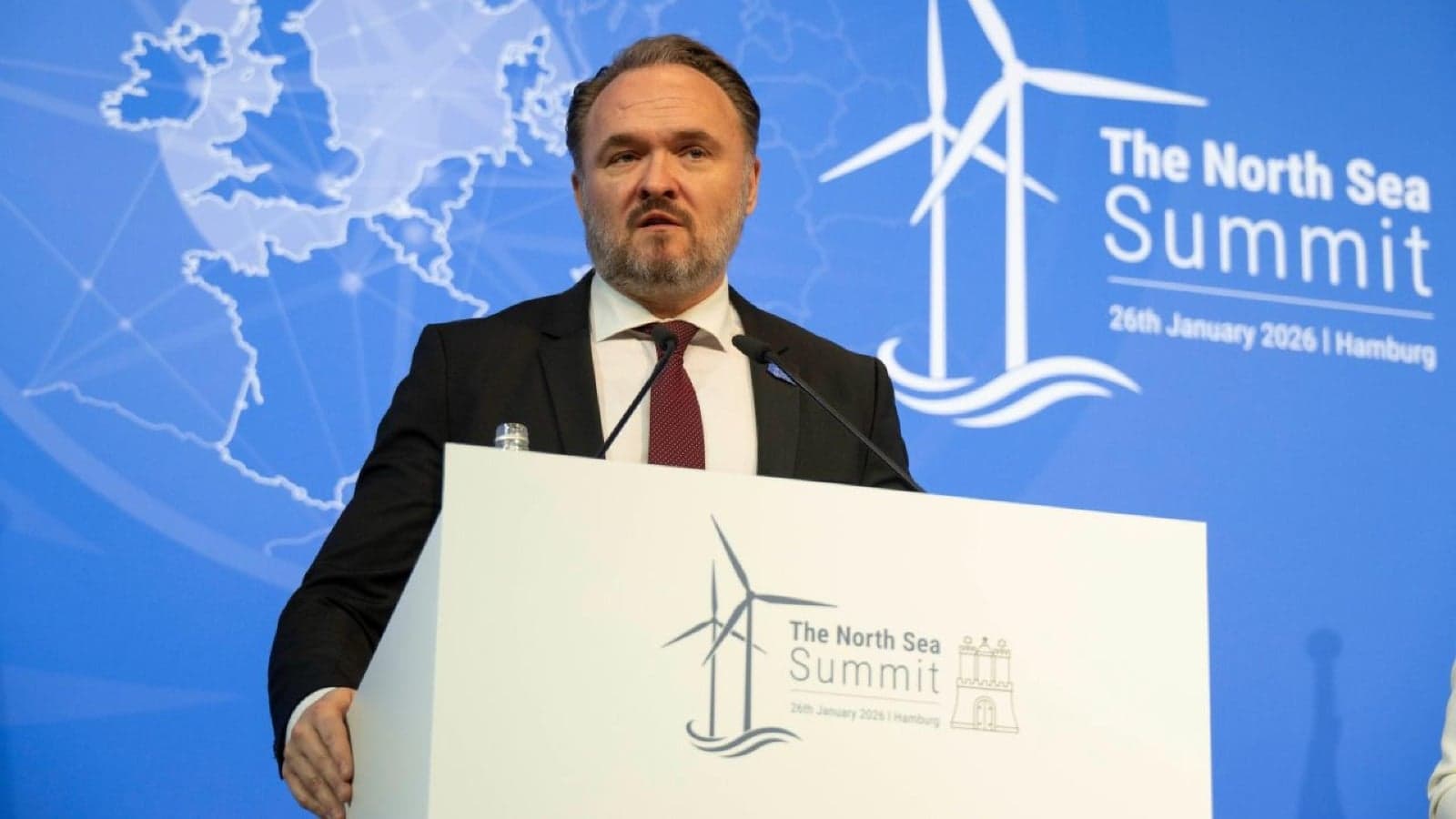
The Hamburg Declaration, signed at the North Sea Summit in Hamburg, unites the UK and several European countries behind offshore wind development in the North Sea.
The Declaration, signed by energy ministers from Belgium, Denmark, France, Germany, Iceland, Ireland, Luxembourg, the Netherlands, the UK and Norway, forms part of the Investment Pact for the North Seas, and has been praised by political leaders and industry alike as a significant step forward towards achieving energy independence.
The pact, which includes the region’s leaders, industry and Transmission Systems Operators (TSOs), will lead to the delivery of 300GW of wind power by 2050 through the development of joint wind assets. The agreement also envisages the development of 100GW of interconnected wind projects, which will allow cross-border sharing.
Said European Commissioner for Energy and Housing, Dan Jørgensen: “In these turbulent geopolitical times, Europe must stand strong and united — and choose independence. That means doubling down on clean, safe, home-grown energy.”
He emphasised that Europe must tap into its natural strengths, of which the North Sea is one of the greatest, and allow clean energy to be shared.
“It means strengthening our interconnections so that affordable energy can flow freely across our continent, continued Jørgensen.
Have you read?
Baltic Sea set to be major player in European clean energy
Is the UK's offshore wind project pipeline at risk?
“And it means securing our industrial leadership while guaranteeing our security. This is Europe’s path to true independence.”
A series of declarations was signed at the Summit to set out specific actions and timelines to de-risk investments to connect electricity grids across borders in the region and strengthen the energy system against physical, cyber or hybrid attacks.
The ultimate aim is to ensure the region becomes less dependent on expensive fossil fuel imports.
UK Energy Secretary, Ed Miliband, commented on the announcement: “After our record renewables auction, we today went further by signing a clean energy security pact with European allies to ensure we maximise the clean energy potential for the North Sea.”
It is expected that industry will respond with ambitious plans for new projects, unlocking up to €1 trillion ($1.19 trillion) of investment. This will lead to the development of UK and European supply chains and will bring down energy prices.
WindEurope CEO Malgosia Bartosik commented: “Today Europe doubles down on offshore wind. Government cooperation on offshore wind buildout can help crowd in €1 trillion of investments in the next decade. This is the best possible response to those who doubt Europe."
Dhara Vyas, Chief Executive of Energy UK, referred to this pact as a “strategic necessity,” adding: “It’s the most effective way to bring down energy costs for households and businesses while fuelling sustainable economic growth and high-value jobs for years to come.”
Rasmus Errboe, President and Chief Executive Officer at Ørsted lauded the announcement as a “giant leap towards powering Europe with renewable, reliable, and cost-competitive electricity.”
He also believes the collaboration will boost investment predictability and de-risk the investment framework.
Energy and security nexus
Dick Schoof, Prime Minister of the Netherlands, commented in a post on X: “The North Sea is the place where energy and security come together. In these times of geopolitical developments, it is particularly important to strengthen cooperation with the North Sea countries.”
He emphasised the importance of protecting critical infrastructure, as well as working closely with businesses to guarantee security and ensure energy supply.
“That is why we are working closely with the business community and other stakeholders…We are doing this, for example, by coordinating our activities at sea and organising joint exercises. We made further agreements and reaffirm existing ones on this during the North Sea Summit in Hamburg.”
In an OpEd published in Politico, Ed Miliband and Dan Jorgenssen also emphasised the milieu in which this pact was signed: “The world has entered an era of greater uncertainty and instability than at any other point in either of our lifetimes, and energy is now central to this volatile age we find ourselves in.”
It’s this uncertainty that makes cooperation based on shared interests absolutely critical, they add.
Henrik Andersen, CEO of Vestas, stated in a LinkedIn post that even though he has attended the North Sea Summit before, this year felt different.
“At the North Sea Energy Cooperation Summit in Hamburg, government and industry came together to look each other in the eyes and do what’s needed to secure the project volumes and industrial scale required to deliver competitive, green energy for Europe.
“…The clear need for energy independence meant it felt different this year. There was real intent from my fellow roundtable participants…”
A different story across the pond
While Europe’s leaders rally around offshore wind as a critical source of energy sovereignty and security, the sentiment is less positive towards the renewable energy resource in the US.
US President Donald Trump recently referred to wind turbines as “losers,” as reported by USA Today, in a meeting with oil and gas executives in Davos. He added that he’s “not much of a windmill person,” and will not be approving any wind farms while in office.
Trump believes wind farms are aesthetically unappealing, and because they use Chinese turbines, they give China a competitive edge over the US.
US being the biggest exporter of LNG (and Europe's increased import of this energy resouce)
No matter the reason, it is clear that the US, like Europe, is chasing energy sovereignty, but will be charting a very different course to achieving that goal.
For now, the US has cemented its role as the world’s leading LNG exporter, with a large portion of those exports heading to Europe.