Overcoming material challenges in thermal energy storage tanks
Guest/partner contributor
Posted on: 2 June 2025
CSP plants employing thermal energy storage systems face materials-related challenges when operating at high temperatures| writes Andy Backhouse of Outokumpu.

Concentrated solar power (CSP) plants employing thermal energy storage (TES) systems face considerable materials-related challenges when operating at high temperatures. One such challenge is stress relaxation cracking (SRC) in 347H austenitic stainless steel, the alloy most widely used for molten salt tank construction.
Andy Backhouse, Lead Technical Manager at steel manufacturer Outokumpu, highlights findings from a recent consortium research project indicating that adopting Therma 4910 stainless steel could mitigate this persistent issue.
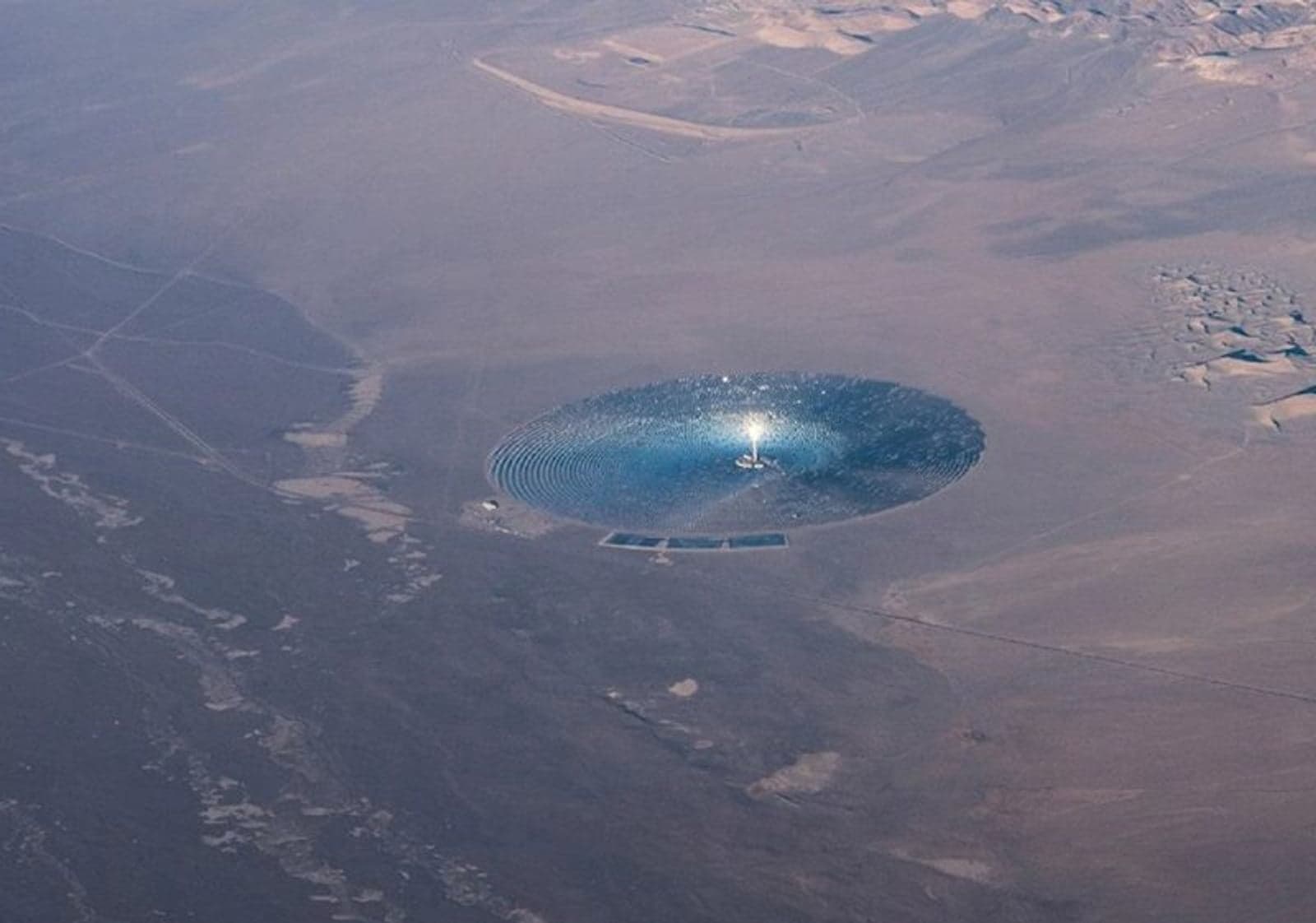
In a recent report, the International Energy Agency (IEA) concluded that concentrated solar power could meet more than 11% of global electricity demand by 2050, assuming sufficient governmental support.
However, achieving cost competitiveness with conventional and renewable generation demands that CSP delivers dispatchable power — power available on demand — through integrated Thermal Energy Atorage (TES) solutions.
Currently, thermal energy storage offers the lowest-cost approach for storing solar-generated heat for multiple hours: typically, the five-to-seven-hour evening peak period encountered worldwide. As solar photovoltaic deployment has increased, addressing daytime energy needs, peak electricity demand naturally shifts to evening hours.
The ability to store energy effectively is critical to widespread renewable energy adoption. CSP combines renewability with the capability to store thermal energy affordably and release electricity to the grid when required.
Thermal energy storage typically consists of massive tanks filled with thousands of tonnes of molten salt cycling between about 300°C and 600°C. Although molten salts theoretically could maintain their stored heat for extended periods with minimal heat loss (approximately one degree Celsius per day), they are primarily used for daily "time-shifting," converting solar heat collected during daytime into evening electricity.
Have you read?
ENERGYNEST signs power-to-heat contract with LEONHARD KURZ
Can rocks in a box revitalise European industry?
The challenge: SRC in 347H tanks
The 347H stainless steel grade is the standard material for constructing molten salt storage tanks. This is essentially due to its corrosion resistance to molten nitrate salt and mechanical strength at high temperatures.
Nevertheless, 347H weldments are at risk of a pronounced problem: intergranular stress relaxation cracking, particularly at temperatures above 550 °C and often occurring after relatively brief periods in operation.
SRC often leads to critical structural damage, shorter equipment lifespan, leakage hazards, costly inspection-and-repair-related downtime, and safety risks. A vivid example occurred when the molten salt storage tank in one such CSP plant started leaking, forcing the plant to shut down and consequently costing the operating company over $51 million in losses.
SRC-related issues also pose significant reputational risks for manufacturers.
Stress relaxation cracking usually develops because of weld-induced residual stresses and susceptible alloy microstructures operating continuously at elevated temperatures (generally above 550°C). When fracturing occurs in 347H it is often caused by relaxation of local strains accumulated around niobium carbide precipitates in the weld heat affected zone.
Post-weld heat treatment (PWHT) could potentially reduce the risk of cracking by relieving residual stresses, but implementing it effectively in a large tank on site is challenging and cost prohibitive.
Incorrectly applied PWHT can even cause SRC or lead to other problems.
SRC failure is not restricted just to 347H. Other nickel base alloys and stainless steels can also be susceptible at these temperatures; 316H has been used in advanced gas-cooled nuclear reactors and SRC failures have been documented.
Therma 4910: An alternative to address SRC issues
Due to these ongoing concerns, industry stakeholders have actively sought alternative stainless steels and weld fillers offering improved SRC resistance, comparable or enhanced corrosion resistance, and strong thermomechanical properties like fatigue strength and creep resistance.
Therma 4910 (EN 1.4910), also known as 316LNB, has emerged as a promising, commercially available alternative.
The alloy — strengthened with nitrogen and boron and containing a low carbon content — has demonstrated comparable molten salt corrosion resistance and superior creep strength compared to 347H. Furthermore, employing 16-8-2 filler (ER16.8.2) has shown improved resistance to SRC in weld heat affected zones compared to the traditional filler combinations used with 347H welds.
Also of interest
Heat for hops: How Heineken is using solar thermal to decarbonise Valencia brewery
A Swedish formula for European industrial competitiveness
Worth noting is that, while its targeted application for CSP molten salt storage tanks is recent, Therma 4910 isn’t a novel material. Initially developed in the late twentieth century as EN 1.4910, it was used in European coal-fired power plants that underwent substantial temperature and pressure upgrades.
Thus, Therma 4910 has a long-standing record of reliable high-temperature operation and performance, underpinned by long-term laboratory creep testing. Recognising its beneficial attributes, Therma 4910 is being reintroduced specifically for thermal storage applications, such as in CSP.
Proving Therma 4910’s SRC resistance experimentally
To validate Therma 4910’s suitability and performance potential, an industry-academic consortium was formed by Outokumpu, Colorado School of Mines (Golden, CO), CSP technology leader Vast Energy, and construction partner CYD.
The overarching objective was to experimentally evaluate Therma 4910’s SRC resistance compared to conventional 347H.
There is no standardised test available to evaluate SRC.
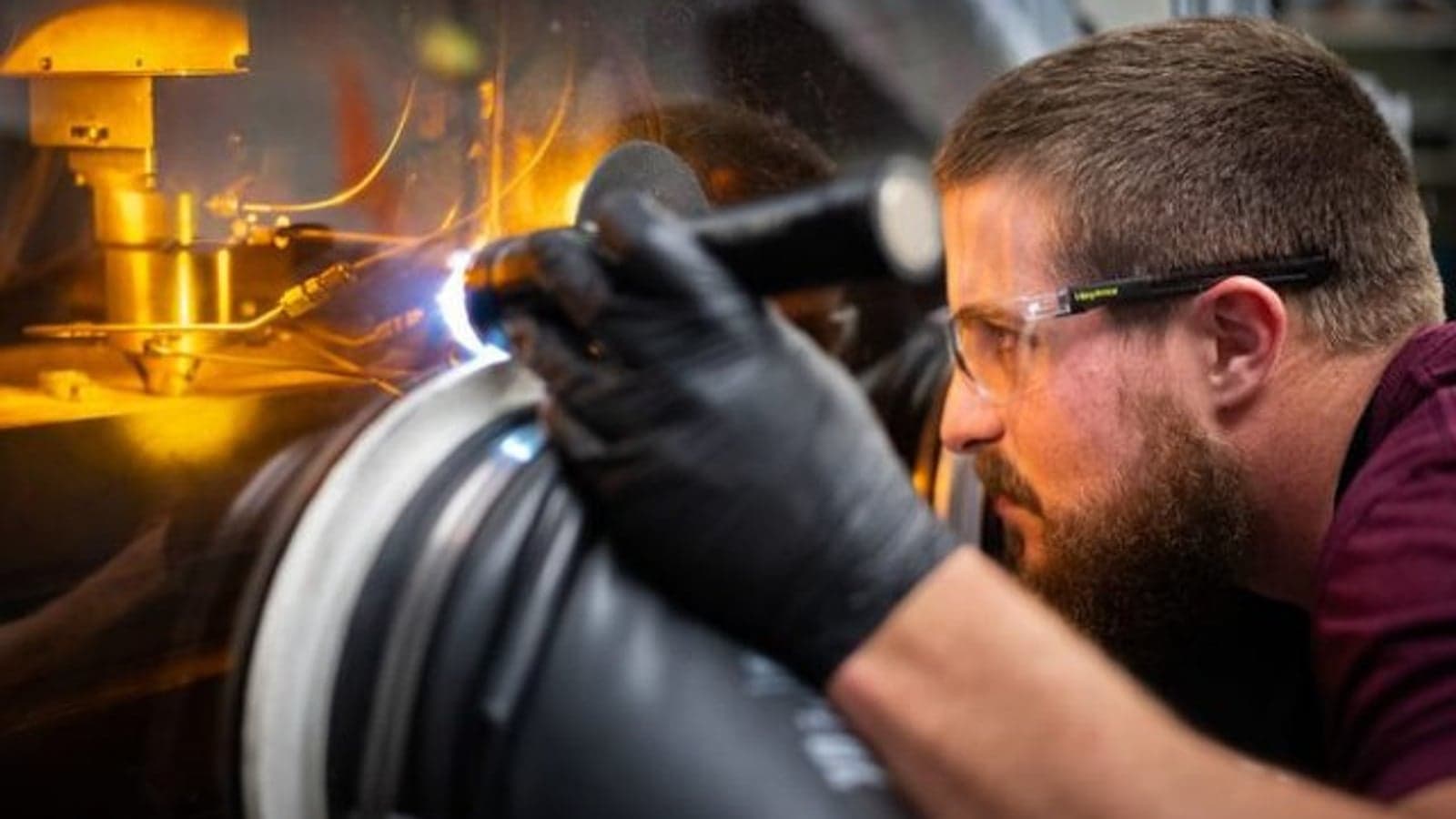
The consortium conducted advanced thermomechanical testing utilising the Gleeble 3500 simulator, a digital device providing precise control over thermal and mechanical loading. The simulator generates static loading up to 10 tonnes in compression or tension and achieves ultra-rapid sample heating (as high as 10,000°C/s).
The test parameters used were designed to resemble as closely as possible the metallurgical and stress state conditions experienced in heavy wall welded tanks, although it should be recognised that no laboratory SRC test methodology can fully replicate real-world conditions.
These rigorous tests specifically examined SRC susceptibility in the heat-affected zone (HAZ) and weld fusion zone (FZ) employing 16-8-2 filler material. Twenty-two-hour Gleeble tests spanning simulated operating temperatures of 600°C–800°C revealed no cracking in Therma 4910 HAZ samples loaded initially at 650 MPa stress or 0.174 strain, nor in FZ samples at 460 MPa yield stress.
In sharp contrast, similar testing of 347H HAZ and weld samples using matching filler showed visible cracking within a few hours.
Future work will aim to complete the testing program by conducting longer-duration tests at 600°C and analyzing the microstructural conditions involved in fracture initiation.
Thermal energy storage: Conclusions and broader industry implications
The initial test results indicate that Therma 4910 austenitic stainless steel, under laboratory conditions, provides superior resistance to SRC compared to the currently employed 347H grade in molten salt storage tank applications.
Although Therma 4910’s composition incurs incremental manufacturing costs versus 347H, this can be offset by the higher elevated temperature strength of Therma 4910 and additional investments appear marginal when weighed against the financial, safety, and reputational risks associated with catastrophic SRC failures.
Resolving materials challenges increasingly matters for CSP's broader role as a reliable renewable heat source for power generation and industrial processes. Additionally, while thermal energy storage tanks provide dispatchable power at temperatures up to about 600°C, ongoing research projects seek even higher-temperature operations to achieve improved plant efficiencies and reduced operating costs.
Given such demanding future scenarios, Therma 4910, with excellent SRC resilience and superior creep strength, could soon emerge as an indispensable material solution.