Port of Rotterdam – How to make the biggest European port carbon neutral
Jonathan Spencer Jones
Posted on: 27 September 2022
The Port of Rotterdam is on track for 55% carbon emission reduction by 2030 and carbon neutrality by 2050.
The Port of Rotterdam is on track for 55% carbon emission reduction by 2030 and carbon neutrality by 2050.
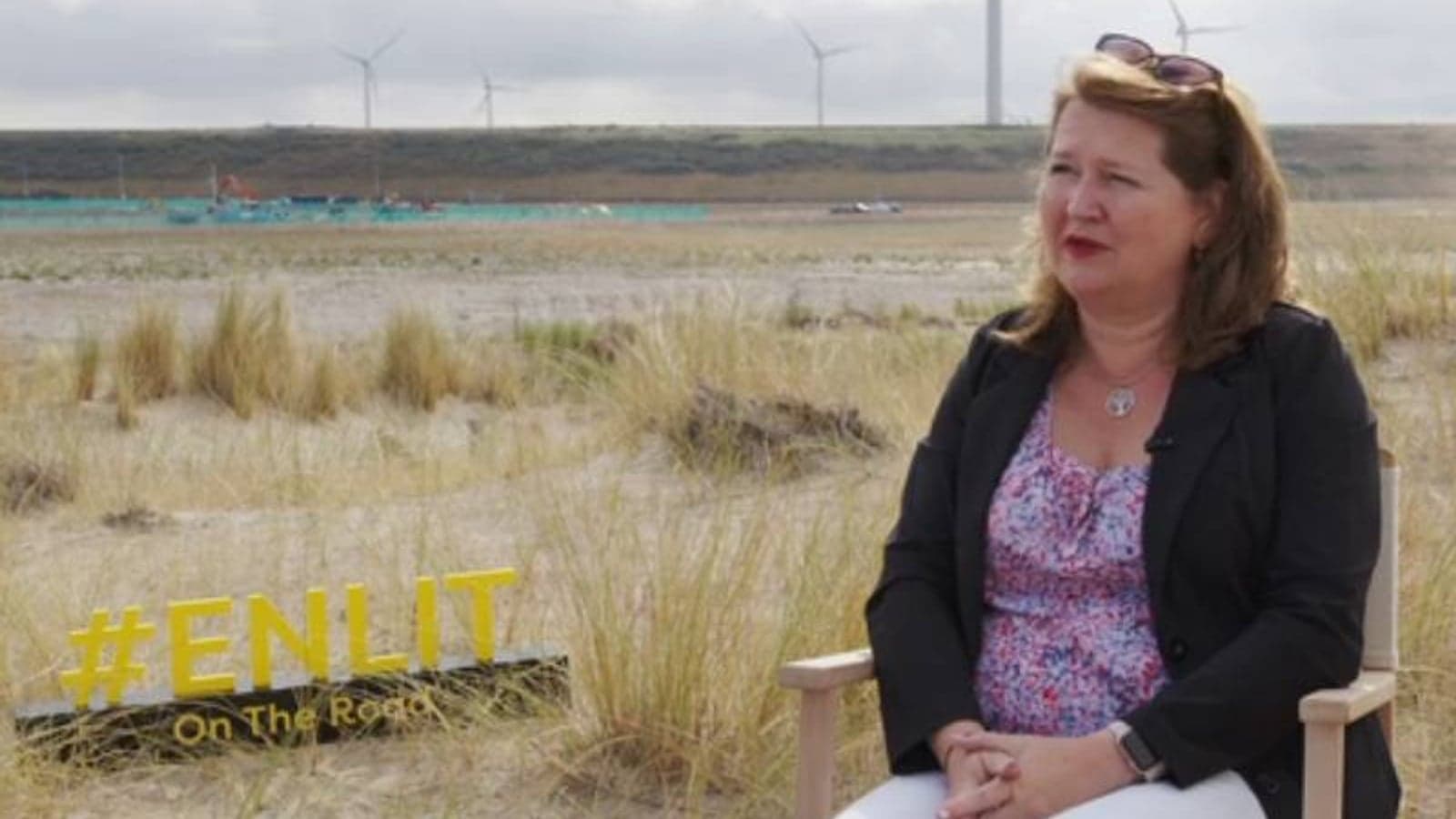
That is the word from Maike Akkers, Programme Manager Energy Transition Infrastructure at the Port of Rotterdam, in an exclusive interview with Enlit on the Road in Rotterdam.
“When we started the energy transition many people didn’t take us seriously and thought it wasn’t going to happen but I’m glad we started early – and I hope it was early enough – and we have done a lot of things to make it happen,” she says.
Akkers describes the Port’s role as a facilitator for the projects of the companies present, ranging from majors such as Shell down to small operators, with the infrastructure both within the port and with connections externally.
Key projects include an open access hydrogen backbone, new east-west connections for new energy carriers, the interconnection of new offshore wind, carbon capture with offshore storage and a residual heat network.
Watch the video:
Site visit: Building Europe’s largest hydrogen plant
The Port has been at the forefront of developing itself as a hydrogen hub for Europe, with a growing number of import agreements with countries across the world and the allocation of land for gigawatt-scale electrolyser production by Shell among others.
“The hydrogen water taxi is a small example but people can see that [hydrogen] is happening and it is possible,” Akkers says.
“Sometimes one has to stimulate the little developments to get enough trust for the larger ones.”
An important question is around hydrogen storage and Akkers says that in the short term the port has sufficient storage space but longer term salt caverns will need to be used for storage.
Commenting on the Port’s approach to the energy transition, Akkers says that raw materials and recycling are key pillars and necessary for circularity. While recycling is growing, transforming raw materials from fossil-based to renewable, given the wide range of goods that come through the port, is the “real challenge” and ultimately a global issue.
With these activities, it seems safe to say that the heart of the energy transition of Rotterdam is at the Port of Rotterdam.
More insights from Enlit on the Road – Rotterdam:
How the Port of Rotterdam is enabling the energy transition with hydrogen
Project visit: Residential power-to-gas
Stedin chief talks realising, optimising and digitising the energy transition
Latest content
+3
Shell's Holland Hydrogen 1 – building block of Europe’s green hydrogen economy
Shell’s Holland Hydrogen 1 green hydrogen electrolyser in the Port of Rotterdam is set to be a key stepping stone to deliver the company’s and Europe’s decarbonisation goals, says Lijs Groenendaal from Shell.
- Jonathan Spencer Jones
- 26/09/2022
+2
Rotterdam fuels its own energy transition with hydrogen
Rotterdam, headquarters of Dutch distribution system operator Stedin and home to Europe’s largest seaport, is laying the foundations for a decarbonised future with its development of hydrogen, writes Jonathan Spencer Jones.
- Jonathan Spencer Jones
- 24/11/2022