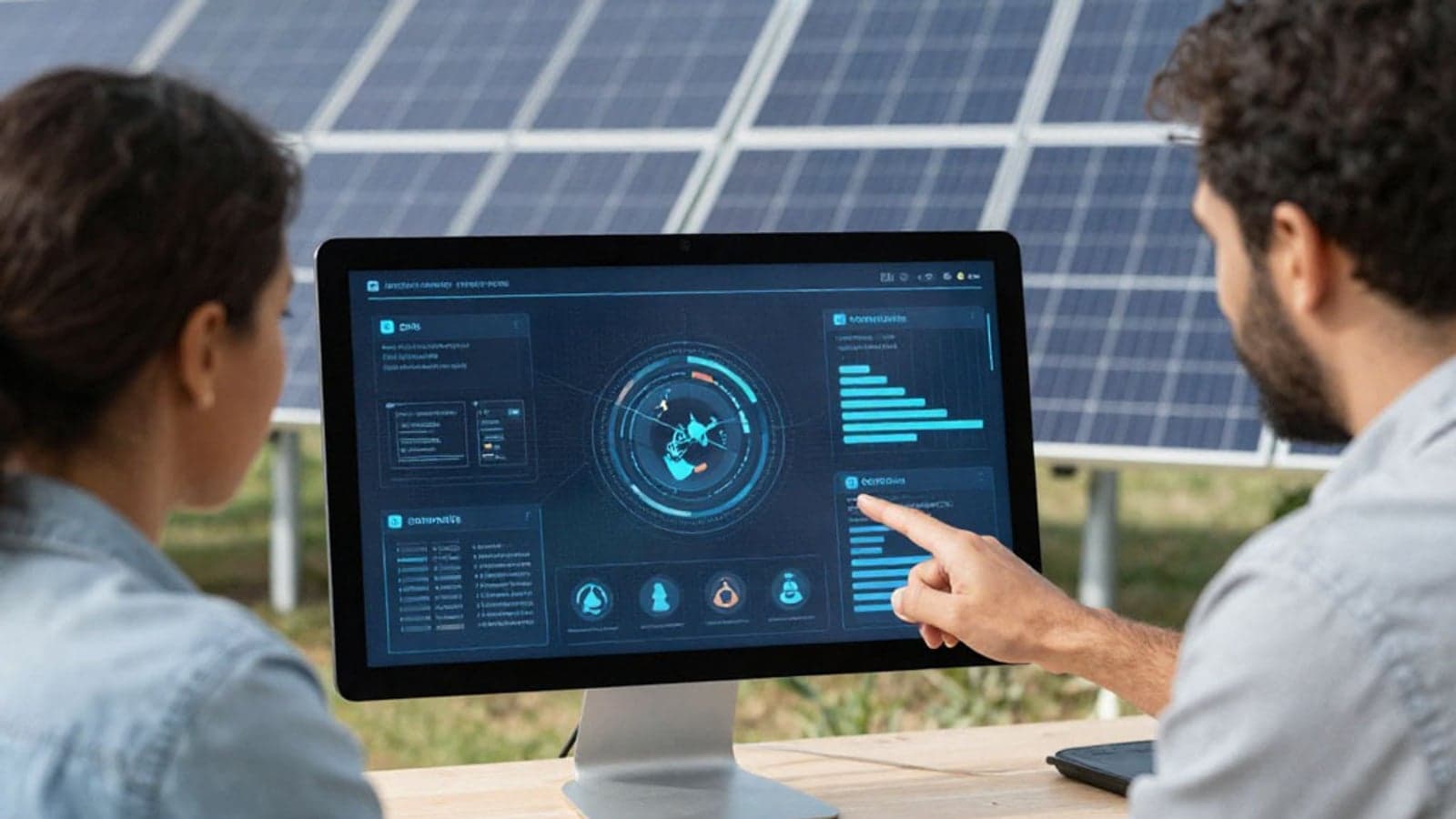
Powering progress: Putting people at the heart of the energy transition
Guest/partner contributor
Posted on: 14 May 2026
The global drive to decarbonisation is accelerating a triggering a profound shift across the electrification landscape, writes Guillaume Eymery of Nexans.

As countries work to modernise ageing grids, expand renewable capacity and electrify different sectors such as transport and technologies across homes, the systems supporting energy delivery are becoming more complex than ever before.
At the same time, artificial intelligence is advancing at an unprecedented pace, redefining how organisations assess risk, plan infrastructure and oversee complex networks of physical and digital assets.
The rapid evolution of electrification and software intelligence are now tightly interconnected. Greater electrification brings heightened complexity, increasing reliance on automation, real-time data and predictive capabilities.
In parallel, AI is evolving beyond analysis alone, offering the potential to turn this complexity into a source of operational and strategic strength.
For decision-makers, this marks more than incremental change. AI is reshaping how infrastructure is designed, how assets are maintained and how safety and resilience are managed at scale. Recognising and adapting to this shift will be critical to delivering the dependable, secure and sustainable energy systems required in the years ahead.
AI driving innovation and enhanced performance
Innovation in the electrification sector has traditionally been dominated by incremental improvements to materials, components and design processes. But AI is rapidly redefining the pace and possibility of that innovation.
Advanced algorithms can ingest and analyse engineering archives, testing parameters and environmental datasets that would take human teams years to evaluate. By generating millions of design variations and simulating their performance, AI helps engineers uncover solutions that are more resilient, more sustainable and more cost-effective before any physical prototypes are created.
This shift is influencing how products such as cables, connectors, switching systems and renewable-energy components are conceived. AI-assisted design tools are supporting the development of assets that are fundamental to energy transition, such as fire-resistant materials, lighter and more flexible components, and products that are easier to recycle.
The ability to evaluate trade-offs between durability, efficiency, environmental impact and cost at the earliest stage is accelerating time-to-market and expanding the scope of innovation.
AI’s influence reaches far beyond product development. Electrification systems generate enormous amounts of operational data. These include sensor readings, environmental measurements, maintenance logs and performance histories, and they provide a rich foundation for improving reliability.
AI can detect anomalies within these datasets that human operators would be unable to, especially at scale.
Have you read?
AI potential to shape sustainable consumption in Europe
First data centre microgrid deploys in Ireland
By learning from patterns within equipment behaviour, environmental conditions and historical failures, AI can predict when components are likely to degrade or malfunction. The result is maintenance that is proactive rather than reactive, reducing unplanned downtime and extending the life of essential infrastructure.
For grid operators, AI offers an additional layer of intelligence that enhances the overall stability of the system.
By combining weather forecasts, load data and real-time equipment performance, AI can anticipate demand spikes, identify stress points on the network and adjust the flow of power to maintain balance.
This level of automation is particularly valuable as renewable-generation assets grow and the grid becomes more dynamic. With solar, wind and storage technologies introducing greater variability, AI provides the analytical capability needed to orchestrate power flows efficiently and sustainably.
AI protects people and strengthens Infrastructure
While innovation and performance are key drivers, safety remains the foundation of every electrification environment.
Factories, substations, renewable-energy farms and cable manufacturing sites all carry inherent risks, from high-voltage equipment to heavy machinery and complex operational workflows.
AI is emerging as a valuable ally in identifying and mitigating these risks before they become incidents.
By examining historical safety records, near-miss data and real-time operational inputs, AI can detect subtle signals that may indicate unsafe behaviours, equipment anomalies or environmental hazards. These insights help organisations intervene early, strengthening their safety culture and reducing the likelihood of accidents.
In global operations, where teams may speak multiple languages and work across different regulatory frameworks, AI also plays a role in harmonising safety communication.
Automated translation tools and intelligence-driven reporting systems ensure that critical information remains accessible and consistent across regions, reducing the risk of misinterpretation.
Beyond the boundaries of industrial sites, AI contributes to the protection of critical national infrastructure. Electrical grids, renewable-energy installations and underground cable networks face growing threats, primarily from extreme weather, ageing components and cyberattacks.
Continuous monitoring powered by AI enables operators to identify unusual patterns in asset behaviour, shifts in environmental conditions or early signs of physical strain. These insights can support targeted repairs, asset replacement programmes and resilience planning, ultimately helping prevent large-scale outages.
AI also strengthens the digital defences of increasingly connected energy systems. As smart grids expand, the attack surface for cyber threats widens. AI-driven security tools can detect unusual or suspicious network activity, identify vulnerabilities and respond to anomalies with a speed far beyond manual capabilities.
This level of vigilance is essential as the industry becomes more digitised and interdependent.
Harnessing human knowledge and elevating data quality
While AI is transforming the electrification landscape, its impact ultimately rests on the shoulders of two foundational elements: the strength of human expertise and the integrity of the data it relies on. Electrification organisations produce enormous volumes of operational data, but much of it remains siloed, inconsistent or poorly maintained.
Without well-structured, reliable datasets, even the most advanced AI systems struggle to deliver meaningful or dependable outcomes. As a result, many organisations are placing greater emphasis on data governance, standardisation and continuous data improvement to unlock the full value of their digital investments.
Equally important to unlocking the true value of AI is the role of human insight in shaping how it is applied.
Technical specialists such as engineers, planners, analysts and frontline operators provide the contextual understanding and critical judgement that AI alone cannot replicate. Their involvement ensures that outputs are interpreted accurately, risks are properly assessed and decisions are grounded in real-world conditions.
As electrification continues to accelerate, the interplay between skilled professionals and intelligent technologies will become increasingly central. Success will depend on combining advanced analytical capabilities with deep industry knowledge, enabling organisations to build energy systems that are not only more efficient, but also more robust and secure.
About the author: Guillaume Eymery is the Chief Strategy Innovation & Digital Officer at Nexans.