'No meaningful progress' for women in renewables this decade says IRENA
Pamela Largue
Posted on: 15 October 2025
IRENA has released the second iteration of its report, Renewable Energy: A Gender Perspective, which shows a persistent underrepresentation of women in the sector.
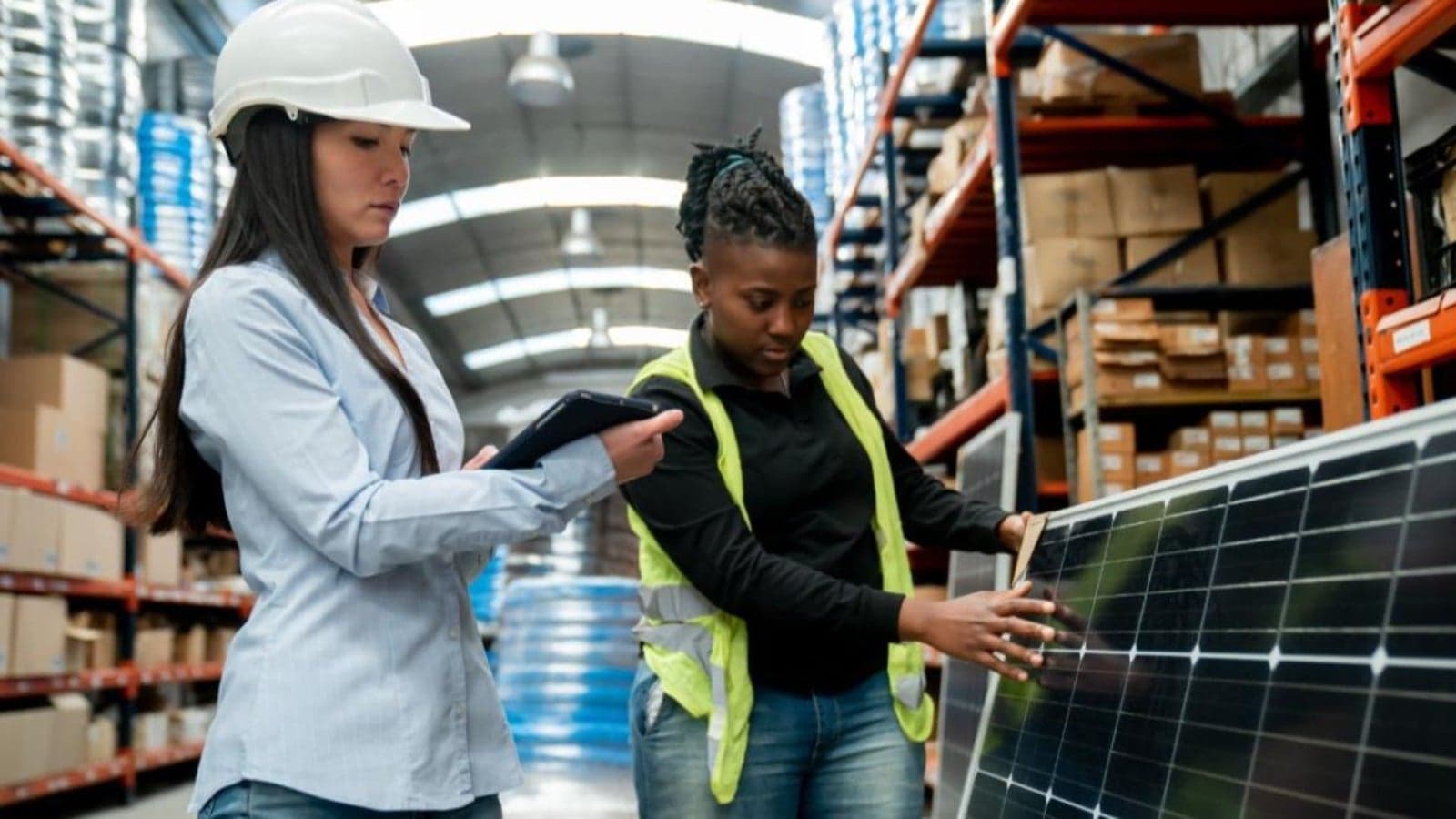
Compared to the first report published in 2019, IRENA states that “no meaningful progress” has been made in women’s representation, with only 32% of full-time jobs in the renewables sector being held by women.
According to the report, women account for only 19% in senior leadership positions, as opposed to 45% in administrative roles.
Also, only 22% of women operate in trades such as electricians or machine operators, which usually require vocational training or apprenticeships.
IRENA Director-General Francesco La Camera said: “Unfortunately, despite performing better than in fossil fuel industries, little progress has been made. The sector still has a lot of work to do. To realise the energy transition’s full potential, women must be recognised as equal partners and leaders in shaping the renewables-based future.”
The report is designed to raise awareness about the lack of gender equality and diverse perspectives and the impact that could have on a fair and sustainable energy transition.
Have you read?
Joanna Osawe on building a global platform to elevate women in renewable energy
Jeanette Gitobu on leading women in wind and shaping energy policy
It also calls for systemic barriers that hinder gender balance to be addressed, specifically highlighting continuing bias, cultural stereotyping, challenges with balancing professional and caregiving responsibilities, and discrimination.
IRENA’s report makes several recommendations to address these barriers, such as access to education, equal pay policies and the enforcement of non-discrimination laws by governments.
The study highlights that private enterprises, which dominate the renewables sector, report the lowest levels of female participation at 25%. By comparison, non-governmental organisations show nearly 48% female representation, while government and non-commercial institutions report 37%.
IRENA calls on all employers, in public and private sectors, to implement strategies that provide equal opportunities. These strategies can include flexible work arrangements, transparent recruitment and promotion practices, mentorship opportunities, and safe, as well as respectful workplaces.
La Camera added: “By mainstreaming inclusion in all programmes, policies and stages in energy planning, deployment and investment, we can unlock innovation, expand market opportunities and build energy systems that serve entire populations more effectively.”
Beyond renewables
The trend witnessed in the renewable energy sector is not unique. Within engineering in general, the needle is simply not moving on the issue of gender equality.
Earlier this year, in a podcast with Monica Collings OBE, Chair of POWERful Women, it became evident that the shift towards inclusivity, specifically in the UK, has stalled.
Podcast with Monica Collings: Why the UK power sector needs more female leaders
POWERful Women's 2025 State of the Nation report shows that women make up 30% of board members - up only 1% from last year, and 16% of executive directors, also up only 1% from last year.
Collings commented on the report findings: "I think the most depressing figure is at leadership level only 34% of leadership roles [are] filled by women, a figure which has remained unchanged over the past 12 months.”
Like IRENA, Collings is calling for a diverse workforce which will allow better decision making, innovation and creativity. "It's good for business, it's good for everyone to have these more diverse workplaces, because we will leave no stone unturned and what we build will be better and stronger if we do it together."
New talent pools
A report published this year by Enlit, Making it work, highlights the significant gender imbalance in the energy industry. In 2019, male workers represented 75% of the total workforce in the EU energy sector. The problem starts in primary and secondary education, where many girls can be put off from pursuing STEM subjects at university, making it critical to promote STEM subjects at school level.
The report also suggests that industry is not promoting career opportunities to a sufficiently broad section of the population, which means many women candidates simply do not know about employment opportunities in the energy transition. The report recommends the industry become more adept at sourcing excellent candidates with no direct energy experience, to avoid missing out on a wealth of transferable skills.
Join the conversation about women in energy at Enlit Europe in Bilbao. Register to attend the dedicated sessions; How do we Make the Energy Workforce More Diverse and Inclusive? and Energy transition = workforce transformation.