Site visit: HEDNO's Central Energy Control Centre for Non-Interconnected Islands
Guest/partner contributor
Posted on: 25 October 2023
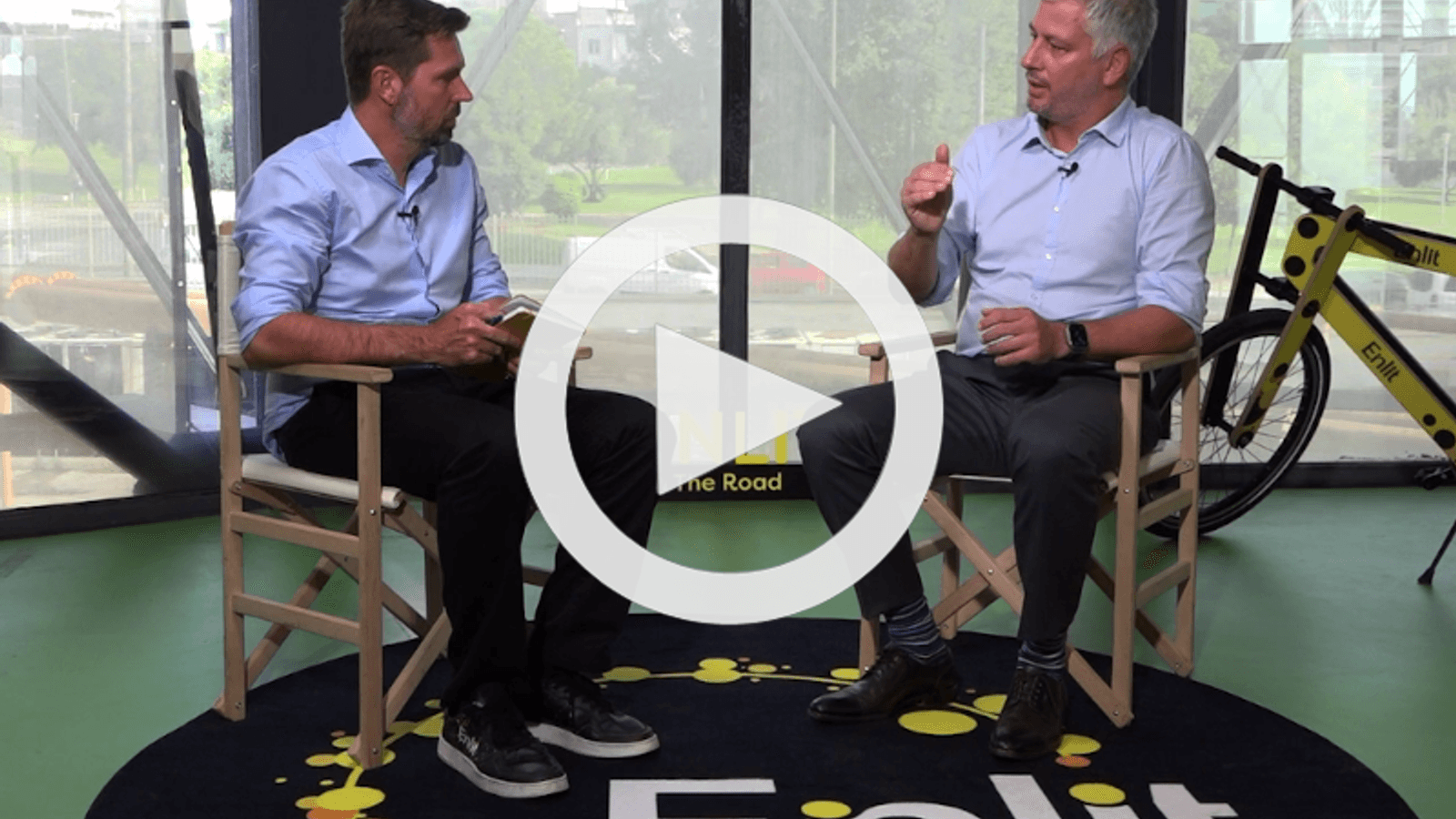
Enlit on the Road visited HEDNO’s Central Control Centre for Non-Interconnected Islands in Athens to explore how their SCADA-Energy Management System is used to control the integration of large-scale intermittent renewable energy systems
Enlit on the Road visited HEDNO’s Central Control Centre for Non-Interconnected Islands in Athens to explore how their SCADA-Energy Management System is used to control the integration of large-scale intermittent renewable energy systems.
The Greek electricity grid is one of the most distinctive grids in the world as it contains various electrical systems of Non-Interconnected Islands (NIIs), explains Stefanos Kokkinelis, HEDNO's Deputy Head of Dispatch and Short-term Operation Planning Section.
Typically, the energy in these electrical systems is produced by fossil fuel generators. The integration of large-scale intermittent renewable energy systems (RES) like Wind Parks (WPs) in an isolated microgrid such as the electrical systems of the Greek NIIs poses many operational and control challenges that can affect the reliable and stable operation of the electrical systems.
Read more:
Insights from Enlit on the Road, Athens
Project RIR – a rural microgrid demonstrator in Hauts-de-France
Why the electrical grid is ‘the backbone of the energy transition’
Implementing a SCADA - Energy Management System
HEDNO (Hellenic Electricity Distribution Network Operator), as market operator and energy system operator of NIIs, has tackled this issue by implementing a SCADA - Energy Management System (SCADA-EMS) with advanced functionalities. The operation of the new SCADA-EMS is expected to result to an optimal operation of generating units (thermal and renewables) in each NII while increasing RES penetration and reducing human intervention to a bare minimum.
The SCADA-EMS has been designed considering the unique characteristics of the NII electrical systems and consists of a Central Control Centre located in Athens, a Local Control Centre (LCC) on each of the 27 NIIs, a Local Control System (LCS) in each WP and RTUs in a percentage of photovoltaic stations (PVs), depending on the number of installations.
The main functionalities of the SCADA-EMS include real-time monitoring of thermal units, feeders, WPs and PVs via a graphical interface, real-time data storing in a database, and a runtime environment, which integrates, among other capabilities, several options for WP management.
As the NII electrical systems are considered isolated microgrids, the problems introduced by wind power generation in terms of power quality, frequency variations, system inertia and stability are accentuated.
Furthermore, in these systems, wind power fluctuations place increased operational demands on the thermal units, which are responsible for retaining the power balance. Therefore, WPs in NIIs are often curtailed to ensure the electrical systems’ stability, power quality and overall, to increase reliability.
On each NII, the SCADA-EMS human machine interface (HMI) provides the operator with a complete overview of the production units (thermal and RES) as well as the ability to manage WPs either by sending manual set-points or automatically by set-points that are calculated and delivered to WP controllers on predefined time intervals, taking into account a set of constraints.
An algorithm for unique constraints
In order for the SCADA-EMS to automatically manage WPs effectively, an algorithm has been developed that takes into account the limitations and constraints imposed by the dispatched thermal units, the fluctuations of load and the intermittency of WPs. Various parameters can be set by the system operator so that the transition from one set point to the next may be implemented with a ramp.
Furthermore, several variables are used as inputs to the WP management algorithm, such as wind direction, wind speed and loss of communication. The output of the algorithm is reassessed every minute based on the conditions and the optimal set-point for each WP is computed.
Recent experience from the SCADA-EMS operation has shown that human intervention in WP management is needed only on special occasions (e.g. grid maintenance, extremely bad weather) since the developed WP management algorithm along with its parameters efficiently curtails WPs whenever required.
It must be noted that the adjustment of the aforementioned parameters can be tailored to each NII according to its characteristics (size, peak load, number and location of installed WPs, prevailing weather conditions, thermal units’ characteristics) for optimal management. The advanced functionalities for managing WP have proved to be an important section of the SCADA-EMS, adding to improved management of the NIIs electrical systems and the increase of RES penetration.
Watch the full video for Stefanos's explanation of what the control centre does on a day-to-day basis. To meet Stefanos at Enlit Europe in Paris, register here.