Size matters: scaling down fusion for compactness and the desktop
Jonathan Spencer Jones
Posted on: 6 April 2026
Realta Fusion’s CoSMo ‘magnetic mirror’ fusion system and Alpha Ring’s Alpha-E desktop device are recording progress.
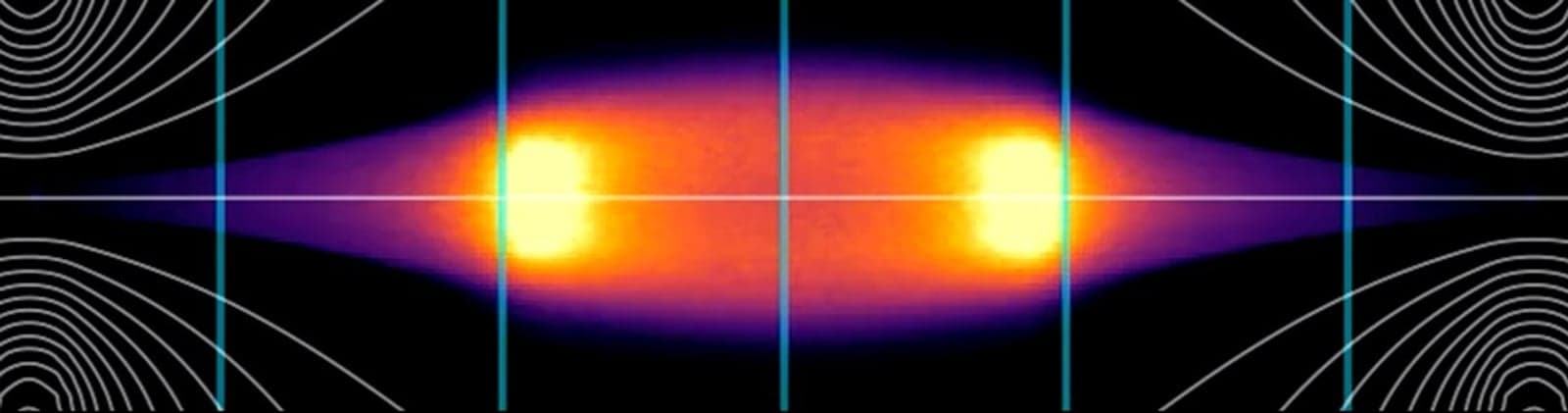
In a partnership agreement, Commonwealth Fusion Systems is to design and manufacture high-temperature superconducting magnets to advance the commercialisation of Realta Fusion’s ‘magnetic mirror’ technology.
These magnets are intended for their demonstration device, named Anvil, and the commercial scale successor, Hammir, due in the mid-2030s.
Realta Fusion CEO Kieran Furlong, said in a statement that working with CFS, which, in developing its own fusion system has specialised in advancing high temperature superconducting magnet technology, is significantly de-risking this critical technology.
Also of interest
Collaboration critical as fusion developers push toward MW-scale pilots
Meet the ‘fusionista’ ready to deliver on the promise of fusion energy
“Commercialising magnetic mirror fusion systems requires integrating multiple cutting edge technologies. Knowing that we can get the magnets we need, when we need them, from the best developed supply chain, is a huge leap forward for Realta.”
Realta’s magnetic mirror approach is based on confining the fusion plasma within a cylinder between two high-field superconducting magnets, with the strong magnetic fields causing the charged energetic particles to bounce back and forth – hence the mirror effect.
Indeed, this concept was one of the early approaches to fusion, but research languished, with the revival of interest primarily due to advances in magnet technology and the high field strengths that are achievable – the latest record reported by Chinese scientists in September 2025 being 351,000 Gauss or 35.1 Tesla, over 700,000 times stronger than the Earth’s magnetic field.
The advantage of the approach is that it should enable the development of more compact and modular and scalable fusion devices – to coin a term, small modular fusion reactors – that could be pre-assembled and deployed in for example, industrial or other neighbourhood-scale settings.
Commonwealth Fusion has been working since 2020 with Realta – a spinout from the University of Wisconsin to advance the Wisconsin HTS axisymmetric mirror (WHAM) experiment – and provided the high temperature superconducting magnets used to confine its first plasma at a then world record magnetic field strength of 17T in 2024.
Far from regarding Realta as a competitor to its own tokamak fusion development, Commonwealth Fusion CEO Bob Mumgaard describes its efforts as giving the growing industry another promising technological opportunity to bring fusion energy to the grid.
“This partnership allows Realta to tap into the world-class supply chain we built to support our advanced manufacturing capabilities, and that will help it to bring commercial fusion energy to the grid faster.”
Alpha-E to accelerate fusion skills
Alpha Ring has reported that its Alpha-E table top fusion device has been installed at Bulgaria’s Sofia University, marking a first in Europe and the advancement of the development of fusion skills.
The installation supports the launch of a new undergraduate course, ‘Introduction to nuclear fusion systems’, within the University’s Department of Radiophysics and Electronics.
Built around the Alpha-E device, which is being donated to Sofia University by alumnus Dr Kosta Yanev, the course is designed to give students direct experience generating and diagnosing fusion reactions with practical experimentation.
Comprised of 15 modules, these cover HV systems, microwave plasma generation, ion beam formation, vacuum engineering, fusion reaction diagnostics and cross-section measurements, culminating in direct observation and analysis of fusion products.
Associate Professor Stiliyan Lishev, Head of the Sofia University Radiophysics and Electronics Department, said that developing a highly qualified workforce and stimulating innovation in a competitive industrial ecosystem is one of the cornerstones needed to establish fusion as a sustainable energy source of the future.
“In this regard, partnerships between universities and the private sector are essential for the training and education of scientists, engineers and technicians with the relevant expertise. The partnership between the Faculty of Physics of Sofia University and Alpha Ring is truly an example of such productive cooperation.”
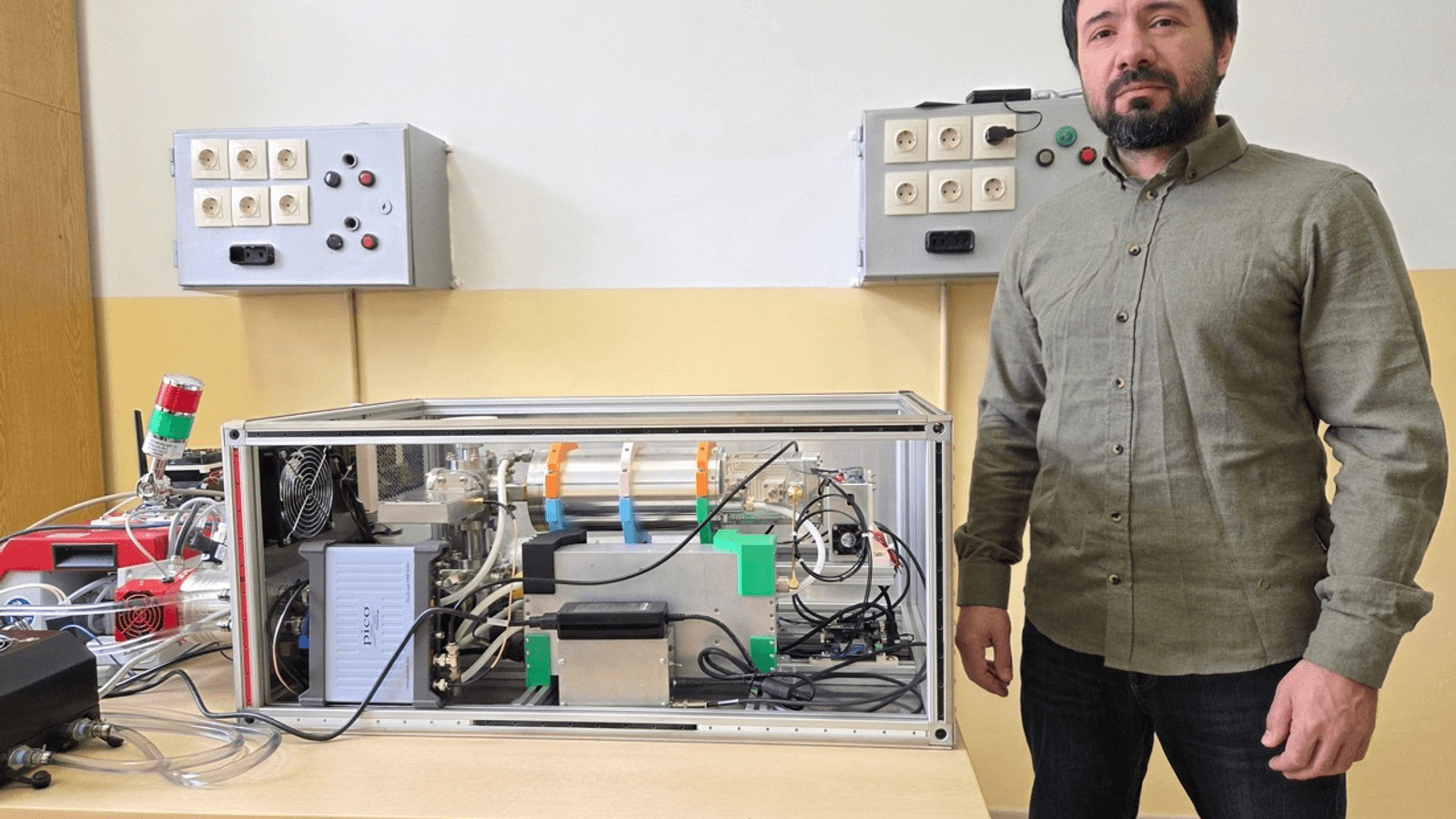
The Alpha-E is an ion beam device that can be used to study fusion reaction experiments, including deuterium-deuterium (DD) and proton-boron.
Sofia University has been trialling the device since April 2025, since when it has already been used to complete a bachelor student’s thesis.
The University intends to also integrate Alpha Ring’s newly developed plasma module that enables hands-on plasma physics experimentation. The compact module enables students to visualise plasma formation and confinement, explore the effects of magnetic fields and microwave tuning and use diagnostic tools such as Langmuir probes and optical spectrometers.
The Sofia installation follows a permanent installation of Alpha-E at Purdue University in March.