Tech giants collaborate on data centre energy efficiency
Yusuf Latief
Posted on: 23 March 2026
NVIDIA partners with Emerald AI as Google signs on demand response and Siemens and Rittal develop solutions for more efficient power distribution.
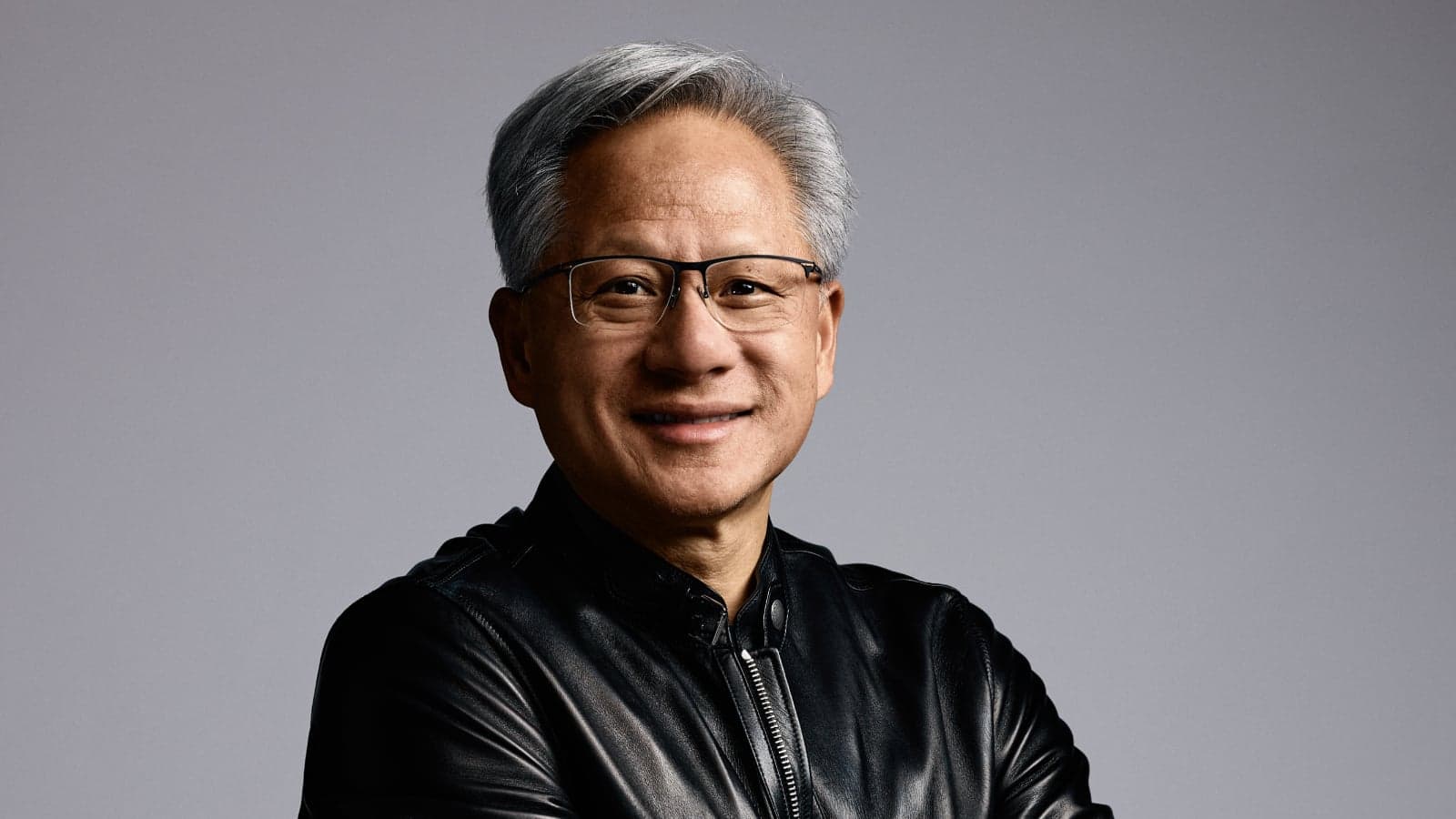
A host of tech giants operating in the US and Germany have announced separate initiatives to improve how data centres consume power.
Over in the US NVIDIA and Emerald AI have announced a collaboration alongside six other energy sector stakeholders on data centres as flexible energy assets.
Meanwhile, Google announced 1GW in contracts with utilities to tap their data centres as demand response assets. And over in Germany, Siemens Smart Infrastructure and Rittal have partnered to enhance how data centres are designed.
NVIDIA and Emerald AI announced a collaboration with AES, Constellation, Invenergy, NextEra Energy, Nscale Energy & Power and Vistra to power and advance a new class of AI factories that can operate as flexible energy assets that can support the grid.
These next-generation AI factories will harness the new NVIDIA Vera Rubin DSX AI Factory reference design, which includes the DSX Flex software library for connecting AI factories to power-grid services.
According to NVIDIA in a release, the factories can use co-located energy generation and storage as bridge power for hybrid AI factories, then later harness these resources to flexibly supply the grid, accelerate AI factory interconnection and support the broader power system.
AI factories are the engines of the intelligence era, and like any great engine, every system must be designed together — energy, compute, networking and cooling as one architecture.
The DSX reference architecture can also support flexible AI factories without co-located energy resources to achieve larger and faster power grid connections.
Emerald AI’s Conductor platform will orchestrate computational flexibility alongside onsite generation, batteries and other behind-the-meter resources to deliver precise, grid-responsive power flexibility.
This coordination, says NVIDIA, helps operators meet power targets, protect priority workloads, shorten time on bridge power, and support larger and faster interconnections. It can also help reduce the need for infrastructure to be sized around peaks, easing pressure on future system costs.
Jensen Huang, Founder and CEO of NVIDIA, said: “AI factories are the engines of the intelligence era, and like any great engine, every system must be designed together — energy, compute, networking and cooling as one architecture.
“NVIDIA and Emerald AI are working together to enable a future for AI where performance, efficiency and grid responsiveness can be tapped into immediately.”
“AI factories are too valuable to be treated as either passive loads or permanent islands,” said Varun Sivaram, founder and CEO of Emerald AI. “They produce tremendously valuable AI tokens and knowledge, and with DSX Flex, they can also provide measurable relief back to the grid.
“Emerald Conductor orchestrates compute flexibility alongside onsite energy resources to support the grid, so projects can connect sooner, preserve quality of service for AI tenants and ultimately strengthen the power system around them.”
AES, Constellation, Invenergy, NextEra Energy, Nscale Energy & Power and Vistra will collaborate to evaluate optimised generation applications designed to power the AI factories built with the architecture developed by NVIDIA and Emerald AI.
This will include through hybrid projects that use co-located power to speed time to power and create value for the broader grid.
The companies can also support flexible AI factories that are grid-connected from the outset, using co-located energy resources if available, says NVIDIA.
Over the last year, Emerald AI and NVIDIA trialled AI power flexibility demonstrations at five commercial data centres around the world. DSX Flex is expected to be deployed at commercial scale later this year at the NVIDIA AI Factory Research Center in Virginia, planned as one of the world’s first power-flexible AI factories with NVIDIA Vera Rubin infrastructure.
Google’s demand response contracts
NVIDIA’s announcement comes a week after a milestone from Google in its efforts to make data centre energy use more flexible. The tech giant, which has recently announced several initiatives to cement its position in the power sector, has integrated a total of 1GW of demand response capacity into their long-term energy contracts with multiple utilities across the US.
More on Google's plays in the energy sector:
Google firms power sector position after finalising $4.8bn Intersect deal and co-launching Utilize with Tesla
Google acquires energy company to advance data centre development
How data centre-driven power demand is shaping big tech power plays
Since announcing initial agreements with Indiana Michigan Power (I&M) and Tennessee Valley Authority (TVA) last year, Google said they signed contracts with Entergy Arkansas, Minnesota Power and DTE Energy that incorporate demand response as a key resource for new data centres to connect more rapidly to local grids.
Demand response can be deployed quickly to bridge the gap between short-term load growth and the longer timelines required to build new clean generation and storage solutions.
Specifically, Google’s demand response capability allows them to limit or shift a portion of machine learning workloads running in their data centres, reducing overall data centre power demand, helping to stabilise the grid during certain hours or times of the year.
By allowing utilities to cover peak demand periods with existing grid resources, Google says this demand response will help optimise the build-out of new transmission and power plants. This is because flexible demand reduces the need for new infrastructure designed only to meet short periods of peak use of the system — a primary driver of costs for electricity customers.
Google says it will also continue working to advance data centre design, grid planning processes, and market development for the tech. This includes collaborating with states, regulators and their utility partners to modernise power system planning.
Siemens and Rittal collaborate on data centre design
Across the pond in Germany and days before Google’s milestone, Siemens and Rittal entered a strategic partnership to jointly develop what they say will be future-proof, sustainable solutions for more efficient data centre power distribution in the IEC market.
The standardised infrastructure is intended to accelerate the construction of high-performance data centres, minimize time-to-compute, and address the rapidly increasing power densities of AI applications.
According to Siemens, in AI data centres power densities exceeding 100kW per rack have become the norm. By 2030, the power density could increase to more than 1MW. This requires innovative architecture for power distribution, cooling, and heat recovery.
As technology leaders, we have a responsibility to keep strengthening our customers' competitiveness with the latest technologies.
This is where the company pitches its partnership with Rittal, Friedhelm Loh Group and its largest company Rittal, a global supplier of racks and standardised infrastructure, including power and cooling for leading hyperscalers.
Said Prof. Dr Friedhelm Loh, Owner and CEO of the Friedhelm Loh Group: “We have a long-standing collaboration with Siemens in a number of fields. We are proud to be taking our partnership to the next level.
“Both companies are driven by the desire to innovate. As technology leaders, we have a responsibility to keep strengthening our customers' competitiveness with the latest technologies.”
One of the first joint solutions from the partners will be a ‘sidecar’ application that is housed directly in the white space of a data centre, where the server cabinets and data storage are located.
According to Siemens, by bundling the power electronics in a dedicated power rack that supplies the server racks, this type of power supply represents a breakthrough for future AI applications. It provides computing units with a fast, simple, standardised, and scalable supply of power.
Andreas Matthé, CEO of Electrical Products at Siemens Smart Infrastructure, said: “To enable the rapid growth of AI, we need smart, reliable, and scalable power supply solutions for data centres and we need them quickly. In combination with our innovative electrical products and solutions, Rittal is an ideal partner when it comes to speed and standardisation in infrastructure.”
Other Siemens and Rittal projects include the development of a standardised low-voltage distribution system for modular and containerised data centres as well as optimized solutions for operational and personal safety. The first customer projects are already underway.
Latest content
+3
Smarter siting for a strained system: Factors shaping the UK’s energy sector in 2026
Chris Wilton, Utilities Lead at Ordnance Survey, discusses the outlook for the UK's energy sector in 2026, considering the data centre surge, ageing assets concerns, and the need for resilient power networks.
- Guest/partner contributor
- 07/01/2026