The future of energy islands: CRETE VALLEY’s system-of-system digital twins
Guest/partner contributor
Posted on: 18 December 2025
Crete has the capacity to become a renewables powerhouse – and the CRETE VALLEY project is enabling this transition.
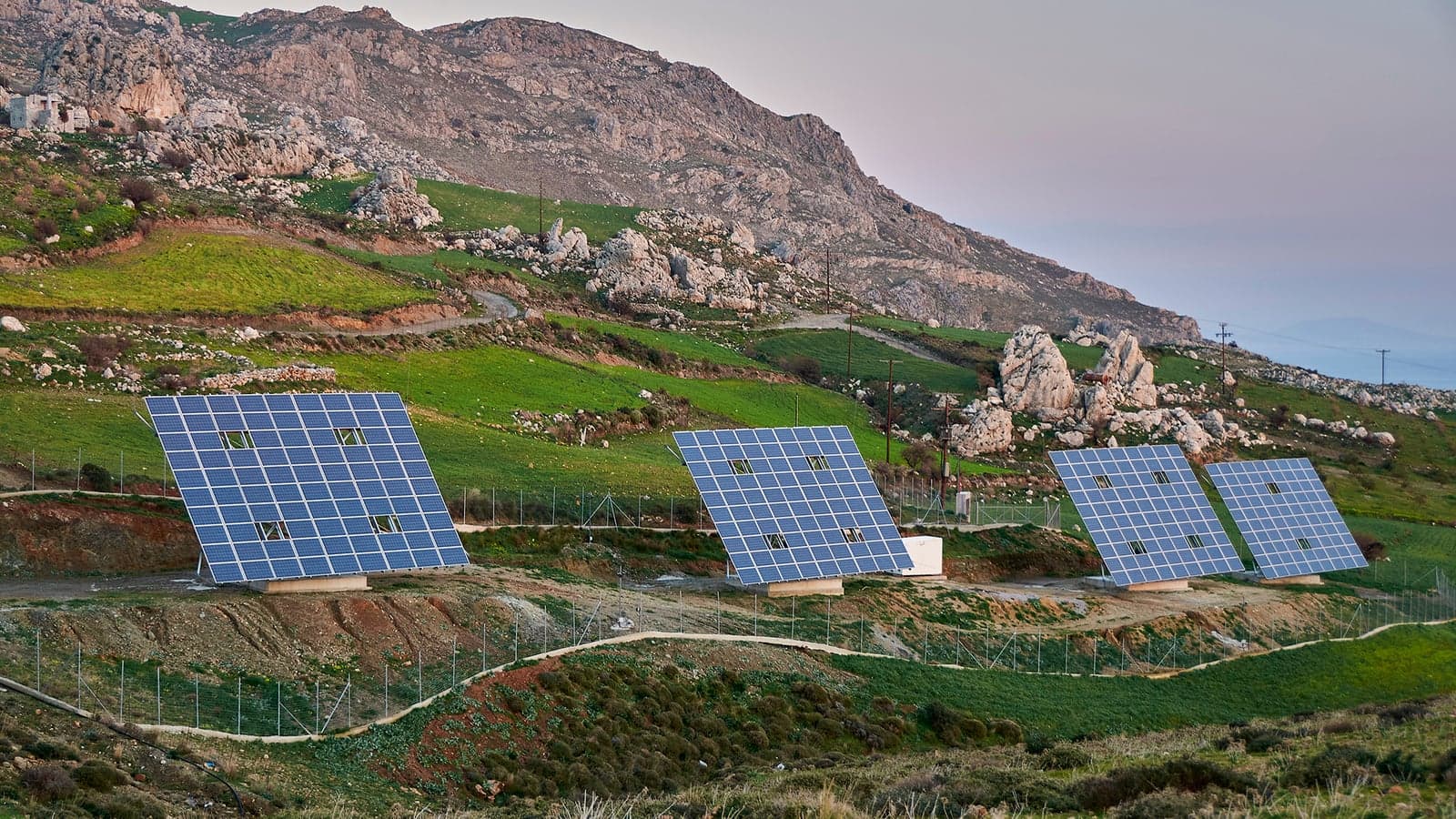
Crete, like other islands in Europe, has been faced with dependencies on imported fossil fuels, with a dearth of conventional energy sources of its own. Most of Crete’s electricity is generated through thermal power stations and a handful of wind and solar power plants. This lack of self-sufficiency often results in high energy prices, with considerable changes in energy demand and consumption throughout the year. [1]
The island demonstrates great renewables potential, especially through biomass due to the scale of agricultural activities in the region, as well as geothermal reservoirs. [2]
Energy island in the making
CRETE VALLEY, financed partially through Horizon Europe, has set out to create a renewable energy valley 'living lab' (REV-Lab) in Crete.
The project will establish an independent, distributed and affordable energy system for residents and businesses, meeting local energy needs through a suite of renewable energy carriers combined with energy storage technologies.
The REV-Lab comprises four community energy labs (CELs) located in geographically unique sites across Crete, where the different renewable energy technologies will be implemented. Its goal is to create a decentralised renewable energy system that layers innovative ICT technologies and interoperable digital solutions with social engagement and robust business models.
The technological layer of the project relies on a mix of approaches, including advanced AI, flexibility models and power flow simulations that materialise through a system-of-system digital twin for multiple carrier grid management and operation.
Role of the digital twin
To fully operationalise, scale and replicate the renewable energy valley model, technological barriers, among others, must be overcome. Different stakeholders within an energy system must be connected to effectively manage and coordinate local energy grids with service provision for individual consumers. [3]
Digital twins form the backbone of the renewable energy valley system and facilitate smarter energy management within increasingly complex energy systems that are decentralised, data intensive, and reliant on distributed renewable energy sources. With this technology, it is possible to accurately manage smart grids, to integrate multiple generation sources of electricity and heating and deliver it optimally to consumers.
By integrating these advanced digital tools, the project aims to enable more coordinated, efficient, and intelligent operation of the overall energy ecosystem.
The CRETE VALLEY project has recently released its first wave of data driven applications and services supporting its system-of-systems digital twin, reaching a major milestone in building a reliable, low carbon, smart energy system in Crete.
Developed by the project coordinator, ICCS at the National Technical University of Athens, along with the active support of RWTH, HOL and INESC TEC, the platform is designed to support grid operators, energy suppliers, and individual consumers by improving operational efficiency, enabling flexible energy management, and promoting energy autonomy. As of now, and in the context of the project, the platform is operated and utilised by HEDNO, the DSO of Greece, and IPTO, the TSO of Greece.
How the digital twin platform works
The system represents the four community energy labs (CEL1 – CEL4), each encompassing the full range of digital twin capabilities, including spatial mapping and asset tracking, load and production analytics and predictive maintenance scheduling.
Each CEL is supervised by a CEL manager, responsible for ensuring optimal operation and coordination within the overall renewable energy valley framework. Dedicated renewable energy managers oversee specific energy carriers, such as solar, wind, geothermal, hydrogen, biomass and biogas, ensuring that generation assets operate efficiently and complement one another. The local electricity distribution network is managed by the DSO, which maintains efficient energy delivery and network stability, while the TSO ensures system-wide grid balance and transmission reliability.
At the integrated grid level, the platform enables advanced simulations and optimisation tools, supporting both DSO and TSO operations through real-time monitoring, forecasting and decision support.
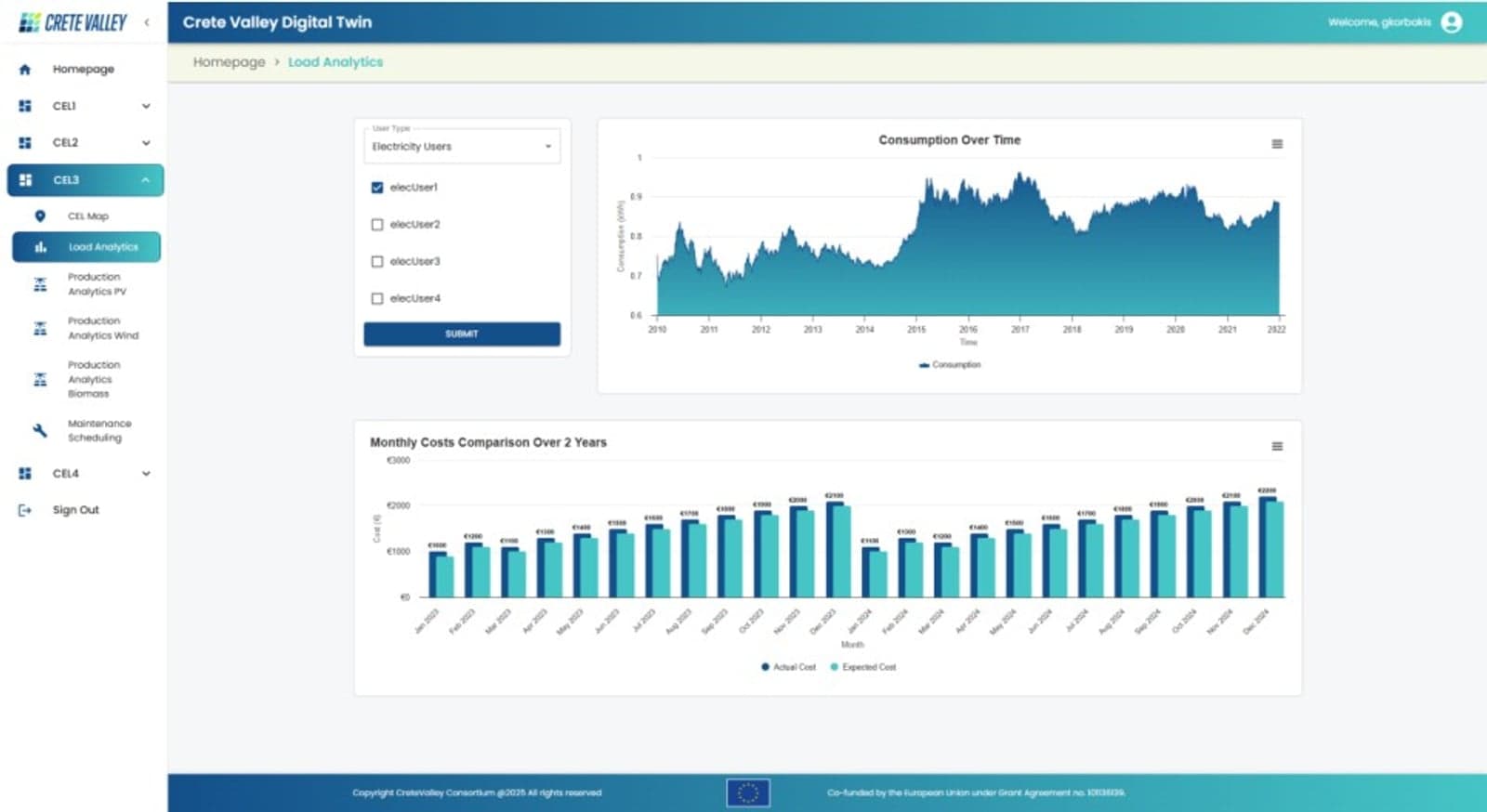
CEL managers can promote consumer engagement and sustainable behaviour through data driven insights and targeted incentives. For example, the load analytics feature, seen on the figure below, visualises consumption and cost trends, enabling users to monitor efficiency and compare actual versus expected energy use. Based on these insights, CEL managers can offer incentives, for example, rewards for off-peak consumption or participation in demand response programmes, to encourage more sustainable energy practices.
What’s next for CRETE VALLEY
The first release will be followed by a second and third version of the digital twin and data driven services and apps. Future project phases, including system installation and performance evaluation based on end-user feedback, will test these technologies under real-life conditions.
As energy systems become increasingly decentralised and complex, CRETE VALLEY’s digital twin offers a peek at the future of smart, interconnected and sustainable energy management. The next steps for the project are building on the solid foundation of the system-of-systems digital twin, paving the way for deeper integration across the project’s wider ecosystem.
Upcoming developments include linking the services to real-time demonstration environments, as the renewable energy sources of the project are currently in the development phase.
As the digital twin advances, it will continue to focus on enhancing the technical interoperability and operational management of the REV-Lab’s multi-carrier energy systems. This operational hub for DSOs, TSOs, aggregators and community managers will promote a multi-stakeholder coordination approach in order to facilitate the energy autonomy of the citizens.
We warmly invite peers, researchers and stakeholders to connect with us to explore synergies and collaboration opportunities as we collectively shape the future of smart, sustainable energy ecosystems.
Learn more about the project and subscribe to the newsletter to stay updated at the website.
References
1. Mendez-Morales, M., Karipoglu, F., Ivanković, M., Lukić, T., & Rebelo, C. (2025). Transforming Crete’s Sustainable Energy Landscape: A Modular Energy Island approach. International Journal of Energy Research, 2025(1).
2. Katsaprakakis, D. Al., Michopoulos, A., Skoulou, V., Dakanali, E., Maragkaki, A., Pappa, S., Antonakakis, I., Christakis, D., & Condaxakis, C. (2022). A Multidisciplinary Approach for an Effective and Rational Energy Transition in Crete Island, Greece. Energies, 15(9), 3010.
3. Panagiotis Skaloumpakas, Elissaios Sarmas, Michalis Rachmanidis, & Marinakis, V. (2024). Reshaping the energy landscape of Crete through renewable energy valleys. Scientific Reports, 14(1).
Related tags
Latest content
+5
ECOLOOP: Empowering rural communities for the energy transition
The ECOLOOP project is transforming how rural communities manage land, waste and energy by equipping farmers and foresters with tools, knowledge and innovative business models to harness renewable energy, improve soil health and cut carbon emissions, while generating new economic opportunities.
- Guest/partner contributor
- 10/06/2025
+6
Innovative solutions for a greener rural future: Inside the ECOLOOP project
As Europe pushes forward with its green transition, the ECOLOOP project is showing how rural areas can lead the way, not just by adopting clean energy, but by transforming how we manage land, waste and biodiversity.
- Guest/partner contributor
- 21/08/2025
+5
How Crete is seeking the perfect synergy between geography and renewables
Crete Valley, a renewable energy valley project on the island of Crete, aims to enhance energy autonomy by integrating diverse renewable energy sources tailored to specific geographic regions.
- Guest/partner contributor
- 13/05/2025