The potential of microgrids for use in industry and business
Guest/partner contributor
Posted on: 19 December 2023
New-found freedom: more and more businesses are recognising the benefits of the on-site microgrids.
New-found freedom: more and more businesses are recognising the benefits of the on-site microgrids.
For more and more businesses, taking responsibility for their own energy supply with a view to increasing its regenerativeness, reliability and where possible, cost-effectiveness, has become a desirable option.
In Germany as elsewhere, energy shortages have put the issue of energy flexibility at the top of the agenda. But what potential do microgrids really have to lower costs, secure supply reliability and decrease CO2 emissions? Can requirements really be covered by almost 100% renewables, and if so, at what price?
The outcome all depends on the energy mix used, which is itself determined by the type of application.
Using a microgrid for their own energy supply promises numerous advantages to industrial and business customers – they not only gain a reliable source of power that provides them with capacity on top of the public grid and renders them independent of it in uncertain times, they also have the option of reducing CO2 emissions by adjusting the level of renewables in the part of the energy mix under their control.
The potential each user has at his disposal to make a saving depends on the type and form of energy needed – be it a large amount of thermal energy in the form of heat or cooling, or predominantly electrical power.
Also relevant is where the microgrid is to be located and the conditions of the public grid. These are the factors that influence the choice of components.
Decisive in all cases is the high degree of flexibility and modularity needed, not only for a stable energy supply, but to accommodate the future technological developments that promise further cost savings and CO2 reductions.
Getting the microgrid mix right
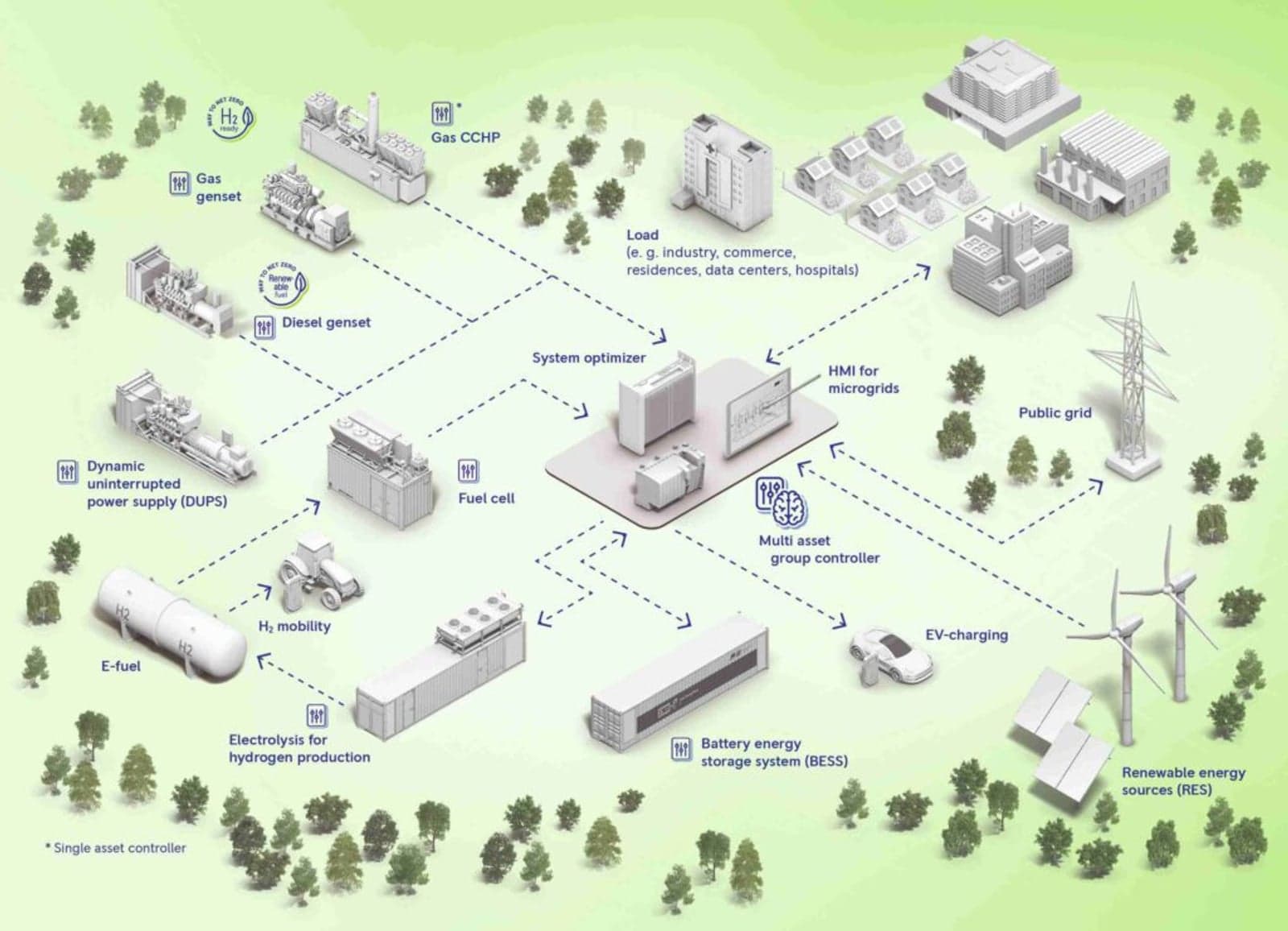
Microgrids classically comprise different systems for producing energy. They use fossil fuels such as gas and diesel, and electrical power from the local power grid and from renewable sources such as wind and solar. Also set to play an important role in the future are fuel cells and electrolysers.
Using smart control, battery storage and electrolysers, the various energy sources in the microgrid can be finely managed to make the most of their respective advantages. Which microgrid configuration offers the most efficient, ecological and cost-effective solution for the user depends on his particular situation.
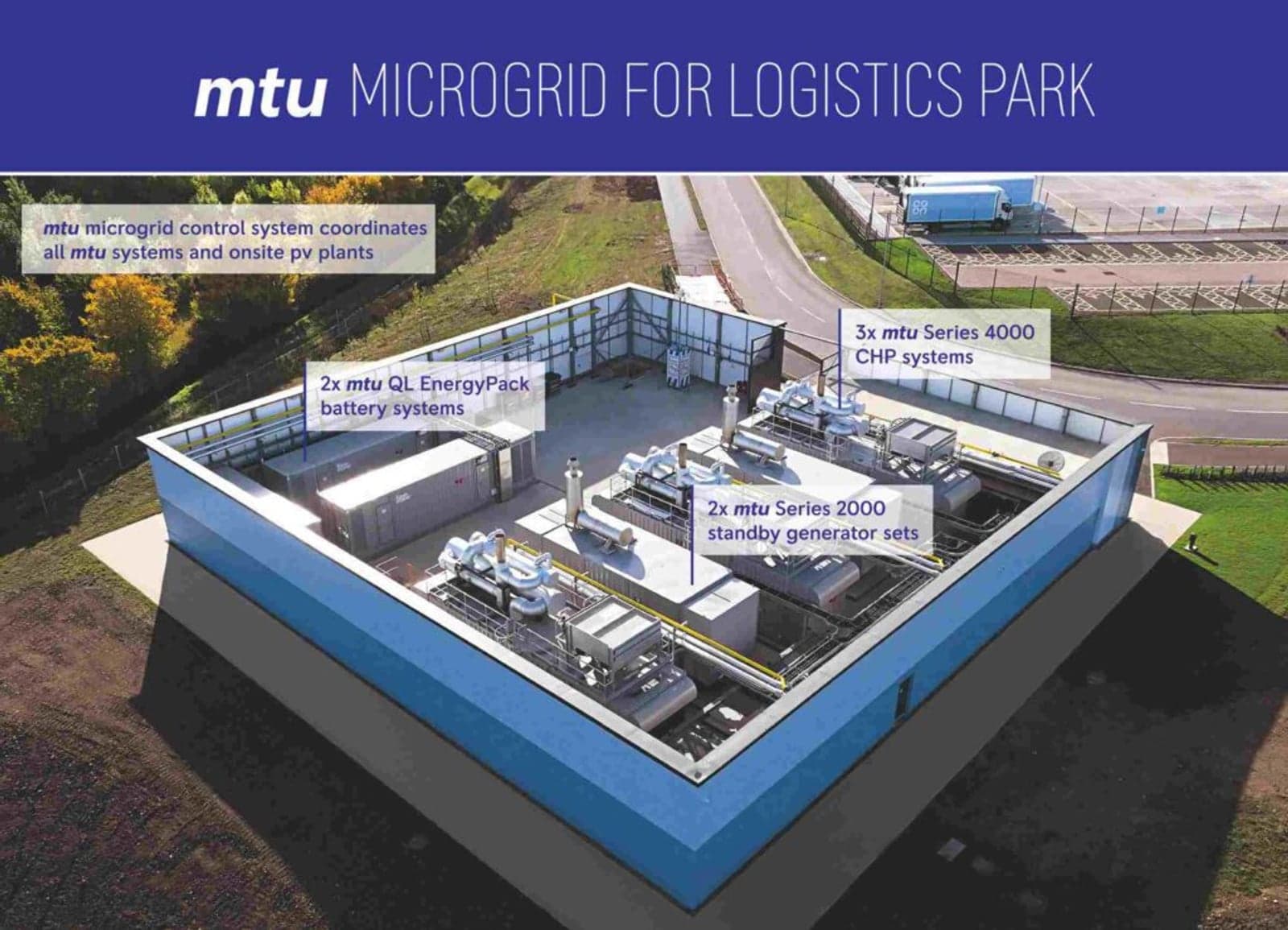
Stable energy supply for Biggleswade Logistics Park
What is expected of a microgrid is best illustrated by two projects currently being implemented by the Rolls-Royce business unit Power Systems: a logistics park in Great Britain and a textile company in Costa Rica.
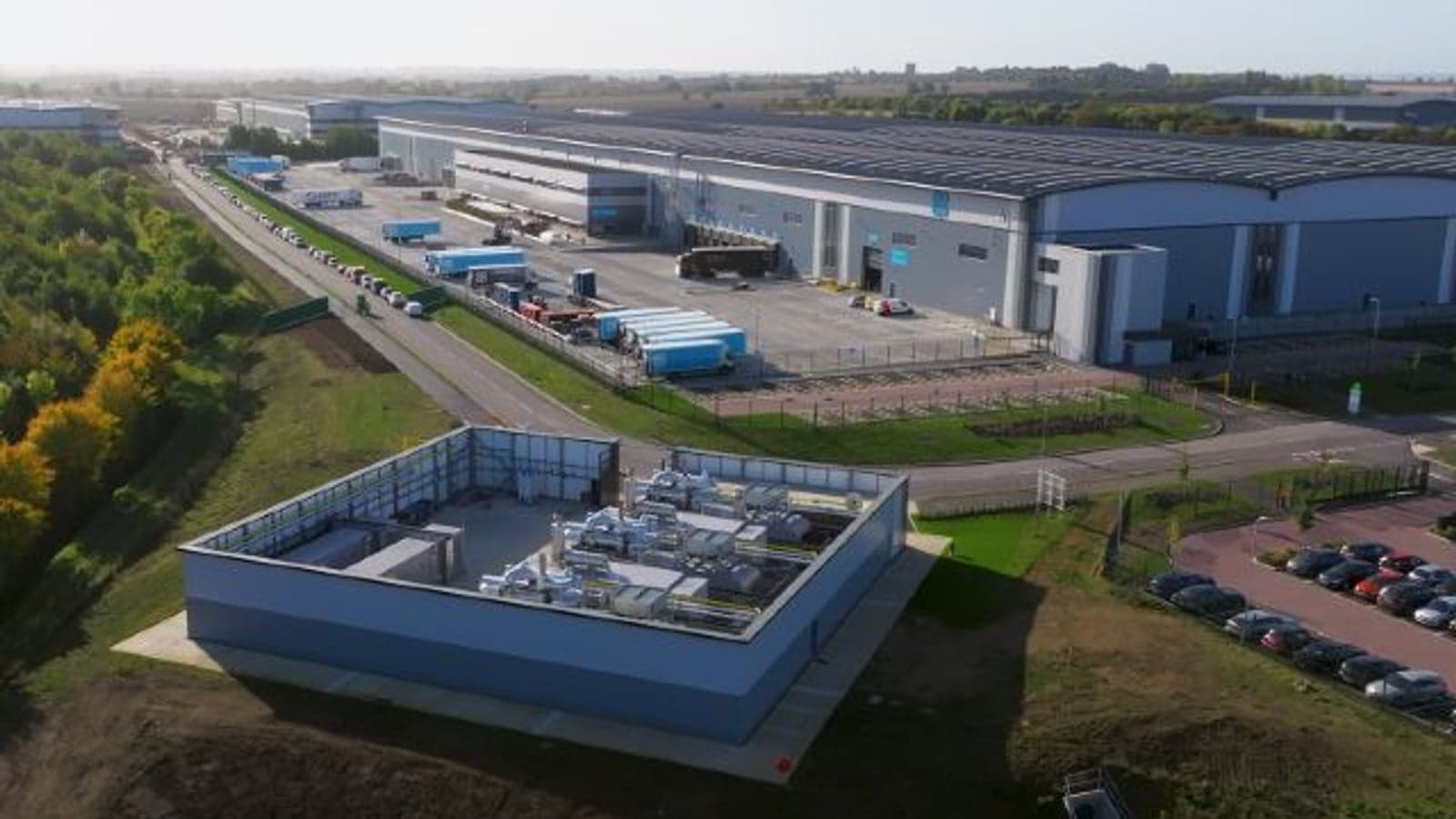
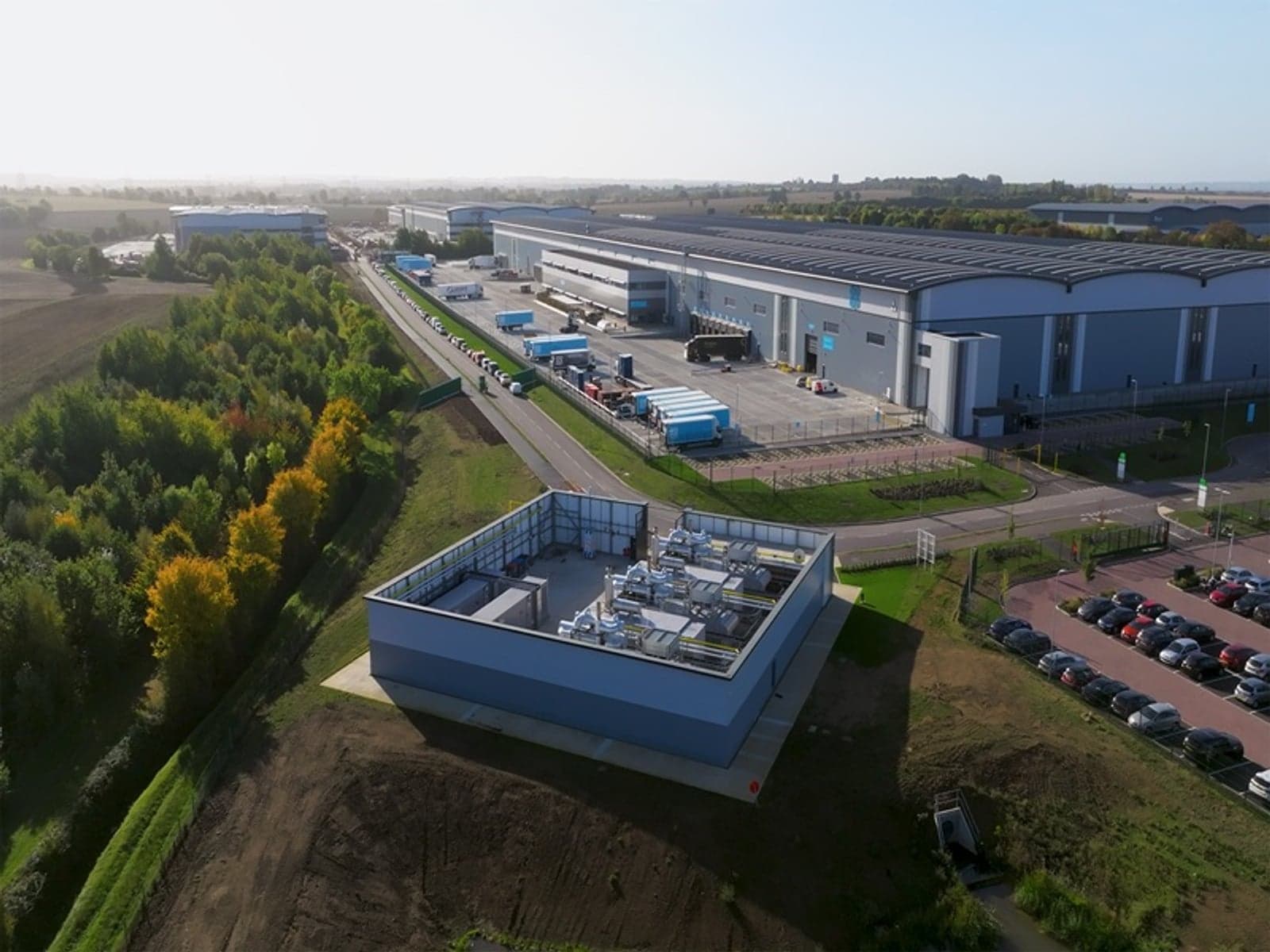
At the Symmetry Logistics Park in Biggleswade, Rolls-Royce is implementing an integrated mtu microgrid solution for the new 2MW energy centre in the park. The focus lies on an independent, stable energy supply because the current grid capacity is not sufficient to meet the needs of the newly built logistics units.
Operator BasePower Ltd. has opted for a mix of fossil fuels and renewables to provide the required process heat alongside electrical power. Two mtu QL EnergyPack battery energy storage systems with a total capacity of 2.3MWh store electrical energy, enabling the system to respond quickly, flexibly, and without CO2 emissions to fluctuating load demands.
In times of low demand, the battery storage systems suffice as the sole power source. The major source of power is formed by three mtu combined heat and power plants (8V4000 GS) with a total power capacity of 3MW. These have the added capability of being able to run on hydrogen in the future.
The microgrid is completed by twin diesel-powered mtu 16V2000 DS1250 emergency generator sets with 1MW power output to ensure that power continues to flow in the event of an emergency.
This microgrid strategy provides customers of BasePower in Biggleswade with a power supply that is reliable, stable and favourably priced. And the operators can expect a 5–10% decrease in their energy costs.
Textile company saves costs and lowers CO2 emissions
Textile company Proquinal in Costa Rica has adopted an entirely different approach to reaping the benefits of its microgrid.
With peak shaving and energy shifting, it saves some €380,000 per year. It does so by not tapping into the public grid during high-tariff peak times, which keeps energy costs down.
Since installation of its integrated energy system consisting of battery storage systems, solar panels and smart control, the entire plant can be completely disconnected from the public grid for around five hours each day when tariffs are at their highest.
During that time, the plant is fed by two mtu EnergyPacks QL, each offering an output of 750kVA and a storage capacity of 2.1MWh. The smart mtu EnergetIQ control system regulates the system automatically, optimising the energy flow to ensure reliability and cost-effectiveness.
60% of the reduction in annual energy expenditure can be accounted for by lower grid fees, while 8% can be credited to the use of solar energy and 32% to charging the EnergyPacks during the cheaper low-demand periods.
The system will pay for itself in just 4.3 years and enable a reduction in the textile manufacturer's CO2 emissions of 285t each year.
Smart microgrids control with foresight
A smart mtu microgrid controller likewise manages the energy plant in Biggleswade. To ensure fail-safe operation, there are two microgrid controllers, one in service and the other in standby.
Based on the power demand, the microgrid controller simultaneously manages the dynamic load and chosen power source to achieve optimum cost efficiency and use of technologies.
The microgrid operates alongside and supplements the public grid, from which it can also be isolated. The microgrid controller thus ensures that the best energy source or combination of energy sources is being used at any one time.
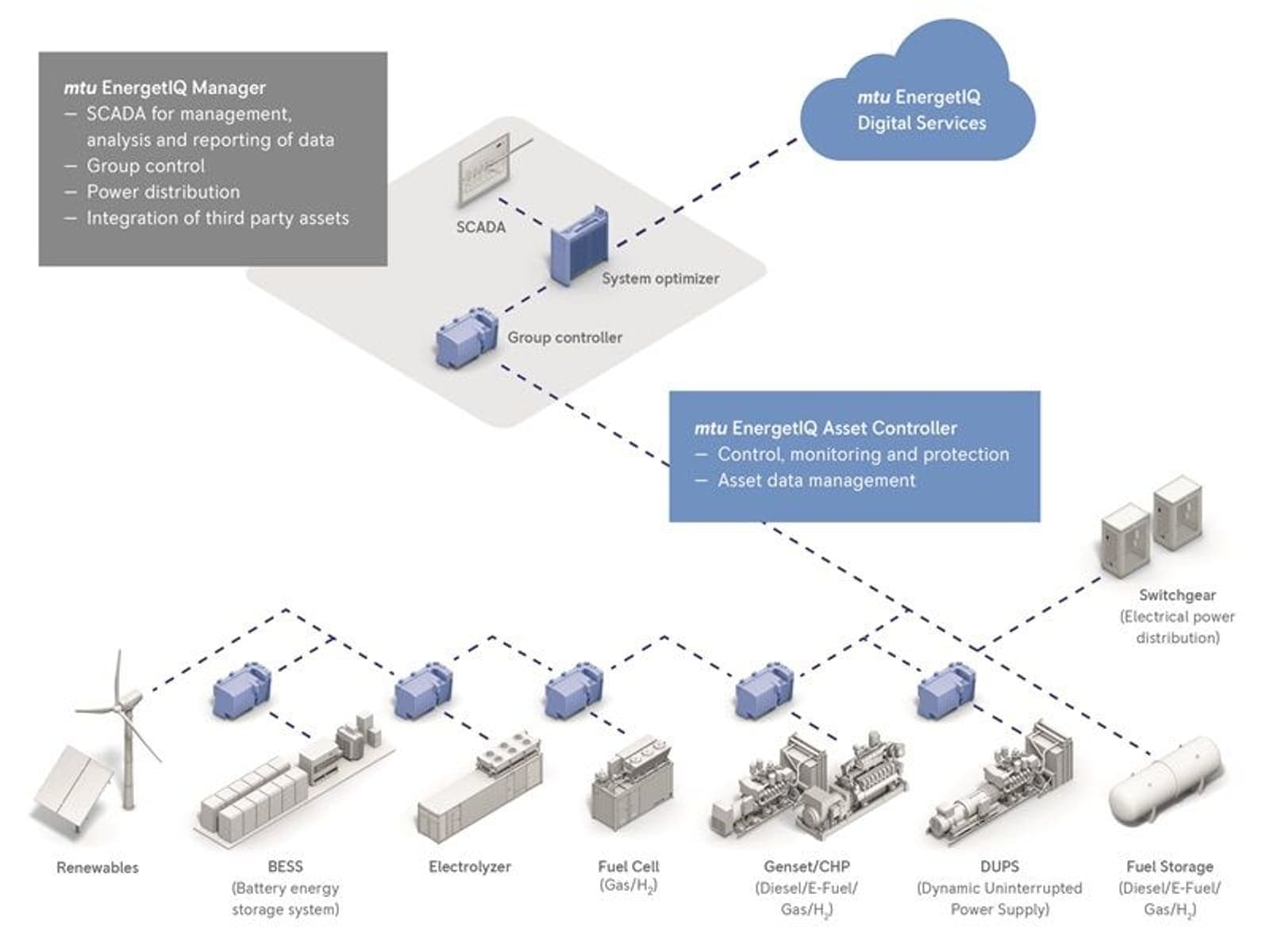
The mtu-EnergetIQ controllers do not work according to a straightforward rules-based strategy such as 'load batteries when the sun shines'. Underpinning their operating strategy is predictive, mathematically optimised planning.
A learning neural network enables highly precise prediction of upcoming energy consumption and weather conditions to provide the foundations for reliable, sustainable and economic operation. Calendar details such as days of the week and public holidays are taken account of, as are seasonal peculiarities.
In winter for example, a greenhouse might still be naturally warmed by the sun, while a cold storage plant is subject to far fewer fluctuations.
These are the special factors that the learning microgrid controller needs to recognise and take account of.
Furthermore, looking ahead to energy trading and the growing significance of microgrids as intermediate storers of energy that support the public grid, the importance of equipping the controller with trading and reporting functions becomes evident, especially for billing users according to their consumption.
Here, Rolls-Royce Power Systems has decades of experience in the operation of CHP plants to fall back on.
H2-ready: hydrogen enabling rapid rise in share of renewables
Unlike the set-up in Costa Rica, the Biggleswade microgrid is still using fossil fuels to cover the base load. However, that share will quickly shrink when the required hydrogen infrastructures are in place, since the mtu CHP plants are H2-ready, even today.
The Biggleswade microgrid will be able to operate immediately with a share of around 20% renewables. If the demand for electrical power increases, the energy centres can also be extended, by adding, for example, additional photovoltaics. That ensures a high degree of flexibility and enables operators to put their customers on the path to a carbon-free power supply.
Flexible and futureproof – the power of microgrids
When assessing the potential of the microgrid for use in business and industry, the criteria is flexibility. At the planning stage, the focus is on finding an efficient energy mix for the given application. Depending on the location, that might involve a high proportion of renewables, 50–80% being realistic for small businesses, hotels, and light industry.
In the case of energy-intensive industrial applications however, a 100% regenerative power supply, while technically conceivable, is uneconomical since it will usually be too space-consuming and expensive. Here, the primary energy source will be fossil fuels used in high efficiency CHP set-ups, although, looking forward, these will be increasingly replaced by hydrogen in both CHPs and fuem cells.
In all cases, microgrids not only make power supply systems reliable and stable and reduce energy costs and CO2 emissions, they also to a high extent free users from the regulations and restrictions that will increasingly govern the energy infrastructure in the future.
With their ability to back up the public grid, they enable rapid set-up of the power supply when plants are being extended or sites newly built. At the same time, they stabilise the power supply through the intermediate storage of regenerative energies.
That makes microgrids an attractive opportunity for many industrial and commercial customers on their path towards a future-proof, climate-friendly, or even climate-neutral power supply.
Latest content
+5
Transforming commercial structures into energy-optimising powerhouses
With buildings accounting for a whopping 37% of global energy use and a third of US emissions| businesses are kicking sustainability initiatives into gear to advance the clean energy transition.
- Guest/partner contributor
- 29/06/2023