UK measures to shield electricity prices from market volatility
Yusuf Latief
Posted on: 22 April 2026
UK joins the likes of Germany, the Netherlands, Bulgaria and Slovenia who are looking to buffer against the energy impact from the conflict in the Middle East.
The UK government has announced new measures to reduce the impact that volatile gas prices have on the price of electricity.
Plans include voluntary long term fixed contracts that will be offered to existing low-carbon generators, as well as an updated Electricity Generators Levy.
The government in a release says the contracts will be offered to existing low-carbon generators not on fixed price contracts – covering around a third of Britain’s power supply.
The fixed contracts, known as ‘Wholesale Contracts for Difference’ (WCfD) will be introduced later this year, with an intention to run an allocation process in 2027.
A WCfD would offer existing eligible generators, who aren’t already contracted under a CfD, the option to accept a fixed price for the electricity they generate. This would mean that both they and consumers are no longer exposed to volatile gas-linked electricity prices.
It would see eligible generators give up their current forward wholesale revenues in exchange for a fixed power price achieved via a CfD. Under this proposal, says the government, generators accredited under the Renewables Obligation (RO) would continue to receive support via the RO in the way they do currently – with only their wholesale revenues being exchanged for a fixed price CfD.
The WCfD will be a voluntary offer to eligible electricity generators, and will be subject to consultation.
On the levy update, the government says that immediate action will be taken to tax excess profits through the Electricity Generator Levy by raising the rate from 45% to 55%, ensuring an increased proportion of the extraordinary revenues generated when the gas price spikes is available to government. These funds will be used to support businesses and households, minimising with the impacts on cost of living brought about by the conflict in the Middle East.
As we face the second fossil fuel shock in less than five years, the lesson for our country is clear: The era of fossil fuel security is over, and the era of clean energy security must come of age.
According to the government, these measures will further reduce the share of electricity exposed to gas price shocks and provide generators the economic incentive to move on to fixed contracts not linked to volatile gas.
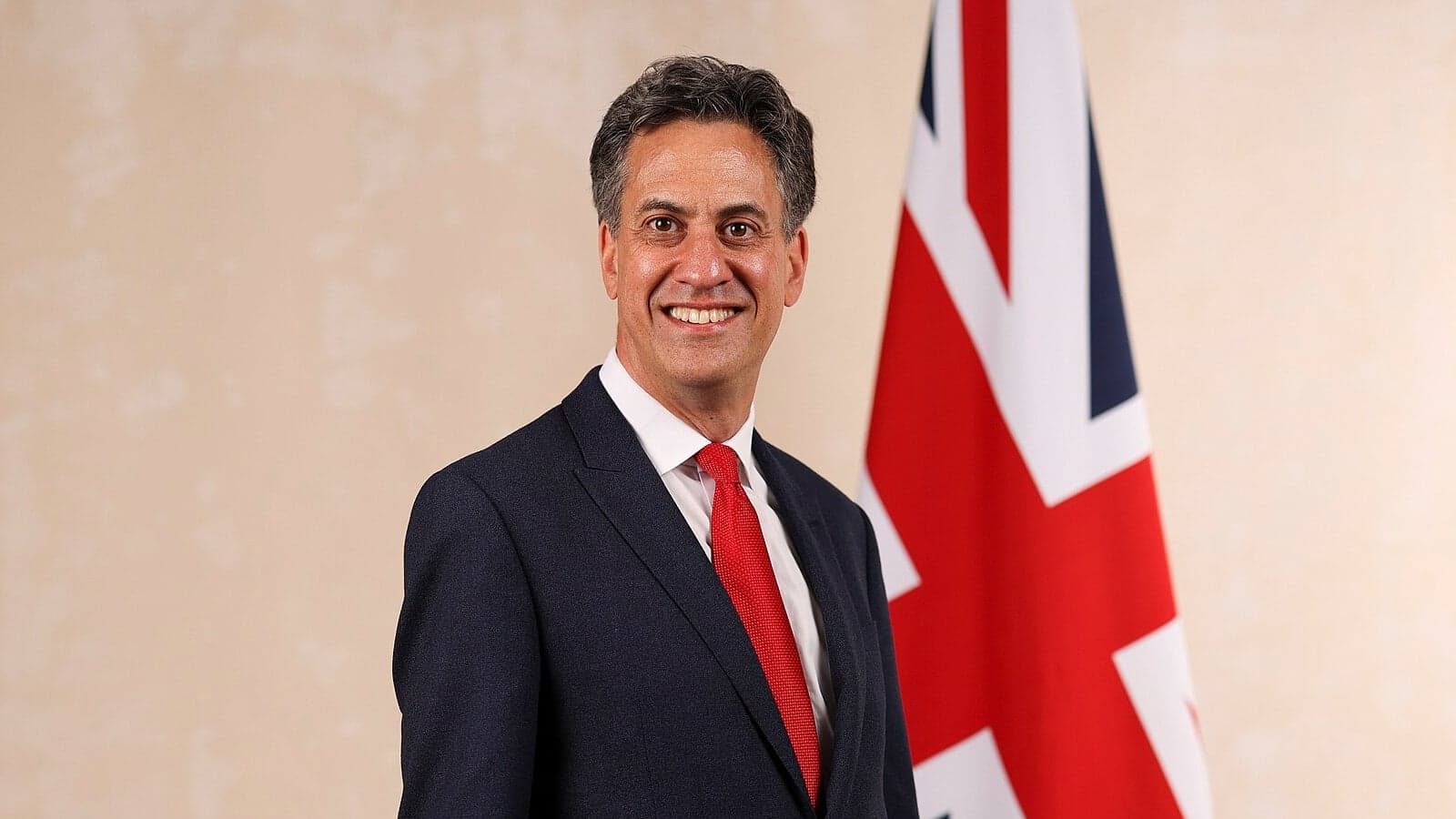
Said the UK’s Energy Secretary Ed Miliband:
“As we face the second fossil fuel shock in less than five years, the lesson for our country is clear: The era of fossil fuel security is over, and the era of clean energy security must come of age.
"That’s why we’re doubling down on clean power, to give our country energy security and bring down bills for good.”
Heat pumps and EVs
Another significant measure from the government includes plans to make it easier for people to switch to cheaper electric transport and heating, by making EV chargers, solar panels and heat pumps easier to instal for renters, flat-dwellers and households without a driveway.
The government says it will legislate to introduce permitted development rights to expand EV charging provision, allowing for cross-pavement charging solutions and associated charging points.
Furthermore, it will consult on changes to permitted development rights with the aim of making it easier to instal air source heat pumps. The consultation will explore expanding permitted development including extending to non-domestic buildings and amending some siting restrictions, and seek views on how to enable more installations in flats.
Additionally, it announced new funding – backed by £90 million ($121.8 million) – to help build and expand heat pump factories in the UK, alongside extra investment in the £30 million ($40.6 million) Heat Pump Ready scheme to help companies design and test new, market-ready heat pumps.
Commenting in response to this announcement was Octopus Energy’s Chief Product Officer Rebecca Dibb-Simkin:
“It’s great to see the government doubling down on electrification. Demand for EVs, heat pumps and solar is already booming.
“Slashing red tape, boosting the heat pump grant for households with oil boilers to £9,000 (approximately $12,177) and making EV charging work even better for those without driveways will help more people make the switch.”
Have you read?
Strengthening European resilience to combat energy shocks
System integration key to absorbing price shocks says EASAC
How should Europe think about energy sovereignty post-Hormuz?
Miliband also set out further measures, including:
- An increase to the Boiler Upgrade Scheme (BUS) grant for properties heated by oil and LPG, taking the total grant to £9,000;
- An additional £100 million ($135.3 million) of funding for the Social Housing Fund, adding to the current £1.2 billion to upgrade 100,000 social homes over the next two years and support the delivery of up to a total of 57,000 solar installations for households;
- Backing Great British Energy’s solar scheme with up to £40 million ($54.1 million) of government investment to extend support for more rooftop solar installations on a further 100 schools and colleges;
- Plans to expand renewables across the Public Estate – including using brownfield land, industrial sites and railway sites to host solar panels and wind turbines. This could unlock up to 10GW of capacity, the government says;
- Streamlined rules to unblock the grid and speed up connections for clean power;
- A new Reformed National Pricing Delivery Plan that aims to show how smarter planning and faster delivery of electricity infrastructure could unlock up to £20 billion ($27.1 billion) in benefits between 2030 and 2050.
Said Prime Minister Keir Starmer said:
“We need to get off the fossil fuel rollercoaster – this will make energy bills more stable and take the pressure off family budgets.
“When global gas prices spike, people here shouldn’t be picking up the tab.
“Our focus is simple: easing pressure on household budgets now, while building a homegrown energy system that protects families from global instability in the years ahead.”
EU support schemes and the Dutch Cabinet's proposed relief
The UK’s relief measures come a day after the Dutch Cabinet announced its own set of economic measures in response to the economic impact of the conflict in the Middle East as moves into phase 1 of the national oil crisis plan.
These measures include an allocation of €195 million ($229.6 million) to the Energy Emergency Fund, which pays part of the energy bill for households that are eligible for support.
The Cabinet is also focusing on measures to increase the resilience of the Netherlands and reduce energy consumption, making €180 million ($211.9 million) available for the National Heat Fund, alongside a slew of other measures aiming to increase uptake of low-carbon technologies.
The Cabinet, which does not hold a majority in either Parliamentary house, will have to secure support from opposition parties.
Days prior to the announcements from the UK and the Netherlands, the European Commission approved State aid schemes to provide temporary electricity price relief for energy-intensive companies in Bulgaria, Germany and Slovenia in line with the objectives of the Clean Industrial Deal.
Through the condition to reinvest a significant share of the aid received in decarbonisation measures, the schemes will contribute to the transition towards a net-zero economy.
The budgets of the schemes are €334 million ($393.3 million) for Bulgaria, €3.8 billion ($4.5 billion) for Germany and €90 million ($106 million) for Slovenia, aiming to support energy-intensive companies by compensating them for a share of their electricity costs in the coming three years.
The measures will be open to companies active in sectors with a significant risk of activities moving outside the EU to locations where environmental measures are absent or less ambitious. This risk depends on the electro-intensity of the sector in question and its openness to international trade.
Related tags
Latest content
+6
From data to decisions: ECOLOOP powers smart farming with renewable energy
Across Europe, rural communities are facing the dual challenge of increasing agricultural productivity while reducing energy consumption and carbon emissions. The ECOLOOP project, funded by Horizon Europe and coordinated by ETRA I+D, is tackling this challenge head-on.
- Guest/partner contributor
- 23/09/2025
+6
Innovative solutions for a greener rural future: Inside the ECOLOOP project
As Europe pushes forward with its green transition, the ECOLOOP project is showing how rural areas can lead the way, not just by adopting clean energy, but by transforming how we manage land, waste and biodiversity.
- Guest/partner contributor
- 21/08/2025