UK power grid cannot cope with increasing 'super storms'
Yusuf Latief
Posted on: 23 February 2026
New data reveals the country's electricity grid is highly vulnerable and millions of people are at risk of outages because of storms and heatwaves.
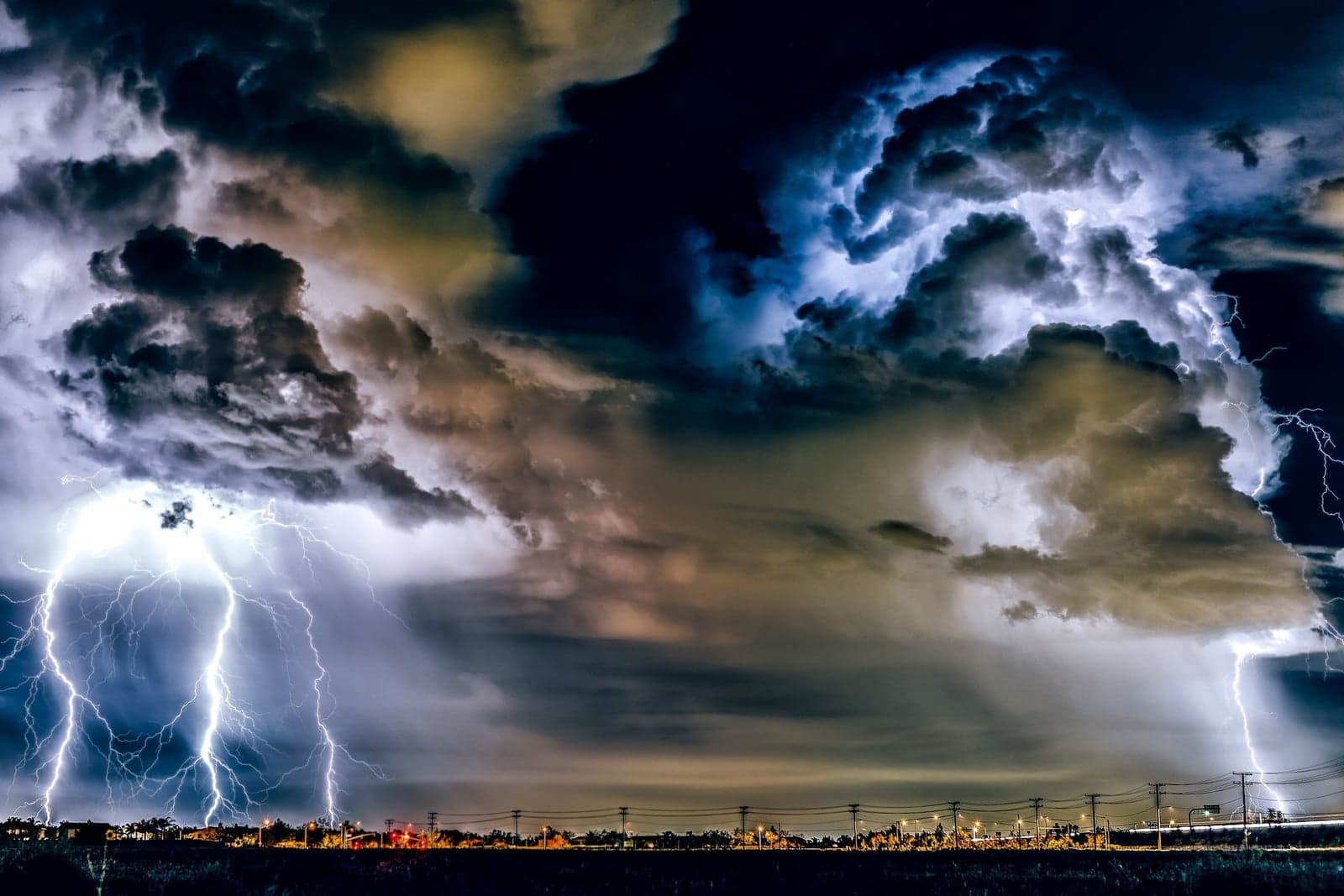
Digital modelling of the UK power grid has found it incredibly vulnerable in the face of increasingly severe ‘super storms.’ Past research, both on storms and extreme heat, paints a similar picture.
AI tech and data company Neara has released physics-enabled digital modelling of the UK’s energy grid, detailing the scale of network vulnerability to ‘super storms’.
The company claims that over 3.5 million people in the country are currently at risk of power outages, with millions more likely to experience disruption in the coming years.
This comes as regulatory focus intensifies on high impact, low probability weather events, with UK energy regulator Ofgem issuing new ED3 guidance for utilities on climate resilience stress testing.
It also follows a September 2025 study in Carbon Management, warning that extreme weather could disrupt Britain’s future electricity system, as well as research in May finding vulnerabilities in the power system to extreme heat.
Super storms
Neara built a digital model of over 16,000km of the UK’s grid network before simulating a series of extreme weather events to see how critical infrastructure responded. This included modelling the impact of 100mph winds – comparable with Storms Arwen (2021), Eowyn (2025) and, most recently, Goretti (2026) – and more intense 112mph winds (equivalent to a Category 2 hurricane).
Analysts then extrapolated the resulting data to assess the disruption that would be caused if these so-called ‘super storms’ were to hit on a national scale.
The modelling, which is underpinned by three-dimensional physical simulations, found that up to 34% of the UK's overhead power lines could fail if the country is hit by storms of increasing intensity.
Specifically, the analysis found:
If nationwide 100mph winds struck the UK, 5.2% of the entire network would currently fail. This could cut off power to an estimated 3.6 million people;
If higher winds speeds of 112mph (equivalent to a Category 2 hurricane) struck across the UK, the country could see a critical incident, with indicative modelling suggesting more than a third (34%) of their energy grids are potentially at risk of failure due to degraded or poorly installed assets. This could cut off power to an estimated 23 million people;
Neara cites research from the National Centre for Atmospheric Science, finding that, as a result of climate change, the UK will see more such super storms in the coming years, with numbers already rising.
Storm Arwen’s windspeeds of over 100mph left more than a million UK customers without power in 2021, while 1.4 million suffered outages during Storm Eunice in 2022. More recently, last year's Storm Éowyn saw more than a third of households (725,000) in Ireland lose power – an overwhelming event on a neighbouring system that indicates the UK’s vulnerability could be even greater than identified in this study.
Neara’s modelling shows that storms of a similar magnitude striking larger swathes of the UK could cause severe devastation, with grid failures stemming from damage to ageing infrastructure – some built over 40 years ago – causing assets to topple under high winds, while wooden poles in particular may simply snap.
Too much of the sector is still relying on spreadsheet based vulnerability assessments that can’t capture the real world behaviour of assets under extreme conditions.
In addition to this damage, the full impact caused by these wind speeds is likely to be far greater. These predictions do not take into account the enormous impact that falling trees and vegetation can have on the grid during a severe storm. Additional analysis from Neara found that 16% of spans - the stretches of power lines between two poles or towers - on the UK’s distribution network are currently at risk of being knocked out by falling trees in extreme weather. This would compound the effect of falling poles - plunging more households into darkness.
Neara managing director Taco Engelaar said: “A multitude of complex factors means it’s difficult to predict future storm trends with certainty, but most climate scientists believe that both the frequency and the severity of storms will rise. It’s therefore crucial we harden our energy grid.”
Engelaar said that, although utilities are taking steps to address vulnerabilities in the network and regulators are pushing for more rigorous stress testing, “too much of the sector is still relying on spreadsheet based vulnerability assessments that can’t capture the real world behaviour of assets under extreme conditions.”
Rather, he says, “physics based digital modelling technologies can provide the real time, granular insights needed to make smarter, faster decisions and reduce the need to build expensive new infrastructure.”
Read more exclusive insights from Taco Engelaar:
How digital twins can unlock untapped capacity in Europe’s grids
Predictions 2026: ‘Green gridlock will hit every economy’
Grid resilience: the gatekeeper to Europe’s energy future
Flexibility against severe storms
Neara is the not the only company which has been researching this type of vulnerability. Last year multiple research studies showed the risk of extreme weather for the UK power grid, both in the form of storms and intense heat.
A September study in Carbon Management warned that, even with planned network upgrades, extreme weather could disrupt Britain’s future electricity system, highlighting ‘demand flexibility’ as a critical tool for resilience.
Researchers from the Tyndall Centre for Climate Change Research, based at the University of Manchester, examined a range of 2050 Net Zero energy scenarios for Great Britain, assessing how climate risks might affect electricity supply and demand technologies, as well as the resilience of transmission and distribution networks.
The study identified specific seasonal periods that are most likely to stress the system, using windstorms as a case study. While planned network investments will improve overall capacity and resilience, it says, they may not fully prevent power outages.
According to the study, severe windstorms, which may extend into autumn and spring, could damage critical network infrastructure. When these storms coincide with high demand for electricity from heating systems, the risk of outages increases.
The researchers emphasise that this is not a theoretical scenario: the combination of physical stress on infrastructure and high demand is a realistic concern under several Net Zero pathways, making resilience measures essential.
The report acknowledges that improvements to transmission and distribution networks will strengthen Britain’s electricity system, enhancing capacity and overall resilience. However, even with planned upgrades, extreme weather events could still cause temporary shortfalls under certain scenarios.
The researchers highlight the need to plan for extreme events, not just average conditions, to design a system capable of withstanding climate extremes.
One of the most important solutions, they say, is demand flexibility, described as a vital, ‘low-regret’ approach: it does not eliminate all risk but has strong potential to reduce the likelihood of outages.
Extreme heat
In addition to such severe storms, the report mentions how, during summer heatwaves, electricity demand for cooling rises significantly.
At the same time, wind speeds often drop during hot, calm periods, reducing output from wind turbines – a key component of the UK’s Net Zero energy supply. This combination of higher demand and lower supply creates a particularly vulnerable period for the electricity system.
Months prior to the Tyndall report, energy consultancy Ricardo released results from a Climate Services for a Net Zero World research programme they led on behalf of the UK Department for Energy Security and Net Zero.
The programme assessed the vulnerabilities of different components of the energy system to extreme heat, also looking at the potential impacts that temperatures at different levels of global warming might have on those components.
Overall, no components were rated ‘extremely vulnerable’, the highest rating. However, says the study, four components were assigned the second highest, ‘vulnerable’, all from the power networks category: Transmission & distribution transformers; service lines and connections; switchgears, circuit breakers, and other protection devices; and distribution underground cables.