Wärtsilä Energy’s vision for a flexible European grid
Enlit Editorial Team
Posted on: 14 November 2025
Louis Strydom from Wärtsilä Energy explains how Europe can turn renewable ambition into action with flexible grids, co-optimised power and heat, and AI-driven solutions.
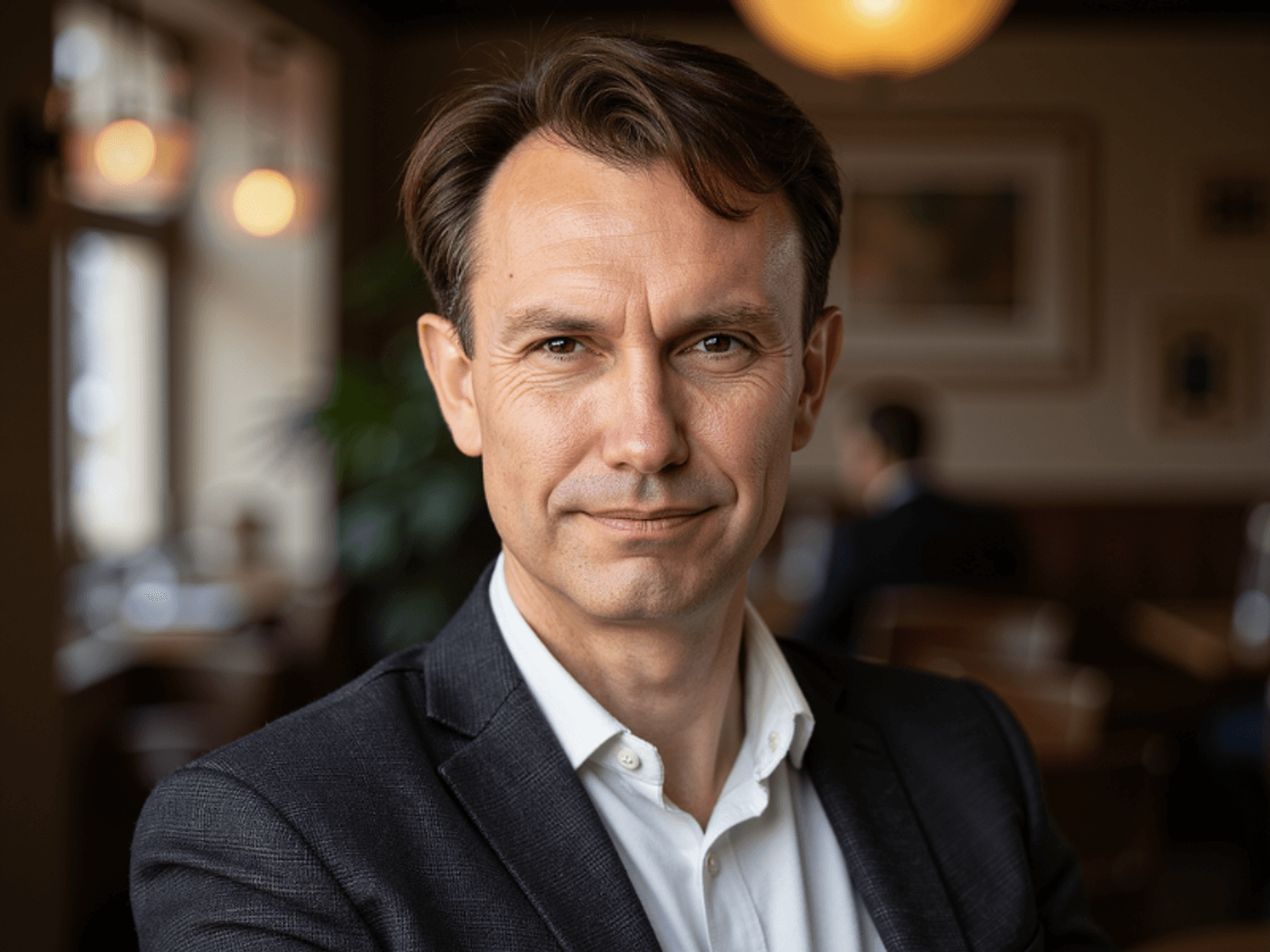
In an Enlit exclusive, Louis Strydom, Growth & Development Director for Africa & Europe at Wärtsilä Energy, outlines how investing in flexibility, grid upgrades and digital tools can make the energy transition both resilient and economically efficient.
How does the European energy sector turn shared ambition into collaborative action?
By shifting from technology-first to system-value decision-making. That means policies and procurement that pay for the outcomes—reliability, flexibility, inertia, black-start, and heat—rather than picking winners. Concretely:
- Embed ‘value-stack’ tenders that score assets on capacity, ramp rates, start times, inertia, and locational need;
- Align market design so flexibility is investable—capacity and ancillary products that reward fast, modular balancing, not hours-run;
- Make cross-border and distribution-level grid upgrades bankable; and
- Normalise power-and-heat co-optimisation in coal-to-clean transitions. Europe’s new market design already points the way—use long-term contracts (PPAs, two-way CfDs) for low-marginal renewables while strengthening short-term signals and ACER oversight.
Industry should meet policymakers halfway with transparent cost/benefit data and project pipelines shaped around system services, not just MWh.
What does Europe need to do to deliver competitive, resilient energy by 2030?
There are three main priorities:
Make flexibility investable. ENTSO-E projects a >60 GW net increase in flexible gas by 2035; investors will build it if scarcity and ancillary prices, capacity payments, and 15-minute settlement reliably reward it. Engines with very fast starts and broad flexibility stacks are ideal where grids are tight.
Bank the grid. Fund the EU Grids Action agenda—particularly DSOs—so new renewables don’t stall in curtailment queues and negative prices. Prioritise cross-border projects, anticipatory investment rules, and distribution-level digitalisation.
Co-optimise power & heat where DH exists. In Central & Eastern Europe, engine-based CHP plus heat storage can cut system costs and reduce curtailment while retiring coal faster.
It’s 2030: what does Europe’s energy system look like?
The question isn’t the energy ‘mix’ but how much variable renewables the system can absorb at lowest total cost. By 2030, think ~60%+ renewables at EU level under the reformed market—if every country pays for flexibility and grid capacity with the same rigor it applies to LCOE. Expect far more granular pricing (now 15-minute day-ahead across SDAC), widespread negative-price management, and strategically located fast-start engine fleets providing reserves, inertia, and black-start, often coupled with district heating. ENTSO-E’s outlook for additional flexible gas capacity, plus today’s rise in negative-price hours (8–9% of H1-2025 in DE/NL/ES), underlines that absorption—not ambition—is the bottleneck to 70%+ VRE. Outcome-based planning says: build flexibility and grids so 1 GW of wind/solar actually displaces fossil, not just adds curtailment.
Is there another industry vertical with vital lessons for energy?
Yes: telecom tower ‘neutral-host’ models. Mobile operators initially raced to build separate towers; then independent TowerCos (e.g., Cellnex, American Tower) aggregated and leased shared sites, unlocking capital efficiency, faster rollout, and less duplication. Energy can mimic this with ‘FlexCos’: third-party owners of shared, multi-service balancing blocks (fast-start engine parks with CHP where heat exists, plus optional storage/electrolysers) sited where they displace grid reinforcement and reduce curtailment. TSOs/DSOs procure services; FlexCos optimise asset portfolios against multi-market revenues. This moves us from one-plant-per-subsidy to infrastructure-as-a-service, accelerating renewables absorption at lower total cost.
COP30: optimistic or pessimistic - and what should it deliver?
Cautiously optimistic—if Belém prioritises finance and systems over slogans. Two deliverables really matter for Europe’s transition speed: one is de-risked capital flows into grids and flexibility through MDB and export-credit reforms and clearer treatment of system-services revenue; and the second is data-sharing frameworks (aligned with the EU Data Act) that make asset and market data usable for AI/ML operations. COP30’s calendar is set; the incoming presidency is signalling a finance-heavy agenda. Europe should arrive with a concrete playbook: standard flex-service contracts, open measurement rules, and a plan to convert NDC goals into bankable infrastructure.
Biggest workforce issue: recruiting, reskilling, retention - or something else?
Reskilling at grid speed—with AI. Europe doesn’t lack mission-driven talent; it lacks hands who can deploy flexibility, digital substations, and DH-CHP modernisations at the pace of variable renewables demand. The answer is not a decade-long training pipeline; it’s frontline AI/ML literacy plus modular training tied to standardised data models and digital twins. Think dispatcher-in-the-loop forecasting, automated outage analytics, and ML-guided maintenance for engine fleets and DH networks. If we teach thousands of engineers and operators to use AI like a power tool, we multiply scarce expertise without lowering standards.
Europe doesn’t lack mission-driven talent: it lacks hands who can deploy flexibility, digital substations and DH-CHP modernisations at the pace of variable renewables demand.
Is the energy sector making the most of current AI tech?
Not yet—data is the bottleneck. Many EU operators still juggle siloed SCADA, asset, and market datasets, and legal uncertainty slows experimentation. Progress is coming: the EU Data Act phases in access and switching rules from Sept 2025, and AI Act sandboxes must be in place by Aug 2026. Meanwhile, market surveillance (REMIT II) is tightening reporting—another nudge to structure data well. The prize is big: AI that forecasts ramps, quantifies stability needs, and prices services accurately, so flexible capacity earns on outcomes. What we need now is a permissive “try-and-learn” culture inside corporates—IT as enabler, not gatekeeper—plus sector-wide data schemas so models travel across borders.
How will AI/ML support your organisation’s CX strategy?
There are two ways—predictive confidence and outcome-based services:
Predictive confidence. We combine customer-side forecasting (renewables, heat demand, unit commitment) with engine fleet analytics to guarantee availability and ramp commitments. That reduces curtailment, avoids imbalance penalties, and de-risks PPAs—value customers feel on their P&L.
Outcome-based services. Increasingly, a Wärtsilä solution isn’t just engines installed; it’s a service package with a machine-learning layer today—covering dispatch optimisation, stability assessment & management, and black-start readiness—with AI capabilities being introduced over time as we expand and harden the toolkit. Pricing is tied to delivered system value. As policy moves to 15-minute settlement now (and, we hope, 5-minute next), these digital layers will become inseparable from the customer offer.
Sustainability practice you’re most proud of - and your personal footprint?
Company-wise, Set for 30 commits Wärtsilä to carbon-neutral own operations and a product portfolio ready for zero-carbon fuels by 2030. In February 2025, we extended this with a target to reduce Tier-1 suppliers’ Scope 1–2 emissions by 25% by 2030.
By the end of 2024, we had reduced our Scope 1–2 emissions by 50% versus the 2019–2021 baseline. In 2024, we also launched a 100% hydrogen-ready engine power plant, with orders opening in 2025 and first deliveries targeted for 2026, so today’s gas-fired flexibility has a clear decarbonisation pathway as green molecules scale.
Biggest challenges facing energy leaders today?
Absorption risk and resilience risk.
Absorption: Negative-price hours surged in H1-2025 (8–9% in DE/NL/ES), a symptom of grids and flexibility lagging VRE buildout. Leaders must stop measuring success in GW installed and start measuring MWh absorbed and MWh dispatched when needed.
Resilience: The Iberian and Czech blackouts showed how fast stability margins can evaporate. Leaders need portfolios that can restart, re-island, and support frequency with inertia and fault current—attributes engine plants with black-start and CHP are designed to deliver.
Also, policy clarity to bankability remains uneven; the new EU market design is a start, but transposition and product design must reward flexibility attributes, not just capacity headcount.
How will your experts address these challenges at Enlit Europe?
From policy clarity to bankability. We’ll show how the reformed EU market design translates into investable contracts for fast-start engine capacity and stability services—stacked with CHP revenues where heat exists—so that flexibility is financed at scale.
Co-optimising electricity and heat. We’ll share modelling from coal-to-clean DH regions: planning heat and power together can save billions (e.g., €3.8 bn in Poland over a decade) while cutting emissions 57%—because CHP engines reduce both curtailment and heat costs.
Granularity + digitalisation. We’ll advocate for market and metering granularity (see EU shift to 15-minute SDAC) and open data standards so AI can accurately price and procure stability—turning flexibility into a core asset class.
If you had a magic wand, what would you implement today?
Make Europe a true five-minute power system—measurement, dispatch, and settlement. The EU just moved to 15-minute day-ahead; following Australia’s five-minute settlement and US ISOs’ 5-minute dispatch would tighten price signals for flexibility, slash uplift, and reveal the real stability needs that engines and other fast resources can solve. Five-minute markets reduce the gap between physics and finance; they also curb overbuild by showing when and where flexibility beats megawatt-hours.
Connect with Wärtsilä Energy in Bilbao!
18-20 November 2025
Related tags
Latest content
Partner content
+4
Reality check: What’s really going on in Europe’s energy transition
Europe’s energy transition is facing a reality check, says Wärtsilä Energy’s Louis Strydom. Spain curtailed 11% of renewable electricity in July 2025 due to grid constraints, while Germany extended gas plant subsidies beyond its 2035 clean power target.
- Enlit Editorial Team
- 04/03/2026
+4
What Spain’s blackout means for the US grid and its energy storage future
EU grids tend to be centrally managed whereas the US runs a patchwork of regional systems. Barrett Bilotta of Agilitas Energy examines what can one learn from the other to counter the threat of cascading blackouts.
- Guest/partner contributor
- 31/10/2025
Partner content
+5
The future of district heating: A relay race to clean energy
Decarbonising district heating is not a leap into the unknown but a measured relay race, with today’s gas-fired plants evolving into energy hubs that underpin a future powered by renewables and zero carbon fuels.
- Guest/partner contributor
- 26/11/2025